The truck driver dropped the forty-third pallet and looked at Linnea Gustafson as if she had lost her mind.
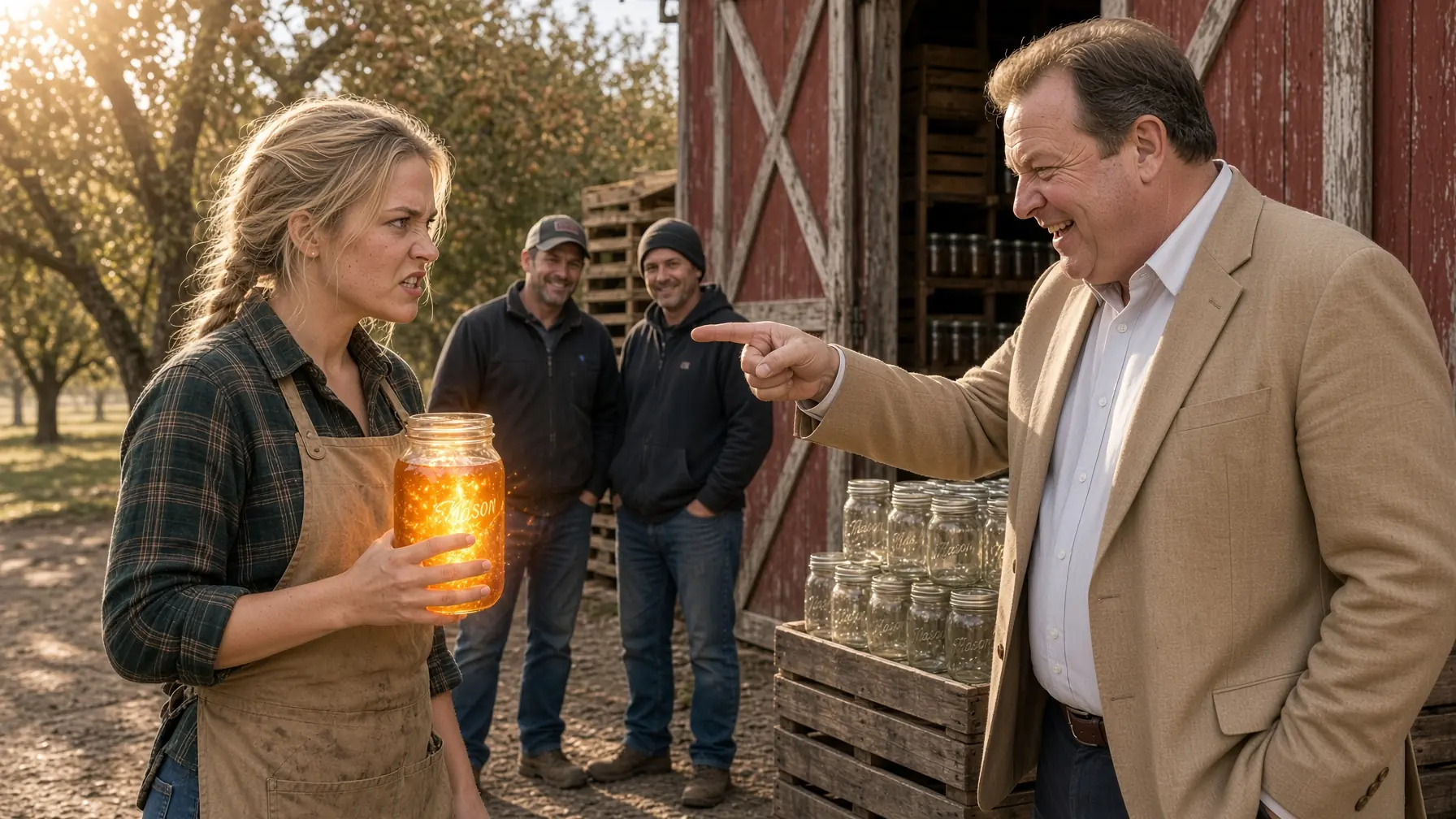
Twelve thousand glass jars now filled the empty side of her family’s old red barn.
Some had tiny bubbles trapped inside the glass.
Some had cosmetic ripples.
Others carried small imperfections around the base.
A few were genuinely damaged and would never be usable.
But thousands looked almost perfect.
Doug Prescott did not see almost perfect.
He saw garbage.
The Hartwell Glass plant manager stood beside the loading ramp in polished brown shoes already ruined by Iowa mud, holding a liability form in one hand and watching Linnea inspect a half-pint Mason jar.
“You understand what you're taking, right?”
Linnea turned the glass toward the morning light.
A small air bubble sat near the bottom.
Nothing else.
“I understand.”
Doug tapped the paper against his palm.
“These failed commercial quality control.”
“They failed your line.”
“They’re rejects.”
Linnea looked toward the pallets.
“Some are.”
Doug frowned.
“They all are.”
She selected another jar.
Perfect rim.
Clean threads.
Slight cosmetic ripple along one side.
“Not for everything.”
That answer irritated him.
Doug stepped closer.
“You signed an agreement accepting industrial waste.”
Linnea lowered the jar.
“No.”
She pointed toward the paperwork.
“I signed an agreement accepting rejected containers.”
Doug gave a dry laugh.
“That's the same thing.”
“It isn't.”
He looked at her as if speaking more slowly might help.
“Hartwell is bringing these here because landfill disposal costs money.”
“I know.”
“We’re not giving you inventory.”
“I know.”
“We’re giving you a disposal problem.”
Linnea smiled faintly.
“That depends on what I put inside them.”
Doug’s eyes moved to the small jar sitting on a wooden crate beside her.
Amber contents.
Handwritten paper label.
He picked it up.
“What is this?”
“Apple butter.”
“You filled one already?”
“Test batch.”
Doug laughed.
Two delivery workers looked over.
One smirked.
The other shook his head.
Linnea said nothing.
She had learned something useful during four years of college.
People often laughed fastest when they did not understand the math yet.
Doug held the jar like it might embarrass him personally.
“You cannot seriously be planning to sell food in rejected factory glass.”
“Any jar I use will be individually inspected.”
“That doesn’t make it commercial packaging.”
“I didn't say Hartwell approved it for commercial packaging.”
“Then don't put our name anywhere near it.”
“I wasn’t planning to.”
Doug stepped closer.
“If somebody gets hurt, Hartwell is not responsible.”
“That's what the agreement says.”
“You're going to bury yourself in liability.”
“Maybe.”
He stared at her.
That answer seemed to annoy him more than an argument would have.
Behind them stood a weathered barn with faded red siding, one broken gutter, and a roof Linnea’s father had patched three times in five years.
Doug glanced toward it.
Then toward the muddy yard.
Then back at the twenty-four-year-old woman standing in work boots and a leather apron.
“You really think you can build a business out here?”
Linnea looked around.
“Yes.”
Doug laughed again.
“You're standing in mud beside a half-empty barn.”
“And you drove forty miles because your company needed somewhere to put twelve thousand jars.”
The laughter stopped.
One delivery worker looked down quickly.
Doug’s jaw tightened.
Linnea placed the apple butter jar on top of a crate.
Sunlight passed through the glass.
The amber contents turned deep gold.
For the first time, the supposedly defective jar looked less like waste and more like something that belonged on a country-store shelf.
Doug saw it too.
His eyes lingered.
Then hardened.
“If you start advertising that you're using Hartwell rejects, our attorneys will shut you down.”
Linnea met his gaze.
“Then tell them to bring the safety regulations with them.”
Doug stared.
“You think your food science degree makes you untouchable?”
“No.”
She picked up the waiver.
“It makes me capable of reading the paperwork you hoped I wouldn't.”
Doug snatched the pages back.
“Enjoy your hobby.”
He turned toward the truck.
“When this barn is full of useless glass and nobody buys whatever you're making, don't call us to haul it away.”
Linnea looked at the forty-three pallets.
“I won't.”
The truck disappeared down the gravel road twenty minutes later.