At 9:17 on a Thursday night, fifteen-year-old Noah Carter stopped pretending he could still feel his fingers.
The sleet had begun before sunset.
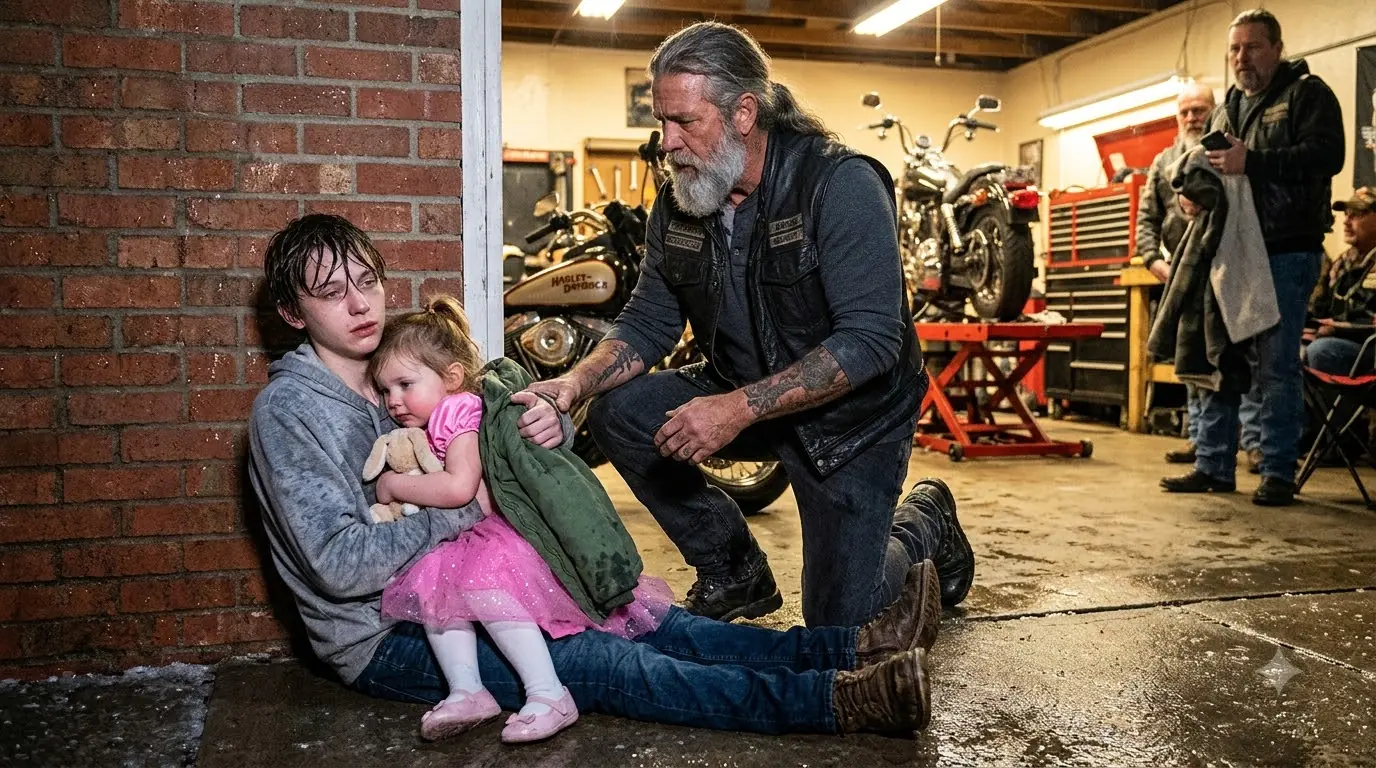
By nine, northeastern Oklahoma had become a gray-black world of frozen pavement, empty fields, wind, and headlights appearing only long enough to remind Noah that other people were going somewhere.
He was not.
For three weeks, Noah had measured his life in temporary places.
A church doorway.
A bus shelter.
An abandoned storage shed behind a grocery store.
Two nights beneath the awning of a closed tire shop.
Three nights inside an old utility building until somebody changed the lock.
He had no address.
No bedroom.
No kitchen table.
No person expecting him home.
So he counted steps.
It gave the walking a purpose.
One thousand steps to the convenience store where the clerk sometimes let him sweep in exchange for hot food.
Two thousand eight hundred to the public library.
Another twelve hundred to the industrial district.
Distances made sense.
People did not.
That Thursday, Noah had already walked farther than usual because a security guard had chased him from the loading dock where he planned to sleep.
He carried everything he owned in a faded backpack.
Two shirts.
Three pairs of socks.
A toothbrush.
A photograph of his mother.
A small pocketknife.
A cheap flashlight with weak batteries.
Seventeen dollars and forty cents.
And one heavy green jacket donated to him by a church volunteer six days earlier.
That jacket was probably the most valuable thing he owned.
Then Noah heard crying.
At first, he thought it was the wind pushing through roadside grass.
He kept walking.
The sound came again.
High.
Small.
Human.
Noah stopped.
Across the road, an SUV sat crooked near a drainage ditch with its hazard lights blinking weakly.
No other vehicle was nearby.
Noah stared.
The crying continued.
He crossed carefully.
His shoes slipped twice on the icy shoulder.
The driver’s door was open.
Nobody inside.
The rear door was half-open too.
Noah pointed his flashlight.
A tiny girl sat strapped into a child seat.
She wore a bright pink dress beneath a thin cardigan.
Her cheeks were red from cold.
Tears covered her face.
A stuffed rabbit was crushed against her chest.
Noah’s stomach dropped.
“Hey.”
The girl jerked toward his voice.
“No!”
“It’s okay.”
“No!”
Noah stopped several feet away.
He lifted both hands.
“I’m not touching you.”
The girl cried harder.
“I want Grandpa.”
Noah looked around.
“Where is he?”
She shook her head.
“Mommy.”
“Where’s your mom?”
Another shake.
Noah examined the vehicle.
Front end undamaged.
One rear tire flat.
Engine off.
No obvious crash.
A purse lay on the passenger seat.
Phone on the floor.
No adult.
That frightened him more than an accident would have.
He tried the phone.
Dead.
He checked the purse only enough to find identification.
SARAH BENNETT.
There was also an emergency card.
One side listed medical information for Molly Bennett, age three.
The other had three names.
Sarah Bennett.
Jack Bennett.
Under Jack’s number, someone had written:
GRANDPA — GRIZZLY’S REPAIR CLUBHOUSE
Below it was an address.
Noah knew the road.
He had passed it two days earlier.
Old repair garage.
Motorcycles outside.
Maybe five or six miles away.
He looked toward the darkness.
Then toward Molly.
“Where’s your mommy?”
The little girl’s lip trembled.
“She went to get help.”
“When?”
“I don’t know.”
Noah checked the roadside.
Maybe Sarah had walked toward the nearest service station.
Maybe she had slipped.
Maybe somebody picked her up.
He should call police.
There was no working phone.
He could leave Molly and find help.
He looked at her red cheeks.
No.
Not alone.
He opened the rear door another inch.
“My name’s Noah.”
She stared suspiciously.
“What’s yours?”
“Molly.”
“Okay, Molly.”
He pointed toward the emergency card.
“I think I know where your grandpa is.”
Her eyes widened.
“Grandpa Grizzly?”
Noah almost smiled.
“That is a very serious grandpa name.”
“He has motorcycles.”
“Of course he does.”
“And a beard.”
“Also expected.”
Molly sniffed.
Noah looked toward the road.
“Can you walk?”
She nodded.
Then shook her head.
“My feet hurt.”
Noah considered options.
He could wait beside the SUV.
But the temperature was falling.
The car would provide some shelter, yet no heat.
The road was nearly empty.
If Sarah returned, she would panic when Molly was gone.
If she did not return, the girl could remain there for hours.
Noah searched the purse again.
He found a pen.
Then tore a piece from an old receipt.
He wrote slowly:
MOLLY IS SAFE. TAKING HER TO JACK BENNETT AT GRIZZLY’S REPAIR CLUBHOUSE. 9:31 PM. NOAH.
He placed the note on the driver’s seat.
Then he looked at Molly.
“I’m going to get you to Grandpa.”
She stared at him.
“You promise?”
Noah hated promises.
Adults had made too many around him.
His father promised he would stop drinking.
His aunt promised Noah could stay as long as he needed.
A caseworker once promised they would find a stable arrangement.
Noah had learned promises were usually emotional sentences spoken before reality arrived.
So he answered differently.
“I’m going to try as hard as I can.”
Molly thought about it.
Then nodded.
That was apparently enough.
Noah removed his green jacket.
Molly watched.
“What are you doing?”
“You’re cold.”
“So are you.”
“I’m bigger.”
That logic satisfied her.
He wrapped the jacket around her.
It nearly swallowed the pink dress.
Noah released the child-seat straps.
Molly immediately wrapped both arms around his neck.
He froze.
He had not expected trust that quickly.
She was lighter than he thought.
But six miles was six miles.
He lifted her.
“Ready?”
Molly rested her cheek against his shoulder.
“Grandpa has hot chocolate.”
Noah started toward the road.
“Best information I’ve heard all day.”
At the same moment, forty-three-year-old Sarah Bennett woke in the back of an ambulance.
The first thing she said was not her own name.
“Molly.”
The paramedic leaned closer.
“Ma’am?”
“My daughter.”
Sarah tried sitting up.
Pain exploded through her ankle.
She gasped.
“Stay down.”
“My daughter is in the car.”
The paramedic’s expression changed.
“What car?”
“Highway.”
“Flat tire.”
“I went for help.”
Sarah began breathing too fast.
“I slipped.”
Memory returned in fragments.
Walking along the shoulder.
Sleet hitting her face.
A pickup slowing.
Trying to wave.
Then nothing.
Apparently she had fallen on black ice near an intersection and struck her head.
A driver found her unconscious.
Nobody knew about Molly.
Sarah grabbed the paramedic’s sleeve.
“She’s three.”
The ambulance radio came alive immediately.
Within minutes, county deputies were heading toward the SUV.
Sarah called her father.
No answer.
Again.
Still no answer.
“Please.”
She whispered to the phone.
“Dad.”
Jack Bennett was not ignoring his daughter.
He was standing beneath a motorcycle lift with a wrench in one hand when Sarah called the first time.
Music played from an old radio.
Rain and sleet hammered the metal roof.
Around him, eleven riders were scattered through the clubhouse repair garage.
Thursday nights were informal maintenance nights.
Someone repaired a clutch.
Someone else argued about tires.
Coffee sat beside toolboxes.
Jack’s phone vibrated inside his vest.
He did not feel it.
People called him Grizzly because he was enormous and because somebody once watched him wake from a roadside nap and claimed the resemblance was undeniable.
Fifty-six.
Long salt-and-pepper hair tied back.
Thick gray beard.
Heavy shoulders.
Tattooed forearms.
A face children sometimes feared until he smiled.
He was tightening the final bolt when his friend Marcus “Doc” Hale called across the garage.
“Jack.”
“What?”
“Your phone’s lighting up.”
Jack wiped his hands.
He checked.
Sarah.
Four missed calls.
His stomach tightened.
Sarah rarely called twice.
Never four times.
He returned the call.
A paramedic answered.
“Is this Jack Bennett?”
Every man in the garage heard the change in Jack’s breathing.
“Yes.”
“My name is Travis. I’m with Rogers County EMS. Your daughter Sarah Bennett is conscious and stable, but—”
“Where’s Molly?”
The paramedic paused.
That pause terrified Jack.
“We’ve notified deputies.”
Jack’s voice became hard.
“Where is my granddaughter?”
“Sarah says Molly was left secured in their disabled vehicle while she went for help. Officers are heading there now.”
Jack grabbed his jacket.
Doc stood.
“What happened?”
Jack was already moving.
“Molly.”
Every chair scraped backward.
By 9:54, deputies found Sarah’s SUV.
Empty child seat.
Green jacket fibers where Molly had been sitting.
No child.
No sign of forced entry.
Then one deputy found Noah’s note.
The information went over the radio.
Child reportedly being taken to Jack Bennett at Grizzly’s Repair Clubhouse by individual identifying himself as Noah.
Jack received the call while riders were pulling motorcycles and trucks out of the garage.
He stopped.
“Who the hell is Noah?”
Nobody knew.
A stranger had taken Molly.
Maybe rescued.
Maybe kidnapped.
Jack’s mind immediately produced every terrible possibility.
Doc grabbed his shoulder.
“Read the note again.”
Jack did.
Molly is safe.
Taking her to Jack Bennett.
Time included.
Name included.
“He left his name.”
Doc said.
“Kidnapper probably doesn’t leave directions.”
“Probably?”
“Jack.”
Jack looked toward the storm.
The clubhouse sat nearly six miles from where the SUV had been found.
Whoever Noah was, if he was walking—
Jack turned toward everyone.
“Roads.”
Engines started.
Trucks too.
No chaos.
People divided routes.
Some searched toward the highway.
Others checked gas stations.
Another group headed toward the hospital in case someone brought Molly there.
Jack remained at the clubhouse only because deputies told him the note indicated that was Molly’s destination.
Waiting nearly destroyed him.
Noah made the first mile in twenty-one minutes.
The second took thirty.
Molly grew quieter.
That scared him.
“You awake?”
“Yes.”
“What color’s your rabbit?”
“Brown.”
“Name?”
“Mr. Hop.”
“Terrible name.”
Molly lifted her head.
“No.”
“Pretty terrible.”
“He likes it.”
“How do you know?”
“He told me.”
Noah nodded.
“Can’t argue with that.”
He kept talking because silence made him imagine she was getting too cold.
Molly asked where Noah’s house was.
He told her:
“Not close.”
That was technically true.
“Do you have a mommy?”
The question hurt.
Noah looked toward the white line beneath his feet.
“She died.”
Molly became very quiet.
Then her tiny hand touched the side of his neck.
“My daddy died.”
Noah slowed.
“I’m sorry.”
“Mom says he’s in heaven.”
Noah said nothing.
Molly rested her head back against him.
“Maybe they know each other.”
Noah swallowed.
“Maybe.”
He did not believe much about heaven.
But he wanted that one to be true.
At mile three, Noah fell.
His right foot slipped.
He turned instinctively so Molly would land on top of him.
His shoulder hit the pavement.
Pain shot down his arm.
Molly screamed.
Noah immediately sat up.
“You okay?”
She nodded.
“Are you?”
“Yep.”
He was not.
Blood appeared through his wet hoodie at the elbow.
Molly saw it.
“You’re hurt.”
“Scratch.”
She touched his face.
“You’re cold.”
“Little.”
“Take your jacket.”
“No.”
“I can walk.”
Noah looked at her tiny pink shoes.
The sleet had become harder.
“Nope.”
“I’m big.”
“You’re three.”
“I’m almost four.”
“Still not convincing.”
Molly frowned.
Noah smiled.
“Come on.”
He lifted her again.
His arms hurt now.
His back too.
But children had a strange ability to become heavier every mile.
At mile four, he stopped beneath a tree.
Terrible shelter.
But enough to rest.
Molly looked at him.
“Are we lost?”
“No.”
“You sure?”