The fence had been standing before Kate Pryor was born.
It had been standing before her mother, Lena, was born.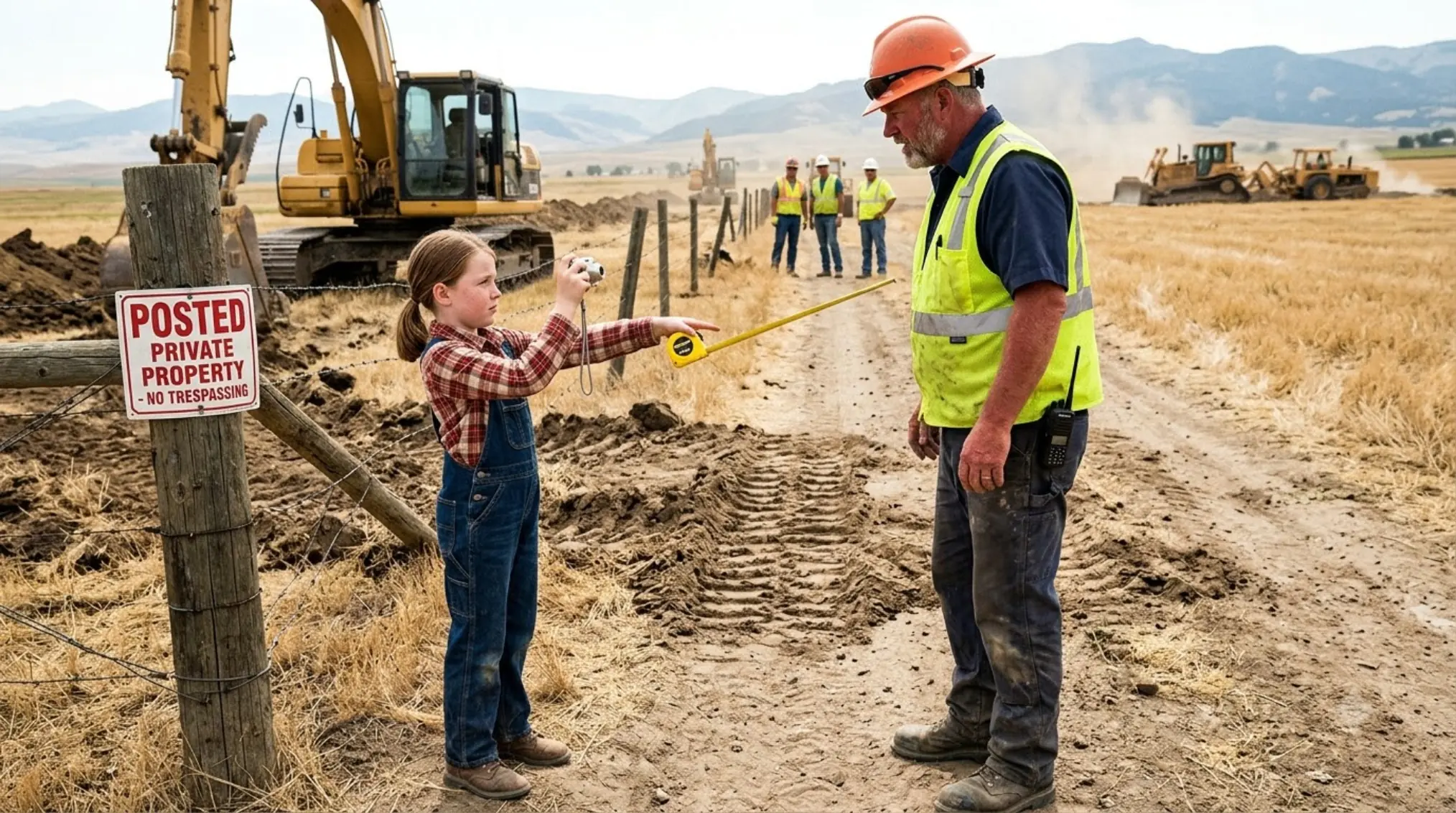
And according to the stories told around the Pryor kitchen table, it had been standing long enough that nobody in the family remembered the eastern pasture without it.
Sixty-three lodgepole pine posts stretched across the rocky edge of their 280-acre cattle farm in Carbon County, Montana. Three strands of barbed wire connected those posts from the northern corner down toward the seasonal creek, where the fence eventually met an old wooden gate with a spring latch that snapped shut with a clean metallic click.
Kate loved that sound.
Her great-grandmother, Maryanne Pryor, had built the fence in 1968.
She had dug and driven every post herself, setting each one deep into the stubborn Montana soil and tamping gravel around the base with a coffee can. She had stretched the wire by hand. She had repaired it through winters, droughts, and spring runoff.
By the summer of 2012, the wood had faded gray and silver beneath decades of sun.
But the fence was still there.
And everyone in the Pryor family knew exactly what it meant.
This side was theirs.
That side belonged to someone else.
Kate was nine years old when a company called Consolidated Basin Resources purchased more than 3,000 acres adjoining the Pryor property.
Nobody in the family had objected to the sale.
The land was not theirs.
The company had every right to buy it.
CBR planned to build a natural gas transmission pipeline across its new acreage. Trucks began appearing on rural roads that had previously carried mostly cattle trailers, hay wagons, and pickups. Survey crews walked through distant fields wearing reflective vests. Orange markers appeared along the proposed corridor.
Then the heavy equipment arrived.
Bulldozers.
Trenchers.
Tracked excavators.
White company pickups with radios mounted inside.
Kate found the machinery fascinating from a distance.
Her mother did not.
Lena had attended county planning meetings and studied the public documents connected to the project. She knew where the pipeline corridor was supposed to run.
Forty feet inside the company’s property.
That number mattered.
Forty feet.
It meant the construction crews should never need to touch the Pryor fence.
For several weeks, they did not.
Then came Tuesday morning.
Kate was sitting on the top rail of the cattle corral, swinging one dusty boot while watching a pair of calves circle a water trough.
The June sky was enormous and blue.
A red tractor sat farther across the property.
Somewhere beyond the eastern field, diesel engines growled.
Kate had grown used to the sound.
She almost ignored it.
Then something changed.
A yellow excavator appeared near the fence.
Not beside it.
Not approaching it.
Coming through it.
Kate stopped swinging her boots.
The tracked machine pushed forward.
Barbed wire bent.
Post 17 snapped near the ground.
Another post tilted violently as the wire pulled tight.
Then the excavator rolled directly onto Pryor land.
Kate stared.
For approximately five seconds, she did nothing.
Then she jumped from the rail.
She ran toward the house.
“Mom!”
Lena stepped from the mudroom.
“What happened?”
“They came through the fence.”
Lena froze.
“What?”
“The big excavator.”
Kate pointed.
“It broke the fence.”
Lena moved toward the door.
Kate moved faster.
She grabbed the small digital camera from the kitchen counter.
Then she opened the mudroom toolbox and pulled out a yellow measuring tape.
Lena watched her.
“What are you doing?”
Kate looked toward the eastern field.
“Documenting it.”
Lena said nothing for a moment.
Kate had heard that word before.
Documenting.
Maryanne had used it.
Lena had used it after a leaking section of barn roof caused water damage the previous winter. An insurance inspector had come out, placed a ruler beside damaged boards, and photographed everything.
Kate had asked him why the ruler needed to be visible.
The inspector had smiled.
“Because a photograph without a measurement is just a picture.”
Kate remembered that.
Now she ran toward the fence.
Post 17 lay cracked.
Kate photographed it from one side.
Then another.
Then from directly above the broken base.
She pulled out the measuring tape.
The excavator track closest to the post began several feet inside the Pryor side.
Kate stretched the tape from the post toward the mark.
She photographed the measurement.
Then she opened the little notebook she carried around the farm.
Post 17.
Cracked at base.
Track marks.
She wrote down the distance.
Then she moved to post 18.
The wire had pulled it partly from the ground.
Photograph.
Measurement.
Notebook.
Post 19.
Bent.
Photograph.
Measurement.
Notebook.
Behind her, Lena had reached the field.
She did not interrupt.
Her daughter was working.
And Kate worked with such concentration that for a moment she seemed unaware that the enormous excavator sat less than a hundred feet away.
She examined the ground.
She examined the wire.
She photographed deep track patterns.
Then a white pickup approached.
It stopped near the damaged section.
The driver's door opened.
A large man climbed out.
Keith Sorley was the field supervisor for Consolidated Basin Resources.
He wore work boots, a company polo beneath a reflective safety vest, and a radio clipped to his belt.
He looked first at the damaged fence.
Then at the excavator.
Then at Kate.
The sight clearly confused him.
A nine-year-old girl in denim overalls was standing beside a broken fence post with a camera in one hand and a measuring tape in the other.
“What are you doing?” Sorley asked.
Kate looked up.
“Documenting the damage.”
Sorley stared at her.
He looked toward Lena, who remained several yards away.
Then back to Kate.
“Your fence was in the wrong place.”
Kate did not argue.
That surprised him.
She simply turned to post 20, extended the measuring tape and took another photograph.
Sorley stepped closer.
“I said the fence is in the wrong place.”
Kate wrote something in her notebook.
Then she looked at him.
“My great-grandmother built it in 1968.”
Sorley folded his arms.
“That doesn't make it the boundary.”
“We had it surveyed.”
“When?”
“2008.”
“By who?”
“Gil Haverford. From Billings.”
Sorley's expression changed slightly.
Kate raised the camera again.
Click.
Another photograph.
“Stay on your side of the line,” Sorley told her.
Kate looked down at her boots.
Then at the remaining fence posts.
“I am.”
Sorley's jaw tightened.
“This company purchased this property.”
Kate pointed toward the other side of the fence.
“You bought that property.”
Then she pointed down.
“This is ours.”
Lena finally stepped forward.
She had heard enough.
“How did your machine get across the boundary?”
Sorley turned toward her.
“Our field engineer staked the construction route.”
“And where did your engineer put the boundary?”
“About twenty feet west of this fence.”
Lena glanced at Kate.
Kate's eyes widened.
Lena had seen that expression before.
It meant her daughter had just heard something she intended to remember.
“Do you have a survey showing that?” Lena asked.
Sorley shifted his weight.
“Our field data is company information.”
Lena turned toward the house.
“I have a certified survey.”
Sorley said nothing.
Kate photographed another track mark.
Lena went inside.
The certified plat was exactly where she had left it, inside the kitchen file cabinet with deeds, tax records, grazing agreements, insurance documents, and decades of family paperwork.
She called their attorney before returning outside.
Carter Vane answered on the second ring.
He was a general practice lawyer in Red Lodge who had handled legal work for the family before.
Lena explained what had happened.
“Is the equipment still there?” Carter asked.
“Yes.”
“Did you photograph it?”
“Kate is photographing everything.”
There was silence.
“Kate?”
“My daughter.”
“How old is she now?”
“Nine.”
Another pause.
“What exactly is she photographing?”
“The broken posts. Tracks. Measurements.”
Carter's voice changed.
More focused.
“Tell her not to stop.”
Lena looked through the kitchen window.
Kate was kneeling beside another damaged fence post.
“She isn't stopping.”
“Make sure the camera date and time are correct.”
“She checks the clock herself.”
Carter paused again.
“Your nine-year-old checks the camera clock?”
“Every morning she uses it.”
“Good. Photograph every damaged post. Every track. Company markings. Equipment location. Anything showing where the machine came from and where it went.”
Lena picked up the 2008 survey.
“Anything else?”
“Ask the supervisor how they determined the boundary. Ask in front of Kate. Write down his answer immediately afterward.”