Sophia Lauron stood in front of her floor-to-ceiling windows, staring down at the city lights twenty stories below, and seriously considered faking food poisoning.
Not mild food poisoning.
Something dramatic.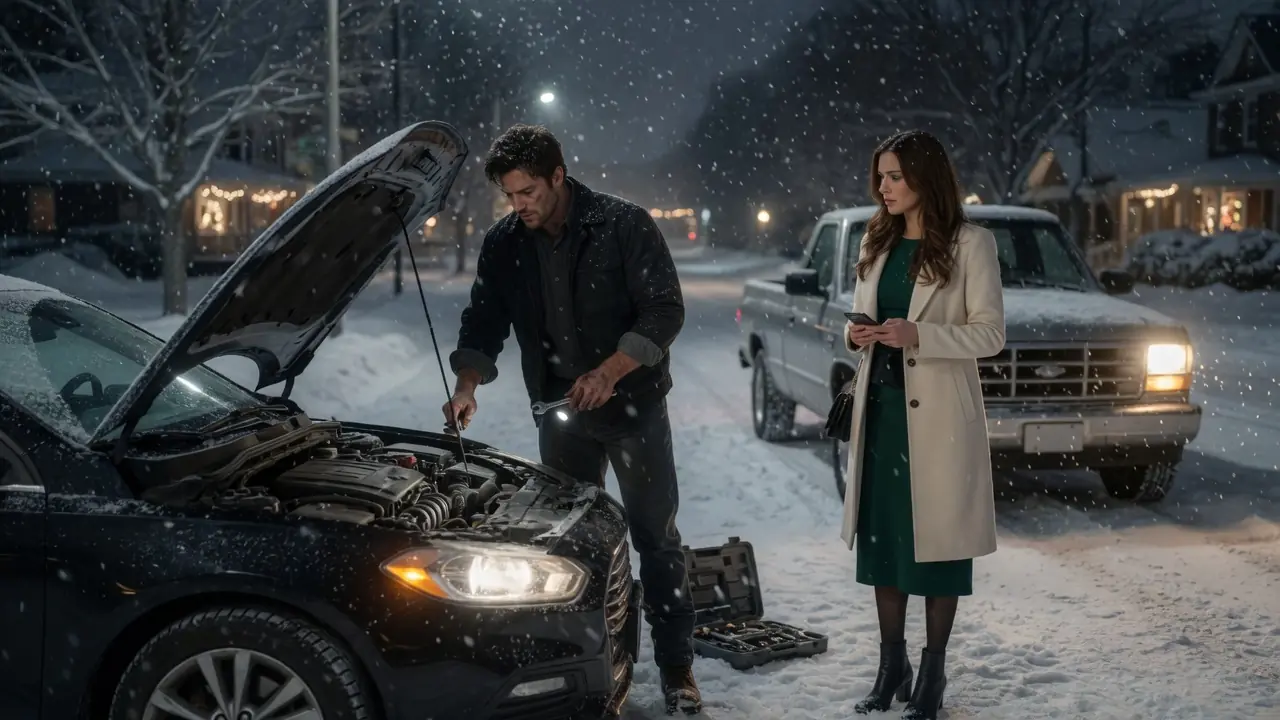
Something that involved a believable text to her best friend, a tragic inability to leave the apartment, and maybe one carefully staged groan over the phone for good measure.
Because honestly, the last thing Sophia needed right now was a blind date.
The last thing she needed was to sit across from some stranger in a cozy café, wearing a dress she had selected purely because Mia said it made her look “less like an exhausted CEO and more like a woman who remembered sleep existed,” while her entire company sat three months away from a very expensive collapse.
Her phone buzzed again on the glass coffee table.
Another email.
Another investor update.
Another polite corporate sentence that meant we are losing patience with you.
Sophia did not even need to open it.
She already knew the tone. She had read enough of them over the last two weeks to recognize pressure disguised as professionalism.
She turned from the window and stared at the phone as it buzzed again.
For half a second, she imagined throwing it out the window.
A clean, beautiful arc into the winter night.
Twenty stories down.
No more emails.
No more board pressure.
No more questions about expansion timelines, investor confidence, liquidity, retail growth, payroll obligations, and whether Lauron & Co. could survive another year without a flagship location.
Then she remembered the phone cost eight hundred dollars.
And she was very close to being broke.
Not personal-bank-account broke, exactly.
That would take longer.
But company broke.
The kind of broke that came with employees, lawyers, vendor contracts, warehouse leases, investor meetings, and two hundred people who would wake up unemployed if Sophia failed to solve one impossible problem before January 15.
So no.
Throwing the phone out the window was not the best financial decision.
She picked it up instead.
The latest email subject line made her stomach tighten.
Re: Market Street Expansion — Immediate Confirmation Needed
Sophia locked the screen without reading it.
She knew what they wanted.
Everyone wanted Market Street.
The investors wanted it because the location was perfect. Her business partner Marcus wanted it because the numbers worked. The board wanted it because retail analysts loved the corridor. The real estate team wanted it because the owner had been approached, pressured, and nearly cornered into selling.
And Sophia needed it because Lauron & Co., the fashion company she had built from nothing, was standing at the edge of a cliff.
Two years earlier, she had been on magazine covers.
“Fashion’s New Powerhouse.”
“The Young Founder Reshaping American Luxury.”
“The Woman Who Made Sustainable Design Profitable.”
It had been flattering.
Dangerous, too.
Praise made people think success was solid.
It was not.
Success was often a beautiful glass room built on deadlines, loans, investor patience, supply chain timing, and the constant terror that one wrong quarter would turn admiration into doubt.
Lauron & Co. had started in Sophia’s tiny apartment ten years earlier with a sewing machine, a folding table, and a stubborn belief that clothing could be elegant without being wasteful. She built the company slowly at first. Online orders. Small pop-ups. Local boutiques. Then influencers discovered her structured coats and tailored dresses. Then buyers called. Then investors came.
Money arrived.
So did expectations.
Expansion had looked easy from the outside.
Inside, it was a daily battle.
A factory delay in Portland. A fabric supplier in Italy requiring upfront payment. A retail partner backing out of a spring commitment. Rising shipping costs. A failed West Coast pop-up that burned through more cash than anyone admitted at first.
Now the company needed a flagship store.
Not wanted.
Needed.
A visible location. A statement. A place that could reassure investors and customers that Lauron & Co. was still growing, still relevant, still worthy of belief.
Market Street was the only property that worked.
There was just one problem.
Sophia did not yet know it would become the biggest problem of her life.
Her apartment door burst open without a knock.
“Mia,” Sophia said without turning. “One day, I’m going to change the locks.”
“No, you’re not,” Mia declared, sweeping into the room with the confidence of someone who had known Sophia since college and therefore considered all boundaries decorative. “Because then who would come in and save you from yourself?”
Sophia turned.
Mia Russo stood in the doorway wearing a red coat, snowflakes melting in her dark hair, one hand on her hip and the other holding a garment bag like a weapon.
She took one look at Sophia’s face and groaned.
“Oh, no. Absolutely not.”
Sophia blinked innocently.
“What?”
“You are not backing out.”
“I did not say anything.”
“You don’t have to. Your face is wearing a whole speech called ‘Mia, I’m too busy to experience human connection.’”
Sophia crossed her arms.
“My company is dying.”
“Your company is not dying. It is being dramatic.”
“My investors want an answer by January 15. If we don’t secure the flagship location, they may pull funding. If they pull funding, I can’t guarantee payroll through spring. If I can’t guarantee payroll, two hundred people lose their jobs.”
Mia’s expression softened, but only slightly.
“I know.”
Sophia’s throat tightened.
“I built this company from a sewing machine in a bedroom. I know every employee’s name. I know who just had a baby. I know whose father is in the hospital. I know who needs health insurance to keep their kid’s therapy covered. This isn’t just numbers, Mia.”
“I know,” Mia repeated, stepping closer.
“Then why are you dragging me to a blind date?”
“Because you have not had dinner with someone who didn’t ask about gross margins in almost a year.”
“That’s not true.”
Mia stared.
Sophia looked away.
“Fine. Eight months.”
“Your last romantic interaction was when a barista wrote a smiley face on your receipt and you said, ‘Thank you for the stakeholder engagement.’”
“I was tired.”
“You need help.”
“I need a retail location.”
“You need both.”
Sophia laughed without humor and walked toward the mirror.
She wore a black designer dress from her own line, fitted but not severe, the kind of piece fashion editors described as “effortless” after a team of six people spent months making it look that way. Her blonde hair was pinned into a low knot. Her makeup was flawless.
She looked like a woman in control.
A complete lie.
Mia stood behind her in the mirror.
“Listen to me. One dinner. His name is Jake. He’s thirty-five. He’s a mechanic. He’s a widower. He has a little girl. He is kind, stable, and according to his sister, not secretly weird.”
“According to his sister?”
“Emma is very trustworthy.”
“You found me a date through someone named Emma?”
“Emma found you through me. Mutual friend chain. Very old-fashioned. Very charming.”
Sophia closed her eyes.
“A mechanic.”
Mia’s brows lifted.
“Do not say that like you are above mechanics. Your car makes a noise every time you turn left.”
“My car is fine.”
“Your car sounds haunted.”
Sophia’s phone buzzed again.
She glanced at it.
Mia snatched it from the table.
“No.”
“Mia.”
“No. Tonight you are not Sophia Lauron, CEO of a company having an existential crisis. Tonight you are Sophia, a woman going on a Christmas Eve blind date at Evergreen Café.”
“It’s not Christmas Eve.”
“It’s December twenty-third. Emotionally, close enough.”
Sophia exhaled.
“I really don’t think I can do this.”
Mia stepped closer and placed both hands on her shoulders.
“That is exactly why you should.”
Sophia looked at her reflection.
The woman staring back looked polished, expensive, untouchable.
Inside, she felt one email away from breaking.
“Fine,” she said.
Mia smiled.
“One date.”
“One date,” Sophia agreed. “If he is terrible, I am never speaking to you again.”
“If he is terrible, I will personally buy you apology wine.”
“And if he is nice?”
Mia’s expression softened.
“Then maybe you remember you’re still allowed to want something for yourself.”
Across town, in a cramped apartment above Morrison’s Garage, Jake Morrison was having the same argument in a completely different tax bracket.
His sister Emma was on FaceTime, propped against a jar of peanut butter on the kitchen counter, while his six-year-old daughter Lily physically blocked the front door with the seriousness of someone defending a kingdom.
“Daddy,” Lily said, hands on her hips, “you promised Aunt Emma you would go. Morrisons do not break promises.”
Jake adjusted his tie for the fifth time.
The tie was navy blue. It was the only tie he owned. He wore it to weddings, funerals, and occasionally to meetings with bank officers who looked at his garage numbers with expressions of polite concern.
It felt like it was trying to kill him.
“I know I promised, Pumpkin. But this really isn’t a good night.”
Emma’s voice came through the phone speaker.
“You haven’t had a good night for dating in four years, Jake. That excuse expired.”
“I run a garage.”
“Yes.”
“I have inventory to check.”
“Inventory can wait.”
“The water heater is making that noise again.”
“You are not dating the water heater.”
Lily nodded.
“Also, I helped Aunt Emma pick her.”
Jake froze.
“You what?”
Emma suddenly looked very interested in the ceiling.
“Emma.”
“She saw the profile.”
“You let my six-year-old choose my blind date?”
Lily raised one finger.
“I have excellent taste.”
Jake looked from his daughter to the phone.
“This family has lost its mind.”
Emma grinned.
“She said Sophia looked like a fashion princess and that you needed someone who wore pretty coats.”
“I do like pretty coats,” Lily added.
“That is not a dating criterion.”
“It should be,” Emma said.
Jake sighed.
The apartment was small but warm. It smelled like motor oil rising faintly from the garage below, cinnamon cookies Lily and Emma had baked earlier, and the pine candle Sarah used to buy every December. A half-decorated Christmas tree stood near the window, leaning slightly left because Lily insisted it had “personality.”
Photos of Sarah sat on the bookshelf.
Sarah laughing with flour on her cheek.
Sarah holding newborn Lily.
Sarah and Jake in front of the garage the day they signed the loan papers.
Four years gone, and sometimes her absence still entered a room before he did.
Jake had loved Sarah in the uncomplicated way young men love before loss teaches them to be afraid of happiness. They had married at twenty-five, bought the garage at twenty-eight, and spent two years rebuilding it into something real.
Then came the aneurysm.
Sudden.
Cruel.
No warning.
Lily had been two.
Jake’s life split into before and after.
Before, Morrison’s Garage was a dream he shared with his wife.
After, it became a promise he kept because she was no longer there to keep it with him.
“Daddy,” Lily said softly, breaking through his thoughts, “Mommy would want you to go.”
The room went still.
Emma’s face softened on the phone.
Jake looked at his daughter.
Lily was wearing reindeer pajamas and sparkly socks. Her brown curls were tied into two uneven pigtails because Jake still had not mastered symmetry. Her missing front tooth made her look younger than six and somehow wiser.
“You think so?”
Lily nodded.
“Aunt Emma said Mommy liked when people were happy.”
Jake closed his eyes briefly.
Emma muttered, “That was private aunt-niece wisdom, but okay.”
Lily continued.
“And I want you to have someone to smile at besides customers and me.”
Jake’s chest tightened.
“I smile at you all the time.”
“Yes, but you are supposed to. I am delightful.”
Despite himself, he laughed.
“There it is.”
Lily stepped aside from the door.
“You can go now.”
“Thank you for granting permission.”
“But you have to tell me if she is nice.”
“I will.”
“And if she likes fashion.”
“Also that.”
“And if she wants to see my drawings.”
Jake picked up his jacket.
“Slow down, Cupid.”
Emma leaned toward the camera.
“Jake.”
He paused.
“What?”
“Go in open.”
He looked at her.
His sister rarely used that tone. The one that sounded less like teasing and more like grief speaking gently.
“I’m trying.”
“I know. Try a little harder.”
Twenty minutes later, Sophia’s car made a sound no car should ever make.
It was somewhere between a dying cat, a garbage disposal, and an expensive machine deciding it had endured enough emotional instability for one night.
The dashboard flashed.
The steering stiffened.
The engine coughed once.
Then the car gave up on life entirely.
Sophia guided it to the side of a dark road three miles from Evergreen Café and sat there gripping the wheel, watching snow begin to fall.
“This is a sign,” she said out loud.
The car did not respond.
She checked the time.
7:05.
She was already late.
Mia was going to be unbearable.
Sophia called roadside assistance and received the wonderful news that wait times were unusually long because apparently everyone’s car had chosen the same winter evening to develop a personal crisis.
“Two hours?” she repeated.
The dispatcher apologized in the flat tone of someone who had already apologized too much that day.
Sophia hung up and texted Mia.
Car died. Universe has spoken. Going home if I survive.
Mia replied almost instantly.
NO. CALL AN UBER. DON’T YOU DARE BAIL.
Sophia typed back.
I am stranded in snow. Have some compassion.
I have compassion. I also have your pattern recognition. You prayed for a loophole and your car sacrificed itself. Call Uber.
Sophia stared at the screen.
Then headlights appeared behind her.
An older pickup pulled onto the shoulder.
Her first thought was, This is how every cautionary tale begins.
Woman alone.
Dark road.
Snow.
Stranger in truck.
She locked the doors.
A man got out of the pickup and walked toward her with his hands visible, deliberately slowing his pace as he approached the window.
He looked mid-thirties, tall, dark-haired, wearing a black jacket over a button-down shirt and a tie that seemed to be bothering him greatly. Snow collected on his shoulders. His face was tired but kind.
He stopped a few feet from the window.
“Ma’am, you okay? Car trouble?”
His voice was rough around the edges, but gentle.
Sophia lowered the window halfway.
“Yes. It just died.”
“Did you call for help?”
“Two-hour wait.”
He winced.
“Yeah, that sounds about right tonight.”
She studied him.
“You know cars?”
“A little.” He smiled. “I own Morrison’s Garage.”
A mechanic.
Of course.
Mia would call this fate and become impossible.
“Would you mind if I looked?” he asked. “No pressure. I know it’s late, and I know I’m a stranger. I just hate leaving somebody stuck in snow if I can help.”
Sophia hesitated.
Then her car made another sad clicking sound.
“Please,” she said.
He nodded, stepped back, and waited for her to pop the hood.
She got out, wrapping her coat tightly around herself. Snowflakes landed on her hair and melted instantly.
The mechanic leaned under the hood with a small flashlight from his keychain. His hands moved confidently, checking connections, belts, battery terminals.
Sophia watched from a careful distance.
“What’s your name?” she asked.
“Jake.”
He looked up.
“And you?”
“Sophia.”
“Nice to meet you, Sophia. Sorry it’s under mechanical tragedy.”
Despite herself, she smiled.
“It is very on-brand for today.”
“That bad?”
“You have no idea.”
He returned to the engine.
Within a minute, he nodded.
“Alternator’s shot.”
“That sounds expensive.”
“It’s not cheap, but it’s fixable. I can patch the connection enough to get you a few miles, but I wouldn’t trust it beyond that. Where were you headed?”
“Evergreen Café on Maple Street.”
Jake froze.
Just for half a second.
Then he laughed.
Not politely.
Fully.
Sophia blinked.
“What?”
“That’s where I’m headed.”
“Seriously?”
“Blind date.”
Sophia stared at him.
Something fluttered in her chest.
No.
No way.
“What time?”
“Seven.”
Sophia’s mouth opened.
Then closed.
“What’s your date’s name?”
Jake shrugged as he adjusted something near the battery.
“Sophia. My sister didn’t show me a picture. Just told me not to screw it up.”
The snow seemed to pause.
Sophia stared at him.
“I’m Sophia.”
Jake slowly looked up from the engine.
His face changed.
“Lauron?”
“Yes.”
He looked at the car.
Then at her.
Then at the road.
Then he started laughing again, this time harder.
“You’re kidding.”
“I wish I were.”
“You’re my blind date.”
“And you’re fixing my car.”
“Technically, I’m making sure my blind date can arrive late to our blind date.”
Sophia covered her face with one gloved hand.
“This is absurd.”
“It’s memorable.”
“It is humiliating.”
“It’s also efficient. We’ve already covered car trouble and names.”
Sophia laughed.
A real laugh.
The first one all week.
Jake grinned and went back to work.
For fifteen minutes, they stood beside the open hood while snow fell around them. He worked quickly, patching the connection enough to get the car moving again. She held the flashlight when he asked. Their conversation was strangely easy.
He told her about his daughter.
Lily, six years old, obsessed with fashion design despite having a father who owned exactly one tie and considered “clean jeans” formalwear.
Sophia told him about her company, though lightly at first.
Fashion, she said.
Design.
Too much work.
Not enough sleep.
He listened without trying to sound impressed.
That impressed her more than if he had.
When the engine finally started, Sophia clapped once in relief.
Jake closed the hood.
“That’ll get you to Evergreen. Don’t drive it home tonight if you can avoid it.”
“What do I owe you?”
“Nothing.”
“Jake.”
“You can buy me coffee.”
“That was already part of the date.”
“Then we’re even.”
She looked at him through the snow.
“You always stop for strangers?”
“When I can.”
“Why?”
He wiped his hands on a rag.
“My dad used to say, ‘If someone is stuck and you have tools, you don’t keep driving.’”
Sophia felt that sentence land somewhere she was not prepared for.
They drove to Evergreen Café one behind the other, his pickup leading, her patched-together car following close enough that she felt oddly protected by his taillights.
Evergreen Café glowed at the corner of Maple Street, warm and golden behind frosted windows. Strings of white lights framed the door. A small Christmas tree stood inside near the counter. It looked like the kind of place where people ordered cinnamon lattes and believed in second chances.
Jake parked first.
Sophia pulled in beside him.
They got out at the same time.
He held the door open for her.
Inside, heat wrapped around them.
The owner, Harper, looked up from the hostess stand, saw Jake, then Sophia, and her face transformed into a grin so wide it was almost indecent.
“Jake Morrison?”
Jake lifted a hand.
“That’s me.”
“Your date just arrived. Sophia Lauron.”
Sophia raised her eyebrows.
Jake turned toward her.
“You’re Sophia.”
“You’re Jake.”
“The blind date.”
They said it at the same time.
Then both burst into laughter.
Harper leaned on the stand.
“Well, looks like you two already broke the ice and fixed the alternator. Your table is ready.”
They sat in a corner booth beneath a garland threaded with tiny lights.
For a few seconds, they just looked at each other.
Then Sophia shook her head.
“You really didn’t know?”
“My sister said your name and that you were a fashion CEO. That was it.”
“Mia said you were a good dad and that I was not allowed to cancel.”
“Emma told me if I canceled, Lily would be disappointed in my character.”
“Your daughter has standards.”
“She does. Terrifying ones.”
Harper arrived with a coffee pot.
“Can I get you two started?”
“Coffee,” they said together.
They laughed again.
And something in Sophia loosened.
Not completely.
The company still existed. The investors still existed. January 15 still waited like a knife on the calendar.
But for the first time in weeks, she was not thinking about board emails.
She was thinking about the man across from her, his hands rough from work, his tie still slightly crooked, his smile genuine enough to make the room feel warmer.
Two hours disappeared like nothing.
Jake told stories about the strange things customers did to cars before finally bringing them to him.
A transmission held together with zip ties and chewing gum.
A muffler repaired with a soup can.
A man who had poured orange juice into his washer fluid reservoir because “it looked close enough.”
Sophia laughed so hard her ribs hurt.
“I’m sorry,” she said, wiping at her eyes. “Orange juice?”
“Pulp-free,” Jake said seriously. “He thought that helped.”
“It did not?”
“Shockingly, no.”
“What did you do?”
“Flushed the system. Charged him half price because he looked like he’d already been punished by life.”
Sophia studied him over her coffee.
“You do that a lot, don’t you?”
“What?”
“Help people even when it costs you.”
Jake shrugged.
“My dad used to say you can either be rich or sleep at night. I prefer sleeping.”
Sophia’s smile faded slightly.
She thought about the investor emails.
The Market Street property.
The building marked for demolition.
The clean, profitable plan sitting on her desk.
“What?” Jake asked.
“You make it sound easy.”
“It’s not.”
“But you still do it.”
“Most of the time.”
He leaned back.
“What about you? What’s it really like running a fashion company?”
She almost gave the polished answer.
The one from interviews.
Fast-paced. Challenging. Rewarding. Creative. Empowering.
Instead, she looked into her coffee and told the truth.
“Right now? It feels like watching something I built with my bare hands fall apart while everyone asks me for a growth strategy.”
Jake’s expression shifted immediately.
Not pity.
Attention.
“That bad?”
Sophia exhaled.
“We need a flagship location by January 15. Investors want proof we can expand. If we don’t secure it, they may pull funding. If they do, I don’t know if I can protect payroll.”
“How many people?”
“Two hundred.”
Jake went still.
“That’s a lot of lives.”
“Yes.”
“And the location?”
“Market Street.”
“Good area.”
“Perfect area. Which is part of the problem.”
She stopped.
She did not know why she stopped.
Maybe because Jake was listening too carefully. Maybe because part of her knew there were details she should not share on a first date. Maybe because speaking the plan aloud made it more real.
Jake did not push.
Instead, he reached across the table and gently touched her hand.
Only for a second.
Warm.
Steady.
“You seem like someone who figures things out.”
Sophia looked up.
“You barely know me.”
“I know you held a flashlight in snow without complaining and didn’t make me feel weird about my truck. That’s something.”
Despite herself, she smiled.
“You set a low bar.”
“I’m a mechanic. I appreciate functioning parts.”
Harper brought the check.
Sophia reached for it.
Jake got there first.
“No.”
“Jake.”
“You can get the next one.”
She raised an eyebrow.
“Confident there will be a next one?”
He smiled.
“I’m hoping.”
Outside, snow had thickened.
Sophia’s car wore a white coating over the hood. Jake eyed it with professional suspicion.
“That patch won’t last the night. I can fix it properly tomorrow.”
“Tomorrow is Christmas Eve.”
“I know.”
“You’re going to work on Christmas Eve?”
“Shop’s closed, but I’ll be downstairs doing paperwork anyway. Lily wakes up at five on Christmas morning, so Christmas Eve afternoon is just the calm before glitter warfare.”
Sophia hesitated.
“Could I meet her?”
The words escaped before she thought them through.
Jake looked surprised.
“Lily?”
“Only if that’s okay. You mentioned she likes fashion, and I have some things I could bring. But if it’s too soon or weird, forget I said anything.”
Jake’s smile turned soft in a way that made Sophia’s chest ache.
“Tomorrow around two?”
“Yes.”
“Fair warning. She may scream.”
“I work in fashion. I’ve heard editors yell.”
“No, this will be higher pitched.”
The next afternoon, Sophia stood outside the apartment above Morrison’s Garage holding a gift bag full of art supplies, fabric scraps, colored pencils, and a child-sized sketchbook.
She had changed three times before coming.
A blazer felt too formal.
A dress felt too much.
She finally chose jeans, boots, and a cream sweater, then spent ten minutes wondering why she was more nervous to meet a six-year-old than she had ever been to meet investors.
The stairwell smelled faintly of motor oil, sawdust, and cinnamon.
She knocked.
Jake opened the door.
His face lit when he saw her.
That look did something dangerous to Sophia.
Before either adult could speak, a tiny girl in reindeer pajamas shot past him like a missile.
She stopped in front of Sophia, stared up at her with enormous brown eyes, and gasped.
“Daddy,” Lily whispered, in the loudest whisper possible, “there is a princess at our door.”
Sophia laughed.
“Not a princess. Just Sophia.”
Lily’s mouth fell open.
“Sophia Lauron?”
Jake winced.
“She Googled.”
“Aunt Emma showed me,” Lily said proudly. “You make the blue coat from the magazine.”
“I did.”
Lily turned to Jake, scandalized.
“Daddy. You did not tell me she was famous-famous.”
“I tried to say she was a person before she was famous-famous.”
“That sounds like something grown-ups say.”
Sophia crouched.
“I brought you something.”
Lily accepted the gift bag like it contained treasure. When she pulled out the sketchbook and fabric scraps, she squealed so loudly Jake muttered, “Told you.”
The apartment was small but warm.
A Christmas tree leaned near the window, overloaded with handmade ornaments. A framed photograph of a dark-haired woman stood on a shelf with a candle beside it. There were children’s drawings on the fridge, folded laundry on a chair, and a coffee table that had clearly become a workshop for some ongoing craft project.
It did not look polished.
It looked loved.
Lily dragged Sophia to the rug and opened a shoebox full of drawings.
Dresses.
Coats.
Hats.
Shoes.
Some were wild and impossible. Some were surprisingly elegant. A few showed real understanding of shape and movement.
Sophia stopped pretending this was just cute.
“Lily,” she said, holding up a dress sketch with dramatic sleeves and a high collar, “this is genuinely good.”
Lily beamed.
“Really?”
“Really. Have you ever tried draping?”
“What is draping?”
Sophia looked around, spotted a clean sheet folded over the couch, and glanced at Jake.
“May I?”
Jake lifted both hands.
“I have no idea what’s happening, but yes.”
Sophia draped the sheet over a chair, showing Lily how fabric could change shape depending on where it was pinned, folded, or pulled. Within minutes, Lily was on the floor beside her, completely absorbed.
Jake stood in the kitchen doorway holding two mugs of hot chocolate.
He watched Sophia teach his daughter with patient enthusiasm, watched Lily lean close as if Sophia had opened a secret door in the universe, and felt something in his heart move for the first time in years.
Not the painful movement of grief.
Something warmer.
Something he did not trust yet.
“You’re good with her,” he said, handing Sophia a mug.
“She makes it easy.”
Lily climbed partly into Sophia’s lap to show her another drawing.
“Are you Daddy’s girlfriend?”
Sophia choked on her hot chocolate.
Jake turned bright red.
“Lily.”
“What? I asked politely.”
“You can’t just ask people that.”
“Why not?”
“Because we just met.”
Lily looked between them with brutal six-year-old clarity.
“But you like her. You smile different.”
Jake opened his mouth.
No sound came out.
Sophia laughed because the alternative was combusting.
Then Lily said, softer, “Daddy needs someone nice. He’s been sad since Mommy died, but he pretends he’s not.”
The room changed.
Jake’s expression closed.
Sophia saw it happen and immediately understood they had stepped into sacred ground without warning.
“I’m going to check your car,” Jake said, voice tight.
He disappeared downstairs before anyone could stop him.
Lily’s face fell.
“Did I make Daddy sad?”
Sophia set the mug down and pulled the little girl gently closer.
“No, sweetheart. Your daddy just misses your mommy.”
Lily nodded.
“I miss her too, but sometimes I forget pieces, and then I feel bad.”
Sophia’s throat tightened.
“Missing someone does not have to be perfect.”
Lily thought about that.
“Aunt Emma says Daddy needs someone new to love so he can be happy again.”
“Aunt Emma sounds very direct.”
“She is.”
Lily played with the sleeve of Sophia’s sweater.
“I think you are nice.”
Sophia smiled softly.
“I think you are nice too.”
Then Lily said, casually, as children often do before detonating adult lives, “Daddy’s worried about the garage.”
Sophia’s attention sharpened.
“Why?”
“Some fancy people want to buy our building. Daddy says we might have to move if the landlord sells it.”
Sophia went very still.
“What building?”
“This one.”
Lily pointed down.
“Morrison’s Garage. It’s on Market Street. The little mall place with the pizza shop and the dry cleaners. Daddy says Mommy helped him paint the sign.”
Something cold slid through Sophia’s body.
Market Street.
Pizza shop.
Dry cleaners.
Garage.
The property.
The acquisition file on her desk.
The building her real estate team planned to buy, clear out, demolish, and replace with the Lauron & Co. flagship store.
Sophia’s pulse roared in her ears.
No.
No.
Not Jake.
Not Lily.
Not this place with the crooked Christmas tree and Sarah’s photograph and a little girl’s fashion drawings on the floor.
Her phone buzzed.
A text from Marcus, her business partner.
Board meeting moved to Jan 10. Need final decision on Market Street ASAP. Investors pushing hard.
Sophia stared at the message until the letters blurred.
Jake came back upstairs wiping his hands on a rag.
“Bad news is the alternator needs replacing. Good news is I can get the part tomorrow morning.”
He looked up and saw her face.
“Sophia?”
She stood too quickly.
“I’m sorry. I just got a work emergency.”
Lily looked up.
“But we were making dresses.”
“I know, sweetheart. I’m so sorry.”
Jake set the rag down.
“What happened?”
Sophia could not tell him.
Not with Lily sitting there.
Not with Sarah’s photo on the shelf.
Not when she did not yet know whether she was about to become the woman who destroyed his life.
“I have to go.”
Jake’s expression shifted from concern to hurt so quickly she almost reached for him.
But she didn’t.
She left.
The snow outside was sharp against her face.
She sat in her car with both hands on the wheel and tried to breathe.
The garage sign hung below the apartment window.
Morrison’s Garage
Paint faded, but clean.
A string of Christmas lights ran along the frame.
Sophia thought of the acquisition presentation.
“Underutilized mixed-use parcel.”
“Tenant displacement risk manageable.”
“Current leaseholders below market value.”
“Demolition timeline feasible.”
That language had felt clean in the boardroom.
Now it had a child’s face.
A dead wife’s dream.
A man’s hands fixing her car in the snow.
She texted Marcus three words.
We can’t buy it.
He called immediately.
“What do you mean we can’t buy it?”
Sophia closed her eyes.
“The owner is someone I know.”
“You know the owner?”
“The tenant. Morrison’s Garage.”
“Sophia, the tenant is irrelevant to the acquisition.”
“No, Marcus. He is not irrelevant.”
Silence.
Then Marcus’s voice went colder.
“You met someone.”
“That is not the point.”
“It is absolutely the point if you are about to tank our expansion because of a guy.”
“He is a single father. That garage is his livelihood. His late wife helped build it.”
Marcus exhaled sharply.
“And what about our two hundred employees? What about their livelihoods? What about Mia in production? What about Hannah in logistics, whose husband just lost his job? What about all the people who trusted you to make hard decisions instead of romantic ones?”
Sophia pressed her forehead against the steering wheel.
He was right.
That was the worst part.
Marcus was right.
“I need time,” she said.
“We don’t have time.”
“I know.”
She hung up.
For three days, Sophia disappeared.
Not from work.
At work, she was everywhere.
Meetings. Calls. Emails. Legal reviews. Investor models. Site plans. Financing contingencies.
But from Jake, she vanished.
His texts came slowly at first.
Hey. Hope everything’s okay. Lily asked if your car survived.
Then:
No pressure, but she keeps asking when you’re coming back.
Then:
If I did something wrong, I’m sorry. I’d really like to see you again.
Sophia read each message and felt worse.
She drafted a dozen replies.
Deleted them all.
What could she say?
Sorry I left because my company is trying to demolish your garage.
Sorry your daughter showed me the exact address I was trying not to think of as human.
Sorry I may have to choose between your dream and two hundred jobs.
On the fourth day, Emma arrived at Sophia’s office.
She bypassed the receptionist with the focused determination of an older sister who had reached the end of politeness.
“I’m Jake’s sister,” she announced, walking into Sophia’s office without invitation. “And we need to talk.”
Sophia stood.
“I’m in the middle of something.”
“Good. So am I.”
Emma placed a folded paper on the desk.
“Lily wanted you to have this.”
Sophia did not touch it at first.
Emma’s voice softened, but her eyes stayed sharp.
“I don’t know what happened. Jake won’t tell me much because Jake has the emotional transparency of a brick wall with abandonment issues. But I know my brother has not smiled once since Christmas Eve, and Lily thinks she scared you away.”
Sophia flinched.
Emma noticed.
“That little girl has lost enough. If you were never serious, fine. You had one date. Walk away. But do not let a six-year-old think she ruined something because she said her daddy was sad.”
Sophia picked up the paper with shaking fingers.
She unfolded it.
It was a crayon drawing.
Three people holding hands beneath a Christmas tree.
Labels above their heads:
Daddy
Me
Sophia
Underneath, in Lily’s uneven handwriting:
My Christmas wish. Please don’t leave us.
Sophia sat down hard.
Emma’s expression softened.
“He hasn’t been this happy in four years,” she said quietly. “Neither has Lily. I don’t know what you’re dealing with, but if you care about them at all, tell the truth. Even if it’s ugly.”
After Emma left, Sophia sat alone with two things on her desk.
Lily’s drawing.
And the Market Street acquisition folder.
For a long time, she simply stared.
Then something clicked.
Not emotionally.
Structurally.
She opened the architectural file again.
The building was old but not useless. Morrison’s Garage occupied the ground floor and rear service bay. The upper level was underdeveloped. The lot had expansion potential toward the alley. The flagship plan required demolition because demolition was clean, fast, and familiar.
But what if clean was not the same as smart?
Sophia grabbed a pen.
She started sketching.
What if they did not demolish the garage?
What if they built around it?
Ground-floor garage preserved and renovated.
Lauron & Co. flagship above and beside it.
Shared courtyard.
Fashion showroom with exposed industrial design.
A community design workshop in partnership with Lily’s school.
Garage retained as anchor tenant and brand story.
Blue-collar craftsmanship meets sustainable luxury.
Repair, rebuild, reuse.
It was not only morally better.
It was more interesting.
More authentic.
A better story.
A better business.
Sophia called Marcus.
“What if we keep the garage?”
Marcus groaned.
“Sophia, I am too tired for riddles.”
“No. Listen. What if we build the flagship around Morrison’s Garage? We preserve the ground floor. Renovate it. Make the existing craftsmanship part of the concept.”
Silence.
Sophia kept going.
“Our brand is about sustainability. Repair. Longevity. Rejecting disposable luxury. What is more aligned than preserving an existing local business instead of bulldozing it?”
Marcus said nothing.
“We build up. Use the upper levels. Add a glass structure at the rear. Create a flagship that combines fashion, restoration, and community. Investors get a stronger story. We reduce demolition waste. We avoid bad press from displacing tenants. Jake keeps the garage.”
More silence.
Then Marcus said, “Send me the sketch.”
Sophia did.
Five minutes later, he called back.
“I hate that this might be brilliant.”
Sophia leaned back in her chair and closed her eyes.
“Can we make the numbers work?”
“If the landlord agrees to a joint redevelopment structure. If the garage owner signs a long-term partnership. If the investors buy the brand story. If the city approves mixed-use modifications.”
“So maybe.”
“So maybe,” Marcus said. “But Sophia?”
“Yes?”
“You need to tell him before we pitch anyone.”
“I know.”
Two days later, Sophia walked into Evergreen Café.
Jake was there with Lily.
The sight almost undid her.
Lily sat in the booth drinking hot chocolate with whipped cream on her nose, sketchbook open beside her. Jake sat across from her, looking tired and guarded.
Lily saw Sophia first.
“Sophia!”
She launched herself across the café.
Sophia dropped to her knees just in time to catch her.
“I knew you’d come back,” Lily whispered.
Sophia closed her eyes.
“I’m sorry I left.”
Lily squeezed harder.
Jake stood slowly.
His face held relief for half a second before he hid it.
“Sophia.”
“Can we talk?”
He nodded.
He asked Harper to sit with Lily for a few minutes. Harper, who had clearly been emotionally invested from the start, immediately brought Lily a cookie the size of her face.
Sophia and Jake sat in the same corner booth where everything had begun.
For a moment, neither spoke.
Then Sophia took out a folder.
“I owe you the truth.”
Jake’s jaw tightened.
“Okay.”
“My company has been trying to secure a flagship location. The property is on Market Street.”
Jake went still.
Sophia pushed herself to keep going.
“The building where Morrison’s Garage is located. We were planning to buy it and demolish it.”
The words landed heavily.
Jake looked at her.
“You knew?”
“Not at first. Not when we met. Not when you fixed my car. Not during dinner. I found out when Lily mentioned the address.”
His face changed.
The hurt was quiet.
That made it worse.
“So you disappeared.”
“Yes.”
“Because you were trying to decide whether to destroy my garage?”
Sophia flinched.
“Yes.”
He leaned back.
“Thank you for not making that sound prettier.”
“I don’t deserve prettier.”
Lily laughed from the counter at something Harper said. The sound floated over them, bright and unaware.
Jake looked toward her.
“That garage is all I have left of Sarah.”
“I know.”
“You don’t.”
His voice cracked slightly.
Sophia said nothing.
Jake looked back at her.
“Sarah and I painted that sign the first week we owned the place. She chose the blue. Said red signs were too aggressive and green looked like a dentist’s office. The apartment upstairs was supposed to be temporary. Then Lily came, and we stayed because the garage was our whole life. When Sarah died, I kept it because I needed Lily to grow up inside something her mother helped build.”
Sophia’s eyes burned.
“I know I hurt you by disappearing.”
“You scared my daughter.”
That hit harder than anything else.
“I’m sorry.”
Jake looked at the folder.
“What is that?”
“A way to not destroy it.”
He did not touch it.
Sophia slid it closer.
“Partnership proposal. We preserve Morrison’s Garage as the ground-floor anchor. Renovate it. Upgrade your equipment. Long-term ownership stake. Lauron & Co. builds the flagship above and around it.”
Jake stared at her.
“What?”
“We build around you.”
He opened the folder slowly.
His mechanic’s hands, the same hands that had fixed her car in snow, turned the expensive pages carefully.
Site plan.
Renderings.
Financial structure.
Partnership terms.
Ownership percentages.
Community workshop concept.
Repair-and-design branding strategy.
Sophia watched him read.
Her heart pounded so hard she could feel it in her throat.
Finally, he looked up.
“You did this for me.”
“No,” she said. “I started because of you. But I did this because it’s better. For you. For Lily. For my employees. For the company. For the neighborhood.”
Jake’s eyes were wet.
“You’re serious?”
“I have never been more serious.”
“What if your investors say no?”
“Then I fight harder.”
“What if it fails?”
“Then at least I fail without becoming someone I hate.”
He looked at her for a long moment.
Then he reached across the table.
Sophia took his hand.
“I should have told you sooner,” she said.
“Yes.”
“I was scared.”
“I figured.”
“I didn’t want to be the villain in Lily’s Christmas wish.”
His mouth trembled.
“You’re not.”
“Not yet.”
He squeezed her hand.
“Then don’t be.”
The investor pitch happened on January 10.
Sophia stood in the conference room with Marcus beside her and the revised Market Street proposal on the screen behind them.
The room was full of skeptical faces.
Investors did not like surprises.
They liked numbers that behaved.
Sophia gave them numbers first.
Construction costs.
Timeline modifications.
Projected foot traffic.
Brand differentiation.
Demolition savings.
Tax incentives for adaptive reuse.
Retail impact.
Then she gave them the story.
Not sentimental.
Strategic.
“The luxury market is changing,” she said. “Customers do not simply buy products anymore. They buy values. They buy proof. Lauron & Co. was built on the belief that beautiful things should be made to last. Demolishing a functioning local business to build a store about sustainability would be hypocrisy dressed in marble.”
A few people shifted.
Sophia continued.
“Morrison’s Garage has been operating on Market Street for years. It is part of the neighborhood’s identity. We do not need to erase that. We need to build with it.”
She clicked to the rendering.
Gasps were subtle, but audible.
The design was stunning.
Industrial brick preserved. Glass and steel rising above it. A restored garage front with navy signage and warm lighting. The Lauron flagship integrated overhead, elegant but not sterile. A shared courtyard with a small café kiosk and a workshop space for community classes.
Marcus presented the financials.
He did it brilliantly, though he later complained about having to admit Sophia was right in front of people.
The vote took forty minutes.
Sophia waited outside the room, palms sweating, while Marcus paced like a man personally betrayed by architecture.
When the door opened, the lead investor said, “We’ll proceed.”
Sophia did not react for one second.
Then she sat down in the nearest chair before her knees embarrassed her.
That night, she drove to Morrison’s Garage.
Jake was closing up.
Lily sat on the counter drawing what appeared to be a wedding dress with rocket boosters.
Sophia stepped inside.
Jake looked at her face and knew.
“It worked?”
“It worked.”
Lily screamed.
Jake laughed once, breathless, then crossed the garage and pulled Sophia into his arms.
Not careful.
Not polite.
A full embrace.
Grease, wool coat, cold air, relief.
“I get to stay?” Lily asked.
Sophia looked over Jake’s shoulder.
“Yes, baby. You get to stay.”
Lily climbed down and hugged both of them at once.
That was how they began.
Not perfectly.
Not easily.
There were contracts. Permits. Construction delays. Investor nerves. Neighborhood meetings. Jake’s pride. Sophia’s fear of overstepping. Lily’s occasional anxiety that if Sophia left the room too quickly, she might not come back.
They learned each other slowly.
Sophia learned that Jake made pancakes too thick but coffee perfectly. Jake learned Sophia forgot to eat when stressed and answered emails in her sleep. Lily learned that Sophia could sketch a princess dress and also say no to glitter on homework assignments.
Sophia never tried to replace Sarah.
That mattered.
The first time Lily asked if Sophia wanted to see her mom’s picture album, Sophia sat beside her on the floor for two hours. She asked questions. She admired Sarah’s smile. She listened as Lily told stories she half remembered and half borrowed from Jake.
Afterward, Jake found Sophia in the hallway wiping her eyes.
“I don’t want to take anything from her,” Sophia said.
Jake leaned against the wall.
“You’re not.”
“I’m afraid Lily will think loving me means forgetting her.”
“She won’t. We won’t let that happen.”
Sophia nodded.
“Sarah helped build this place,” Jake said. “You helped save it. There’s room for both truths.”
One year later, the building opened.
The finished Market Street development became more than anyone expected.
Morrison’s Garage remained on the ground floor, renovated but recognizable, with the original sign restored and Sarah’s chosen blue brighter than ever. Lauron & Co. occupied the upper level and adjacent showroom, all warm light, exposed brick, steel beams, and clothing displayed like architecture.
Fashion magazines loved it.
Business magazines loved it more.
“Adaptive Luxury.”
“The Flagship That Saved A Garage.”
“Lauron & Co.’s Boldest Move Yet.”
Employees kept their jobs.
Investors made money.
Jake’s garage gained more business than ever.
Lily got a tiny studio corner in Sophia’s design workshop, labeled Lily’s Lab, where she kept sketchbooks, fabric scraps, and a jar full of buttons sorted by color.
On Christmas night, one year after the blind date neither of them had wanted, they sat at Evergreen Café in the same booth.
Lily was seven now, wearing a red dress she and Sophia had designed together. Jake had coffee. Sophia had tea. Harper had already cried once that evening for reasons she claimed were “seasonal.”
“This is where you met,” Lily said.
Jake smiled.
“Technically, we met on the side of the road.”
“Then this is where you realized,” Lily corrected.
Sophia laughed.
“Realized what?”
“That you were in love.”
Jake choked on his coffee.
Sophia hid a smile behind her cup.
Lily looked between them.
“What? I have eyes.”
Harper arrived with dessert and a candle.
“For my favorite family,” she said.
Jake reached into his pocket.
Lily immediately began vibrating with excitement.
Sophia froze.
“Jake?”
He slid out of the booth and knelt beside it.
The café went quiet in the way public places do when everyone realizes a private life is about to become a shared story.
Jake opened a small box.
Inside was a ring.
Simple.
Beautiful.
A diamond set between two tiny blue stones the exact shade of Morrison’s Garage sign.
Sophia covered her mouth.
“Sophia Lauron,” Jake said, voice rough, “you came into my life because your car broke down. You scared me half to death, saved my garage, challenged my pride, loved my daughter without trying to erase her mother, and made a future I did not think I was allowed to want.”
Lily whispered loudly, “Good speech.”
The café laughed softly.
Jake smiled through tears.
“You became the person Lily wished for on Christmas. You became the person I did not know I was still waiting for. Will you marry me?”
Sophia was crying before he finished.
“Yes,” she whispered.
Then louder.
“Yes.”
Lily threw herself around both of them.
“Now you can be Mommy Sophia forever.”
Sophia held her tightly.
“If you want to call me that, I would be honored.”
“I already practiced.”
“Of course you did.”
Six months later, their wedding reception took place at Evergreen Café.
Small.
Warm.
Perfect.
Mia cried through the vows and claimed allergies. Emma cried openly and threatened anyone who commented. Marcus, Sophia’s business partner, gave a toast about “the only time falling in love saved a balance sheet.” Harper baked three cakes because she could not choose one flavor.
Lily was the flower girl in a dress she designed with Sophia.
It had pockets.
She told every guest this was the most important feature.
Jake and Sophia danced near the café windows while snow fell outside, soft and steady, echoing the night everything began.
“You know what’s crazy?” Jake whispered.
“What?”
“If your alternator hadn’t died, if I hadn’t stopped, if both of us had gotten our way and canceled, none of this happens.”
Sophia looked up at him.
“We should send a thank-you note to the alternator.”
“I replaced it. Does that count?”
“No. It sacrificed itself for love.”
Jake laughed and pulled her closer.
Across the room, Lily pressed her face to the window.
“It’s snowing!” she shouted. “Just like the night Daddy found Mommy Sophia.”
The room softened.
Sophia looked at Jake.
Then at Lily.
Then at the people gathered in the warm café — friends, family, employees, mechanics, designers, investors, neighbors, all standing together because one broken car had changed the direction of so many lives.
Sometimes the worst nights turn into the best stories.
Sometimes the thing that breaks is only making room for something better to be repaired.
Sometimes a CEO on the edge of losing everything meets a mechanic trying to protect the last dream he built with his late wife.
Sometimes a little girl’s Christmas wish is stronger than a boardroom plan.
And sometimes love finds you on a dark road in the snow, wearing a crooked tie, holding a flashlight, and saying, “Mind if I take a look?”
Years later, Sophia would stand on the upper floor of the Market Street flagship and look down through the glass at Morrison’s Garage below.
She would see Jake laughing with a customer.
Lily sketching at her tiny studio table.
The original blue sign glowing over the service bay.
And she would think about how close she had come to destroying the very place that became her home.
She had spent years believing business required hard decisions.
It did.
But hard did not have to mean cruel.
Growth did not have to mean erasure.
Success did not have to be built on someone else’s loss.
Sometimes the bravest decision was not to choose between love and ambition, but to become creative enough to save both.
And every Christmas, when snow began falling over Market Street, Lily insisted they tell the story again.
The story of the broken car.
The blind date.
The garage that almost disappeared.
The drawing that changed Sophia’s mind.
The building that became two dreams stacked on top of each other, strong enough to hold a family.
Jake always started it the same way.
“Once upon a time, Sophia’s alternator had excellent timing.”
Sophia always rolled her eyes.
Lily always laughed.
And outside, beneath the restored blue sign of Morrison’s Garage and the warm lights of Lauron & Co. above it, snow fell quietly over the place where everything broken had somehow been repaired.