Luke Bennett had spent three years waiting for one morning like this.
At thirty-four, he owned two decent shirts, one reliable tie, and a ten-year-old sedan that started only when the weather was kind. He had raised his eight-year-old son, Noah, alone since his wife died from a sudden illness five years earlier. Every decision Luke made—every late shift, skipped meal, and unpaid bill—was measured against the same question: would it give Noah a safer future?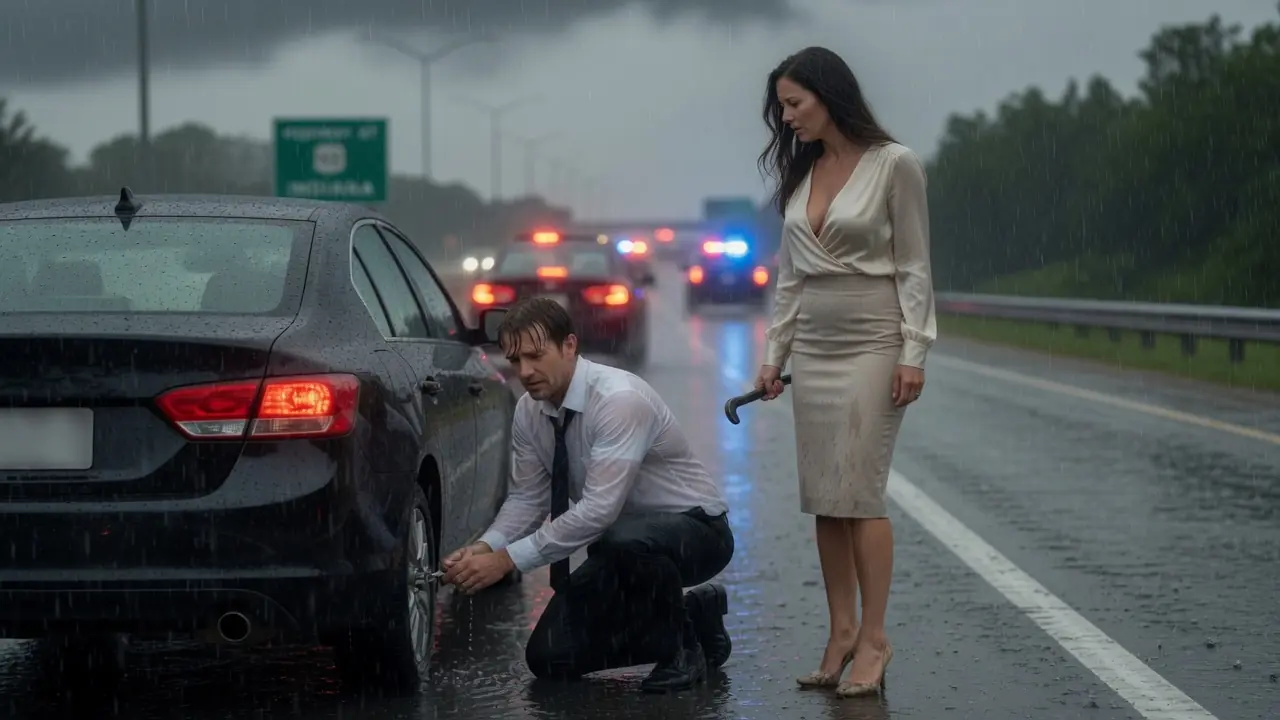
The interview at Carter Industrial Systems could finally change their lives. The company needed an operations supervisor, and the salary was almost twice what Luke earned managing overnight inventory at a struggling warehouse. It included health insurance, a retirement plan, and hours that would allow him to eat dinner with Noah instead of leaving for work while his son prepared for bed. More importantly, it offered a path upward.
Luke woke before dawn and found Noah already sitting at the kitchen table.
The boy had arranged a bowl of cereal, a glass of orange juice, and Luke’s folder containing his résumé. He wore dinosaur pajamas and had attempted to straighten Luke’s tie using a tutorial on his tablet. The result was uneven, but Luke kept it exactly as Noah had tied it.
“You’re going to get the job,” Noah said.
“You sound very certain.”
“You know how to fix problems, and companies have lots of problems.”
Luke smiled. “That may be the best interview advice I’ve received.”
Noah slid a folded piece of paper across the table. Inside, he had drawn Luke standing beside a tall office building with the words HEAD BOSS DAD written above him. Luke placed the drawing inside his résumé folder, promising to look at it before entering the interview.
By seven thirty, rain had begun tapping against the apartment windows. The weather report predicted a passing storm, but the sky above southern Indiana looked darker than expected. Luke left Noah with Mrs. Ramirez downstairs, kissed his son twice, and drove toward Carter Industrial’s regional headquarters.
The interview was scheduled for nine.
Luke planned to arrive at eight twenty.
At eight twelve, traffic slowed along Highway 12.
Rain struck the windshield so heavily that the wipers could barely clear it. Brake lights reflected across the wet pavement, and several cars had already pulled onto the shoulder. Luke checked the dashboard clock, calculated the remaining distance, and told himself he still had enough time.
Then he saw the black sedan.
It stood partly on the shoulder near an exit sign, its hazard lights flashing through the rain. A woman in a cream silk blouse and light beige skirt was struggling with the trunk while passing vehicles sprayed water across her. Her long dark hair had become soaked, and her expensive heels kept slipping near the edge of the road.
Luke drove past her.
For five seconds, he continued toward the interview.
Then he remembered Noah’s drawing inside the folder and heard his late wife’s voice from years earlier.
The person you become when stopping costs you something—that is the person your child will remember.
Luke tightened his hands around the steering wheel, found the next safe turnaround, and drove back.
He parked his sedan behind the stranded car, switched on the hazard lights, and stepped into the rain. Within seconds, his carefully pressed white shirt was soaked through. The woman turned quickly, gripping a tire iron as though she expected danger.
“I’m not here to hurt you,” Luke said, raising both hands. “You have a flat rear tire.”
“I noticed.”
Despite the fear in her eyes, there was something controlled and confident about her voice. She was perhaps thirty-nine, strikingly beautiful, with intelligent brown eyes and the posture of someone accustomed to giving instructions. Her cream blouse had wide sleeves, while the high-waisted beige skirt looked completely unsuitable for standing beside a highway in a storm.
“Do you have a spare?” Luke asked.
“I think so.”
“You think so?”
“This isn’t my usual car.”
Luke opened the trunk and found a compact spare beneath several neatly arranged travel bags. The jack remained sealed inside its original plastic wrapping. He removed his suit jacket, folded it carefully inside his own car, and rolled up his wet sleeves.
The woman looked at his shirt and tie. “You’re going somewhere important.”
“Job interview.”
She checked her watch. “What time?”
“Nine.”
“It’s eight twenty.”
“I know.”
“Then leave. I can call roadside assistance.”
Luke glanced at the sky, the traffic, and the location of the damaged tire only a few feet from moving vehicles. “They may take an hour in this weather.”
“That is not your problem.”
“It became my problem when I stopped.”
He positioned the jack beneath the car while the woman stood beside him holding the tire iron. Rain ran from his hair into his eyes as he loosened the first lug nut. The metal resisted, forcing him to put his full weight against the wrench.
“You’re missing your interview because of me,” she said. “Why haven’t you left?”
Luke gave her a tired smile. “Because no job is worth abandoning a beautiful woman alone in this storm.”
The answer caught her off guard.
For the first time, the tension in her expression softened. “You don’t even know my name.”
“Not yet,” Luke said, looking up at her, “but something tells me this isn’t our last meeting.”
She smiled despite herself. “Evelyn.”
“Luke.”
“Luke, you should still go.”
He returned to the tire. “I have a son watching how I live, even when he isn’t standing beside me. I’d rather explain why I missed an interview than explain why I left someone here.”
Evelyn studied him silently.
Luke removed the damaged wheel, fitted the spare, and tightened the lug nuts in a careful pattern. His knees were soaked, his hands were covered in black road grime, and the rain had ruined any chance of looking professional. When he finally lowered the car, the dashboard clock in his sedan showed eight forty-seven.
Carter Industrial was still fourteen minutes away without traffic.
Luke already knew he had lost the interview.
Evelyn offered him a clean towel from the trunk. “Let me call the company. Perhaps they can delay it.”
“They said late arrivals would not be admitted.”
“What position?”
“Operations supervisor.”
She paused. “At Carter Industrial?”
Luke looked at her. “Yes.”
Evelyn’s expression became unreadable. “What is your last name?”
“Bennett.”
Something changed behind her eyes, but she quickly looked toward the repaired tire.
Luke assumed she recognized the company because it employed thousands of people across the state. He wiped his hands, placed the damaged wheel inside her trunk, and advised her not to exceed fifty miles per hour on the temporary spare.
“You should have the other tires inspected too,” he said. “The tread is getting low.”
“Will you still go to the interview?”
“I’ll try.”
“You’re nearly an hour from arriving once traffic clears.”
“I know.”
“What will you tell them?”
“The truth.”
“And if they refuse to see you?”
Luke looked toward his car. “Then I go home and tell my son I did the best I could.”
Evelyn removed a business card from her handbag, hesitated, then placed it inside his wet résumé folder. The card was face down.
“Call this number later,” she said.
“For roadside assistance?”
“For a conversation.”
Luke did not examine it. He closed the folder to protect Noah’s drawing and hurried back to his sedan.
Traffic moved even more slowly after the next exit. A minor collision blocked one lane, and the rain reduced visibility almost completely. Luke called the company’s recruitment office twice, but both calls went to voicemail.
He arrived at Carter Industrial at nine twenty-eight.
The regional headquarters rose above a landscaped business park, its glass entrance reflecting the gray sky. Luke parked near the visitor area, straightened his ruined tie, and looked at himself in the mirror. His hair was wet, mud marked one knee, and black grease remained beneath his fingernails.
He looked nothing like the prepared candidate who had left home that morning.
Inside the lobby, a receptionist checked the interview schedule. “The panel has already completed the first round.”
“I understand. I had an emergency on the highway.”
“The instructions were very clear about punctuality.”
“I know.”
She offered a sympathetic smile. “You may leave your résumé, but the hiring manager has closed today’s interviews.”
Luke placed the damp folder on the counter, then remembered Noah’s drawing inside. He opened it, removed the picture, and handed over only the résumé.
As he turned to leave, he heard laughter from a conference room beyond the security gates. Other candidates in dry suits were speaking with company representatives. One man carried a portfolio identical to the one Luke had saved for months to purchase.
Luke walked back into the rain feeling as though the future had closed ten minutes before he reached it.
He sat inside his car for several minutes before turning Evelyn’s business card over.
EVELYN CARTER
Chief Executive Officer
Carter Industrial Systems
Luke read it three times.
His first thought was that the card could not belong to the woman on the highway. Perhaps she had borrowed the car from someone named Evelyn Carter. Perhaps she worked for the CEO and carried her cards. But the photograph on the company website appeared in his memory: a formal portrait he had glanced at while researching the interview.
The woman in the portrait had her hair tied back and wore a dark suit.
It was her.
Luke looked toward the enormous Carter Industrial sign above the building entrance and felt his stomach drop.
He had told the CEO her tires were worn.
He had also called her beautiful.
Before he could decide whether to laugh or panic, someone knocked on his window.
A security officer stood beneath an umbrella.
“Mr. Bennett?”
Luke lowered the window. “Yes?”
“Ms. Carter has requested that you return inside.”
Luke followed the officer through the lobby, past the receptionist who now stared at him with open surprise, and into a private elevator. They ascended to the twelfth floor, where assistants moved through a quiet executive corridor lined with photographs of factories, shipping centers, and engineering teams.
Evelyn stood inside a conference room wearing a dry navy suit.
Her hair had been restyled, and no trace of the stranded woman remained except the small scrape across one heel. Beside her sat three senior executives and the director of human resources. Luke stopped near the doorway, aware of his wet shirt and muddy trousers.
Evelyn motioned toward an empty chair.
“Mr. Bennett, thank you for returning.”
“You’re the CEO.”
“So the card says.”
“You knew I was coming here.”
“I recognized your name from the finalist list after you told me.”
Luke looked toward the executives. “I apologize for being late.”
The human-resources director opened Luke’s file. “You were informed that late candidates would not be interviewed.”
“Yes.”
“Yet you arrived nearly thirty minutes after your scheduled time.”
Luke nodded. “I stopped to help someone with a flat tire.”
One executive raised an eyebrow. “You sacrificed the most important interview of your career for a stranger?”
Luke glanced toward Evelyn. “At the time, she was a stranger.”
Evelyn leaned back in her chair. “Tell them why.”
Luke could have given an impressive answer about leadership, responsibility, or corporate values. Instead, he spoke honestly.
“My wife died five years ago, and I’m raising our son alone. He watches me more closely than I realized. I want him to grow into someone who helps people, but I can’t teach him that if I only do it when helping is convenient.”
The room became quiet.
Evelyn opened the résumé folder that Luke had left downstairs. Noah’s drawing had accidentally remained caught behind the inner pocket. She placed it on the table.
“Head Boss Dad,” she read.
Luke’s face warmed. “My son is ambitious for me.”
The operations director, a stern man named Robert Hayes, studied Luke’s résumé. “You have warehouse management experience, but no degree.”
“No.”
“Our other finalists have bachelor’s degrees.”
“I began working full-time after high school because my mother became ill. I completed certification courses at night.”
“You supervised only eighteen people.”
“Twenty-six during peak season.”
“You left your last full-time supervisory position three years ago.”
“My wife died. The overnight warehouse position paid less, but the schedule allowed me to care for my son during the day.”
Robert closed the file. “That decision interrupted your advancement.”
“Yes.”
“Do you regret it?”
“No.”
Evelyn’s gaze remained on Luke.
The formal interview continued for forty minutes. The panel asked about inventory failures, workplace conflicts, employee safety, and cost control. Luke answered from experience rather than textbooks. He described redesigning an inefficient loading schedule, protecting an injured worker from being blamed for a management error, and accepting responsibility when his own decision delayed a major shipment.
When the interview ended, Evelyn asked everyone except Luke to leave.
He remained seated while rain moved across the windows behind her.
“You believed you had lost the opportunity when you stopped,” she said.
“Yes.”
“Would you stop again?”
Luke considered the question. “I’d probably ask for your business card sooner.”
She smiled. “That is not an answer.”
“Yes. I would stop again.”
“Even knowing who I was?”
“Especially knowing who you were. CEOs shouldn’t change tires in that outfit.”
Evelyn laughed, not the controlled laugh of an executive but the same genuine one he had heard beside the highway.
Then her expression became serious.
“I inherited a company with excellent equipment and poor leadership in several departments. Too many supervisors protect schedules, budgets, and titles while forgetting the people carrying the work. I reviewed hundreds of résumés looking for someone who understood responsibility.”
Luke glanced toward Noah’s drawing. “And you found that beside a flat tire?”
“I found a man willing to lose something important rather than abandon another person.”
“The interview was for operations supervisor.”
“It was.”
Luke noticed the past tense.
Evelyn opened a second folder. “The department head resigned this morning after our audit discovered repeated safety violations he failed to report. We planned to appoint an interim manager while searching externally.”
Luke stared at her. “I don’t understand.”
“I am offering you the position.”
“Department head?”
“Yes.”
“I applied to supervise one shift.”
“You would oversee three shifts, four supervisors, and seventy-eight employees.”
“I’ve never managed a department that large.”
“You told the panel when you did not know something. That already separates you from the man leaving the position.”
Luke looked at the salary listed on the offer page. It was almost three times his current income.
“This is because I changed your tire.”
“No,” Evelyn said. “That earned you the interview you almost missed. Your record, judgment, and answers earned the position.”
“People will think you promoted the stranger who rescued you.”
“Then prove them wrong by doing the job well.”
Luke read the page again. The offer included a six-month review period, leadership training, family health insurance, and normal daytime hours.
His eyes stopped at the salary.
“Noah could stay in his school,” he whispered.
Evelyn heard him. “Was that uncertain?”
“Our landlord is raising the rent. I was considering moving us to a smaller district.”
“Then perhaps you should accept before I reconsider.”
Luke smiled. “You don’t seem like someone who reconsiders often.”
“I reconsider whenever better evidence appears.”
He signed.
That evening, Luke returned home carrying a small Carter Industrial folder. Noah ran downstairs before Mrs. Ramirez could stop him.
“Did you get it?”
Luke knelt despite the pain in his soaked knees. “I missed the interview.”
Noah’s face fell.
“But the CEO found me.”
“Were you lost?”
“In a way.”
Luke showed him the offer letter. Noah understood only a few words, so Luke pointed toward the title.
“Department Head.”
Noah’s eyes widened. “That is almost head boss.”
“Almost.”
“Did you tell them I made the drawing?”
“The CEO saw it.”
“Did she like it?”
“She may have hired me because of it.”
Luke did not explain the full story until dinner. When he described helping Evelyn in the rain, Noah listened without interrupting.
“You stopped because she was beautiful?” he finally asked.
Luke nearly choked on his food. “That was not the only reason.”
“You said she was beautiful.”
“I also said she was alone in a storm.”
Noah smiled mischievously. “Is the CEO your girlfriend?”
“No.”
“Could she be?”
“Eat your vegetables.”
Luke began work two weeks later.
The department was in worse condition than the interview panel had admitted. Employees skipped safety inspections to meet unrealistic deadlines, supervisors altered reports, and experienced workers had stopped offering suggestions because the previous manager ignored them. Luke’s first weeks were filled with mistakes, long meetings, and moments when he feared Evelyn had promoted him too quickly.
He refused to pretend otherwise.
Luke met every employee individually, asked what prevented them from doing good work, and wrote down the answers. He reinstated safety checks, changed the schedule so single parents could request predictable shifts, and created a process allowing workers to report equipment concerns without a supervisor’s approval.
Productivity initially declined.
Several executives complained.
Luke stood before them and explained that the department had been producing impressive numbers by hiding failures. Within three months, injuries decreased, missed shipments fell, and employee turnover dropped dramatically.
Evelyn attended the six-month review personally.
“You were right,” she said.
“About what?”
“My company didn’t need most men.”
Luke remembered the roadside conversation. “It needed the one who stopped?”
“It needed someone who understood that reaching the destination means nothing if you leave people behind.”
Their relationship developed slowly after that.
Evelyn met Noah at a company family picnic, where he immediately asked whether she still carried a spare tire. She began joining Luke for coffee after leadership meetings, and their conversations gradually moved beyond work. Luke learned that Evelyn had inherited the company after her father’s death but spent years proving she could lead it without becoming a copy of him.
She learned that Luke still spoke to his late wife when difficult choices frightened him.
Neither rushed what grew between them.
One rainy evening nearly a year after the flat tire, Evelyn arrived at Luke’s office holding the same tire iron from her sedan.
“I kept this,” she said.
“As a reminder to inspect your tires?”
“As a reminder that the worst delay of my life introduced me to the best man in my company.”
Luke looked at her. “Only in the company?”
Evelyn stepped closer. “Would you like to discuss another position?”
“That depends on the benefits.”
She kissed him before he could make another joke.
Three years later, Luke became vice president of regional operations. He earned the promotion through measurable results, employee trust, and the ability to solve problems without sacrificing people. Noah continued displaying the original HEAD BOSS DAD drawing above Luke’s desk, although he eventually admitted the artwork looked childish.
Luke never removed it.
Whenever new managers joined Carter Industrial, Evelyn told them the story of the soaked job candidate who arrived late because he changed a stranger’s tire. She never mentioned that Luke called her beautiful until Noah revealed it during a company dinner.
The story embarrassed Luke for years.
It also became part of what employees respected most about him.
Luke had believed the most important interview of his life waited inside a glass office building. He had worn his best shirt, carried a polished résumé, and rehearsed every answer he hoped would prove his worth.
Instead, the real interview happened beside a highway in heavy rain.
There were no prepared questions, no panel, and no promise that anyone important was watching. There was only a stranded woman, an approaching deadline, and a choice between protecting his opportunity or protecting someone alone.
Luke chose the woman.
He missed the scheduled interview.
Then he discovered he had already passed the one that mattered.