Clare Donovan had spent most of her adult life proving she did not need anyone to rescue her.
At thirty-four years old, she was the founder and CEO of Donovan Enterprises, a company that had started in a cramped rented office above a closing travel agency with two borrowed laptops, one broken printer, and a bank account that looked more like a warning than a business plan.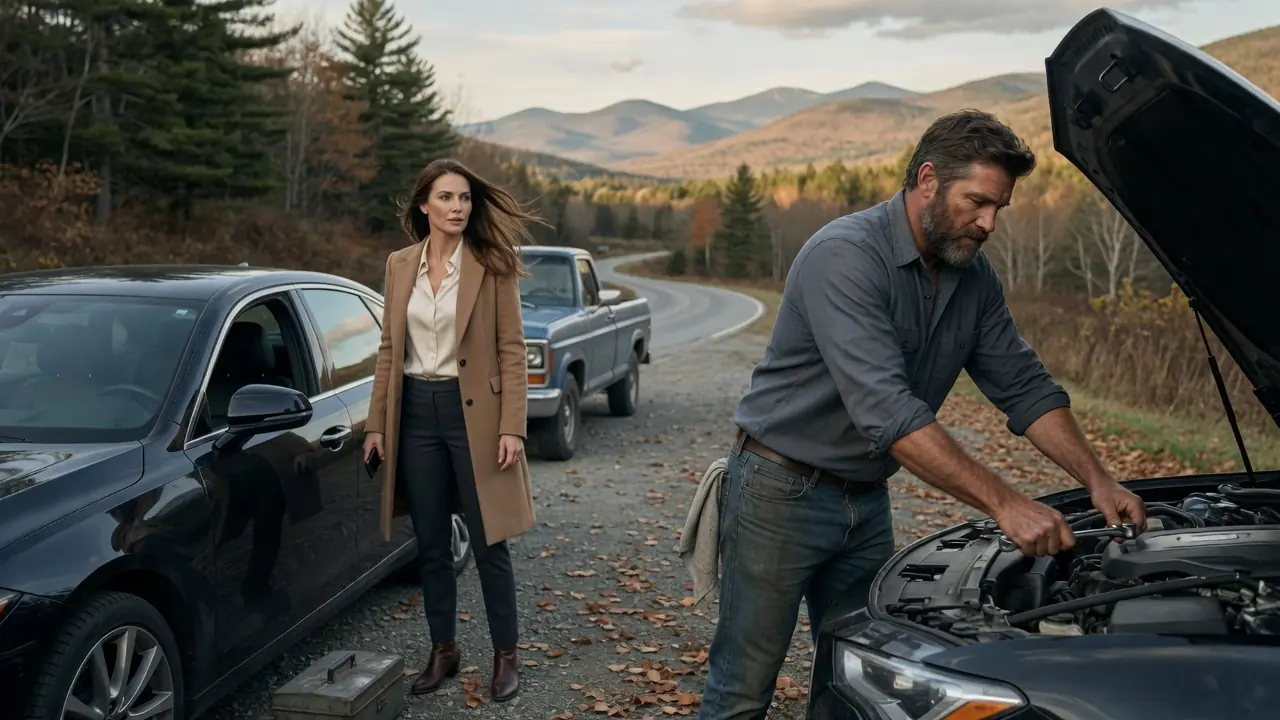
Twelve years later, that same company had offices in six cities, nearly nine hundred employees, and contracts with clients who once would not have returned Clare’s emails.
Her name appeared in business magazines, on conference banners, in investor reports, and on lists of women who had built their own empires from nothing but stubbornness and skill. People called her brilliant. Relentless. Disciplined. Impossible to intimidate.
They said it with admiration when she was in the room and with resentment when she was not.
Clare had learned to accept both.
She lived in a glass penthouse overlooking the city, thirty-four floors above sidewalks crowded with people who had no idea that the woman behind those windows often stood barefoot in the dark, holding a cup of tea she forgot to drink, wondering how a life so full of achievement could still feel so empty.
Her home was beautiful in a way that impressed visitors but comforted no one. White marble counters. Floor-to-ceiling windows. Sculptural furniture. A dining table that could seat ten, though no one had eaten dinner at it in months. Fresh flowers arrived twice a week from a florist her assistant paid automatically.
The flowers were always perfect.
Clare rarely noticed them.
Her closet was arranged by color. Her shoes stood in quiet rows. Her calendar was planned in fifteen-minute blocks. Her life functioned with the kind of precision people envied from a distance, because they could not see what that precision had cost.
Control had become Clare’s religion.
She knew how to read contracts at a glance, how to predict market shifts before competitors noticed the first signs, and how to turn silence into pressure during negotiations. She sat at the head of boardroom tables where powerful men twice her age lowered their voices when she spoke. She had built a reputation for never blinking first.
But all that control vanished on a deserted mountain road at 4:17 on a Thursday afternoon.
The road curved through the high ridges outside Ashford Ridge, a quiet mountain town two hours from the city. Tall pines lined the shoulders. The air was cool, clean, and sharp enough to remind Clare that she had spent too many years breathing climate-controlled office air. Above her, the sky hung heavy with late autumn clouds, not quite raining, not quite clearing, only threatening.
Her sleek black car sat half on the gravel shoulder, half angled toward the road, expensive and useless.
Clare tried the ignition again.
Nothing.
No sputter.
No reluctant engine cough.
Just silence.
She stared at the dashboard as if frustration alone might force the machine to obey.
“Come on,” she whispered.
She turned the key again.
Still nothing.
Her fingers tightened around the steering wheel.
That morning, she had stood in front of forty executives and closed a deal worth millions. She had answered every question with calm authority. She had watched three men underestimate her and then sign exactly where she told them to sign. She had walked out of that meeting with investors calling her office before she reached the elevator.
And now, on a mountain road with no signal and no traffic in either direction, she could not make her car start.
The irony was almost insulting.
Clare stepped out, her black heels crunching against loose gravel. The wind moved through the trees with a restless, whispering sound. She pulled her tailored camel coat tighter around herself and held up her phone, watching the signal flicker from one bar to none, then back to one, then vanish again.
“Of course,” she muttered. “Of all the days.”
She had taken the mountain road because she wanted quiet.
That was the explanation she had given herself after the charity luncheon. She had spoken at a resort event about opportunity and leadership, accepted applause from donors who liked associating themselves with ambitious women, and refused her driver’s offer to take her home. She told him she wanted to enjoy the drive.
That had been only half true.
The real truth was that Clare needed distance.
From her office.
From her board.
From the investors calling nonstop.
From her assistant’s carefully worded reminders.
From the life she had built so successfully that it sometimes felt like a beautiful prison with better furniture.
She had wanted one afternoon where no one addressed her as Ms. Donovan. One road where she did not have to be strategic. One hour where the phone might lose signal and the world might stop demanding things from her.
Now the world had stopped completely.
And she hated it.
She walked around the car once, as if the act of inspection might magically give her mechanical knowledge she did not possess. She looked under the hood after finding the latch, but everything beneath it might as well have been written in a foreign language. Wires. Tubes. Metal. Silent judgment.
The road behind her remained empty.
The road ahead curved out of sight.
The sky darkened.
A cold uneasiness moved through her. Clare had been in hostile boardrooms, legal disputes, investor attacks, and public criticism sharp enough to leave bruises no one could see. She had handled all of it with discipline. But standing alone beside a dead car in the mountains awakened a different kind of fear, something older and more physical.
She was a woman alone on a quiet road.
No signal.
No passing cars.
No certainty that the person who eventually stopped would be safe.
She hated needing help.
She hated needing anyone.
Then, far behind her, an engine sounded.
Not the smooth hum of a new car.
Something older.
Rougher.
Steady.
Clare turned.
An old blue pickup truck appeared around the curve, its paint faded by years of sun, salt, and weather. It slowed as it approached, then pulled onto the shoulder behind her car. The driver did not crowd her bumper. He stopped several yards back, leaving space, as if he understood the first rule of helping a stranger was not making her feel trapped.
The truck door opened with a creak.
A man stepped out.
He was tall, broad-shouldered, and dressed in a dark work shirt rolled at the sleeves, jeans worn pale at the knees, and dusty brown boots. His hands were rough, the hands of a man who fixed things for a living. His dark hair was touched with silver at the temples, and his trimmed beard carried the same faint gray. His face was weathered, not from neglect, but from years of responsibility and sunlight.
He looked at the car first.
Then at Clare.
“Engine trouble?”
His voice was deep, calm, and familiar in a way Clare could not immediately place.
She felt relief first.
Then caution.
“It won’t start,” she said. “I don’t know what’s wrong with it.”
He nodded once, keeping a respectful distance.
“Mind if I take a look?”
She hesitated only a second.
“Please.”
He walked to the front of the car with the easy confidence of someone who had spent his life around engines. Clare returned to the driver’s side, found the hood release, and popped it open. The man lifted the hood and leaned in, studying the battery, cables, and connections.
Clare stood near the driver’s door, watching him work.
There was something about the way he moved.
Not rushed.
Not careless.
He had a stillness that did not feel lazy. It felt grounded. Every motion had a purpose. Every pause meant he was thinking.
A strange feeling tugged at her memory.
Not recognition exactly.
More like the shadow of a song she had once known by heart.
“When’s the last time you had the battery checked?” he asked.
“I’m not sure. I bought the car six months ago.”
His mouth curved slightly.
“New cars still have old problems.”
“Comforting.”
“Honest, at least.”
He reached toward the battery terminal, tested it gently, then nodded to himself.
“Could be loose. Let me grab something from my truck.”
He returned with a wrench and a small work light, though the day had not yet fully dimmed. He bent over the engine again. Clare watched his hands move with practiced ease, careful but strong.
“You live around here?” she asked.
“About twenty minutes down the road.”
“Mechanic?”
He glanced up, and for the first time, she saw his smile.
Small.
Warm.
Genuine.
The kind of smile that did not ask for anything.
“Guilty,” he said. “I run Harris Auto Repair in town.”
Harris.
The name slid past her at first.
Then settled somewhere deeper.
“I’m Clare,” she said.
He tightened the terminal.
“Ethan.”
The wrench slipped slightly in his grip, but only for a second.
Clare noticed.
Ethan.
Something inside her chest shifted.
She stared at him longer than she meant to.
It was a common enough name. It had to be. Ethan. Harris. Mechanic. Mountain town. There were thousands of men named Ethan. Thousands of men named Harris. Thousands of men with kind eyes and tired smiles and hands that knew how to fix broken things.
But that smile.
Those eyes.
The calm in his voice.
Fifteen years ago, there had been another Ethan Harris.
A young man from physics class.
A boy with a backpack full of overdue library books and hands that smelled faintly of metal because he worked part-time fixing motorcycles at a shop near campus. A boy who had appeared on the library steps one cold October night when Clare was scared and cornered and had no idea how to save herself.
She blinked the memory away.
Impossible.
The man in front of her straightened and closed the hood.
“Try it now.”
Clare slid into the driver’s seat and turned the key.
The engine roared to life.
Smooth.
Perfect.
As if it had never failed her at all.
“Oh my God,” she breathed, half laughing from relief. “Thank you.”
Ethan stepped back, wiping his hands on a rag.
“Loose battery terminal. Happens sometimes.”
Clare reached for her purse.
“How much do I owe you?”
He shook his head immediately.
“Nothing.”
“No, really. I insist.”
“It took two minutes.”
“You stopped on the side of a deserted road and fixed my car. That’s worth something.”
“It was a bolt, not open-heart surgery.”
Despite herself, she laughed.
He smiled again.
The feeling returned, stronger now.
Clare pulled out a business card and held it toward him.
“Then at least take this. If you ever need anything, anything at all, please call me.”
Ethan hesitated.
Then he accepted it.
His eyes moved over the card.
Clare Donovan.
CEO, Donovan Enterprises.
His eyebrows rose slightly, but he did not react the way most people did. There was no sudden calculation in his face. No forced admiration. No shift into performance.
“Well,” he said, tucking the card into his shirt pocket. “I hope the rest of your drive goes smoother, Miss Donovan.”
“Clare,” she corrected softly.
He looked at her.
For a moment, something passed between them.
Something almost remembered.
Then he gave a small nod.
“Clare.”
He walked back to his truck, climbed in, and pulled onto the road.
Clare stood beside her car and watched his taillights fade around the bend.
Only then did it hit her.
That smile.
That voice.
The way he had looked at her, directly but gently, as if she were not a billionaire, not a business headline, not a woman people wanted something from.
Just a person.
Her breath caught.
Westfield University.
Fifteen years ago.
October 23rd.
The library steps.
Clare had been eighteen then, a freshman on scholarship, still wearing glasses that slid down her nose whenever she was nervous. She owned three sweaters, two pairs of jeans, one winter coat from a thrift store, and a terrifying belief that if she failed even once, everything she had fought for would vanish.
Westfield University had looked like another world when she arrived.
Old brick buildings.
Students with expensive backpacks.
Girls who talked about summer houses and ski weekends as casually as Clare talked about public buses.
She had come from a small apartment where her mother worked double shifts at a nursing home and her father had left so long ago that his absence felt more like furniture than tragedy. Clare had spent high school building herself into the kind of student admissions committees loved: perfect grades, debate team, math awards, volunteer hours, essays polished until they no longer sounded frightened.
Westfield accepted her.
Scholarship included.
But acceptance did not mean belonging.
She spent her first semester moving through campus like an uninvited guest. She studied harder than anyone. Ate cheap soup in her dorm room. Counted every dollar. Sat in the front row of classes because she refused to be invisible, even when visibility terrified her.
Physics was the class that nearly broke her.
Professor Morrison taught like everyone in the room had been born understanding equations. Clare spent nights in the library, rewriting notes until her fingers cramped.
Ethan Harris sat two rows behind her.
She noticed him because he always looked tired but never lost. He carried a backpack held together by duct tape, wore the same brown jacket almost every day, and solved problems faster than anyone except the professor. He never spoke much, but when he did, people listened.
One night, after studying past midnight, Clare left the library with her notebook pressed to her chest and fear buzzing under her skin.
She was halfway down the steps when a group of drunk fraternity boys blocked her path.
At first, she tried to move around them.
They moved too.
One of them laughed.
“Where are you going so fast, scholarship girl?”
She froze.
They had seen her before, then. Or heard about her. Or maybe scholarship girl was just an easy guess because everything about her clothes admitted what her pride tried to hide.
Another stepped closer.
“Don’t be rude. We’re just talking.”
Clare’s throat locked.
The campus was not empty, but the late-night distance between other people and danger can feel like miles. She clutched her notebook harder. Her mind, normally sharp, went blank.
Then a voice came from the darkness.
“Move.”
Not shouted.
Not dramatic.
Just one word.
The boys turned.
Ethan Harris stood at the base of the steps, backpack over one shoulder, hands relaxed at his sides, eyes steady. He was not bigger than all of them. He was not threatening in the obvious way. But something in his calm carried weight.
One of the boys scoffed.
“What’s your problem?”
Ethan took one step closer.
“You’re in her way.”
The silence stretched.
Then the boys laughed too loudly, muttered something about losers, and backed off.
Clare did not move until they were gone.
Ethan looked at her, not too directly.
“You okay?”
She nodded, then shook her head, then laughed once because she did not know what else to do.
“No,” she said. “Maybe. I don’t know.”
He walked her back to her dorm.
Not too close.
Not too far.
He kept pace beside her and did not ask questions she could not answer.
At the dorm entrance, Clare should have gone inside.
Instead, they sat on the steps.
The night was cold. Campus lights glowed gold against the brick walkways. Somewhere far away, music thumped from a party that seemed to belong to a different species of student.
They talked until dawn.
Dreams.
Fear.
Families.
Money.
The pressure to become someone before the world decided you were nothing.
Ethan told her his mother cleaned offices at night and his father had left when he was young. He worked at a motorcycle shop near campus, took a full course load, and wanted to design engines one day. Maybe aircraft engines. Maybe racing engines. Maybe he would start his own shop if life did not go according to plan.
Clare told him she wanted to build something so big no one could ever make her feel small again.
He listened.
Really listened.
Not like men at networking events listened years later, waiting for a useful opening.
He listened as if every word mattered.
When the sun came up, soft and pale over the campus roofs, Ethan kissed her.
Softly.
Carefully.
Like she was something precious.
Not something to take.
Something to ask.
Clare remembered touching his sleeve, remembered the cold air, remembered feeling safe for the first time in months.
Then he was gone.
Not that morning. Not immediately.
But within days.
He missed physics.
Then missed again.
Then stopped appearing entirely.
She asked a girl from class if she knew him.
Only his name.
She checked the student directory.
Nothing useful.
She waited after lectures.
No Ethan.
No note.
No explanation.
For years afterward, the memory became a locked room inside her.
A boy had saved her.
A boy had seen her.
A boy had kissed her as if she mattered.
Then life had taken him away before she could ask what it meant.
Eventually, Clare told herself some moments were meant to live only in memory.
Except she never forgot him.
And now, fifteen years later, he had fixed her car on a mountain road and driven away without recognizing her.
Clare did not sleep that night.
Her penthouse was silent around her, high above the city, all glass and steel and expensive emptiness. The rooms were immaculate because she was rarely home long enough to disturb them. The skyline glittered beyond the windows. The furniture looked like something from an architecture magazine. The bed was large enough for two people but had only ever belonged to one.
She lay awake, staring at the ceiling.
Ethan Harris.
She had searched that name many times when she was younger.
At first desperately.
Then casually.
Then once every few years, usually on lonely nights when success felt too quiet.
Now she sat up at three in the morning and searched again.
This time, he appeared immediately.
Harris Auto Repair.
Ashford Ridge.
A simple website.
A photo of Ethan standing outside a modest garage between a hardware store and a coffee shop. He wore the same work shirt, his arms crossed, the same gentle smile softening his face.
Clare clicked through local articles.
Small-town mechanic sponsors youth soccer team.
Harris Auto Repair offers free winter safety checks for seniors.
Single father restores old truck for daughter’s school parade.
Single father.
Clare paused.
Another search led her to a public social media profile. Not much. He was not the kind of man who documented every meal or opinion. But there were photos.
A little girl with dark curls and his smile.
Emma Harris.
At a school play wearing cardboard butterfly wings.
At a campsite holding a flashlight.
In front of a birthday cake with blue icing.
Standing beside Ethan outside the auto shop, both wearing matching grease-smudged grins.
There was no wife in the photos.
No wedding anniversary posts.
No romantic partner visible.
Clare stared at the screen until her eyes burned.
He had built a life.
A small one, maybe.
But warm.
Real.
Full of fingerprints, lunchboxes, weekend soccer games, homemade birthday cakes, and drawings taped to walls.
She looked around her penthouse.
Everything here was expensive.
Very little felt alive.
The next morning, Clare tried to work.
She failed.
At 8:00, she was in a strategy call with her chief operating officer, discussing expansion into the Southwest region. At 8:17, she realized she had not heard a word he said. At 8:42, her assistant sent a reminder about a capital partners lunch. At 8:45, Clare canceled it.
Her assistant, Maya, appeared in the office doorway five minutes later with the cautious expression of someone approaching a powerful animal behaving strangely.
“You canceled the Donnelly lunch.”
“I did.”
“You never cancel the Donnelly lunch.”
“I’m aware.”
“Are you sick?”
“No.”
“Is someone dead?”
“No.”
Maya narrowed her eyes.
“Are you going somewhere?”
Clare closed her laptop.
“Yes.”
“Should I ask?”
“No.”
Maya studied her for another second.
Then, because she had been Clare’s assistant for six years and knew when resistance was pointless, she simply said, “Do you want your driver?”
“No. I’ll drive.”
Maya’s eyebrows rose.
“You hate driving.”
“I am expanding my horizons.”
“That sounds dangerous.”
“It might be.”
By late morning, Clare was back on the road to Ashford Ridge.
She told herself it was to thank Ethan properly.
That was reasonable.
Polite.
Normal.
But the closer she got to the mountain town, the more her pulse betrayed her.
Ashford Ridge looked like the kind of town people moved to when they wanted to breathe again. Main Street had brick storefronts, a diner with red stools, a small bookstore, a hardware shop, and a coffee place with hand-painted windows. Harris Auto Repair sat at the edge of the main strip, modest and clean, with two service bays, a small office, and an American flag mounted near the entrance.
Clare parked across the street.
For several minutes, she did not move.
Through the open garage door, she saw Ethan working under the hood of an old pickup truck. He was speaking to an elderly man beside him, pointing toward the engine with patient focus. The old man nodded. Ethan laughed at something he said.
Clare’s chest tightened.
That laugh.
She remembered it from the library steps.
She almost drove away.
Then Ethan looked up and saw her.
Recognition sparked in his expression, but not the recognition she wanted.
He lifted one hand in a friendly wave.
Clare got out, holding a paper bag from an upscale deli she had passed on the drive.
Inside the shop, the air smelled of oil, rubber, metal, and coffee. Tools hung neatly on the wall. A radio played low near the office. There was a child’s drawing taped near the register. It showed a blue truck, a smiling man labeled Dad, and a girl with giant curls labeled Emma.
Ethan wiped his hands on a rag as he approached.
“Clare. Hi. Is the car acting up again?”
“No. The car is fine.” She lifted the bag slightly. “I brought lunch. To say thank you.”
His expression flickered with surprise.
“You drove all the way back here for lunch?”
“It’s very good lunch.”
“That doesn’t answer the question.”
“No,” she said. “It doesn’t.”
He studied her, and she realized he was not easily fooled.
Still, he nodded.
“I can take fifteen.”
They sat outside the coffee shop next door, on a wooden bench overlooking Main Street. Clare handed him a sandwich wrapped in white paper. He accepted it with a quiet thank-you.
For a few minutes, they ate without speaking.
Clare had negotiated mergers with less anxiety than she felt sitting beside this small-town mechanic.
Finally, Ethan looked at her.
“Can I ask you something?”
“Of course.”
“Yesterday, when you gave me your card, I looked you up.”
“I assumed you might.”
“You’re that Clare Donovan.”
“That depends on what that means.”
“It means you run a company worth more than this town has probably seen in its entire history.”
She smiled faintly.
“That is one way to put it.”
“So why are you really here?”
She looked down at her sandwich.
“I told you. To thank you.”
“People like you don’t drive two hours to bring lunch to a mechanic because he tightened a battery cable.”
The words were not cruel.
But they carried a wall.
Clare felt it.
People like you.
She knew what he meant.
Wealthy people.
Powerful people.
People with drivers and polished shoes and calendars full of things that mattered more than small-town lunch breaks.
She turned toward him.
“We didn’t always live in different worlds.”
Ethan’s brow furrowed.
“What does that mean?”
“Westfield University,” she said softly. “Fifteen years ago. Professor Morrison’s physics class.”
The sandwich in Ethan’s hand lowered.
She continued, voice quieter now.
“October 23rd. Outside the library.”
His expression changed.
Not all at once.
Memory worked through his face slowly, first confusion, then effort, then shock.
“There was a girl,” he said. “Some guys were bothering her. I walked her back to her dorm.”
“That was me.”
He stared.
Really stared.
His eyes moved over her face, searching beneath the polished woman in front of him for the scared eighteen-year-old girl with glasses, secondhand sweaters, and a scholarship folder clutched like a lifeline.
“Clare,” he whispered.
She nodded.
“That was me.”
He ran a hand through his hair, stunned.
“My God.”
“I had brown hair then. Bad glasses. I was thinner because I could barely afford food.”
“I remember the glasses,” he said, almost to himself. “You kept pushing them up when you were nervous.”
Tears rose in her eyes before she could stop them.
“You remember?”
His voice cracked.
“Of course I remember.”
She looked at him.
“You disappeared.”
His face tightened with old pain.
“I know.”
“I looked for you.”
“I looked for you too.”
That sentence hit her with the force of fifteen years collapsing.
“You did?”
“Yes. But I didn’t know your last name. You were Clare from physics class. Clare who sat two rows ahead. Clare who took color-coded notes. Clare who wanted to build something so big no one could ever make her feel small again.”
She covered her mouth.
Ethan looked away, blinking hard.
“My mom got sick,” he said. “Cancer. It happened fast. I had to leave school and come home. I couldn’t afford tuition anyway, not after the bills started. I thought I’d go back one day. I thought I’d find you somehow.”
“But life happened.”
“Life happened,” he said.
They sat in silence, the town moving around them as if nothing extraordinary had occurred.
Cars passed.
A woman walked a dog.
Someone carried coffee out of the shop.
Clare felt eighteen again.
And thirty-four.
And every age in between.
“I thought that night meant more to me than it did to you,” she admitted.
Ethan looked at her quickly.
“No.”
“You kissed me, and then you were gone.”
“I know how it looked.”
“It hurt.”
His face twisted.
“I’m sorry.”
She believed him.
That made it worse and better at the same time.
Ethan leaned forward, elbows on his knees.
“That night was not nothing to me, Clare. I thought about you for years. I just also had a mother dying, bills piling up, and no way to reach you. After she passed, I was working full-time at a garage. Then life kept moving.”
“And Emma?”
His expression softened immediately.
“Emma came later. Her mother, Rachel, and I were together for a few years. It wasn’t right, but we tried. When Emma was two, Rachel decided she wasn’t meant for small-town motherhood. She left. Sends birthday cards sometimes. Calls when she remembers. But mostly, it’s me and Emma.”
Clare absorbed that quietly.
“I’m sorry.”
“Don’t be. Emma is the best thing in my life.”
“I can see that.”
He smiled faintly.
“She’s eight. Smart, dramatic, obsessed with dinosaurs and soccer, although she is terrible at soccer.”
Clare laughed through the ache in her chest.
“She sounds wonderful.”
“She is.”
Then Ethan looked at Clare again, more carefully.
“And you? Husband? Family?”
“No.”
“No one?”
“No one.”
He seemed surprised.
“I thought someone like you…”
She smiled sadly.
“Would have everything?”
“I didn’t mean it that way.”
“I know. But that’s what people think.” She looked toward the street. “I built a company. I bought the penthouse. I made sure no one could look down on me again. But I never built a home.”
Ethan said nothing.
That was one of the things she remembered about him.
He did not rush to fill silence.
Over the next two weeks, Clare found reasons to return to Ashford Ridge.
At first, she told herself the reasons were legitimate. She had a meeting with a regional partner only forty minutes away. She wanted to inspect a potential property near the resort area. She needed fresh air after a difficult board call.
By the third visit, she stopped lying to herself.
She came because of Ethan.
They had lunch at the coffee shop.
Dinner at the town diner.
Walks down Main Street after he closed the garage.
They spoke of the years they had missed, carefully at first, then with increasing honesty.
Ethan told her about leaving college, working three jobs during his mother’s treatment, losing her anyway, and building the auto shop from borrowed tools and long nights. He told her about the first time he signed a lease for the garage, how terrified he had been to promise rent he was not sure he could pay. He told her about sleeping in the office during the early months because he could not afford both an apartment and the shop.
He told her about Emma’s first steps between two stacks of tires.
About learning to braid hair from a YouTube tutorial.
About attending parent-teacher conferences in work boots and feeling judged by mothers who looked like they had never used a wrench in their lives.
Clare told him about the early years of Donovan Enterprises.
The investors who dismissed her.
The nights she slept under her desk.
The first major deal.
The loneliness that grew as the company did.
She told him how every victory felt good for an hour, sometimes a day, and then turned into pressure to win again. She told him that people praised her discipline without realizing discipline had become a way of keeping everyone at a safe distance.
He listened.
She listened.
It became addictive.
Being seen.
Being understood without having to translate.
Then Clare met Emma.
It happened on a Friday afternoon, accidentally but perfectly.
Clare had stopped by the garage with coffee. Ethan was finishing an oil change when a school bus pulled up near the corner. A small girl with dark curls, a purple backpack, and dinosaur socks came running toward the shop.
“Dad!”
Ethan stepped out from under the hood just in time for Emma to throw herself into him.
He caught her easily.
“How was school, bug?”
“Tyler said pterodactyls were dinosaurs again, and I told him they were flying reptiles, and Mrs. Mills said I needed to let other people be wrong quietly sometimes.”
Clare bit back a laugh.
Ethan looked over his daughter’s head.
“Emma, this is Clare.”
Emma turned.
Her eyes widened.
“You’re the car lady?”
Clare smiled.
“I suppose I am.”
“Dad said your car was fancy but dramatic.”
Ethan closed his eyes.
“I did not say dramatic.”
“You said temperamental.”
“That is different.”
Emma looked at Clare with deep seriousness.
“Temperamental means dramatic for machines.”
Clare laughed.
“I think you may be right.”
Emma studied her for another second.
“Do you like dinosaurs?”
“I know very little about them.”
“That’s okay. I can teach you.”
“Then I would be honored.”
Emma nodded, apparently accepting her.
Ethan watched this exchange with something soft and guarded in his eyes.
That evening, Clare joined them for dinner at the diner. Emma talked almost nonstop about dinosaurs, school, her teacher, the injustice of math homework, and the fact that her father made grilled cheese wrong because he pressed it too flat.
Clare listened like every word mattered.
Because it did.
At one point, Emma leaned across the table and asked, “Are you Dad’s girlfriend?”
Ethan choked on his water.
Clare looked at him, then at Emma.
“I think that is a question for your dad.”
Emma turned to Ethan.
“Well?”
Ethan wiped his mouth with a napkin, red-faced.
“Emma.”
“What? You tell me to ask clear questions.”
Clare laughed harder than she had laughed in years.
Ethan looked at Clare, embarrassed but smiling.
“We are figuring it out.”
Emma considered this.
“That means maybe.”
“It means figuring it out.”
“So maybe.”
“Eat your fries.”
Emma grinned.
“Maybe.”
For the first time in a long time, Clare felt like she was part of something unplanned and alive.
But happiness frightened Ethan.
Clare saw it in small ways.
How he stiffened when she mentioned staying longer.
How he changed the subject when she asked about future plans.
How his eyes darkened whenever she took a business call and used the clipped, authoritative voice that belonged to her CEO life.
He loved who she was when they sat on his porch with coffee.
He did not know what to do with who she was in the rest of the world.
The first real rupture came at a charity event in the city.
Clare invited Ethan because she wanted him there. She did not think of it as a test, but some part of him must have felt tested anyway. He rented a suit from a shop in Ashford Ridge, polished his old dress shoes, and drove two hours with Clare in her car while Emma stayed overnight with a friend.
At first, the evening went well.
Ethan looked handsome in the suit, uncomfortable but trying. Clare introduced him simply as Ethan, not as a mechanic, not as anything that needed explanation. He shook hands politely, remembered names, and stood beside her without trying to claim space that was not his.
Then one of Clare’s investors, a silver-haired man named Richard Vale, made the mistake of assuming Ethan was staff.
“Could you bring us another round?” Richard asked, barely looking at him.
The table went quiet.
Clare’s face froze.
Ethan smiled lightly.
“I think you’re looking for the waiter.”
Richard blinked, then laughed too loudly.
“My mistake. I didn’t realize you were with Clare.”
The words were small.
The damage was not.
On the drive home, Ethan stared out the window.
Clare gripped the steering wheel.
“I’m sorry.”
“You didn’t say it.”
“No. But I brought you there.”
“That isn’t the same.”
“It feels the same.”
He shook his head.
“You move through that world like it belongs to you.”
“It does not.”
“It does from where I’m standing.”
She glanced at him.
“And where are you standing?”
He was quiet for a long time.
“Outside,” he said.
That answer stayed with her.
The next week, Ethan became harder to reach.
Not cruel.
Never cruel.
But distant.
He canceled dinner once because the shop was busy. Then again because Emma had homework. Then a third time because he was tired.
Clare knew avoidance when she saw it. She used it herself often enough.
So one Friday evening, after a long day of meetings, she drove to the garage unannounced. The sky had turned lavender over the mountains. Ethan was closing the shop, locking the service bay doors.
He looked surprised when he saw her.
“Hey. I wasn’t expecting you today.”
“I wanted to see you.” She smiled. “Is that okay?”
“Of course.”
But his smile did not reach his eyes.
She knew.
Something had been building.
“Ethan, what’s wrong?”
He looked down at the keys in his hand.
“We need to talk.”
The words were simple.
They landed heavily.
Clare folded her arms against the cold.
“All right.”
He leaned back against the garage door.
“What are we doing?”
She tried to keep her voice light.
“I thought we were enjoying each other.”
“Clare.”
The pain in his voice stopped her.
He looked at her fully.
“What is this supposed to become?”
“What do you want it to become?”
“What I want doesn’t matter.”
“It matters to me.”
“It shouldn’t.”
Her chest tightened.
“Why?”
“Because look at you.” He gestured helplessly toward her, her tailored coat, her expensive car, her life. “And look at me.”
“I am looking.”
“No, you’re not. Not clearly.”
“Then explain it to me.”
He pushed away from the garage door, frustration breaking through.
“You run a company with offices in six cities. You attend meetings with people whose watches cost more than my truck. You live in a penthouse. You’re invited to charity galas and investor conferences. I fix cars in a town most people can’t find on a map and go home to an eight-year-old who needs help with spelling.”
“So?”
“So we don’t make sense.”
The words cut deeply, but Clare stood still.
“We never did,” Ethan continued, voice rough. “Fifteen years ago, you were going somewhere, and I was the guy who had to leave. Now you’re at the top of the world, and I’m still here. Same town. Same work. Same old truck.”
“You say that like it’s shameful.”
“It’s not shameful. But it’s not your life.”
“You don’t know what my life is.”
“I know enough.”
“No,” Clare said, anger rising now. “You know what it looks like from the outside.”
He laughed once, bitterly.
“And what, from the inside it’s lonely? Empty? Full of people who don’t really know you?”
“Yes.”
“That doesn’t mean you belong here.”
“Why not?”
“Because one day you’ll wake up and realize you settled.”
The word struck her like a slap.
Settled.
Ethan’s voice cracked.
“You’ll realize you gave up something huge for a mechanic with a mortgage, a kid, and a small life. You’ll resent me. Maybe not right away, but someday. And I can’t watch that happen.”
Clare stared at him.
Her eyes burned, but she refused to look away.
“My world is full of people who want pieces of me,” she said. “My time. My money. My influence. My approval. You know what no one asks me? Whether I ate lunch. Whether I slept. Whether I’m tired. Whether I’m happy.”
Ethan’s face shifted.
She stepped closer.
“You stopped on a mountain road and fixed my car without knowing who I was. You refused my money. You looked at me like a person. The last time someone made me feel that safe, I was eighteen, sitting on library steps with you until sunrise.”
“Clare…”
“No. You’re going to listen.”
He closed his mouth.
“I built an empire because I was scared. Scared of being poor. Scared of being powerless. Scared of ever needing someone who might leave. And I succeeded. I became untouchable. Congratulations to me.”
Her voice broke.
“But untouchable is just another word for alone.”
Ethan’s eyes filled.
“I’m not asking you to fit into my world,” she continued. “I’m asking you to let me choose where I belong. And when I am here, with you and Emma, I feel like I can breathe.”
He swallowed hard.
“I can’t give you what those people can.”
“I don’t want what they can give me.”
“You deserve more than this.”
“No, Ethan. I deserve this. I deserve someone honest. Someone kind. Someone who loves his daughter so fiercely that he’s afraid of letting anyone close unless he knows she’ll be safe. Someone who fixes cars, makes terrible grilled cheese, and still remembers a girl from physics class after fifteen years.”
His eyes closed.
“I’m scared.”
“I know.”
“I’m scared I won’t be enough.”
“You are.”
“I’m scared you’ll regret me.”
“I’ve regretted many things. You could never be one of them.”
For a moment, he did not move.
Then he crossed the space between them and cupped her face in his hands.
“I loved you then,” he whispered. “I didn’t know what to do with it, but I loved you.”
Clare’s tears spilled over.
“I loved you too.”
“I never stopped thinking about you.”
“I never stopped looking for you in other people.”
His thumbs brushed her cheeks.
“I’m sorry I left.”
“I’m sorry I thought you forgot.”
He kissed her then, softly at first, as if asking permission from fifteen years of distance. Then the kiss deepened, filled with everything they had carried separately for too long.
When they pulled apart, Ethan rested his forehead against hers.
“Emma comes first,” he whispered.
“I would never ask otherwise.”
“I’m not moving to the city.”
“I didn’t ask you to.”
“Your company…”
“Has executives who are very well paid to function when I am not physically in a glass tower.”
He gave a shaky laugh.
“You’d change your life?”
“No,” Clare said. “I’d finally start living it.”
The next months unfolded slowly, carefully, and beautifully.
Clare did not move in overnight. She did not sweep into Ethan’s life and try to reorganize it with money. She had learned enough to know that love was not conquest.
She kept her penthouse at first.
Worked from the city part of the week.
Spent weekends in Ashford Ridge.
Then weekends became long weekends.
Long weekends became four days.
She took board meetings from Ethan’s kitchen table while Emma ate cereal nearby and occasionally appeared on video calls wearing dinosaur pajamas. At first, Clare was mortified. Then a board member asked, “Is that a triceratops?” and Emma launched into a five-minute correction about classification.
Ethan apologized afterward.
Clare said, “Honestly, it improved the meeting.”
Emma began making space for Clare in small ways.
A mug beside hers at breakfast.
A sticky note on the fridge that said Clare likes blueberries.
A drawing of three people standing beside a blue pickup truck, labeled Dad, Me, and Clare.
One night, after a school play where Emma performed as Tree Number Two with great seriousness, she climbed into the back seat of Clare’s car and announced, “I have decided something.”
Ethan buckled her seat belt.
“That sounds official.”
“It is.” Emma looked at Clare in the front seat. “You can be my almost-mom.”
Clare’s heart stopped.
Ethan froze.
Emma continued, “Not my real mom, because I have one, but she lives somewhere else and forgets stuff. You remember stuff. Also, you came to my play and brought flowers. So almost-mom.”
Clare turned in her seat, tears already in her eyes.
“I would be honored to be your almost-mom.”
Emma nodded.
“Good. Also, can we get pancakes?”
Ethan wiped at his eyes while pretending to adjust the mirror.
“Pancakes it is.”
Clare eventually bought a small house in Ashford Ridge, five minutes from Ethan’s shop and three minutes from Emma’s school. She kept it simple, ignoring every designer her assistant recommended. She chose a porch with chipped railings, a kitchen with morning light, and a backyard large enough for Emma to run through sprinklers.
Ethan helped her fix the loose cabinet doors.
Emma chose the color for the guest room.
Clare planted hydrangeas and killed half of them by overwatering.
Ethan teased her gently.
“You run a corporation but cannot keep a plant alive.”
“Plants do not send quarterly reports.”
“They do if you listen.”
“I refuse to be judged by shrubbery.”
Life became something Clare had never expected.
Mornings with coffee.
Emma’s homework spread across the table.
Ethan’s boots by the door.
Clare’s laptop open beside a bowl of soup.
Soccer games.
School fundraisers.
Quiet porch nights.
Arguments too, of course.
Real life included those.
Clare sometimes worked too much.
Ethan sometimes withdrew when he felt out of place in her business world.
Emma sometimes tested boundaries because love made her feel safe enough to be difficult.
But they learned.
Clare learned that family was not a deal to manage.
Ethan learned that accepting help did not make him smaller.
Emma learned that people could leave and others could still stay.
A year after the mountain road, Donovan Enterprises launched a scholarship and apprenticeship program for students who had talent but not access. Clare named the first initiative the Harris Opportunity Fund, though Ethan protested for three days.
“It sounds too fancy,” he said.
“It is supposed to sound fancy. People give more money to fancy.”
“Use your name.”
“My name is already on too many things.”
“Clare.”
“Ethan.”
Emma looked up from her cereal.
“I like Harris Opportunity Fund. It sounds like Dad helps people.”
Clare pointed at her.
“The committee has spoken.”
The fund partnered with technical schools, community colleges, and small businesses. It helped students who could not afford tuition, tools, transportation, or unpaid internships. Ethan became part of the advisory board, not as a symbol, but as someone who understood what it meant to have ability and no path.
At the first ceremony, Clare gave a speech.
She stood onstage in a simple navy dress, Ethan and Emma seated in the front row.
“I used to believe success meant never needing anyone,” she said. “I was wrong. Success means becoming the kind of person who can help without making others feel small, and the kind of person brave enough to receive help without shame.”
Her eyes found Ethan.
“Fifteen years ago, someone helped me when I was scared. Years later, that same person stopped on a mountain road and helped me again, without knowing who I was. He reminded me that the most important turning points in life do not always look grand. Sometimes they look like a loose battery terminal, an old pickup truck, and a kindness offered with no expectation.”
Ethan looked down, overwhelmed.
Emma whispered loudly, “Dad, she’s talking about you.”
Everyone nearby smiled.
Two years after Clare’s car broke down, Ethan proposed.
Not at a gala.
Not in the city.
Not under a chandelier.
He proposed on the porch of Clare’s house, after dinner, while Emma pretended to chase fireflies but was clearly watching from behind a tree.
Ethan held a small velvet box in hands that had fixed thousands of engines but trembled now.
“I don’t have a speech,” he said.
Clare smiled through tears.
“You absolutely have a speech.”
“I have a little speech.”
“I knew it.”
He laughed nervously, then took her hand.
“Fifteen years ago, I met a girl on library steps who made me want to become better. I lost her before I understood what that meant. Then life gave me a second chance on a mountain road, and I almost let fear ruin it.”
His eyes shone.
“You chose me when I couldn’t understand why. You chose Emma with patience, not pressure. You chose this town without making it feel small. You brought light into our home, and I want to spend the rest of my life making sure you never feel alone again.”
Clare could barely see him through tears.
“Marry me?”
Before she could answer, Emma yelled from behind the tree, “Say yes!”
Clare laughed.
“Yes.”
Emma ran over screaming with joy before Ethan could even put the ring on Clare’s finger.
Their wedding was small.
Ashford Ridge church.
Wildflowers.
Diner pies instead of a formal cake because Emma insisted the diner’s pie was better than “fancy circle cake.”
Clare invited only a few business associates and many people from town. Ethan wore a dark suit and looked as nervous as he had the day he fixed her car. Emma wore a blue dress and carried the rings with solemn authority.
During the vows, Clare looked at Ethan and said, “You were never a detour from my life. You were the road leading me home.”
Ethan cried.
Emma cried because Ethan cried.
Half the church cried because Emma cried.
Years later, Clare still kept the business card she had given Ethan on the mountain road.
He had never thrown it away.
He had tucked it into a drawer in his office at the shop, and on the back, months after they reunited, he had written one sentence:
The day life brought Clare back.
Clare kept it framed beside a photograph of the three of them at Emma’s school soccer game.
Emma remained terrible at soccer but excellent at arguing with referees about rules she had only recently learned.
Ethan’s auto shop expanded slowly. He hired apprentices through the scholarship program. Young people who reminded him of himself came through the garage, learning not just engines, but discipline, honesty, and pride in work done well.
Clare split her time between the company and Ashford Ridge. Donovan Enterprises continued to grow, but it no longer owned every hour of her life. She learned to delegate. Learned to close the laptop. Learned that dinner at the table mattered even when emails waited.
Sometimes, after Emma had gone to bed, Clare and Ethan sat on the porch under the stars.
They spoke of the past without drowning in it.
The night on the library steps.
The years apart.
The mountain road.
The fear.
The return.
One night, Clare asked, “Do you ever wish we had found each other sooner?”
Ethan thought for a while.
“Yes,” he said honestly. “Sometimes.”
She leaned against him.
“Me too.”
Then he added, “But I don’t think we would have known how to keep each other then.”
Clare nodded.
They had been young then.
Hungry for futures they could not yet hold.
Now they had scars, responsibilities, losses, and a deeper understanding of what love required.
Not just passion.
Not just memory.
But staying.
Choosing.
Showing up on ordinary days.
Fixing what could be fixed.
Forgiving what could not.
Emma grew older. Clare officially adopted her when Emma was twelve, after a long conversation where Emma said, “You’re already my mom in all the ways that count, but I want the paperwork to annoy people who say otherwise.”
Clare cried for an hour.
Ethan pretended not to cry and failed.
At fifteen, Emma wrote an essay for school about family.
She titled it:
The Day My Dad Fixed a Car and Found My Mom.
In it, she wrote:
Some people think love stories are about two people meeting for the first time. But sometimes love stories are about people finding each other again after life made them take the long way around. My dad says engines stop working when connections come loose. I think hearts are like that too. Sometimes the connection is still there, but someone has to stop, open the hood, and tighten what time shook loose.
Clare framed that essay too.
Because it was true.
A loose battery terminal had stopped her car.
But it had also restarted a life she had forgotten she wanted.
On the fifteenth anniversary of the night they first met, Clare and Ethan returned to Westfield University.
The library steps were still there.
Older.
Cleaner.
Less frightening in daylight.
They stood together, hand in hand, while students rushed past with backpacks and coffee cups, unaware that for two people standing quietly near the stone railing, the place held an entire lifetime.
Clare looked at Ethan.
“I was so scared that night.”
“I know.”
“You saved me.”
He shook his head.
“I walked you home.”
“You saw me when I needed someone to see me. That saved something.”
He touched her cheek gently.
“You saved me too.”
“On the mountain road?”
“Before that,” he said. “That night. You made me believe I could be more than what I had. Then when life took everything sideways, the memory of you stayed. Like proof that for one night, I had been exactly where I was meant to be.”
Clare rested her head on his shoulder.
They stayed until the sun lowered behind the campus buildings.
Then they drove home.
Home to Ashford Ridge.
Home to Emma.
Home to the porch, the auto shop, the scholarship letters, the ordinary dinners, the arguments about overwatered plants, the laughter, the life.
Clare had once believed power meant never breaking down.
Now she knew better.
Sometimes everything important begins when something stops working.
A car.
A plan.
A life built too carefully around loneliness.
And sometimes the person who pulls over to help is not a stranger at all.
Sometimes he is the first love you lost.
The answer you never stopped carrying.
The road back to yourself.
And sometimes, if life is merciful, he smiles, tightens one small loose connection, and gives your whole heart the chance to start again.