“Turn around. You’re going in cuffs.”
Bill Walker looked at the officer’s hand, then at the blue Cadillac parked a few steps away. His daughter’s purse was still inside it, along with the medication she had asked him to retrieve.
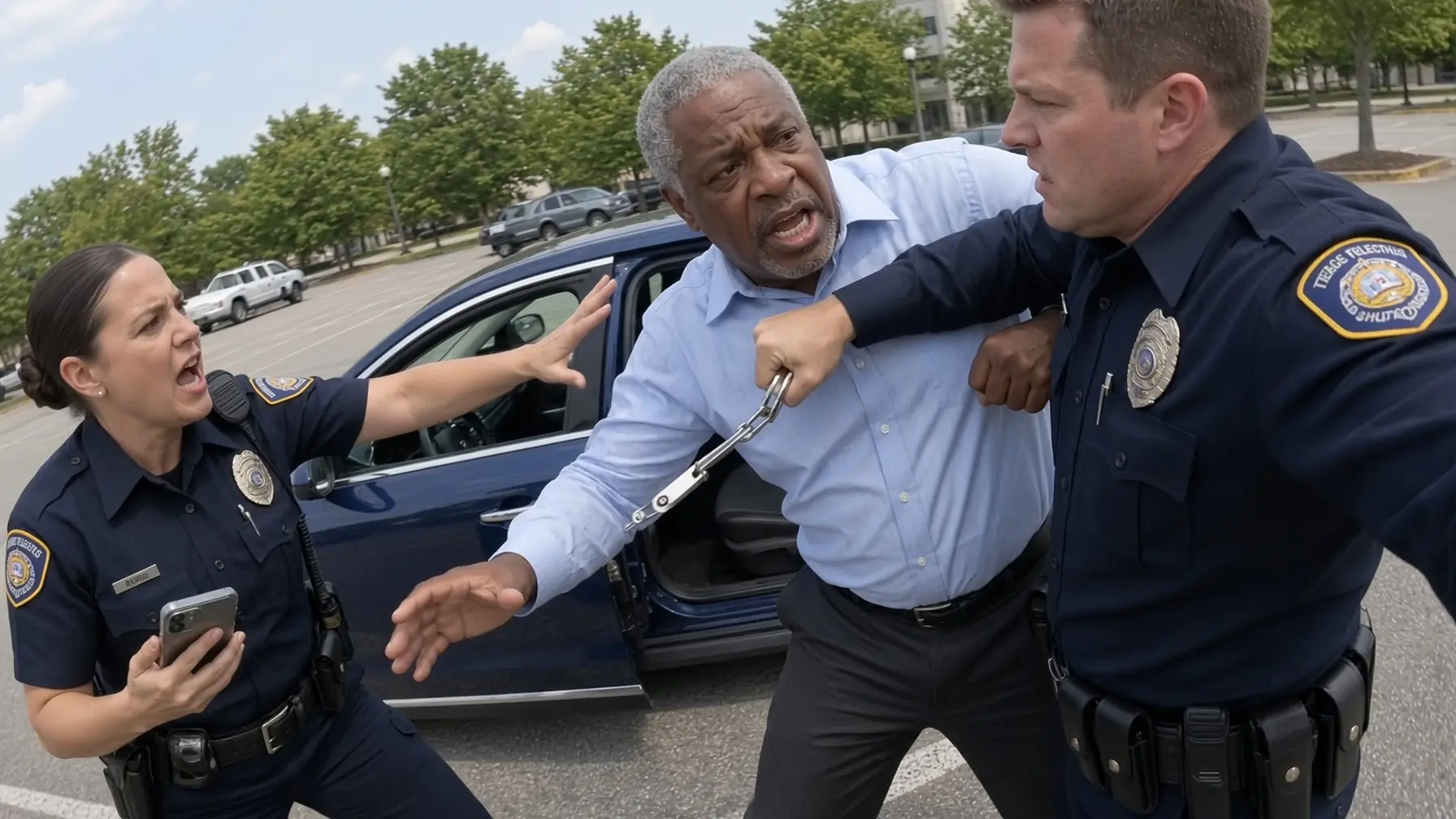
The afternoon had already gone wrong in several ways. Now Officer Kurtz was reaching for his wrist.
“I asked you to wait for your supervisor,” Walker said.
“And I told you to back up.”
Around them, people stood in the parking lot of the Premier Center in Little Rock. Walker’s wife was trying to keep track of their daughter, another officer had positioned himself beside the Cadillac, and an employee had appeared near the building entrance.
There was no room left in the conversation for the question Walker had been asking.
Why had the plan changed?
The first time the officers came, he believed they had reached an understanding. His daughter needed medical attention, the car was parked, and he would help address the remaining problems.
Then the officers returned.
Now, before the requested supervisor had even reached the property, a disagreement about a purse had become a threat of arrest.
Walker felt a hand against him.
“Don’t put your hand on me.”
“Back up.”
“This is my property.”
“I don’t care.”
The words arrived plainly, without hesitation.
Walker stared at him.
It was the moment he understood that the officer was no longer trying to explain what needed to happen. He was trying to establish who would be obeyed.
Less than an hour earlier, Kurtz had been dealing with a very different problem.
A driver had flagged him down and reported that a woman was chasing him through traffic. Kurtz looked toward the road and saw a blue Cadillac moving in a way he considered dangerous, including entering the wrong lane.
He activated his emergency lights.
The Cadillac did not immediately stop.
According to Kurtz, it continued for four blocks before pulling into a parking lot near Daisy Bates and Ringo.
The lot belonged to Walker.
The woman driving the Cadillac was his daughter.
Those facts did not erase what the officer believed he had witnessed. A car entering oncoming traffic could injure somebody regardless of where it eventually stopped or whose family owned it.
Walker understood that.
He would later make clear that his concern was not a demand that the police ignore his daughter’s conduct. He wanted to know what they intended to do, what had changed, and why a situation involving a distressed family was escalating after the vehicle was already parked.
At the beginning, he had believed there was room for that conversation.
The officer approached him in a manner Walker remembered as friendly.
“Hey, man. How you doing, sir?”
Walker answered and tried to understand what had happened before the Cadillac arrived.
The information came in fragments. A driver had complained. His daughter had not stopped when the emergency lights came on. There was a problem with her license.
His daughter said she had addressed the license issue and had an email indicating it had been resolved.
That claim did not settle the matter for the officers, who understood her license to be suspended. But to Walker, it was another reason to slow down and clarify the facts rather than treat every question as defiance.
He had several concerns competing for his attention.
His daughter.
The other driver.
The car.
The license status.
The arriving emergency personnel.
He tried to separate them.
“What do you need from me?” he asked.
In Walker’s account, the initial discussion included a suggestion that the vehicle could remain rather than be towed. He remembered being told to help make sure the outstanding issue was addressed.
He thanked the officer.
He believed that part was settled.
The family waited while medical help was arranged. Walker’s wife arrived, and attention shifted toward getting their daughter to the hospital.
For a little while, that was where his thoughts remained.
He watched his daughter’s face.
He listened when she spoke.
He tried to make sure her mother had what she needed.
Then officers came back into the lot, and the conversation began again with different terms.
Kurtz now said the Cadillac would have to be towed.
He explained that the suspended license, the seriousness of what he believed he had seen, and department policy left him unable to let the vehicle remain.
“I’m going to get in trouble with my job if I don’t do it,” he said.
Walker listened.
The explanation did not match the understanding he believed they had reached earlier.
“Even though the car’s parked?”