Not this table, Caroline. Preston Vale whispered. But the billionaire had already stopped in front of the poorest man in the diner.
Outside, a Vermont snowstorm pressed its white hands against the windows, shaking the glass with little bursts of wind.
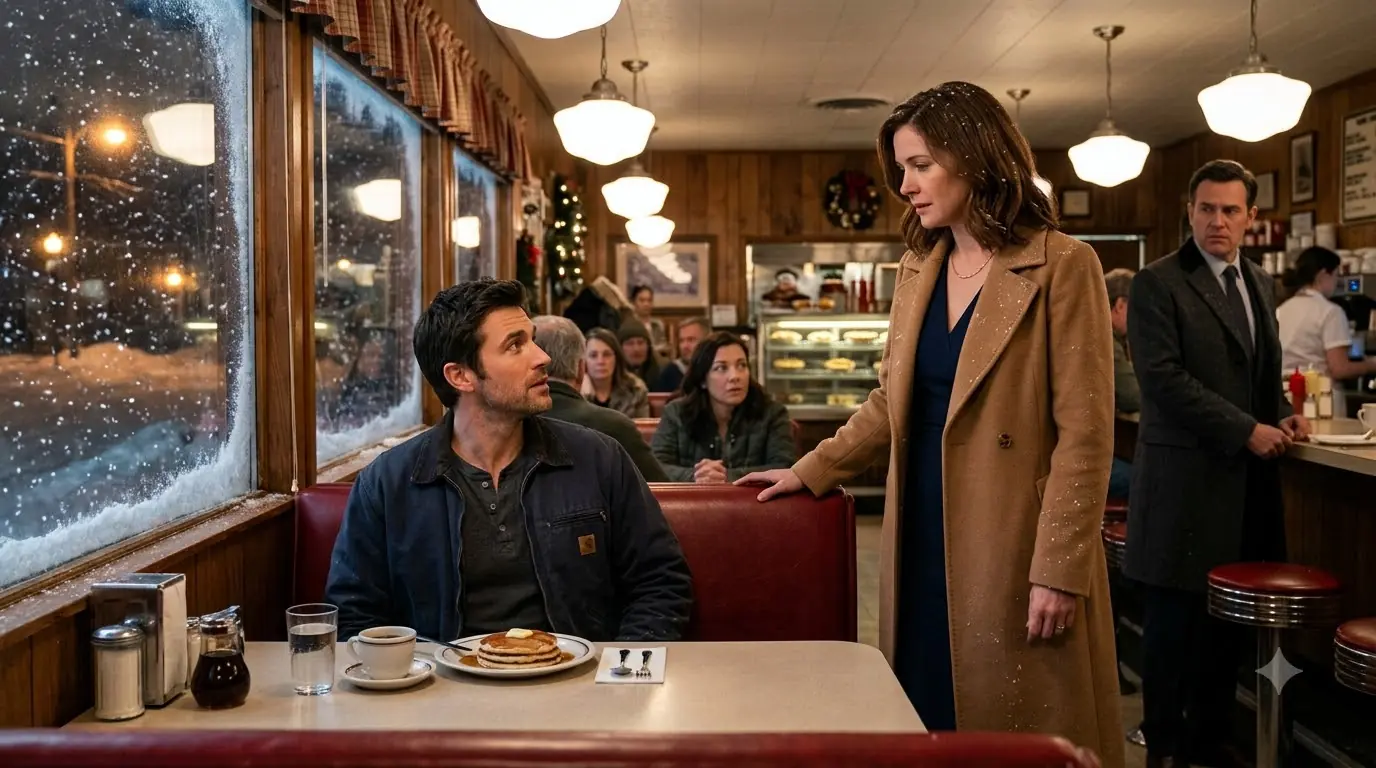
Inside Miller's Corner Diner, forks paused halfway to mouths.
Coffee cups hovered in the air, and the old television above the pie case was still showing Caroline Whitaker's face beneath the headline: Billionaire Philanthropist Arrives for Tonight's Charity Gala.
She stood there in a camel-colored coat darkened by melted snow, her hair loosened by the weather, her eyes tired in a way money could not hide. At the last booth, beneath a flickering yellow lamp, Ethan Miller sat with his 9-year-old daughter, Sophie, sharing one plate of pancakes cut carefully into equal pieces.
His jacket was worn at the cuffs. Her mittens did not match. Between them sat two glasses of water and one small bowl of syrup stretched thin like everything else in their life. Caroline looked at the empty seat across from them, then at Ethan, and asked softly, "Can I sit with you?"
The whole diner seemed to hold its breath. Preston stepped closer, lowering his voice as if kindness were a public relations mistake. "Caroline, there is a private room in the back. The press is outside."
This is not the image we discussed." Ethan looked up slowly. He did not recognize her as power. He did not see the net worth, the cameras, the foundations, or the polished name the rest of the country repeated with admiration. He saw a woman standing alone in wet shoes, trying not to look lonely. "It is just a chair," he said."
Sophie immediately slid out of the booth and pulled the seat open with both hands. "You can sit here. My mom used to say lonely people should never eat by themselves." Caroline blinked.
For one fragile second, the famous woman who had spoken in front of senators, investors, and stadiums looked as if a child had touched an old bruise in her heart. She sat down carefully as though the vinyl booth were more sacred than the velvet chairs waiting for her at the gala. The waitress behind the counter, Mrs. Evelyn Brooks, stopped wiping the same coffee stain she had been wiping for 10 minutes. A truck driver near the door leaned back.
Two teenagers quit whispering. Even the grill seemed quieter, the soft hiss of butter fading under the weight of something no one could name. Ethan pushed the syrup a little closer to Caroline. "We only ordered one plate," he said, calm and unashamed.
"But there is enough if nobody minds smaller bites." Preston gave a thin laugh. "Mister, do you have any idea who you are speaking to?" Ethan took a breath, then handed Sophie the better half of the pancake.
"A hungry person," he said. That is usually enough information. Caroline looked down at the pancake, then at the man across from her. His hands were rough from work, marked with flour near the knuckles, but there was a steadiness in them that reminded her of letters she had kept hidden for years.
Letters from a stranger who once signed only two initials: EM. She had come to this town looking for the person who saved her when she was a forgotten 12-year-old girl with failing eyesight and no family able to pay the bills. She had searched records, church basements, old scholarship files, and burned archives. She had followed the last clue to this diner without knowing why.
Now, across from her, Ethan Miller smiled gently at his daughter and broke his own piece of pancake in half again. Caroline did not know it yet, but the man the room was quietly judging was the reason she could see the world clearly at all. Caroline reached for the fork Ethan offered her, but before she could take a bite, the bell above the diner door rang again, and a cold wind slipped through the room like an unwanted opinion. Ethan rose without drama, walked to the entrance, and pushed the door shut with his shoulder.
A small elderly man outside had been trying to pull his coat tighter against the snow, his boots sinking into the slush near the curb. Ethan glanced at him, then at the nearly empty tip jar by the register. He did not sigh. He did not announce anything.
He simply took the last $5 bill from his pocket, folded it once, and tucked it into Mrs. Brooks's hand. "Bowl of soup for Mr. Harlon," he said quietly.
"Put it on mine, Mrs. Brooks." Mrs. Brooks looked at him with the tired sadness of someone who had watched him give away money he needed.
"Ethan, you already worked a double." Ethan gave a small nod. "Then I earned enough to share," he said. Sophie watched from the booth, her chin resting in both hands, proud and worried at the same time. Caroline saw that look.
It was the look of a child who knew her father was good and also knew goodness did not always pay the electric bill. Ethan returned to the table, brushed snow from one sleeve, and sat as if nothing had happened. Preston studied him with narrow eyes. "You make a habit of feeding strangers."
Ethan poured a little syrup on Sophie's side of the plate. "Only when they are hungry," Ethan said. "That is not a financial plan," Preston replied. Ethan smiled faintly.
"No, it is just a human one." The words settled over the booth with quiet weight. The yellow light above them flickered again, catching the fine lines near Ethan's eyes, the small burn mark on his wrist from the grill, the wedding band he still wore on a chain beneath his shirt because some promises did not leave when people did. He had lived in that town long enough for people to think they knew him.
They knew he drove an old blue pickup with one rusted fender. They knew he rented the small apartment above the laundromat on Maple Street. They knew he packed Sophie's lunch in brown paper bags and walked her to school when the truck would not start. What they did not know was that every month, even in the lean months, Ethan mailed a small envelope to a scholarship office that had changed names three times in 10 years.
Sometimes it held $40, sometimes $12. Once after Sophie had the flu and the heating bill came high, it held only four $1 bills and a note that said, "For someone who needs tomorrow." He never signed his full name, only EM. Sophie had asked him once why they helped children they would never meet.
It had been late October, the first frost silvering the laundromat windows, and Ethan had been counting quarters on the kitchen table. "Because your mother believed one child helped at the right time could grow up and become a miracle for someone else," he had told her. Sophie had considered that seriously, then pushed three coins from her own jar toward him. "Then send these, too," she whispered.