The first time Henrietta Miller heard herself described as livestock was twelve minutes after arriving in Colorado.
She stood beneath the low ceiling of the Silver Jack Saloon in Denver with nine other women arranged beside her like merchandise.
Someone near the poker tables whispered, “Ten came in. Bet they don't all leave married.”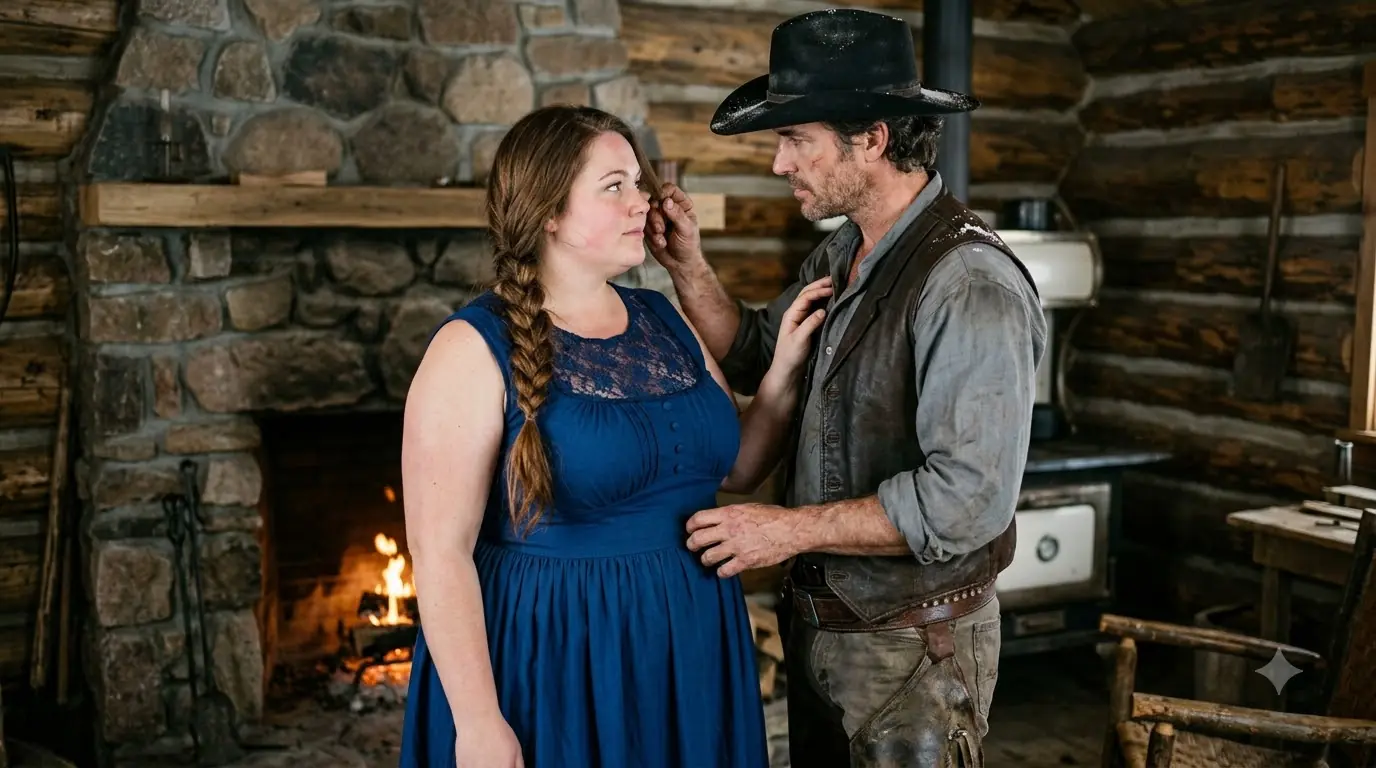
Another voice answered, “Depends how desperate the miners are.”
A third man laughed.
Hattie kept her eyes forward.
She had discovered long ago that humiliation became slightly easier if she refused to turn toward it.
Not painless.
Never painless.
Simply easier.
Her name was Henrietta Miller, though almost everyone who loved her had called her Hattie.
At twenty-four, she stood five feet six inches tall and weighed considerably more than any woman in the line beside her. She had broad shoulders, thick arms, substantial hips, powerful legs, and a soft heavy waist that no corset had ever successfully hidden.
The other women had spent the final hour of the journey preparing themselves.
Hair curled.
Powder applied.
Waists cinched.
Dresses adjusted.
Loretta Vale, standing three places down, looked almost unreal beneath the amber kerosene light.
Tall.
Golden-haired.
Blue-eyed.
A waist so narrow Hattie wondered whether the woman possessed internal organs.
Every man entering the saloon looked at Loretta first.
Hattie expected that.
People had been looking past her toward prettier women since she was old enough to notice.
She had stopped pretending not to understand.
What bothered her was not being considered less beautiful.
Beauty could be unfair.
Nature owed nobody symmetry.
What bothered Hattie was the way people turned appearance into character.
A large woman was supposedly lazy.
Undisciplined.
Desperate.
Grateful for any attention.
A joke before she opened her mouth.
Hattie had spent years proving otherwise and discovered proof rarely mattered to people committed to their assumptions.
Her father had never treated her that way.
Walter Miller owned a butcher shop outside St. Louis for twenty-seven years.
He had taught Hattie to sharpen knives before teaching her embroidery.
At twelve, she could break down a hog.
At fourteen, she could identify spoiled meat by smell before Walter noticed.
At sixteen, she could carry cuts that made grown apprentices complain about their backs.
Her father used to say:
“A body is a tool, Hattie. Better to ask what it does than whether somebody likes looking at it.”
Then he died.
Pneumonia.
Fast.
Eight days between coughing and burial.
The butcher shop should have gone to Hattie.
Instead her uncle Raymond produced debt papers she had never seen, claimed ownership under an old business agreement, and told her a woman could not reasonably operate a butcher shop alone anyway.
Hattie fought.
She lost.
Returning east meant working for Raymond in the shop her father had built while being paid less than his newest apprentice.
So when she saw the newspaper notice offering transportation west for respectable unmarried women seeking husbands among established Colorado settlers, she wrote back.
Not because she dreamed of romance.
Because she needed distance.
The agency representative promised each bride the right to refuse a match.
Hattie believed him until she arrived.
Then she learned reality.
The agency had paid transportation.
Board.
Food.
Hotel charges.
Any woman who refused every available match would owe nearly forty dollars before leaving.
Hattie had six.
So she stood in the Silver Jack Saloon beside nine other women while men inspected them.
The first two matches occurred quickly.
Then another.
Hattie remained.
Of course.
A miner selected the petite blonde at her left.
A rancher chose a red-haired widow.
Loretta received three offers within fifteen minutes.
She refused two.
Accepted none yet.
She was clearly waiting.
For what, Hattie did not know.
Then the saloon doors opened.
Conversation changed.
Not stopped.
Changed.
Quieter.
Men turned.
A large figure entered beneath a black weather-beaten hat.
He had to lower his head slightly under the doorframe.
Hattie noticed scars first.
One pale mark crossed his right cheek.
Another disappeared beneath the collar of his gray shirt.
Dark hair curled behind his ears.
His beard was short and rough.
A long brown coat hung nearly to his knees.
He carried a revolver low on his right hip and wore a knife on his left.
He looked like the mountain had built a man from leather, cold, and bad memories.
Someone whispered:
“Hayes.”
Another man muttered:
“Dead Man’s Peak.”
Hattie looked toward Loretta.
Loretta had straightened.
Of course.
The agency man smiled eagerly.
“Mr. Hayes.”
The stranger stopped.
“You received my letter?”
“I did.”
“Ten?”
“Originally ten. Three already matched.”
The man called Hayes looked down the line.
His gaze moved slowly.
Not lustfully.
That surprised Hattie.
He studied posture.
Hands.
Shoes.
Faces.
He passed the delicate blonde.
Then a brunette.
Then another.
Loretta smiled when he approached.
Hattie almost felt sorry for the rest of them.
Loretta was devastating when she decided to be.
Gideon Hayes stopped in front of her.
Loretta lifted her chin.
“Mr. Hayes.”
He looked at her.
Then looked past her.
At Hattie.
Her stomach tightened.
Gideon stepped around Loretta.
Stopped directly in front of Hattie.
The saloon became strangely quiet.
He studied her hands.
Hattie looked down.
Callused.
Not pretty.
Then his eyes traveled across her shoulders.
Arms.
Waist.
Hips.
Hattie’s face burned.
If he laughed, she decided, she would break his nose.
Gideon turned toward the agency representative.
“I’ll take her.”
No one spoke.
Hattie stared at him.
The representative blinked.
“Miss Miller?”
“Yes.”
Then Gideon said it.
“Give me the fat one.”
A few men laughed.
Hattie felt the sentence strike harder than any slap.
Loretta gasped theatrically.
“Good God.”
Hattie’s face went hot.
The agency man looked uncomfortable.
“Mr. Hayes, perhaps we could use another—”
Gideon removed a leather pouch from his coat.
Dropped it onto the table.
Gold struck wood.
Heavy.
“Three hundred.”
The representative's eyes widened.
Loretta stared.
Gideon looked at Hattie.
“Get your trunk.”
Hattie did not move.
“You could've asked my name.”
His expression changed slightly.
“What?”
“My name.”
Gideon stared.
The saloon watched.
Hattie continued.
“If I'm supposed to marry you, perhaps learn it before purchasing me like a mule.”
A few men coughed to hide laughter.
Gideon’s eyes narrowed.
Then something unexpected happened.
He removed his hat.
“My mistake.”
Hattie stared.
“Henrietta Miller?”
“Hattie.”
“Hattie.”
His voice was deep.
Rough.
“I'm Gideon Hayes.”
“I heard.”
“Will you marry me?”
The question came now.
Too late.
Awkward.
But real.
Hattie looked around.
At the agency man.
At Loretta.
At the laughing miners.
At the six dollars hidden inside her boot.
Then back at Gideon.
“Do I have a room of my own?”
He looked confused.
“At first.”
“Yes.”
“Food?”
“Yes.”
“Will you ever call me ‘the fat one’ again?”
The saloon became silent.
Gideon looked directly at her.
“No.”
“Then yes.”
Loretta laughed in disbelief.
“You can't be serious.”
Hattie turned.
Loretta looked at Gideon.
“You could choose anybody.”
“I did.”
Loretta pointed at Hattie.
“Look at her.”
Gideon's expression changed.
“I am.”
Loretta's mouth tightened.
“She’s a monster.”
The next thing Hattie remembered most clearly was Gideon's face.
Not anger exactly.
Something colder.
He looked at Loretta once.
“Say another word about my wife and you'll leave this room through a window.”
Loretta went pale.
Hattie stared.
Wife.
They were not married yet.
But Gideon had already used the word.
She did not know whether to appreciate that or hate him more.
Probably both.
They married forty-seven minutes later.
A local preacher performed the ceremony behind the saloon.
No flowers.
No music.
No family.
Gideon placed a plain silver band on Hattie’s finger.
It was slightly too small.
Hattie said nothing.
When the preacher told him to kiss the bride, Gideon looked at her first.
Question.
Hattie understood.
She nodded once.
He kissed her cheek.
That was all.
By sunset they were leaving Denver.
Hattie rode in a small wagon carrying her trunk, supplies, flour, beans, salt, lamp oil, ammunition, and enough winter clothing to confirm that Gideon Hayes took mountain weather seriously.
He rode beside her on a dark bay horse.
For the first hour neither spoke.
Then Hattie finally said:
“Why?”
Gideon looked over.
“Why what?”
“Don't insult me.”
“I wasn't.”
“There were nine other women.”
“Six.”
“Nine when you entered.”
“Three were already spoken for.”
“Stop counting.”
Gideon's mouth twitched.
Hattie noticed and became angrier.
“Why me?”
“You'll know when we get home.”
“That sounds ominous.”
“It isn't.”
“You said, ‘Give me the fat one,’ in front of thirty strangers.”
Gideon looked genuinely uncomfortable.
“Poor choice of words.”