The last message Daniel Brooks sent his wife before coming home was a lie small enough to fit beneath his thumb. He told her he would be difficult to reach for a while, then stood beneath the bright airport windows with his duffel against his leg, reading her answer until the screen dimmed.
Alicia had sent a heart. Nothing unusual about that, nothing that should have made him study the little red shape while people moved around him with rolling suitcases and paper cups, but he had been away long enough to become greedy about ordinary things.
He wanted her unfinished sentences. He wanted the way she moved his shoes out of the hallway with one foot while carrying laundry, and the sound of her laughing before she remembered what had started it. He wanted to turn a key in a lock and know that the small noises on the other side belonged to his life.
His return had shifted forward, and the change still felt provisional even with the travel completed and his bag on American flooring. For several hours he had refused to picture the house too clearly, afraid that the moment he let himself believe, some correction would reach him and send him back toward another gate.
Now there were no more flights between him and home. There was only a ride, a familiar road, the short walk from the curb, and the front door he had opened in his imagination more times than he had admitted to anyone.
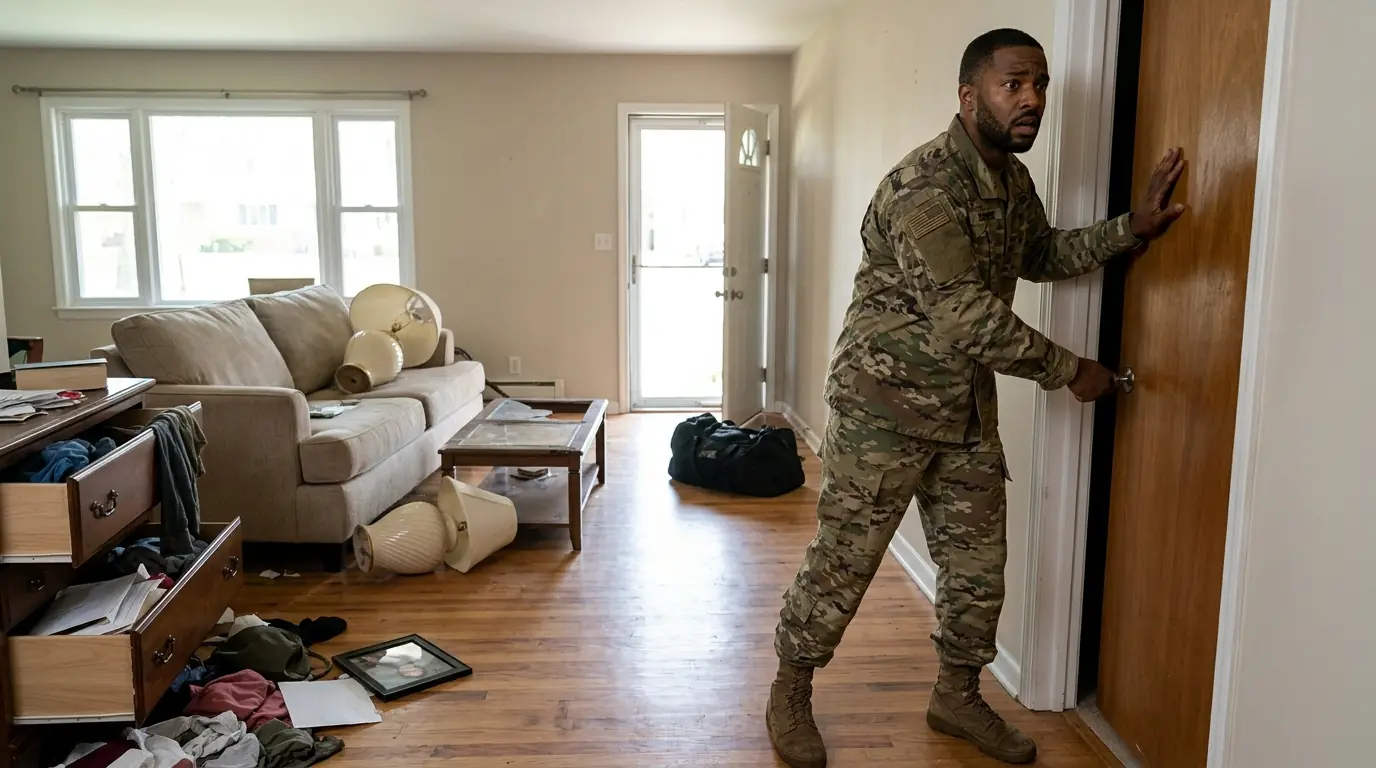
He checked the time. Daylight would still be spilling through the living room windows when he arrived, touching the floor beside the sofa, the same place where Alicia liked to stand barefoot when she answered his calls.
She had never understood that he remembered where the sun landed. During their first months in the house, she had laughed at his certainty that the light changed the color of the walls, and he had insisted that the room was warmer in the afternoon than any paint sample could explain.
He had watched that light through a telephone screen while sitting in places where daylight looked entirely different. Sometimes it was the only thing in the picture that seemed to remain still.
Today he would step into it. He would put down the bag, take her face in his hands, and find out whether the smell of her blouse still held the faint clean scent he could never identify correctly.
The thought made him smile before he realized he was doing it. A woman passing with a child glanced at him and smiled back, and for a moment he felt almost embarrassed by how little effort happiness required when it finally had somewhere to go.
His camouflage uniform was creased from travel. His short hair needed no arranging, and the athletic strength that made carrying the duffel easy had done little to prevent the stiffness of a long journey. He smoothed one sleeve anyway, then checked the small pocket where he had kept the house key separate from everything else, protected by an old habit that had become more important with distance.
He could have called. The idea presented itself with the ordinary reasonableness of sensible things: let Alicia know, spare her the shock, make sure she was home.
Instead he pictured her turning toward the door. He pictured the first breath she would take when she saw him, the startled movement of her hands, the moment when months of being careful with each other would collapse into an embrace.