The first thing Marcus Reed noticed was that the gate had stopped clicking.
All afternoon, a loose tongue of metal inside the latch had answered the breeze with a faint, irregular tick. It was the sort of sound a person could ignore until he had been alone with it for several hours. Marcus had been carrying dishes between the kitchen and the covered porch, setting out chairs, checking the time, and making promises to himself about small repairs. Tighten the latch. Replace the bulb above the garage. Ask his daughter whether the bicycle in the shed was still too small or whether she had simply stopped wanting to ride with him.
Then the ticking ceased.
At the porch table, with a folded napkin beneath one hand and a stack of paper plates beneath the other, he looked toward the narrow opening beside the house.
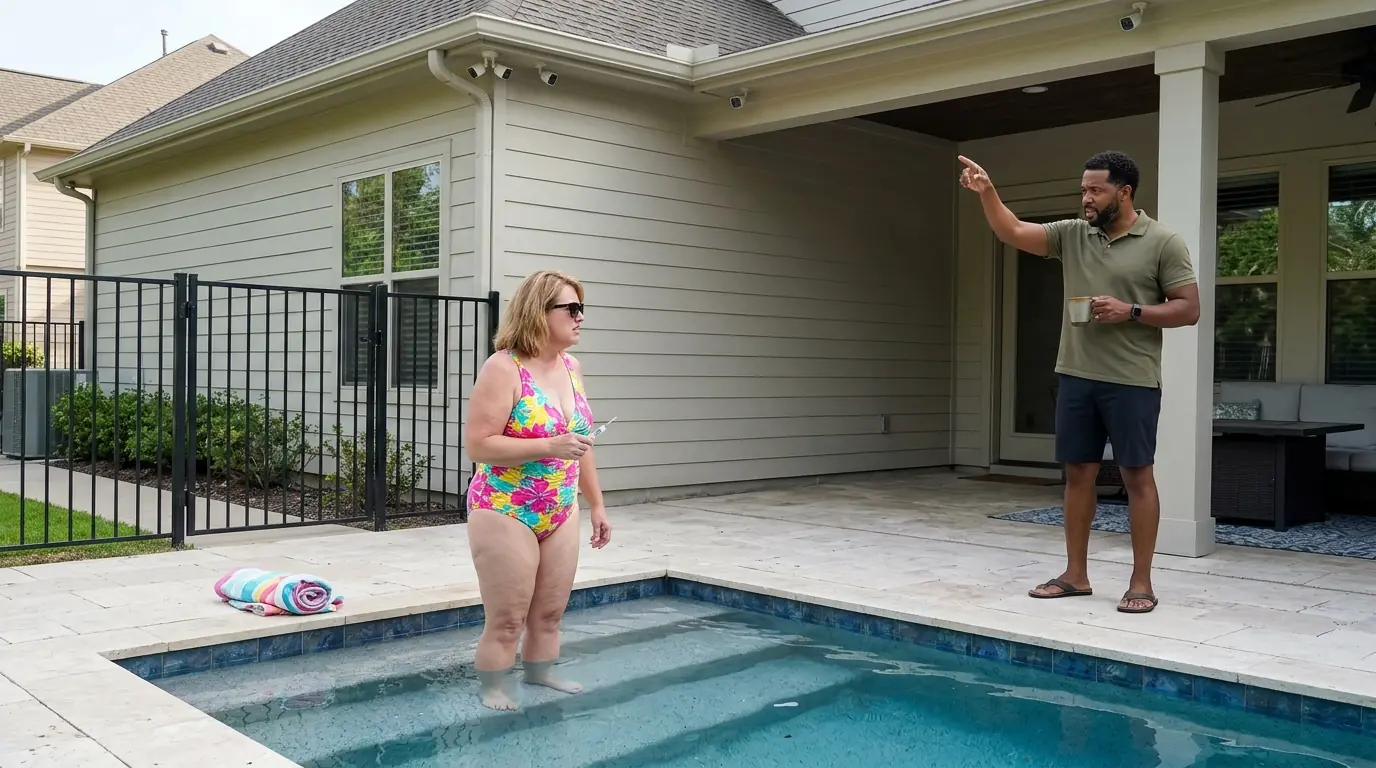
Karen Whitmore stood outside his side gate in a swimsuit bright enough to catch the eye through the slats. Coral flowers, yellow flowers, a turquoise background. Her blonde hair rested against her shoulders. One rubber sandal was angled toward the opening, as if she had already settled the question of whether she was coming in.
There was something in her right hand.
For one brief, foolish moment, Marcus thought she had brought a pool toy.
He would return to that moment in the seconds that followed, although there would hardly be enough seconds for returning to anything. The mind could be extravagant under pressure. It could furnish a whole room inside a heartbeat and invite every old mistake to sit down.
But before the gate stopped ticking, before Karen arrived with her clenched jaw and that thing in her hand, the afternoon had belonged to a different kind of anticipation.
His daughter was coming home.
Not permanently. Not in any of the ways adults liked to pretend they meant when they said home. Lena was sixteen, and a weekend at her father's house could still require three conversations, a calendar invitation, and a neutral reminder from her mother that nobody was asking her to choose a side. She had spent the previous weekend at a school robotics competition and the one before that with friends Marcus knew mostly as voices spilling out of her phone. Today she had promised to come swim, eat an unreasonable quantity of grilled corn, and help him decide what to plant beside the back fence.
He had written the promise on the kitchen calendar because he liked seeing it there.
LENA, 4:30.
Underneath, smaller, he had added: Ask about bridge.
The bridge was a model made from balsa wood that had apparently failed during testing in a way Lena found both humiliating and hilarious. Marcus had caught only half the story during a call from a crowded bus. He wanted the other half. He wanted to understand why a little structure breaking under a stack of weights had made her laugh so hard she couldn't speak. He wanted, more than he had expected to want anything at forty-three, to be allowed back into the ordinary middle of her life.
So he had cleaned the pool himself that morning.