The nightmare started about three months after my family moved into San Isidro Heights, a gated subdivision in Laguna, Philippines.
At first, we thought we had been lucky.
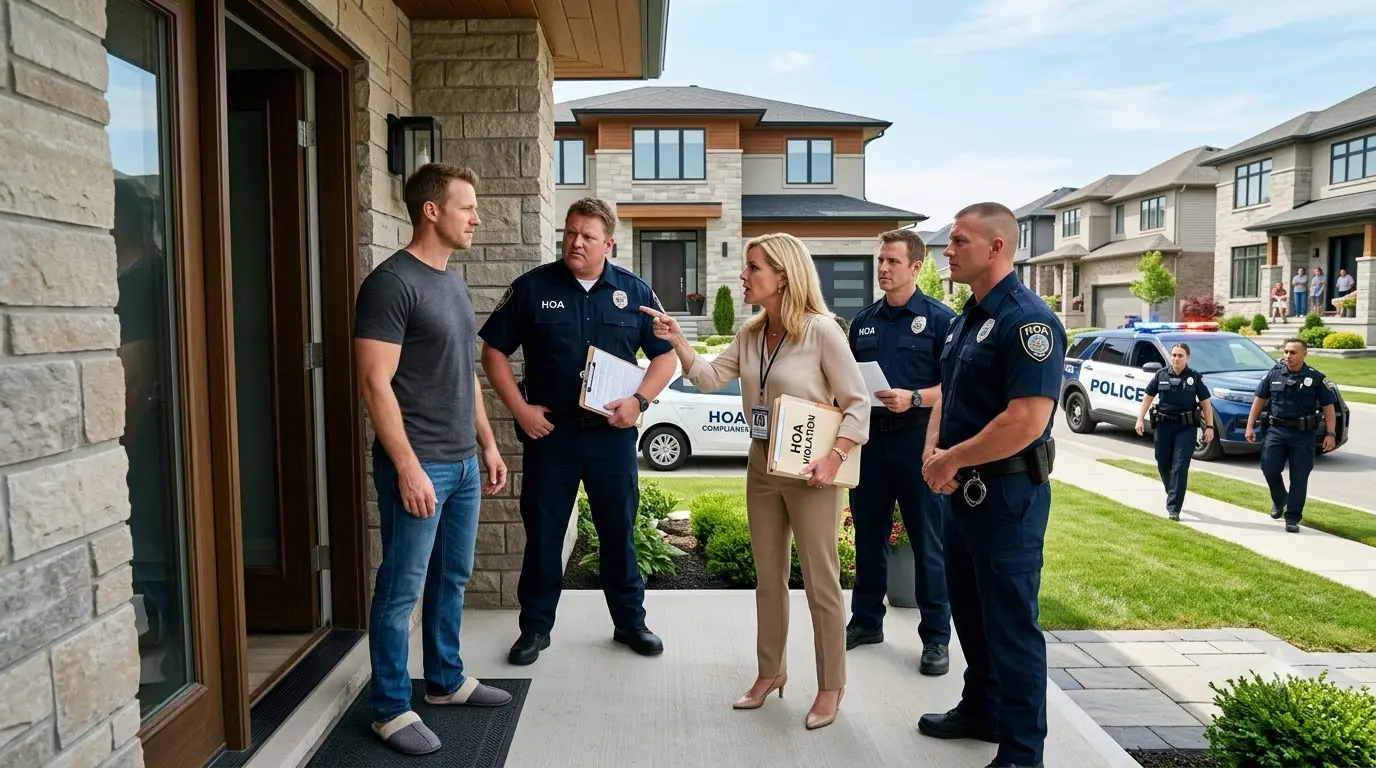
My wife, Marisol, and I had spent almost two years saving, comparing houses, arguing about commute times, looking at schools, and trying to find a neighborhood where our children could grow up without every afternoon feeling like traffic, concrete, and noise.
San Isidro Heights seemed perfect.
It was not one of those enormous luxury villages where every house looked like a hotel.
It was quieter than that.
Tree-lined streets.
A small basketball court.
A playground near the clubhouse.
Security at the gate.
A few hundred houses arranged around gently curving roads, most with little gardens or covered carports.
There were retirees who had lived there for fifteen years, younger families with children, overseas workers whose houses were occupied by parents or siblings, and professionals who commuted toward Metro Manila during the week.
It felt normal.
That was exactly what we wanted.
My name is Daniel Reyes.
I was thirty-seven at the time.
I had been serving with the Philippine National Police for more than a decade.
That is relevant to the story, but it was not something I advertised around the subdivision.
Off duty, I did not want to be Officer Reyes.
I wanted to be Daniel.
Husband.
Father.
The guy washing his car on Saturday morning.
The neighbor carrying grocery bags in from the driveway.
The man whose son kicked a ball over the fence twice a week.
My work already occupied enough of my life.
I had no interest in walking around my own street with a badge in my hand.
Most of our neighbors did not even know what I did during the first few months.
They knew I worked in government.
That was enough.
Marisol knew why I liked it that way.
“You spend your whole week dealing with problems,” she told me once.
“At home, you want people to leave you alone.”
“Exactly.”
We had two children.
Nico was nine.
Sofia was seven.
Nico loved football even though half the boys around him preferred basketball.
Sofia liked anything her brother was doing, provided she could change the rules whenever she started losing.
They were normal kids.
That meant they made noise.
Not outrageous noise.
No screaming at midnight.
No motorcycles.
No giant speakers.
They laughed.
Ran.
Kicked a ball around our front yard.
Rode bicycles up and down the street.
Occasionally argued loudly over whether the ball had gone out of bounds.
The first month after moving in, I thought the biggest problem we would have was convincing Nico not to kick the ball against the freshly painted side wall.
Then I met Clarissa Villanueva.
Clarissa was in her late fifties.
She had lived in San Isidro Heights for years and served as one of the members of the homeowners association board.
She was not the president.
That fact eventually became very important.
But Clarissa carried herself as though every gate, sidewalk, tree, parked vehicle, basketball hoop, garden hose, and trash bin in the subdivision belonged personally to her.
She walked every morning.
Always around the same time.
Wide sun visor.
Large sunglasses.
Clipboard or phone.
Sometimes both.
Most people greeted her.
Some genuinely liked her.
Others waited until she passed before rolling their eyes.
I learned that later.
The first time we spoke, I was outside moving cardboard boxes from the carport.
She slowed near our gate.
“New owners?”
I smiled.
“Yes. Reyes family.”
She looked past me toward the house.
Not at me.
At the house.
Her eyes moved over the carport, the potted plants Marisol had arranged near the entrance, the bicycles beside the wall.
Then she looked at me.
“You received the subdivision rules?”
“Yes.”
“You read them?”
“Most of them.”
“You should read all of them.”
Her tone was not friendly advice.
It sounded more like a warning.
I smiled anyway.
“We will.”
She nodded once and continued walking.
I watched her go.
Marisol stepped outside.
“Friend?”
“Apparently.”
She looked down the street.
“That woman?”
“You know her?”
“She introduced herself yesterday.”
“How’d that go?”
“She told me our curtains were too bright.”
I looked toward the living-room window.
The curtains were beige.
“Those?”
“Yes.”
“What color does she want?”
“I didn't ask.”
We laughed.
That was the beginning.
Small enough to be funny.
The first note appeared two weeks later.
Nico and Sofia had been playing football in the front yard around four-thirty in the afternoon.
I was sitting beneath the carport cleaning an old electric fan.
Marisol was cooking.
The children played for maybe forty minutes.
No music.
No shouting beyond the occasional:
“Pass!”
“That was out!”
“No, it wasn’t!”
The following morning, a folded sheet of paper had been pushed beneath the metal gate.
NOTICE OF NEIGHBORHOOD DISTURBANCE.
It claimed children at our residence had violated subdivision rules by engaging in “recreational ball activity causing repeated noise and possible property danger.”
At the bottom, handwritten:
BALL GAMES ON RESIDENTIAL LOTS ARE NOT PERMITTED.
No section number.
No official letterhead.
Just Clarissa’s name beneath:
BOARD MEMBER, COMPLIANCE.
I brought it into the kitchen.
Marisol read it.
“Can she do this?”
“I don’t know.”
“You read the rules.”
“Not every page.”
That evening, I did.
Every page.
Parking.
Garbage.
Construction.
Pets.
Common areas.
Noise.
Dues.
Use of clubhouse facilities.
Property alterations.
Nothing prohibited children from playing ball on their own lot during the day.
The noise rule applied to unreasonable disturbances, particularly late evening and overnight.
Nico and Sofia kicking a football at four-thirty did not come close.
I folded the note.
Put it in a drawer.
Then forgot about it.
That was mistake number one.
Not because I should have started a war over one ridiculous letter.
Because I should have started a file.
A few days later, Clarissa came personally.
I was washing our Toyota in the driveway.
She stopped outside the gate.
“Mr. Reyes.”
“Good morning.”
“I need to discuss your children.”
I turned off the hose.
“What happened?”
“They're too loud.”
“Today?”
“In general.”
I looked toward the house.
The kids were inside.
“Who complained?”
“Several residents.”
“Which ones?”
“I can't disclose complainants.”
“Okay.”
I set the hose down.
“What rule are we violating?”
“I already gave you notice.”
“Yes.”
“I checked the bylaws.”
“There’s no rule against children playing football on their own property.”
Clarissa sighed.
It was the sigh of someone dealing with a difficult employee.
“The board has discretion regarding problem households.”
“Problem household?”
“Yes.”
“We've been here two months.”
“Exactly.”
I stared at her.
“What does that mean?”
“New residents need to learn the culture.”
I smiled slightly.
“I thought we needed to learn the rules.”
“Same thing.”
“No.”
That was the first time her expression hardened.
I continued calmly.
“If the board has adopted a new rule, send me the actual board resolution.”
“I don't need to provide you internal documents.”
“If you're asking me to follow it, you should be able to show me what it is.”
Clarissa crossed her arms.
“Mr. Reyes, this attitude is exactly how problems begin.”