I stood inside the county assessor’s office on a rainy Tuesday morning in March 2019 holding a cashier’s check for twelve dollars and seventeen cents.
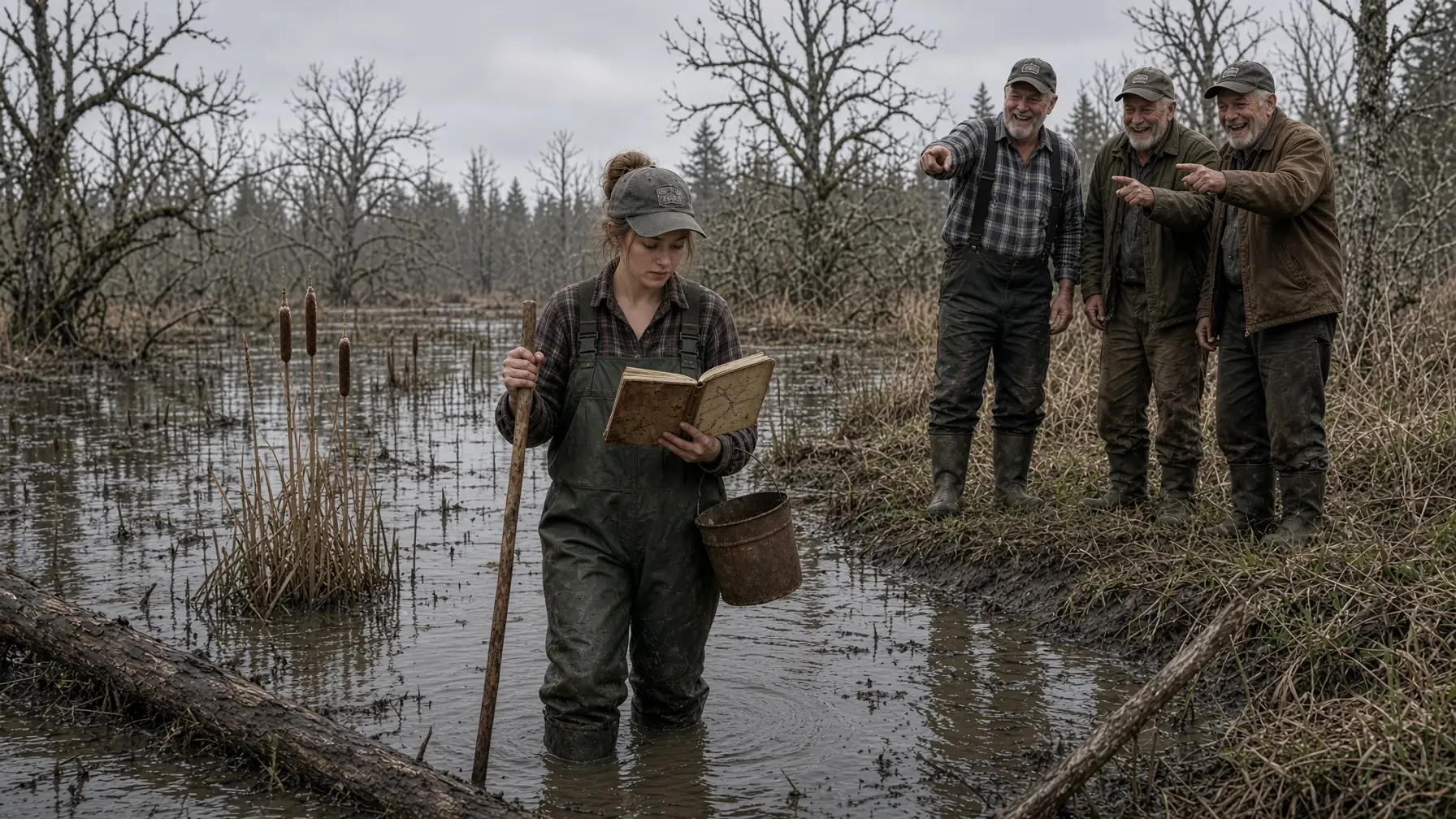
Roger Peton, the fifty-eight-year-old clerk behind the counter, looked first at the check, then at me, then back at the plat map spread between us as though one of those three things had to be a joke.
“You’re serious?”
“Yes, sir.”
He tapped a yellowed section of the map with the chewed end of his pencil.
“Nineteen acres of wetland. No road frontage. Floods every spring. No utilities. You can’t build a conventional house on half of it, can’t graze most of it, and good luck farming anything that doesn’t enjoy standing in water.”
“I know.”
“The county’s been trying to unload this parcel for years.”
“I know that too.”
Roger leaned back.
“How old are you?”
“Twenty.”
He removed his glasses.
“And you want to buy a swamp.”
“Yes, sir.”
Roger stared at me another few seconds.
Then he took the check.
He did not even bother counting.
He stamped the deed transfer, signed two forms, and slid the paperwork across the counter.
March 12, 2019.
Clatsop County, Oregon.
Parcel 4-7-22-AC.
19.3 acres.
Seasonal wetland.
No structures.
No utilities.
Access through adjoining land.
Roger tapped the deed once.
“It’s yours.”
Then he smiled.
“Good luck with it.”
I folded the paper, put it inside my jacket and stepped back into the rain.
Roger thought I had bought nineteen acres of nothing.
Four months earlier, I probably would have agreed.
Then my grandfather died.
Clayton had lung cancer.
He told almost nobody how bad it was until telling people no longer mattered.
By the time I understood he was dying, the disease had already made most of our decisions for us.
He left me the old Craftsman house, the barn, eight acres around it and more debt than I knew what to do with.
Seventy-three thousand dollars.
Four mortgage payments behind.
Past-due property taxes.
A barn roof that leaked.
Old irrigation lines that seemed to burst whenever money was shortest.
One tractor worked sometimes.
The other existed mainly so weeds had something to grow around.
I was working doubles at a feed store and taking whatever side work people would give me.
Fence repair.
Hay stacking.
Cleaning equipment.
Anything.
The math still did not work.
If nothing changed, I would lose the place by summer.
Then I found the notebook.
It was inside the barn beneath a dirty tarp, wedged in an old wooden crate behind a Farmall Cub that had not run in decades.
The leather cover was cracked.
Pages had yellowed.
The edges felt soft enough to tear if I turned them carelessly.
Inside was my grandfather’s handwriting.
Tight.
Slanted.
Blue ink faded almost gray.
The early entries were ordinary.
Weather.
Fence repairs.
Equipment.
Water levels.
Then one page stopped me.
Bought the Nihalum tract today. 19 acres. Paid the back taxes. Nobody wanted it. Let them laugh.
I read the sentence three times.
The acreage was almost identical to the tax-delinquent wetland the county had listed behind our property.
Then I turned the page.
Drawings.
Topographic sketches.
Water-flow patterns.
Sediment layers.
A creek channel that did not exist on modern maps.
And in the margin:
Gold moves downstream. Always has. Always will. Just have to know where it stops.
I looked toward the old Farmall.
Mud still clung beneath one wheel well.
Ancient mud.
Dry as dust.
That night I barely slept.
The next morning I went back to the assessor’s office and asked for the oldest survey maps they would let me see.
A woman behind the counter disappeared into storage and returned almost twenty minutes later carrying a rolled linen map that smelled like mildew and an attic.
The tract had been surveyed in the nineteenth century.
Across the center somebody had written:
Creek diverted following flood. Original channel runs northeast through parcel.
I traced the faded line.
The old watercourse crossed the exact property the county was practically giving away.