My name is Nicholas.
When my wife looked me in the eye and told me she wanted to live for herself without me, my response changed everything between us forever.
I met Dorothy at a professional networking event years ago. She was working in the human resources department for an international organization, and I was just starting my career in financial consulting.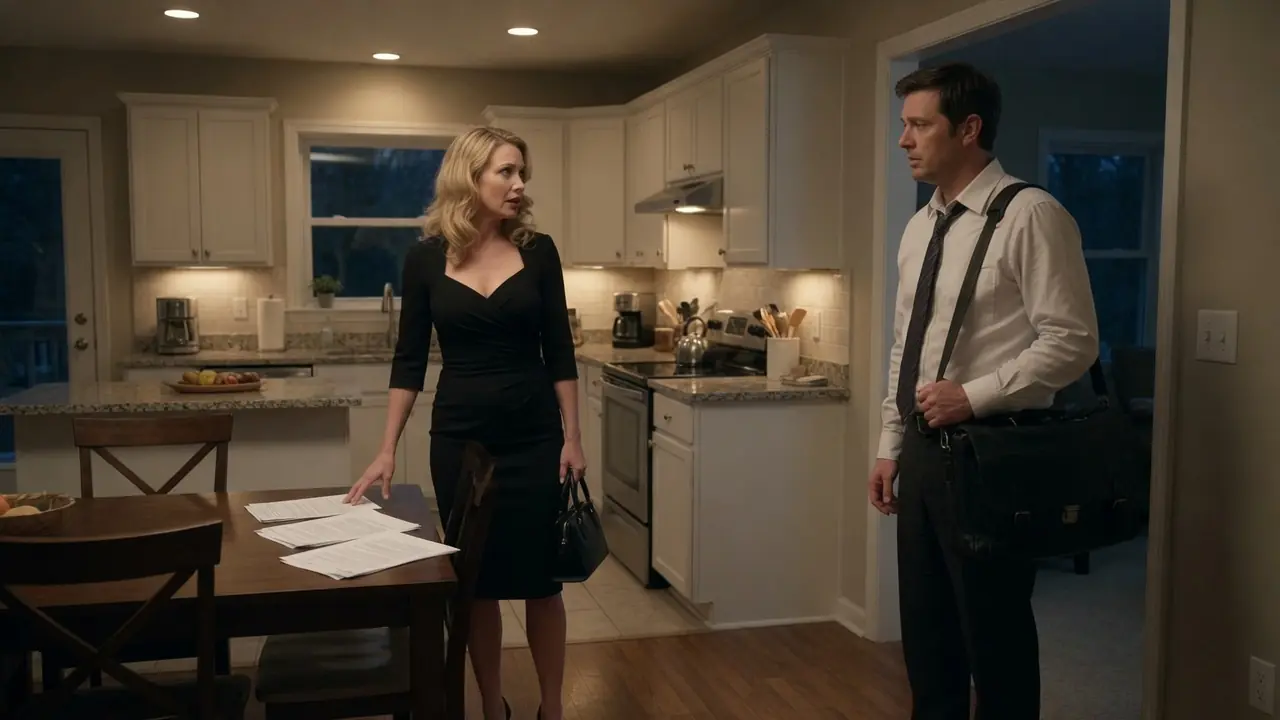
When we started talking that night, I was impressed by how ambitious she was and how thoughtfully she spoke about her work.
Our courtship months later felt natural and healthy. We would meet for coffee between our busy schedules, go to museums on weekends, and take evening walks where we talked about everything from current events to childhood memories.
Dorothy seemed genuinely interested in building something meaningful together. She supported my career goals while pursuing her own professional development.
We got married after dating for two years in a small ceremony that felt perfect for both of us.
Dorothy moved into the house I had bought the year before with money I inherited from my grandfather. It was a three-bedroom suburban home with a small yard, completely paid off, and it represented the kind of stability I had always wanted to provide for my future family.
The first two years of our marriage were everything I had hoped they would be.
Dorothy seemed to love the house. She never complained about it or suggested we needed something bigger or different.
Dorothy had her own career and her own income, but she seemed content with our financial arrangement. I handled the house expenses, while she contributed to groceries and utilities. We maintained separate bank accounts but also opened a joint account for shared expenses and savings.
Everything felt balanced and fair.
During those early years, Dorothy had friends from work and a few college acquaintances she kept in touch with occasionally, but she was not particularly social outside of our relationship.
She would go out with co-workers sometimes for happy hour or attend work events, but most of her free time was spent with me or on her own hobbies. I never felt like her friendships were competing with our marriage or causing tension between us.
The woman I married seemed to value our partnership. She seemed to appreciate the life we were building together. She seemed to understand that marriage meant making decisions together and considering how our choices would affect each other.
Around our third year of marriage, Dorothy reconnected with some college friends through social media. Both of them had been in her sorority, and they had apparently been reaching out to old friends and organizing regular meetups in our city.
Dorothy was excited about reconnecting with them, and at first, I was happy that she was expanding her social circle again.
Now she was embracing what she called independence and encouraging other women to do the same.
The other woman, Kathy, had never been married but had been through a series of long-term relationships that ended badly. She worked in event planning and had an active social life that seemed to revolve around going out.
She was always organizing group activities and seemed to take pride in being the fun, spontaneous friend who could convince people to drop everything for an adventure.
At first, Dorothy’s renewed friendships with them seemed harmless. She would go out with them maybe once a month for dinner or drinks, and she would come home with stories about their conversations and updates about their lives.
I was glad Dorothy had close female friends to talk to, especially since we had moved to a new city after marriage and she had been somewhat isolated from her support network.
But over the course of several months, I started noticing changes in Dorothy’s behavior and attitude that seemed to coincide with the time she spent with those friends.
She would come home from their gatherings with new complaints about our relationship that had never been issues before.
Suddenly, she questioned why I wanted to know where she was going or when she would be home, framing normal married couple communication as controlling behavior.
Dorothy also started making comments about married women we knew who were too dependent on their husbands, or wives who had lost their identities by always prioritizing their families over themselves.
These observations felt like she was testing out new ideas about marriage and independence.
The most noticeable change was in how Dorothy talked about our future plans. Previously, she always used language that included both of us when discussing things. Over time, I noticed she started talking more about what she wanted to do or accomplish without automatically considering how those goals would fit into our shared life.
I tried to dismiss these changes as a normal part of Dorothy exploring different perspectives. I told myself that all marriages go through phases where partners question things or need space to grow individually.
I did not want to be the type of husband who felt threatened by his wife having close female friends or pursuing her own interests.
By our fourth year of marriage, Dorothy’s friendship with her old college friends had become a central part of her social life.
They were getting together at least twice a week, either for planned activities or spontaneous meetups. Dorothy started staying out later when she was with them, sometimes not coming home until after midnight on weeknight gatherings.
The conversations Dorothy brought home from these friendships became more pointed and seemed designed to create conflict between us.
She would share stories about how Debbie’s ex-husband had tried to control her finances, or how Kathy had broken up with a boyfriend who did not want her traveling alone with friends.
These stories always came with commentary about how men try to limit women’s freedom, and Dorothy would watch my reaction carefully when she told them.
Dorothy also started questioning decisions we had made together early in our marriage, reframing them as examples of me being controlling or traditional in ways that were apparently problematic.
Our arrangement where I handled most of the household expenses became evidence that I was trying to keep her financially dependent.
My preference for us to discuss major decisions before making them became proof that I did not trust her judgment.
The most frustrating part of this period was how Dorothy brought up these concerns. Instead of sitting down to have honest conversations about things that were bothering her, she made passive-aggressive comments or asked loaded questions that felt like traps.
If I tried to address her concerns directly, she accused me of being defensive or dismissive of her feelings.
Dorothy’s behavior outside our home started changing as well. She began posting more frequently on social media, sharing articles about women’s independence and relationship equality that felt like indirect commentary on our marriage.
When I expressed concern about the influence these friends had on her, Dorothy became more secretive with her phone, taking calls from her friends in other rooms or stepping outside to talk.
When I asked why she was having hidden conversations, she accused me of trying to monitor her friendships.
These were not behaviors I had ever seen from her before, and they made me wonder what kinds of conversations she was having that she did not want me to overhear.
The arguments between us became more frequent, and they always gradually escalated into bigger issues.
Minor household disagreements turned into accusations about my character or our relationship. Dorothy accused me of not supporting her friendships if I expressed any concern about how much time she was spending away from home or if I mentioned that her late nights were affecting our time together.
The turning point came during our fifth year of marriage, when Dorothy announced that she wanted to go on a week-long trip to Las Vegas with Kathy and her other college friends.
This was not presented as a discussion or a plan we would work out together. Dorothy told me about the trip as if it were already decided, mentioning that they had already looked at flights and hotels and were planning to book everything the following week.
When I asked about the details, Dorothy became immediately defensive.
She said it was just a fun girls’ trip to celebrate one of her friends’ birthdays, but it sounded more like an extended party vacation focused on clubbing, drinking, and meeting people.
My concern was not only the trip itself. It was the way she had made this decision without any discussion with me.
A week-long party vacation in Las Vegas, planned without any input from me and presented as non-negotiable, felt like Dorothy was testing how much she could do without considering our relationship at all.
I told her immediately why the idea made me uncomfortable.
Dorothy’s reaction was more explosive than anything I had seen from her before. She accused me of treating her like property and of being insecure and jealous for no reason.
She said things that night that sounded nothing like the woman I married, using phrases about independence and autonomy that sounded rehearsed and unusually harsh.
Dorothy also started comparing me unfavorably to other men, particularly to one of her friend’s current boyfriends, who apparently never questioned her friend’s plans or expressed concerns about her choices.
She said I was being possessive and traditional in ways that were holding her back from living her life fully.
The fight lasted for hours, with Dorothy becoming more and more angry that I would not just agree to her trip and apologize for questioning it.
What struck me most during that argument was how Dorothy seemed energized by the conflict. It was like she was finally getting to say things she had been thinking for a long time.
The fight ended with Dorothy announcing that she was going on the trip regardless of how I felt about it. She said that if I had a problem with that, maybe I needed to examine my own issues around trust and control.
She said she was tired of feeling like she had to get permission from me to live her life, and that our marriage should not mean she had to give up her freedom and independence.
After that fight, Dorothy stopped speaking to me beyond basic household logistics. She moved into our guest bedroom and began treating me like a roommate she barely tolerated.
For weeks, we lived in the same house while maintaining almost complete silence.
Dorothy would leave for work before I woke up and come home after I had already eaten dinner. On weekends, she made plans that kept her out of the house for most of the day.
When we crossed paths, she responded to any attempt at conversation with one-word answers or simply walked away.
It was clear that she was getting emotional support and validation from her friends while punishing me with silence.
I kept expecting Dorothy to cool down and talk things out. I thought this was just an extreme reaction that would pass like the others.
I genuinely believed she would come to her senses and realize we could work through this conflict if we could just have an honest conversation about our different perspectives.
I started thinking about suggesting couples counseling or planning some kind of gesture that might open the door to communication between us.
I researched marriage counselors in our area and thought about ways to show Dorothy that I was willing to work on whatever issues she felt we had.
I even considered telling her to go ahead and take the Vegas trip, thinking maybe I was being too rigid about something that ultimately was not worth damaging our marriage over.
But Dorothy’s behavior during that time made it clear she was not interested in resolving our conflict or finding a compromise.
She seemed perfectly content with the cold war we were having, like she was waiting for me to surrender completely rather than wanting to find a solution that worked for both of us.
The end came on a Thursday evening.
I had been working late on a project that was due the next day. I had been thinking about coming home and trying one more time to have a real conversation with Dorothy about where we stood and how we could move forward.
When I walked into our kitchen that evening, I found Dorothy sitting at our dining table with papers spread out in front of her.
She was not wearing her wedding ring, which I had already noticed after our fight.
She looked like someone who had made a decision and was completely comfortable with it.
Dorothy stood up when she saw me and crossed her arms. She said she was tired of feeling like she had to check in with me or consider my feelings before making decisions about her own life.
She said she deserved to be happy, and that meant not being married anymore.
The papers on the table were divorce documents.
Dorothy had been talking to a lawyer and had already started the legal process of ending our marriage.
While I had been hoping we could work things out, Dorothy had been planning her exit strategy and consulting with legal counsel about how to leave me.
My response surprised both of us.
Instead of begging, arguing, or trying to talk her out of it, I looked at her calmly and told her she could go ahead and live for herself, but not in my house and not on my dime.
The silence that followed was unlike anything I had ever experienced.
Dorothy’s mouth actually fell open, like she could not process what I had just said. She had been so prepared for me to fight, cry, or beg her to reconsider that my matter-of-fact response seemed to break whatever script she had been following.
Dorothy had clearly expected a completely different reaction.
She thought I would be devastated. She thought I would do anything to keep her. She probably imagined I would accept whatever terms she wanted to set for our marriage.
Maybe she even imagined me agreeing to let her live however she wanted while still providing her with the security and benefits of being my wife.
But I had reached my breaking point.
Something about her cold, calculated delivery flipped a switch in my mind.
I was not going to beg someone to stay when she had already emotionally checked out of our marriage. I was definitely not going to let her treat our home like a hotel she could come and go from whenever she felt like being married.
Dorothy’s shock quickly turned into anger.
She fired back that she was going to take the house.
I explained that the house she had been living in for five years was mine alone, purchased before our marriage with inheritance money, and that her name had never been on any ownership documents.
She had assumed that because we were married, she automatically had a claim to half of everything, including the home.
Maybe her lawyer made the same assumption, because when I took the divorce papers to my attorney the next day, we could see demands for Dorothy to receive half the value of the house as part of the settlement.
When my attorney reviewed the documents, he immediately identified this as a major issue to correct, since the house was my separate property acquired before marriage.
The discovery process revealed the full scope of Dorothy’s misconceptions about our financial situation.
Her reaction to learning about the house ownership was explosive.
She accused me of deliberately hiding information from her and tricking her into believing we owned everything together. She claimed I had been financially controlling throughout our marriage by not putting her name on the deed, even though she had never asked to be added and had never contributed to the purchase or any major improvements.
The legal proceedings stretched on for 14 months, during which Dorothy’s attorney tried various arguments to establish some claim to the house.
They argued that Dorothy’s unpaid household labor had contributed to maintaining the property value, that her financial contributions to utilities and groceries had freed up my income to pay for house expenses, and that she had been led to believe she would share in the property appreciation.
My attorney systematically dismantled each of these arguments with documentation showing that I had paid all property taxes, insurance, and maintenance costs from my separate accounts.
He also showed that Dorothy’s household contributions were normal marital activities that did not create property rights, and that there was no evidence I had ever promised to add her to the deed.
The court hearings were uncomfortable and sometimes embarrassing. Dorothy’s frustration with the legal process led to emotional outbursts that did not help her case.
She interrupted proceedings to accuse me of lying or manipulation, forcing the judge to remind her multiple times about proper courtroom behavior.
When the divorce was finalized, Dorothy received her share of our joint savings account, plus the personal items she had brought into the marriage or purchased with her own money during our marriage.
She also kept her car, which was in her name and which she had been paying for throughout our marriage.
Dorothy had hoped for spousal support, but the court determined that our marriage had been too short and that she had sufficient earning capacity to support herself.
The judge noted that both parties had maintained separate careers throughout the marriage and that there was no evidence of financial dependence that would justify ongoing support.
The total value of Dorothy’s settlement was enough to help her transition to single life, but it was nowhere near the six-figure windfall she had apparently been expecting when she filed for divorce.
My legal costs were high. The process was expensive and emotionally draining for both of us, but the outcome was clear.
Dorothy would leave the marriage with her personal assets and her share of what we had built together financially during the marriage, but she would not be taking any portion of my premarital property.
The months following our divorce were a period of adjustment for both of us.
I stayed in the house and gradually removed all traces of Dorothy’s presence, replacing anything that reminded me of our shared life.
It was strange being alone in a space that had been our home for five years, but it was also liberating not to walk on eggshells or wonder what mood Dorothy would be in when I came home from work.
Dorothy moved in with one of her friends. According to mutual friends, she seemed to be enjoying her newfound independence, going out frequently and posting about her active social life online.
For the first few months, I occasionally heard updates about Dorothy through people we had both known during our marriage.
She was apparently dating again and seemed to be embracing the single lifestyle she had claimed to want so badly.
I was glad she was happy, and I hoped she had found whatever she was looking for when she decided our marriage was not enough for her.
I focused on rebuilding my own life and pursuing hobbies I had neglected.
About two years after our divorce was finalized, Dorothy called me on a Tuesday evening.
I had not heard from her since the final court hearing, and seeing her name on my phone screen brought back a flood of complicated emotions.
Against my better judgment, I answered.
Dorothy’s voice was different from what I remembered. She explained that she was having financial difficulties and hoped I might be able to help her temporarily.
Her settlement money had run out faster than expected because she had quit her previous job, and she was struggling to make rent on her apartment.
Dorothy asked if she could borrow some money to get caught up on her bills, promising to pay me back as soon as she found new employment.
She mentioned that she had already asked her friends and family for help, but everyone else was dealing with their own financial pressure and could not assist her.
The conversation was surreal.
I was listening to the woman who had told me she wanted to live for herself and did not need me, now asking me to rescue her from the consequences of the independence she had demanded.
Dorothy seemed genuinely surprised that I was not immediately willing to help, as if our divorce had been a minor disagreement rather than her deliberate choice to end our marriage.
When I asked why she thought I would lend her money after everything that had happened between us, she said she had hoped we could still be friends and support each other when needed.
She seemed to have completely forgotten her own words about wanting to live without me, or the months of cold treatment that had preceded our divorce.
I listened to Dorothy’s entire request before responding.
Then I reminded her of something she had said years earlier.
I told her she had been very clear about wanting to live for herself without me, and that this was exactly what she was doing now.
I explained that her financial problems were the natural consequence of the independence she had chosen, and that asking me to solve them was inconsistent with the life she had said she wanted.
Dorothy’s response revealed that she had expected our divorce to work differently than it actually had.
She thought she could end our marriage but still maintain access to my financial stability when she needed it.
She wanted the freedom to make her own choices without considering my feelings, but she also wanted the security of knowing I would be there to help when those choices did not work out as planned.
When I made it clear that I would not lend her money or provide any kind of ongoing support, Dorothy became angry in the same way she had during our marriage conflicts.
She accused me of being cruel and vindictive. She said I was punishing her for wanting to be happy. She said I was being petty by holding our divorce against her when she was just asking for help from someone who used to care about her.
But I had learned something important during our marriage and divorce process.
Dorothy’s definition of a relationship was one where she could take what she wanted while giving back only what was convenient for her.
She wanted to make unilateral decisions about her life while expecting me to support and accommodate those decisions, even when they directly harmed our partnership.
I told Dorothy that I wished her well and hoped she figured out her financial situation, but I would not be part of her support system anymore.
I explained that she had made it clear she did not want me in her life, and I was respecting her choice by maintaining the boundaries she had established.
After that conversation, I blocked Dorothy’s number and all her social media accounts.
I had given her one final chance to show that she understood the consequences of her choices, and she failed that test by expecting me to rescue her from those consequences.
Looking back on my marriage to Dorothy and the way it ended, I can see warning signs that I missed or chose to ignore at the time.
Dorothy’s gradual shift in behavior did not happen overnight. It was the result of influences and attitudes that had probably been developing for much longer than I realized.
The most important lesson I learned was the difference between healthy independence in a marriage and selfish autonomy.
Partners in a good marriage maintain their individual identities and interests while still considering how their choices affect their shared life.
Dorothy wanted complete freedom to make decisions without any input from me while still expecting to enjoy all the benefits of being married.
I also learned about the power of toxic friendships to undermine a marriage.
Debbie and Kathy were not just Dorothy’s friends. They actively encouraged her to view our relationship as oppressive and to prioritize her individual desires over our partnership.
Dorothy was susceptible to their influence because she wanted permission to be selfish, and they provided that permission wrapped in the language of empowerment and independence.
The divorce taught me that sometimes the most loving thing you can do is let someone face the consequences of their choices.
Dorothy needed to learn that actions have outcomes, and that you cannot demand independence while expecting other people to rescue you from the results of that independence.
Today, I am in a healthy relationship with someone who understands that marriage requires mutual consideration and shared decision-making.
We both maintain our individual friendships and interests, but we also prioritize our partnership and discuss major decisions together.
It is the kind of balanced relationship I thought I had with Dorothy, but now I realize ours was always one-sided.
Dorothy taught me that love is not enough if it is not paired with respect and genuine partnership.
She may have cared about me in her own way, but she cared more about getting what she wanted than about treating me like an equal partner in our marriage.
I am grateful for that lesson, even though learning it was more painful than I could have imagined.
Sometimes people ask me if I regret how I handled Dorothy’s request for help, or whether I should have been more compassionate toward someone I once loved.
My answer is always the same.
The most compassionate thing I could do for both of us was let her live the independent life she demanded, without undermining that independence by continuing to provide support she had explicitly rejected.
Dorothy got exactly what she asked for when she told me she wanted to live for herself without me.
I just made sure she got all of it.