During that fateful dinner, my daughter-in-law shouted, "Either give your room to my parents or pack your things and leave." I didn't argue or beg. I just left.
A week later, I was waving from the window of my office opposite their house. That was just the beginning of my revenge.
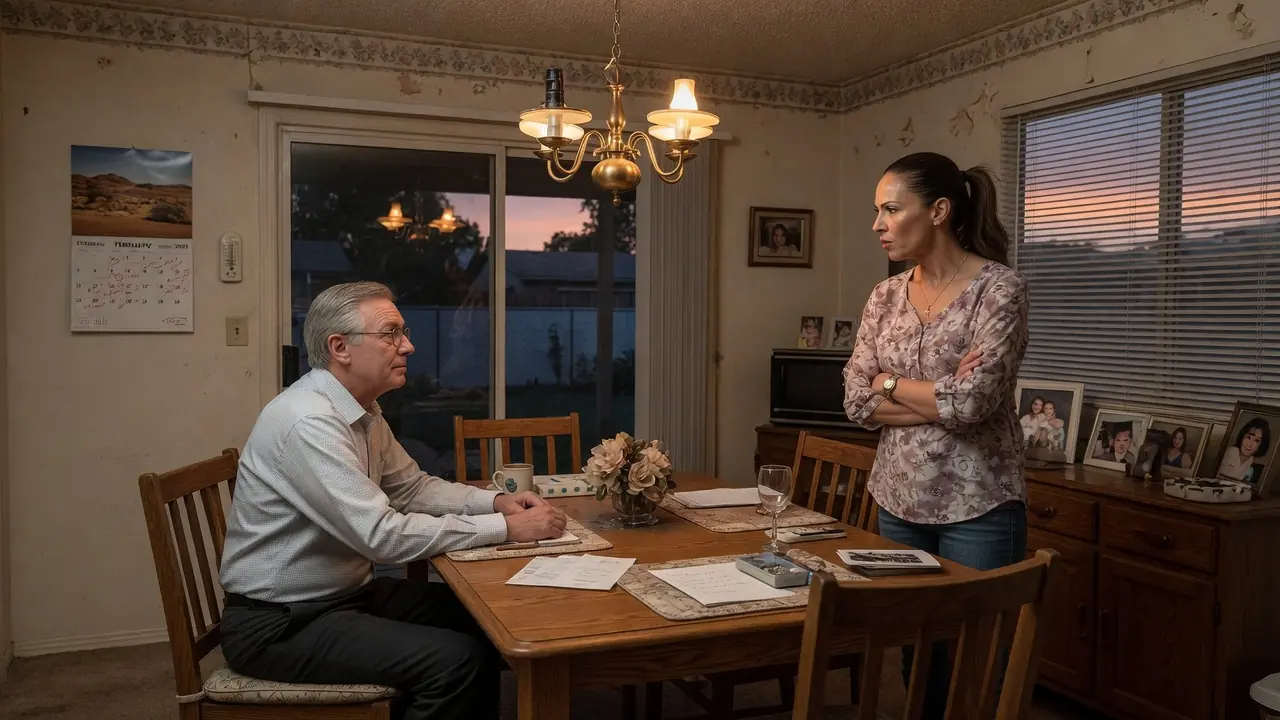
The silence in the dining room felt deliberate. I noticed it the moment I stepped through the front door on Oak Street that February evening, the kind of quiet that comes from people choosing not to speak rather than having nothing to say.
Gertrude's back was to me when I walked in. She moved between the kitchen and dining table with exaggerated focus, arranging plates and silverware with the precision of someone performing for an audience.
Six place settings. I counted them twice. Evening, Gertrude, I said. She adjusted a fork, straightened a napkin. Her shoulders tightened, but she didn't turn around.
I hung my coat by the door and walked toward the dining room. Dwey sat at the table already, staring at something invisible on his empty plate. My son looked up briefly when I entered, managed half a smile, then dropped his gaze again.
Do we? I pulled out the chair across from him. Hey, Dad. His voice barely carried across the table. Gertrude swept past me, carrying a serving bowl, close enough that I could smell her perfume, but far enough to make the distance intentional.
She set the bowl down with more force than necessary. "Dinner's almost ready," she announced to the room. I'd lived in this house for 3 years in the small bedroom off the first floor hallway.
Three years of navigating Gertrude's moods, of learning when to speak and when silence served better. Tonight felt different. The air carried weight.
The doorbell rang. Gertrude's face transformed. The tight line of her mouth curved into a bright smile as she rushed to answer it. I heard voices in the entryway, cheerful, loud, familiar.
We made it. A man's voice boomed through the hallway. Such a lovely home you all have here. A woman's voice, syrupy with enthusiasm. Clarence and Dorothy Webster appeared in the dining room doorway, pulling wheeled suitcases behind them.
Gertrude's parents. I hadn't known they were coming. Clarence was a broad man with thinning hair in the confident posture of someone accustomed to being welcomed.
Dorothy matched him in volume, if not size, her arms already extending toward Gertrude for an embrace. Hope you don't mind us dropping in. Clarence released his suitcase handle and clapped his hands together.
Gertie said it wouldn't be a problem for a couple weeks. A couple weeks? I glanced at Dwey. He was studying his plate with intense concentration, as if the pattern on the china held answers to questions he couldn't ask aloud.
"Of course not, Daddy." Gertrude kissed her father's cheek, then her mother's. "We're so happy to have you." Dorothy settled into a chair, smoothing her dress.
The Hendersons' guest room was just impossible. "That mattress, Clarence, remember?" "Terrible," Clarence agreed, taking the seat at the head of the table. The seat Dwey usually occupied.
Dwey didn't protest. We told them we'd find other arrangements. Other arrangements? I watched Gertrude move around the table, serving her parents first, then Dwey, then herself.
My plate remained empty. Irving, pass the potatoes. When you're done, Gertrude said without looking at me. I hadn't taken any yet. The bowl sat in the center of the table within her reach.
We ate in fractured conversation. Clarence dominated, telling stories about their bridge club and a dispute with their homeowners association. Dorothy punctuated his narrative with affirmations and additional details.
Gertrude laughed at appropriate moments, asked follow-up questions, performed the role of attentive daughter. Dwey and I were spectators.
I finished the food on my plate, though I couldn't have said what it tasted like. The tension wrapped around my chest, made swallowing difficult.
Gertrude stood abruptly, her chair scraping against the floor. She crossed her arms and turned to face me directly for the first time that evening.
Irving, my parents need a proper bedroom. Her voice carried the sharp edge of an announcement, not a request. That room on the first floor is perfect for them.
The room on the first floor? My room? Gertrude, that's where I live. I kept my voice level. Where would I sleep? Either give my parents your room or pack your things and leave.
The words cut through the remaining dinner conversation. Clarence shifted in his chair. Dorothy looked at her daughter with something like pride.
Dwey's fork stopped halfway to his mouth. Son, I turned to him. Dwey set down his fork with careful precision. His eyes met mine for a fraction of a second before sliding away.
Maybe we can figure something out. We already figured it out. Gertrude's voice rose. My parents need that room. It has its own bathroom. It's on the first floor. Mother's knees.
Irving. She can't be climbing stairs all day. There's a guest room upstairs, I said. With a bathroom down the hall.
Gertrude slammed her palm on the table. Silverware jumped. My parents are not going to shuffle through the hallway in their nightclothes. They deserve better than that.
I looked at Dwey again. My son, who I'd raised, who I'd helped in ways Gertrude didn't even know about. He was examining his hands now, turning them over as if discovering them for the first time.
Dwey, I said his name quietly. He opened his mouth, closed it, swallowed. Gertrude filled the silence. This is my house, too, Irving. Actually, it's more mine than...
She stopped herself, but the implication hung between us. I stood. The scrape of my chair was the loudest sound in the sudden quiet that followed.
"I see," I said. "Excuse me." My legs carried me steady and sure down the hallway to my room. Behind me, I heard Gertrude's voice ring out with unmistakable triumph.
Finally, some cooperation. I closed the door behind me and stood in the center of the small space. The room held my life in miniature.
A bed, a dresser, a reading chair by the window, books on the nightstand, a framed photograph of my late wife on the dresser. Maria, gone 5 years now.
I opened the closet and pulled down my suitcase. The leather was worn soft from years of business travel back when I'd worked as a financial consultant.
Back when I'd had my own home, my own space, my own life. I laid the suitcase on the bed and began to pack. Not frantically, not with anger or hurt clouding my movements.
Each item I folded with precise care. Shirts, pants, socks rolled into neat pairs. I organized my toiletries into a small bag, wrapped my razor in a cloth, secured the caps on bottles of cologne and medication.
Through the door, I could hear them. The Websters' voices carried down the hallway, cheerful and oblivious. This room will be perfect, Clarence. Dorothy's voice came through clearly.
Much better than that awful guest room at the Hendersons. Gertie always takes care of us, Clarence replied. I paused. A sweater in my hands.
Something cold and clear settled in my chest. Not anger. Anger burned hot and fast. Consumed itself in flames. This was different.
I sat on the edge of the bed, my hand still resting on the handle. The sounds of celebration filtered through the door, laughter, footsteps, the drag of furniture being mentally rearranged.
My room already theirs. I don't know how long I sat there. Long enough for the light through the window to deepen from gray to charcoal.
Long enough for the voices outside my door to fade into distant murmurs. Long enough for memories to surface one after another with the clarity of photographs developing in solution.
Four years ago, almost exactly four years. I remembered Dwey's face when he'd called me, the tremble in his voice as he explained about the foreclosure notice.
The bank had started proceedings. They were going to lose the house. Gertrude was hysterical, he'd said. He didn't know what to do.
I'd driven over that same evening, sat at this very dining table while Dwey spread the paperwork in front of me, documents stamped with deadlines and legal terminology.
$180,000 to clear the mortgage completely. I can't ask you to do this, Dad, Dwey had said, but his eyes held desperate hope.
I'd written the check the next morning, driven it to the bank myself, watched the balance transfer from my account to theirs, erasing years of missed payments and accumulated debt in a single transaction.
Dwey had cried, actually cried, standing in the bank parking lot, gripping my shoulder. I'll pay you back. I swear, Dad. Every penny.
I told him not to worry about it. Family helped family. But there had been more, hadn't there? The memories came faster now.
A cascade of dates and amounts. My financial mind had cataloged automatically, even as I'd tried to frame them as gifts rather than debts.
$15,000 for their wedding. Gertrude had wanted the reception at that resort in Sedona, the one with the red rock views and the premium bar service.
Dwey's salary couldn't stretch to cover it. I'd covered it. $8,000 for Gertrude's car when the transmission died on her old sedan.
She'd wanted the newer model, the one with leather seats and the upgraded sound system. I'd arranged the purchase. $1,200 a month for the past three years.
Just to help with expenses, Dad, Dwey had said. Groceries, utilities, insurance, the monthly costs that ate away at paychecks. I'd set up an automatic transfer.
I hadn't even thought about it anymore. The money simply flowed from my account to theirs, steady as a river.
I pulled out my phone, opened my banking app, scrolled backward through months, then years of transaction history. There they were, neat rows of transfers, each one labeled with Dwey's name, the evidence of my generosity documented in digital precision.
I set the phone down carefully on the bed beside me. Through the door, Dorothy's voice drifted clear. We'll need to get different curtains, Clarence. These are far too dark. Maybe something in a nice cream color.
Whatever you want, dear. Clarence's response was indulgent, comfortable. They were measuring my room for their furniture, planning their curtains, settling in.
I stood, lifted my suitcase from the bed. The weight was manageable. I'd always lived simply, despite the money Maria and I had accumulated during our years together.
The $2.8 million in investment accounts, the paid-off properties, the comfortable retirement I'd planned. I'd sold my own home three years ago when Maria died.
The place had felt too large, too full of her absence. Dwey had suggested I move in with them. Just until you figure out what's next, Dad.
And I'd agreed, thinking temporary would become comfortable. Thinking family meant safety. I'd been wrong.
I opened the bedroom door. The hallway stretched before me, familiar and foreign at once. I walked toward the front door, suitcase in hand, my footsteps steady on the hardwood floor I'd helped refinish last summer.
Dwey appeared from the kitchen, materializing in front of me with the sudden awkwardness of someone who'd been waiting just out of sight. Dad, his voice cracked slightly.
Maybe maybe we can work something out. You could take the guest room upstairs. It's all right, son. I met his eyes fully, let him see whatever expression my face held.
I felt calm, distant, clear. I'll take care of myself. I didn't know she was going to. He reached toward me, hand extended, then pulled back.
It's just for a couple weeks. They'll go home. And then from the kitchen, Gertrude's voice called out with casual dismissal. Tell him dinner's in the fridge if he wants it.
No goodbye, no acknowledgement that I was leaving with a suitcase in my hand, that something fundamental had just fractured. Dwey's hand dropped to his side.
I walked past him, opened the front door, stepped out into the February evening. The cold hit my face, sharp and clarifying.
I stood under the porch light, breath forming clouds in the air, and pulled out my phone to call a taxi. The driver arrived in 15 minutes.
A younger man, mid-30s, with a Raiders cap and a friendly enough demeanor. "Where to?" he asked as I settled into the back seat. The Hampton Inn on McDowell.
He pulled away from the curb. I watched the house recede in the side mirror. Warm lights in the windows. The home I'd helped save. The family I'd supported.
Moving out? The driver asked, eyes flicking to me in the rearview mirror. Yes. Rough day? I considered the question. Enlightening.
He didn't push for more details, and I was grateful. We drove in silence through streets I knew well, past the park where I pushed Dwey on swings 30 years ago, past the corner store where Maria and I used to buy Sunday papers.
The Hampton Inn lobby was generic in its comfort, neutral carpet, bland artwork, the kind of space designed to be inoffensive. I checked in quickly, took the key card from the clerk, who didn't ask questions, and rode the elevator to the third floor.
The room was clean and impersonal. Standard hotel setup, a bed with a green comforter, a desk, a television mounted on the wall, a bathroom with miniature toiletries.
I set my suitcase on the luggage rack and sat on the edge of the bed. The mirror across from me reflected my image, a 67-year-old man in slacks and a button-down shirt, still composed, still upright.
I looked the same as I had this morning, but something had shifted beneath the surface. I thought about Dwey's face as I'd walked past him. The guilt there, yes, but also the relief.
Relief that I'd made it easy for him, that I'd left quietly, that he hadn't been forced to actually take a stand against his wife. I thought about Gertrude's triumphant voice.
Finally, some cooperation, as if my compliance was the natural order of things, as if I was an inconvenience to be managed rather than the man who'd saved their home, funded their wedding, supported their lifestyle for years.
I thought about the Websters, already discussing curtains in my room, already comfortable in the space I'd occupied for 3 years. The hotel's air conditioning hummed, a steady white noise.
I lay back on the bed, still fully dressed, hands folded on my chest. The ceiling was textured with those small bumps hotels seem to favor. I studied them in the dim light from the bedside lamp.
I gave them everything, I thought. The house, the wedding, the car, the monthly checks. And tonight they gave me clarity. It was time to act.
My phone showed 11:47 p.m. Somewhere across town, the Websters were settling into my former room, and Dwey was lying beside Gertrude, probably staring at the ceiling much as I was.
But where his thoughts circled with guilt and avoidance, mine had sharpened into focus. For the first time in 3 years, I felt free.
The next morning, I ordered coffee from the lobby and spread my documents across the hotel desk. The room was quiet except for the hum of the air conditioning and the occasional sound of footsteps in the hallway.
I'd brought more than just clothing when I'd packed. Habit from 40 years as a financial consultant had taught me to keep my critical records organized and accessible.
I spent that week doing what I do best, analyzing assets, calculating risk, planning strategy. My leatherbound notebook lay open beside my laptop, the same notebook I'd maintained since 1985.
Pages of handwritten figures, account numbers, property addresses. I'd always preferred writing important numbers by hand. It forced careful attention, made them concrete rather than digital abstractions.
First, I documented everything systematically. Retirement savings, $520,000 across three accounts. Investment portfolio $890,000 in a diversified mix of stocks and bonds carefully balanced for my age and risk tolerance.
Certificates of deposit and treasury bonds $340,000 safe and predictable. Then the properties, two rental units in Tempe, purchased 20 years ago when the market had dipped.
I'd renovated both myself initially, replacing fixtures and flooring, learning plumbing and electrical work from manuals and patient contractors. Current combined value $580,000.
They generated $3,400 monthly, almost without effort on my part. Good tenants, stable income. Liquid cash in checking and savings, $470,000.
I wrote the total at the bottom of the page, circled it twice. $2,800,000. My pension added $4,200 monthly.
Combined with rental income, I cleared $7,600 every month without touching principal. I sat back, pen still in hand, and studied the figures.
40 years of careful investing, 40 years of building security. Maria and I had been prudent, strategic. We'd retired comfortably, traveled modestly, lived well without extravagance.
And Dwey had assumed I was just another old man living on social security, grateful for a room in his house. My phone buzzed. Dwey's name appeared on the screen.
I watched it vibrate against the wooden desk. Let it go to voicemail. A minute later, the notification appeared. I played it on speaker while I continued working.
Dad, his voice wavered. Look, Gertie was stressed about her parents. Maybe we overreacted. Call me back. I deleted it without responding.
Three days into my stay, I drove to Tempe. The route was familiar. 30 minutes through Phoenix traffic, past strip malls and residential neighborhoods into the area where my properties stood on adjacent lots.
The first tenant, Marcus, was washing his car in the driveway when I arrived. He straightened when he saw me, smiled with genuine warmth. Mr. Hill, he set down the sponge.
Haven't seen you in months. Everything okay? Just checking in. I walked closer, examining the exterior paint, the condition of the roof. How's the water heater?
Perfect since you replaced it last year. Marcus wiped his hands on his jeans. You didn't need to drive all the way out here. I would have called if anything was wrong.
I know. Wanted to see the place anyway. I inspected both units thoroughly, walking through the interiors with my tenants' permission, checking faucets and window seals, testing light switches.
The properties were solid, well-maintained, requiring minimal management, and generating steady income. Back at the hotel that evening, I sat at the desk with my calculator, running scenarios.
What I could liquidate quickly if needed, what should remain invested, what I could afford for my plan. The clarity I'd felt lying in bed that first night sharpened with each passing day.
I created a spreadsheet, something I hadn't needed to do in years, but the skill returned easily. Every dollar I'd given Dwey and Gertrude documented with dates and purposes.
The $180,000 mortgage payoff, the $15,000 wedding, the $8,000 car, 36 monthly payments of $1,200 over three years, $43,200. Total transferred $246,200.
A quarter million dollars given freely to family I'd trusted, to a son who'd sat silent while his wife demanded I leave, to a daughter-in-law who'd told me to pack my things with triumph in her voice.
I closed my laptop and stared out the window. The parking lot stretched below, cars arranged in neat rows under street lights, ordinary people living ordinary lives, probably unaware that somewhere among them sat a man planning elegant revenge.
On Thursday afternoon, the bank called me back. Mr. Hill, the representative's voice was professional, slightly concerned. I've reviewed your request.
Moving this amount of cash will take a few days. Is everything all right? Everything is fine. I kept my voice steady, pleasant. I'm making an investment. How quickly can you process it?
3 to five business days for the full amount. May I ask what type of investment? Real estate. Ah. Relief colored her tone.
Real estate was respectable, sensible. We can expedite if needed. You've been a valued client for many years. I appreciate that. Standard timeline is acceptable.
By week's end, I sat in the hotel room with a legal pad filled with notes, not angry scribbles. Calm strategic planning, lists of requirements, calculations of costs, timelines for execution.
I'd learned something important during those seven days. The anger I'd felt that first night, the cold clarity had matured into something more refined, more useful.
I didn't want to hurt them. I wanted them to see, to understand what they'd thrown away, to recognize their mistake with absolute unavoidable precision.
The first step crystallized. Show them I wasn't a helpless old man they could discard. Show them I had resources they'd never imagined. Show them consequences.
I stood at the window, looking out toward the direction of Oak Street, though I couldn't see it from here. Somewhere across the city, in the house I'd saved from foreclosure, Gertrude's parents were sleeping in my former room.
Dwey was lying beside his wife, probably feeling guilty, but doing nothing about it. I turned back to the desk, picked up my notebook, reviewed the circled figure one final time.
The house across from theirs had been for sale for 3 weeks. I'd noticed the sign during my years living there, watching it weather through rain and sun, waiting for the right buyer.
I knew exactly where to begin. I checked out of the Hampton Inn the next morning and drove the familiar route to Arcadia.
The neighborhood looked the same as it always had, mature trees lining the streets, houses set back from the road, with front yards landscaped in desert plants and decorative rock.
I knew every turn, every cross street. Oak Street appeared ahead. I slowed, letting a pickup truck pass, then continued at a casual pace.
Dwey's house sat on the left side of the street, Gertrude's white sedan visible in the driveway, lights on in the kitchen. Someone was home.
I didn't stop, didn't linger, just maintained steady speed like any other driver passing through. But I saw it directly across from their house, the wooden sign with burgundy lettering, For Sale, Sonoran Realty.
I'd noticed that sign before in passing during the years I'd lived here. Never paid it particular attention. Now it seemed to glow with possibility.
I parked three houses down, pulled out my phone and photographed the sign. Zoomed in on the phone number. Entered it into my contacts immediately.
Through my windshield, I could see both houses. Dwey's on the left, the house I'd saved. The house where I'd lived in a small first floor room where I'd eaten dinners at that table where I'd been discarded like outdated furniture.
The house across the street on the right, larger two stories 1960s construction with a broad front porch and mature landscaping that needed trimming. Paint fading slightly on the window frames structurally solid but cosmetically neglected.
The distance between them maybe 30 yards. I dialed the number. Sonoran Realty, how may I help you? A woman's voice, pleasant and professional.
I'm interested in the property on Oak Street. Is it still available? Yes, sir. Let me connect you with Margaret Collins, the listing agent.
A brief pause, then a different voice. This is Margaret. Miss Collins, my name is Irving Hill. I'm interested in viewing the Oak Street property. Is it still on the market?
It is, she sounded genuinely pleased. Are you available this afternoon? I can meet you there at 2. 2 works perfectly.
I spent the intervening hours at a coffee shop on Camelback Road reviewing property records on my phone. The house was listed at $685,000.
Four bedrooms, three bathrooms, 2400 square ft, built in 1967, owned by the Carlsons who were relocating to California for work.
At 1:45, I drove back to Oak Street and parked in front of the house. A silver Lexus pulled up behind me exactly at 2.
A woman emerged, early 50s, professional attire, confident stride. Mr. Hill, she extended her hand. I'm Margaret. Thanks for coming on short notice.
Her handshake was firm. She carried a leather folder and keys, moved with the efficiency of someone who'd done this hundreds of times. I appreciate your flexibility.
I gestured toward the house. I'm looking for something specific. Let's see if this fits. She unlocked the front door and stepped aside to let me enter first.
The interior smelled faintly of vacancy. That particular scent of a house waiting between occupants. Hardwood floors in the entryway, slightly scuffed, but salvageable.
Living room to the left with a brick fireplace. Dining room to the right. The owners maintained it well, Margaret said, walking ahead of me.
They raised three children here. It needs cosmetic updates, but the bones are excellent. I followed her through the layout.
Kitchen with original cabinets, outdated, but functional. A family room overlooking the backyard. Upstairs, bedrooms with adequate closet space.
Bathrooms with tile that screamed 1980s renovation. Then she showed me the front room. This was a sitting room for the previous owners.
Margaret opened the door, revealing a space roughly 15 by 12 ft. Built-in bookshelves along one wall, hardwood floor, and along the front wall, a panoramic window stretching nearly the full width of the room.
I walked directly to that window. Through the glass, I had an unobstructed view of Dwey and Gertrude's house, the living room window clearly visible, the kitchen beyond it, even the hallway leading to the first floor bedroom, my former bedroom.
I stood there, hands in my pockets, and felt something click into place. The final piece, the perfect irony. Wonderful natural light, Margaret said behind me.
The view is interesting, I kept my voice carefully casual. What's the distance between houses here? About 30 yards. It's a friendly neighborhood. People know each other.
I turned to examine the built-in bookshelves, running my hand along the wood. These are original to the house from 1967. Yes, solid construction.
I walked to the other side of the room, mentally measuring where I'd place a desk, directly in front of that window, facing it, positioned so anyone sitting there would look straight across at Dwey's house.
The owners are motivated to sell quickly, I asked. Margaret's professional demeanor sharpened slightly, the tone of someone recognizing a serious buyer.
They're relocating for work. They'd prefer a fast close. I can do a cash offer. I met her eyes directly. How fast could we close?
Her eyebrows rose just fractionally before she controlled the expression with cash. 2 weeks, possibly 10 days if inspections go smoothly. And the asking price 685, but the Carlsons are reasonable people.
They want to move forward, not chase another 20,000. I nodded slowly, as if considering, though I'd already decided. I'll need to think about the offer amount, but the location works for me.
We walked through the rest of the house. I made appropriate observations about plumbing and electrical, asked about the roof age, examined the garage, professional questions from someone who knew what to look for.
Back in the front room, I paused at the window again. Margaret gave me space, standing in the doorway, letting me have the moment.
Through the window, a figure moved in Dwey's kitchen. Gertrude, carrying something from the refrigerator to the counter. She was laughing, head thrown back, talking to someone out of view.
Do you have family in the area, Mr. Hill? Margaret asked quietly. I turned to face her. My son lives nearby. That's part of the appeal.
Something flickered across her expression. She'd heard something in my tone, some edge I hadn't quite controlled, but she was too professional to press. "It's a good neighborhood for family," she said simply.
We walked back through the house toward the front door. Margaret handed me her business card along with a detailed information sheet about the property.
Think it over, she said. Call me with questions anytime. I stood on the porch after she'd driven away, looking back at the house, then across the street at Dwey's house.
The distance was perfect. The angle was perfect. The symbolism was perfect. I walked back to my car, started the engine, but didn't drive away immediately.
Instead, I sat there, hands on the steering wheel, looking at both houses, the one where I'd been discarded, the one where I would establish my new position.
My phone buzzed. Another text from Dwey. Dad, please call me. I silenced the notification and drove away from Oak Street, already planning my next call to Margaret Collins.
I turned to Margaret. I'll take it. Let's write an offer. She studied my face for a moment, perhaps looking for hesitation she wouldn't find.
What number did you have in mind? 650 cash 10 day close. Her eyebrows rose. That's 35,000 below asking. And it's cash with minimal contingencies.
The Carlsons want to move forward. So do I. We met at her office the next morning. The space was professional. Glass desk, abstract art on cream walls, the faint scent of vanilla from a diffuser.
Margaret spread the purchase agreement across the desk, walking me through each section with practiced efficiency. I signed where she indicated, my hand steady on the pen.
When I wrote the check for earnest money, $50,000, Margaret watched without comment, but I saw her register the ease of it. No hesitation, no phone call to verify funds, just a number written in my careful script.
I'll submit this immediately, she said. Given their timeline, I expect to hear back quickly. She called 3 hours later.
I was reviewing investment statements in my hotel room when my phone rang. Mr. Hill. Her voice carried genuine excitement. They accepted. Full price, 10 day close.
I've rarely seen sellers this motivated. Excellent. I set down my pen. Send me the paperwork. I'll have my bank ready. I'll email everything within the hour.
The process moved faster than even Margaret expected. The home inspection happened two days later. A thorough man in his 50s who walked through with a clipboard and thermal camera documenting minor issues typical of a house built in 1967.
Foundation solid, he said, making notes in the kitchen. Some cosmetic issues, typical wear. You planning to flip this? No, I'm planning to stay.
I followed him to the front room. How's the window integrity in that office? He examined the panoramic window, running his hand along the frame.
These windows, they're the newest thing in the house, replaced maybe 5 years ago. Double pane, energy efficient, excellent condition. I nodded, satisfied.
The view would remain unobstructed. While escrow processed, I hired a renovation crew. The foreman met me at the property on a Tuesday afternoon.
A stocky man named Carlos, with 20 years of experience and a reputation for quality work delivered quickly. You want all this done in 5 days? He reviewed my list.
Fresh paint throughout. Floors refinished, updated light fixtures, new bathroom hardware. I'm paying premium rates for speed. Can you do it?
Carlos calculated in his head, lips moving slightly. We'll need two crews. It'll cost extra. That's fine. The office room is priority.
I led him to the front room, gestured toward the window. Charcoal gray walls here. Professional, not residential. I want built-in bookshelves refinished, and I need furniture, oak desk, leather chair, proper lighting.
You want it to look like an executive office? Exactly that. He quoted 28,000 for the complete job. I agreed without negotiating.
For the next week, I visited the house daily, watched the crews transform dated interiors into clean, modern spaces. Neutral tones in the bedrooms and living areas.
Hardwood floors stripped and restained to a rich honey color. But the office received special attention. The charcoal walls created depth, made the panoramic window the room's focal point.
The refinished bookshelves gleamed with fresh polyurethane. The oak desk arrived on day four. Solid construction, traditional design, large enough to work comfortably.
Carlos's crew positioned it where I directed. Three feet from the window, I said. Angle it slightly left. Perfect.
March 25th arrived with clear skies and mild temperatures. Margaret met me at her office for the final signing. More documents, more signatures, keys exchanged across the desk.
Congratulations, Mr. Hill. She handed me the keys, two brass copies on a plain ring. Welcome to the neighborhood again. I accepted them with a slight smile.
Thank you, Margaret. You've been very professional. She hesitated, then asked, "If you don't mind my asking, why this house specifically?" "The location." I met her eyes directly. "And the view?"
Understanding flickered across her face, though she didn't press further. We shook hands, and I drove directly to Oak Street.
The house felt different with possession. Mine now. Every room, every window, every carefully planned sightline. I walked through slowly, running my hand along walls, testing light switches, confirming the work had been completed to my specifications.
In the office, I stood at the window. Across the street, Dwey's house looked exactly as it always had. Gertrude's car sat in the driveway, curtains open in the living room, my former bedroom visible on the ground floor, the Websters' room now, 30 yards, close enough to see clearly, close enough to be seen.
Moving in took an hour. I'd lived modestly for 3 years. Everything I owned fit in my car, a suitcase of clothes, a box of books, my laptop, and files.
The furniture delivery brought the rest. The leather chair for the office, a bed frame and mattress, kitchen essentials. I positioned everything myself, particular about placement.
The desk sat exactly where I wanted it, angled for optimal view. The chair, buttery leather, ergonomically designed, faced the window. My laptop on the desk's left side, files and legal pads on the right.
I sat down, testing the setup. Perfect. Through the window, I had unobstructed visibility into Dwey's living room, kitchen, and the hallway beyond.
I pulled out my phone and composed a text to Dwey. Moved into a new house. If you need me, I'm close by. Sent.
The message showed delivered immediately. Then, 30 seconds later, read. I waited. No response came. I set the phone down and opened my laptop.
The afternoon light slanted through the window, warming the oak desk. Across the street, I could see movement in their kitchen. Someone passing through, though I couldn't make out who.
I opened a manila folder, began reviewing documents I'd organized during my hotel stay. Financial records, property deeds, loan documentation, a timeline I'd constructed of every dollar transferred to Dwey and Gertrude over the years.
Phase one complete. The house was purchased, the position established, the stage set. Now they would see. I looked up from my documents, glanced across the street again.
The kitchen light had turned on. Evening approaching. Someone was preparing dinner. Life continuing normally in the house I'd saved among the family who'd discarded me.
I returned to my files, pen in hand, making notes in the margins. Strategic planning, methodical and precise. The work I'd spent 40 years perfecting, now applied to a different kind of investment, one with a very specific return.
The next morning, I made coffee in my new kitchen and carried the cup to my office. Sunrise filled the room with pale gold light. I sat at the desk, opened my laptop, and began working through emails.
Across the street, the house remained dark. Early still, not yet 7:30. I reviewed investment portfolios, replied to a former colleague about consulting work, organized files on my desktop.
At 8:15, lights came on in their living room. I continued working, attention on my screen, but peripherally aware of movement across the street.
Someone approaching their window. A figure in a bathrobe carrying something. Gertrude. Coffee cup raised halfway to her lips. She froze.
I watched her recognize me. Saw the exact moment comprehension struck. The coffee cup stopped moving. Her body went rigid, shoulders pulling back.
She stared directly at me through both windows across 30 yards of morning air. I put down my pen, made deliberate eye contact, raised my hand in a slow, measured wave.
Friendly, calm, absolutely in control. Gertrude jerked backward. Coffee sloshed from her cup. I could see the dark liquid arc through the air, splatter across her robe and floor, her mouth opened.
She turned from the window, disappeared from view. Seconds later, Dwey appeared, still in pajamas, hair disheveled. Gertrude pulled him to the window, pointing across the street.
I could see her speaking rapidly, gesturing. Dwey stared. His face registered confusion, then recognition, then something more complex. Uncertainty mixed with what might have been guilt.
I waved again, same measured gesture. Dwey raised his hand automatically, an awkward half-wave, before Gertrude slapped his arm down.
Even from 30 yards, I could see her fury. Head shaking, hands moving in sharp angry gestures. I returned to my laptop, resumed typing.
Let them process. Let them react. My phone rang 15 minutes later. Dwey's name on the screen. I rejected the call.
Immediately after, a text appeared. Dad, what are you doing? I typed my response. Busy. Talk later. Sent.
Through the window, I watched Dwey look at his phone. Show the screen to Gertrude. Her reaction was visible even from here, pacing, gesturing wildly, phone clutched in one hand.
I sipped my coffee and opened a financial spreadsheet. Throughout the morning, Gertrude returned to the window repeatedly. Each time I was there, working on my computer, reviewing documents, making notes.
Each time she appeared, I acknowledged her with a brief wave or nod before returning to my work. Not hiding, not ashamed, completely present.
Around 10, the Websters joined them at the window, Clarence's bulky frame, Dorothy beside him, all four of them staring across the street at me, a family conference visible through glass.
I finished an email, sent it, and waved at the entire group. Clarence stepped back from the window first, then Dorothy, but Gertrude remained, gripping the curtain, watching.
Lunch came and went. I ate a sandwich at my desk, worked through the afternoon. Occasionally, I'd look up to see Gertrude at her window, sometimes alone, sometimes with Dwey hovering behind her.
The psychological impact was exactly what I'd calculated. My presence, constant, calm, inexplicable, created pressure. They couldn't ignore me, couldn't confront me without coming to terms with what my presence meant.
I was no longer the dispossessed father, living in their small first floor room, grateful for space in their house. I was a man with resources, with property, with position, and I was watching.
Evening approached. I turned on my office light as shadows lengthened. Across the street, their windows glowed warm. I could see them moving through rooms.
Gertrude in the kitchen, Dwey passing through the hallway, the Websters settled in the living room. My phone remained silent. No calls, no texts.
After that morning exchange, I pulled up a document I'd prepared, a detailed accounting of every financial transaction between myself and Dwey. Dates, amounts, purposes, $246,200, itemized with the precision of an audit.
Through the window, I saw Gertrude return to her station. She stood there backlit by their interior lights, staring across the street at me.
I looked up from my document, met her eyes across the distance. She didn't move, didn't wave, just watched. I returned to my spreadsheet, highlighting specific entries, calculating interests that could have been earned.
Opportunity costs of capital deployed without return. When I looked up again, Dwey had joined her at the window. They stood together, silhouettes against their warm interior, having a conversation I couldn't hear but could imagine.
My phone buzzed. A text from Dwey. We should talk. I read it, considered, then replied. When you're ready to really talk, you know where to find me.
I watched him read the message through the window. Saw him show it to Gertrude. Saw her reaction, shoulders tensing, head shaking emphatically.
The evening deepened. Their lights remained on. Mine as well. I organized files, prepared documents, laid groundwork for conversations that would come.
Because they would come. Curiosity and confusion would drive them eventually, but I would set the terms. I would control the timing.
Around 9, I stood and stretched, walked to the window, placed my hand on the frame, looked directly across at their house. Gertrude was there again, watching.
Our eyes met through the darkness in the distance. I wondered what she was thinking, what theories she was constructing about my motivations, my plans, my purpose in positioning myself so deliberately across from their home.
Let them wonder, let them worry. I returned to my desk, opened another folder. Tomorrow, I would begin the next phase. Tonight, I would let my presence settle into their consciousness.
An unavoidable reality, a question mark they couldn't erase. The house was quiet around me. My house, my position, my strategy unfolding exactly as planned.
Through the window, I could see her silhouette in their window. She was watching me and I was watching her. I pulled out my legal pad, began writing notes for tomorrow.
The real work was just beginning. Two weeks passed. I settled into my new routine. Mornings began with coffee at my desk, the window framing my view of the neighborhood waking up.
I'd work through emails, review investment portfolios, consult on financial planning projects I'd taken on remotely, professional work that kept my mind sharp and my schedule full.
Afternoons, I maintained my lawn, trimmed hedges, swept the driveway, waved to neighbors walking their dogs. Mr. Patterson, three houses down, stopped to introduce himself, welcomed me to Oak Street.
I thanked him, mentioned I had family nearby, kept the conversation brief and pleasant. I became ordinary, just another resident. Nothing threatening about a 67-year-old man tending his roses.
Across the street, I watched their patterns. Gertrude leaving for work each morning at 7:45. Dwey departing 15 minutes later, the Websters shuffling around inside, visible through windows, making themselves comfortable in a home that wasn't theirs.
On a Tuesday afternoon, I saw the mail carrier cross to their house, watched Dwey answer the door, signed for a certified letter. He opened it standing in the doorway, casual at first.
Then his body went rigid. I'd been expecting that reaction. 20 minutes later, through my window, I watched Dwey at his kitchen table. He held the letter in both hands, reading it again.
Gertrude appeared, took it from him. Even from 30 yards away, I could see her expression shift. Confusion, then fury.
Robert Chen had done excellent work. The letter was precise, professional, devastating. A formal demand for repayment of $180,000 documented as a loan with supporting evidence from my personal banking records where I'd noted the payment as loan to son to be repaid.
Arizona law recognizes oral loan agreements when backed by documentary evidence. I'd kept meticulous records, emails where Dwey had mentioned paying you back eventually, my own contemporaneous notes about the transaction, bank memos I'd written to myself for tax purposes.
Weak evidence perhaps, but enough to file a legitimate lawsuit, and more importantly, enough to create expensive problems. They consulted an attorney the next day. I learned this later, from Dwey.
$300 per hour to hear that Irving Hill had grounds for a claim. Not strong grounds, their lawyer explained, but enough to require a defense. 15 to $25,000 in legal fees to fight a case they might win. Might.
Two days after the letter arrived, I saw them crossing the street toward my house. I'd been waiting for this. Had coffee ready, actually. French press on the kitchen counter, cups prepared.
The doorbell rang. I opened it calmly. Dwey, Gertrude? I stepped aside. Come in. They entered uncertainly.
Gertrude's eyes scanning my living room as if cataloging evidence. The furniture was minimal but quality. Leather sofa, reading chair, oak coffee table, clean lines, organized, professional.
Please sit. I gestured to the sofa. Coffee? We're not here for coffee. Gertrude remained standing. We're here to talk about that ridiculous letter.
I poured three cups anyway, brought them to the coffee table, sat in the chair across from them. I'm happy to talk, though anything substantive should go through my attorney.
Dad, please. Dwey leaned forward, hands clasped. Can we work something out? We can figure this out as a family. Of course, we can work something out.
I added cream to my coffee, stirred slowly. My attorney's information is in the letter. He'll be happy to discuss terms. Gertrude slammed her palm on the coffee table.
We're your family. Yes. I met her eyes steadily. You are. The silence stretched. Dwey picked up his coffee cup, set it down without drinking.
Gertrude's face flushed red, jaw tight. You can't actually think you'll get that money. Her voice was sharp, but I heard something underneath, uncertainty.
The law will decide. I sipped my coffee. I'm not concerned about the outcome. I documented everything carefully. But legal processes take time, expensive time.
The implications settled between us like a third presence. Even if they won, the costs would devastate them. Their savings, modest at best, would evaporate in attorney fees, and I could sustain a legal battle indefinitely.
This is insane, Gertrude stood abruptly. You're suing your own son over money you gave us years ago. Money I loaned. I remained seated, calm, with the understanding it would be repaid.
My records are clear. Your records, she spat the words. You planned this, sitting in our house all those years, planning. I didn't respond. Let her anger fill the space.
Dwey stood too, touched her arm. Gertie, let's. No. She pulled away from him. Your father has lost his mind. This is harassment.
It's a legitimate legal claim. I stood now, moved toward the door. If you feel it's harassment, your attorney can address that in court along with everything else.
Dwey turned to me at the door, his face pale. Dad, why are you doing this? I looked at my son, saw the confusion there, the hurt, the question that didn't yet understand its own answer.
You asked me to leave my home, I said quietly. I did. Now I'm taking care of my own interests. Speak with my attorney, Dwey.
I opened the door. They left, Gertrude storming ahead, Dwey trailing behind with slumped shoulders. I closed the door gently but firmly.
Returned to my office, sat at my desk, watched them cross the street back to their house. Through the window, I could see Gertrude gesturing sharply, Dwey's shoulders hunched further.
I opened a file folder on my desk, labeled in my neat handwriting, Phase Two. The legal pressure would build slowly, accumulating like compound interest, but there were other levers to pull, other adjustments to make.
I'd given them everything freely for years. Time to see how they managed without it. My phone buzzed, a text from Dwey. Please don't do this.
I read it twice, set the phone face down on my desk. Through the window, their house glowed with interior light against the approaching evening.
I could see shadows moving inside. The daily routine of a family under pressure they didn't yet fully comprehend. The lawsuit was theater, important theater, but theater nonetheless.
The real work was subtler, more comprehensive. I pulled up my banking app on my laptop, navigated to scheduled transfers. Found the monthly payment to Dwey's account, $1,200 set to process automatically on the first of each month for the past 3 years.
My finger hovered over the delete button. $43,200 I'd given them this way. Just to help with expenses, Dwey had said when we set it up. Groceries, utilities, insurance, the small costs that accumulated.
They'd stopped thinking of it as help. Started treating it as expected. Part of the landscape of their finances, invisible as air.
I clicked delete, confirmed the cancellation. The screen refreshed. No scheduled transfers. I closed the laptop and looked across the street again.
The lights were on in every room now. The Websters, visible in the living room, settled comfortably on the couch. Dwey and Gertrude in the kitchen, still talking, arguing from their body language.
A family under siege, beginning to feel the walls close in. The 1st of May arrived. I watched my banking app confirm what I already knew. No transfer to Dwey's account.
The scheduled payment I'd maintained for 36 months simply didn't process. Across the street, I imagined Dwey at his kitchen table, surrounded by bills, calculator in hand, trying to make numbers align that suddenly refused to balance.
I didn't have to imagine for long. 3 days later, early evening, I watched Dwey move through his house with visible tension.
He spoke to Clarence Webster in the living room, a conversation that looked tentative, careful. Clarence's response was expansive, dismissive. Dorothy joined them, animated, comfortable.
The Websters had been staying for 4 months now. Their week or two had stretched into a permanent occupation. Two additional mouths to feed. Utilities climbing. Water usage doubled.
Gertrude's parents settling into my former room as if they'd purchased shares in the property. What had been inconvenient was becoming impossible.
A week later, I saw Gertrude in her driveway, phone pressed to her ear, pacing tight circles. Even from my office window, I could read the anger in her movements, sharp gestures, rigid posture.
She ended the call abruptly, stood for a moment, staring at her phone, then hurled it against the garage door. I learned later, much later, what had happened.
A declined credit card at a restaurant. Gertrude had been meeting a colleague for lunch, reached for her wallet to pay, and watched the cashier run her card twice before apologizing quietly.
The limit reached, the public humiliation. She'd called Dwey in tears that became rage. "Your father has cut us off," she'd screamed. "Did you know he was sending money every month? Now he stopped."
The bills that had always been manageable, suddenly weren't. $1,200 monthly, a number that seemed modest in isolation, created a gap they felt immediately.
Groceries bought on credit, gas purchases deferred, small luxuries eliminated, and looming over everything, the legal fees. The consultation had cost $900. A retainer would require $15,000, money they didn't have, money I'd effectively removed from their equation.
On a Thursday evening in late May, I saw Dwey crossing the street toward my house. I'd expected this eventually. Had coffee ready, same French press, same careful preparation.
The doorbell rang. Dwey. I opened the door. Come in. He looked exhausted, circles under his eyes, shirt wrinkled, the weight of multiple pressures visible in his posture.
I led him to the living room, gestured to the sofa, poured coffee into the cups I'd set out. He accepted his with both hands, like he needed the warmth.
Dad, we're struggling. His voice was quiet, strained. The legal thing, the bills. Can we work something out? Maybe I can pay you back over time.
I sat across from him, my own cup warming my palms. Dwey, I'm 67 years old. I have perhaps 20 good years left, if I'm fortunate. I know, but I spent 40 years building security, saving, investing, planning for retirement for Maria and me, then just for me after she passed.
I set my cup down carefully. I can't give it away anymore. But we're family. The desperation in his voice was raw, unfiltered.
Yes, and families should treat each other with respect. I met his eyes directly. When I needed a place to live, your wife gave me an ultimatum. Pack my things or give up my room. Do you remember?
He looked away. I remember you said nothing. Did nothing. Watched me pack and leave. I'm sorry. His voice cracked slightly. I should have stood up to her. I know that now.
Yes, you should have. I leaned back in my chair. Now I'm doing what I should have done years ago, taking care of myself, protecting what I built, making sure I'm secure for whatever time I have left.
Please. He sat down his coffee, leaned forward with hands clasped. There has to be something we can do, some way to fix this. Talk to my attorney about a repayment plan. Robert Chen has my complete authority to negotiate terms.
I kept my voice level, not unkind, but absolutely firm. I can't help you beyond that. You mean you won't? I mean, I can't.
I stood, moved to the window, looked across at his house, at the life I'd funded, the security I'd provided, the family that had discarded me.
I gave you everything freely, Dwey, the house payment when you were about to lose it, your wedding, Gertrude's car, monthly money for years. I never asked for anything back, never demanded gratitude.
I turned to face him. I only asked for respect, for a place in my son's home, and when that became inconvenient, I was disposable. He stood too, hands hanging at his sides.
It wasn't like that. It was exactly like that. We stood in my living room, 10 ft apart, the distance between us more than physical.
Your wife's parents have been living in your house for 4 months, I said. In the room that was mine. Do you charge them rent? Ask them to contribute to groceries? Demand they give up their space for someone else's convenience.
He didn't answer. No, because they're family. Because family helps family. I walked toward the door, opened it. I was family, too, Dwey. Until I wasn't useful anymore.
He moved to the doorway, paused. I don't know how to fix this. Figure out what you value, what you're willing to fight for, who deserves your loyalty.
I kept my hand on the door. When you know those answers, maybe we can talk again. Until then, speak with my attorney. He walked out slowly.
I watched him cross the street, hands in pockets, head down, shoulders carrying weight he'd avoided for too long. I closed the door and returned to my office window.
Across the street, I saw curtains move. Shadows shifted behind the glass. Gertrude meeting him at the door, probably demanding to know what I'd said, whether I'd agreed to help.
I sat at my desk, my coffee cup still warm from serving Dwey. The physical reminder of our encounter, a father and son separated by consequences neither had wanted, but both had created.
This was the hardest part, watching him suffer, knowing I was the instrument of that suffering, but necessary. They had to understand consequences, had to feel the weight of their choices, had to recognize that actions create reactions, that disrespect carries costs, that people, even family, have limits.
I opened my laptop, reviewed the file labeled Phase Two, notes on next steps, calculations of pressure points, timeline for continued strategy.
Through the window, their house lights blazed against the darkening evening. I could see movement inside, figures passing through rooms, the choreography of a family in crisis.
Four months ago, I'd sat in that house at their dinner table, been given an ultimatum, packed my belongings, and left with quiet dignity. Now I sat in my own house, in a room designed to watch them, executing a plan built on patience and precision, and the recognition that justice sometimes requires inflicting pain.
I took a sip of coffee. Lukewarm now, but still drinkable. Tomorrow the pressure would continue. The bills would still come. The legal threat would still loom. The Websters would still occupy space and consume resources.
And I would still be here, watching, waiting, ensuring they felt every ounce of what they'd done. Sad justice. That's what this was. Not triumph, not victory, just the necessary correction of an imbalance that had gone unchallenged too long.
July brought heat and pressure. I watched both build across the street. The first visible crack appeared on a Thursday morning.
I sat at my desk working through emails when I saw Dwey at his kitchen table visible through both our windows. He stared at his computer screen for a long moment, then reached for his phone, typed something, set it down, picked it up again.
His body language told the story before I knew the details. Shoulders hunched, hand running through his hair repeatedly. The posture of someone making the decision that hurt.
I learned later he'd canceled their vacation. A week in San Diego, they'd planned for mid-July. $6,000 already paid. Non-refundable deposits.
He'd stared at the cancellation button, breathed deeply, clicked, watched the confirmation email arrive. That evening, I saw Gertrude crying at their kitchen table. Dwey beside her, not touching her, just sitting in the space between comfort and exhaustion.
The car appeared in their driveway two days later. Gertrude's sedan, the newer one, the one with leather seats I'd helped them purchase years ago. A handmade For Sale sign in the window, asking $18,000, though the car was worth $22,000. Desperation pricing.
It sold within 48 hours. I watched the buyer arrive, test drive it, return with cash, watched Gertrude hand over the keys with stiff movements, like someone parting with more than just transportation.
She stood in the driveway after the buyer left, staring at the empty space where her car had been. The Websters were still there, 5 months now since that February dinner.
Their presence had evolved from inconvenience to crisis. Two additional people consuming groceries, utilities, space. Two additional people who contributed nothing but expectation.
Mid-July, I watched another scene unfold. Dwey in the living room with Clarence and Dorothy. His gestures were careful, apologetic. Clarence stood abruptly, body language radiating offense.
Dorothy's hand went to her throat. They left the room. Within an hour, they were packing. I watched them load their car the next morning. Suitcases, boxes, the accumulated possessions of five months occupation.
Gertrude stood on the porch, arms wrapped around herself, shoulders shaking. Dwey stood in the doorway, expression unreadable. No hugs goodbye, no promises to visit soon.
The Websters drove away without looking back. Gertrude turned on Dwey the moment they were gone. I couldn't hear the words, but I could see the fury. Pointing, gesturing, her mouth moving rapidly.
Dwey stood there taking it until something shifted. His posture straightened. His hands came up, palms out, not defensive, but firm. They fought properly then, voices rising loud enough to carry through windows, through walls, across 30 yards to where I sat watching.
A lamp fell. I saw the shadow through the curtain. A door slammed. Then silence. Hours passed. Lights came on as evening arrived.
I saw them in separate rooms. Dwey in the kitchen. Gertrude upstairs, the physical distance between them visible even from my window.
The next afternoon, I watched Dwey leave his house and cross the street toward mine. His walk was slow, deliberate. He'd lost weight. I noticed his clothes hung looser, the strain visible in every movement.
I opened the door before he knocked. Dad, his voice was rough, tired. Can we talk? I stepped aside, let him enter, led him to the living room where we'd sat before, during that other conversation when he'd tried to negotiate, to bargain, to find an easy way out.
This time felt different. The energy was different. Something fundamental had changed. He sat on the sofa, leaned forward with his elbows on his knees, hands clasped, looked at the floor for a long moment before speaking.
"Dad, I'm sorry." The words came quietly but clearly. I'm so sorry. I shouldn't have let her treat you that way. It was your house. You paid off our debt. You helped us constantly and we pushed you out like you were nothing.
I waited. Let him continue. I've been weak. He looked up at me then, eyes red-rimmed but direct. I let her control everything. I was afraid of conflict, so I sacrificed you instead. That was wrong.
Yes, I said simply. It was. Can we fix this? Hope and desperation mixed in his voice. Is there a way to fix this?
I sat back in my chair, studied my son, saw genuine repentance in his face. Not manipulation, not strategy, just honesty, arrived at through pain. Perhaps, I said, but on different terms.
He nodded immediately. Whatever you need, tell me. I'll drop the lawsuit, I began, watched relief flood his expression. But the financial help ends permanently.
No more monthly transfers. No more emergency funds. No more safety net. Okay. He didn't hesitate. You're 38 years old, Dwey. You have a good salary. You're capable.
You and Gertrude can build your life without my money propping it up. We will. His voice was firm. We have to. I see that now.
There's one more condition. I leaned forward. Gertrude needs to apologize. Not to you, to me. Face to face for how she treated me.
His jaw tightened. I'll talk to her. I'm not interested in a coerced apology that means nothing, but she needs to acknowledge what happened. That's non-negotiable.
He sat silent for a moment, processing, then nodded slowly. She's she's hurting right now. We both are. But you're right. She needs to say it.
When she's ready to do that, genuinely ready, we can move forward. Until then, everything stays as it is. Dwey stood, extended his hand. I shook it.
His grip was firm, steady despite everything. "Thank you for not giving up on me," he said. "I never did. I just stopped letting you take me for granted."
He walked to the door, paused with his hand on the frame. "Dad, I'm going to make this right. However long it takes." I hope you do, son.
I closed the door after he left, returned to my office window, watched him cross back to his house, shoulders straighter than when he had arrived.
He entered and through the window I saw Gertrude appear. They stood facing each other in the kitchen. She shook her head, turned away. He followed, said something that made her stop.
They were still talking when darkness fell and their curtains closed. I sat at my desk, hand resting on my coffee cup. The conversation had been necessary. The terms were clear. Now it was Gertrude's move.
My son was finally hearing me, finally understanding. But Gertrude, that would be the real test. The days that followed were quieter. I waited to see if Dwey could deliver on his promise.
I returned to my consulting work, contacted former clients, took on two small projects. The work felt good, purposeful. My office became what I had intended it to be, a professional space, not just an observation post.
Late August arrived, a Tuesday morning, warm and clear. I was reviewing financial projections when I saw movement through my window. Dwey and Gertrude leaving their house together, crossing the street toward mine.
His hand was on her elbow, not dragging, but guiding, supporting, insisting. Gertrude's posture was rigid. Arms crossed, jaw set. Every line of her body radiating resistance.
They reached my door. I watched through the window as Dwey spoke to her quietly. She shook her head. He said something else. She closed her eyes, breathed deeply.
The doorbell rang. I opened the door. They stood on my porch. Dwey steady, Gertrude barely containing herself. Dad, Dwey said. Gertie has something to say.
Gertrude stood silent. Her arms remained crossed, defensive. A long moment passed. I could see the internal battle playing across her face. Pride warring with necessity. Anger fighting with exhaustion.
Then through gritted teeth. I'm sorry for how I treated you. It was wrong. The words were mechanical, forced, but they were present. I accept your apology, I said simply.
She looked surprised. That's it. That's it. Come in. I stepped aside. They entered. Gertrude looking around my house as if seeing it for the first time.
The clean lines, the organized space, the evidence of a man who'd built something substantial without their knowledge or help. We sat in the living room.
I picked up my phone from the coffee table. I'm calling my attorney now to drop the lawsuit. You'll receive confirmation within a day. Dwey exhaled slowly. Thank you, Dad.
I dialed Robert Chen, put the call on speaker. Robert, Irving Hill. I need you to file dismissal papers for the Dwey Hill matter today, please. Are you certain? Robert's voice was professional, but curious.
I'm certain. Email me the documents for signature. We'll do. I'll have them filed by end of business. I ended the call. Set the phone down. It's done.
Dad, I Dwey began. But understand, I continued my voice firm. Things are different now. I won't be providing financial help. Not now. Not in the future.
Gertrude's mouth opened. We never asked for Gertie. Dwey's hand on her arm, gentle but insistent. Don't. She stopped, closed her mouth.
After a pause, quieter. We understand. Good. I stood, signaling the conversation's end. You're both capable people. You can build your own life, a real life based on what you actually earn, not what you can extract from others.
Dwey stood too. Can we visit sometime in the future? I considered. Perhaps in time. Let's see how things develop. We walked to the door.
Dwey paused there, emotion crossing his face. Dad, I'm glad you taught me this, even though it hurt. Some lessons have to hurt to matter.
They left. I watched them cross back to their house, walking closer together than when they'd arrived, not holding hands, but side by side. A small thing, but meaningful.
I returned to my desk, opened my laptop, pulled up my email, and began typing. Robert, I've been thinking about returning to part-time consulting. Nothing demanding, just a few select clients.
I have an excellent office space now, and I find I miss the work. Are you still in touch with the Peterson account? Best, Irving. I sent the message and sat back in my chair.
Through the window, their house looked peaceful. Evening approaching, lights coming on one by one. A week passed. I settled into new routines.
Consulting projects kept me engaged. Morning coffee at my desk became about work, not surveillance. I looked up occasionally, saw their house across the street, then returned to my calculations and projections.
That evening, a Tuesday, late August, I sat at my desk as the sun set over Phoenix. The sky turned amber and rose, painting the neighborhood in warm light.
Through my window, I could see Dwey and Gertrude at their kitchen table, talking, no shouting, no dramatic gestures, just conversation between two people figuring out how to build something real.
They looked smaller without my money propping them up, more vulnerable, more human. But they were still there, still together, still trying.
I'd given them $246,200 over the years, given it freely without demanding recognition or respect. And when I needed something simple, a room to live in, basic courtesy, they'd discarded me like an inconvenient piece of furniture.
So I'd shown them what their comfort actually cost, made them feel the weight of every dollar they'd taken for granted, forced them to choose between pride and survival, and they'd chosen survival, chosen growth, however reluctant.
Gertrude's apology hadn't been heartfelt, but it had been spoken, acknowledged. That mattered more than warmth. Recognition mattered more than reconciliation.
Dwey had found his voice, finally learned to stand up to his wife, to take responsibility for his choices, to understand that weakness has consequences. They would be fine.
Financially constrained, certainly. Humbled, absolutely. But fine. And I I had my dignity back, my self-respect, my boundaries established and enforced.
Justice wasn't about their destruction. It was about my restoration. I turned back to my laptop. An email had arrived from Robert, my former colleague.
Irving, Peterson account is still active and asking about you. Let's set up a call. Welcome back. I smiled. Typed a response confirming a meeting for next week.
The Phoenix sky deepened to purple, then navy. Across the street, their lights glowed warm against the evening. Inside my office, my own light reflected off the window, creating a double image.
My desk, my space, my future layered over their house. I raised my coffee cup to my lips. The liquid was still warm, still good.
Tomorrow, I'd start the Peterson project. Next week, I'd call another former client. The work would grow gradually at my own pace, on my own terms.
I'd spent six months teaching a lesson about respect and boundaries, about the difference between kindness and weakness, about consequences. The lesson was learned. The account was settled.
I was 67 years old. I had perhaps 20 good years remaining, and I would spend them with dignity intact, boundaries established, and the quiet satisfaction of knowing I'd stood up for myself when it mattered most.
I set down my coffee cup and returned to my work. Outside, the neighborhood settled into evening routines. Inside, I was exactly where I needed to be. Home, independent, restored.