The morning Earl Schubert’s combine quit, the temperature dropped eleven degrees in four hours.
October 14, 2003.
A Tuesday.
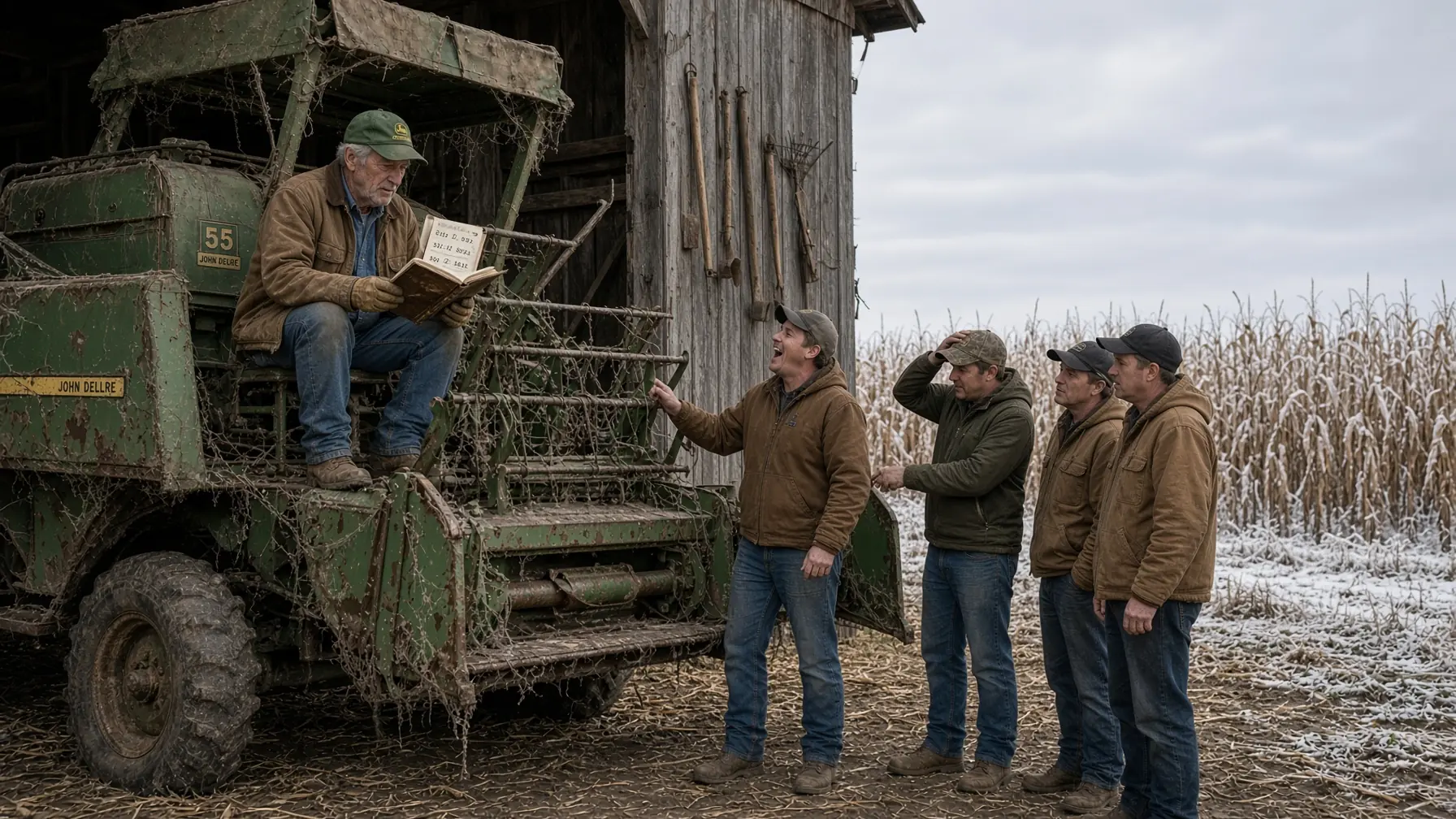
I remember because I had just come in from checking the south field, and the coffee in my hand was still hot when Darlene Schubert called the house at 7:30.
Her voice sounded the way people sound after they have already cried and decided they are finished crying because there is work to do.
“Ray?”
“Morning, Darlene.”
“It’s Earl.”
I put the coffee down.
“What happened?”
“The combine.”
That was worse.
People can be taken to doctors.
Machinery tends to choose harvest week to become philosophical.
“What part?”
“Header seized.”
I closed my eyes.
“How bad?”
“Earl says bad.”
That meant very bad.
Earl Schubert considered duct tape a legitimate intermediate repair method and once finished haying with a hydraulic line wrapped in two layers of rubber hose and six hose clamps.
If Earl said bad, machinery had stopped negotiating.
“Dealer coming?”
“Friday at the earliest.”
I looked through the kitchen window.
Wind had picked up.
The maple leaves beside the barn were turning their silver undersides toward the north.
Cold front.
Fast one.
Darlene continued.
“He’s got three hundred forty acres of soybeans standing.”
I knew.
Everyone knew.
A field that large becomes part of the landscape.
“What’s the forecast?”
“You heard it.”
I had.
Hard frost by the weekend.
Twenty-six degrees for hours.
Not a light frost you could joke about over coffee.
The kind that turned mature soybean pods brittle enough that every extra vibration mattered.
Once those pods began shattering, you could watch a season’s income fall between the rows one seed at a time.
“I’ll come over.”
Darlene went quiet.
Then:
“Thank you.”
I hung up.
Finished my coffee.
And walked toward a shed I had not opened with serious intentions in years.
Before I tell you what happened next, I need to explain why there was a sixty-year-old John Deere combine sitting behind my barn.
Because old farm machinery does not survive by accident.
Most machines work.
Then break.
Then become parts for another machine.
Then scrap.
That is the normal order of things.
My father did not believe normal order applied to anything he understood well enough to repair.
His name was Harlan Hope.
He was not a man who wasted words.
Or money.
Or steel.
He treated every object according to one question:
Can this still do useful work?
If the answer was yes, appearance did not matter.
Age did not matter.
Neighbor opinion definitely did not matter.
In the spring of 1952, Dad bought the remains of a John Deere Model 55 combine that had been damaged in a barn fire outside Griswold.
Calling it a combine when he bought it was generous.
Frame.
Partial drivetrain.
Some sheet metal.
Header parts.
Enough burned wiring that the dealer apparently told Dad he was purchasing “a collection of future headaches.”
Dad paid one hundred eighty dollars.
The dealer probably thought he had robbed him.
Dad probably thought the same thing in reverse.
He hauled it home.
Then spent fourteen months rebuilding it.
Not restoring.
Rebuilding.
There is a difference.
Restoration tries to return something to what the factory intended.
Dad respected factories.
He did not worship them.
When he thought the factory design made sense, he followed it.
When he thought he could improve something for our farm, he changed it.
He fabricated unavailable parts.
Welded joints that had originally been bolted.
Machined pulley wheels on a borrowed lathe at Curtis Albright’s shop.
Built a belt arrangement from a sketch he drew on the back of a feed invoice.
He kept an old Iowa State extension bulletin from 1938 about threshing cold, damaged grain.
By 1952, most farmers considered the bulletin outdated.
Dad considered information either useful or not useful.
Age did not determine which.
When the Model 55 rolled out of his shed in July 1953, neighbors came to watch.
Not because they admired him.
Because they expected to see something funny.
Farm communities can be supportive.
They can also turn a man’s bad decision into entertainment for thirty years.
My father knew that.
He started the engine anyway.
The combine worked.
Then worked again.
Then harvested our fields for twenty-five seasons.
Wet years.
Dry years.
Lodged corn.
Thin soybeans.
Oats.
Small grain.
Whatever we asked.
Dad changed engines once.
Changed belts constantly.
Rebuilt bearings.
Repaired canvas.
Modified the feeder.
Adjusted the reel after a fieldstone damaged it.
He never pretended it was indestructible.