After burying my husband that night, my son slapped me and bellowed, "Get out. This was never your home. It's ours, and you're just in the way." They thought grief would make me weak, but they don't know that the mortgage was still in my name and my late husband's.
Tomorrow, the bank will know the truth, and the family that betrayed me will learn who really owns the home they coveted. The air inside the church was heavy, chilled by the hum of the air conditioning and perfumed with lilies that seemed almost suffocating. I stood near the front pew, clasping the folded funeral program between my palms.
My husband Henry's name looked too final, printed in black ink, framed by verses that promised peace. I nodded as neighbors, colleagues, and distant cousins passed by, their murmured condolences blending into a blur of "so sorry" and "he was a good man." But my eyes, sharp even in grief, kept drifting to the corner.
Chase, my son, leaned close to his wife, Talia, whispering. Their faces weren't carved with loss; they were lit with calculation. I could read people like ledgers; I had done it for years as an accountant, and what I saw there wasn't grief, it was speculation.
"Equity strong right now," Chase muttered, his voice low, but not low enough. "Seller's market," Talia answered, her lips curving in a smile that didn't match her funeral dress. "We'll redo the kitchen fast. Modern buyers want granite and stainless."
The words cut deeper than the hymns comforted. Equity, market, granite. They weren't speaking of Henry's life or the father who had raised Chase with thrift and care. They were talking about the house, the house Henry and I had built payment by payment, year after year, through sacrifices Chase never saw.
I pressed the program tighter, forcing myself to stay silent. Grief has a way of hollowing you, but betrayal fills you with fire. By evening, after the casseroles were stacked in foil tins across the counter and the neighbors had gone home, I thought I'd finally have a moment to breathe.
Instead, Chase cornered me in the kitchen. His tie hung loose, his eyes restless like a man with a deadline. "Mom," he began, though the word sounded like a formality, "you should pack up. This house, it's my inheritance. You can't just stay here alone. Talia and I, we need it now."
I stared at him. "Chase, this is my home. Your father and I..." His hand cut through my words. The slap cracked against my cheek, sharp and hot, reverberating through the silence. My knees buckled, but I gripped the counter, refusing to fall.
"Get out," he bellowed. His face twisted with something I hadn't seen since he was a boy throwing tantrums. "This was never your home. It's ours, and you're just in the way." Behind him, Talia leaned against the doorway, arms folded, eyes gleaming.
Her voice was quiet, poisonous. "You're nothing here but dead weight. It's time." Shock froze me. My mind reeled, but my mouth said nothing.
Sometimes silence is not weakness, it is calculation. Without another word, I walked to my bedroom, took a single suitcase, and left. The house, my house, stood behind me in the dark, the windows reflecting my own disbelief.
The motel smelled of disinfectant and despair. Neon buzzed outside the window, casting harsh pink light against the thin curtains. I set my suitcase on the bed, the silence broken only by the rattle of the ice machine down the hall.
My face still burned, but my hands were steady as I pulled out my phone. At 3:07 a.m., I logged into the bank app. The numbers lit up like small beacons of truth.
First mortgage: Henry Hollowell and Mina Hollowell. Home equity line: the same. Chase's name appeared nowhere. Autopay flowed from my checking account, my account.
Relief and fury braided together inside me. I took screenshots of every balance, every history line, every confirmation. I remembered the occupancy clauses, the protocols lenders followed when disputes arose, and the way systems could be frozen with a single call.
Years of financial discipline, of combing through accounts, came rushing back to me like an old skill waiting to be sharpened. By the time the first hints of dawn glowed at the motel's edges, resolve had crystallized. I pulled out the motel notepad and wrote four words: bank, freeze, inspection, evidence.
Then I set a 7:30 a.m. alarm on my phone, naming it what it truly was: "Own the note." Henry's watch ticked softly on my wrist. For the first time that night, I smiled—not with joy, but with steel.
Morning light spilled across the polished wooden tables of the Copper Cup, a cafe in Dilworth where young professionals tapped away at laptops and mothers compared strollers. I sat at a corner table with my own laptop, Henry's worn leather folder, and a legal pad that already bore the faint ring of my cappuccino cup. My appearance, a silver-haired widow in black slacks, didn't draw a second glance, but inside, my mind sharpened like a blade.
One by one, I laid out the papers I had carried with me. Marriage certificate. Henry's death certificate, creased from too many hands. Mortgage statements showing every payment made on time, never late, not once in 26 years.
And my driver's license, a picture of me taken years ago when I still wore hope in my eyes. These were not just documents; they were weapons. I dialed the bank.
After the polite maze of recorded options, a calm male voice came on. "This is Carter, branch manager. How can I help you today?" I steadied my tone.
"Mr. Carter, this is Mina Hollowell. There's a residency and occupancy dispute concerning my home. There has also been what I believe to be elder abuse. I need temporary holds placed while you verify borrower status." There was a pause, then the quiet clicking of keys.
"Mrs. Hollowell, I understand you are a named borrower." "Yes. My husband and I signed both the mortgage and the home equity line. He passed away last week. I am the surviving borrower. My son has moved into the property without my consent and has attempted to take control."
"I want autopay on the first mortgage canceled immediately, and I request suspension of all HELOC draws until you complete identity and occupancy verification." "Understood," he said, his voice tightening with professional seriousness. "I'll flag this for an administrative hold and schedule a property inspection. We'll also update our system so no one else can call in and impersonate you. Would you like your mailing address changed?"
"Yes," I said firmly. "Send everything to my PO box from now on. No exceptions." As he typed, I imagined Chase standing in the kitchen, dreaming of countertops and open floor plans, unaware that the foundation of his fantasy was already slipping from beneath his feet.
I scanned each document with a portable app on my phone, sending PDFs to Carter's secure email. Then I added screenshots of text messages—Chase demanding the house, his language crude and entitled: "Get out, Mom. You're done here."
My hand trembled as I attached the files, but not with fear. It was anger distilled into purpose. Before closing my folder, I dialed one more number.
"Mrs. Alvarez," I said into the voicemail. "It's Mina. I know you saw what happened through your window that night. If you're willing to make a statement, I'd be grateful. I need to protect myself." My voice cracked only at the end, but the words were steady.
Finally, I rang Elena Park, my old friend from college, now a sharp attorney with a voice like glass. She listened quietly as I laid out the facts. "As the surviving borrower, you hold the reins," she confirmed.
"The bank will follow the note, not sentiment. If Chase escalates, file for a 50C or even an elder abuse report; North Carolina takes that seriously. For now, you're doing exactly the right thing." Her validation settled me.
For years, I had lived with the quiet rhythm of ledgers, of numbers lining up neatly. Now, the same discipline would save me. I slipped Henry's watch from my wrist into my purse, feeling the cool weight against the leather.
Time was no longer my enemy; it was my ally. And somewhere across town, while I fortified my position, Chase and Talia dragged my framed photos off the wall, tossing them into boxes marked yard sale. They laughed over my life as if it were clutter.
But they didn't know that walls could be repainted and frames replaced. Paper, however, paper decided everything. My phone buzzed on the table, a text from the bank: "Inspection scheduled. Tomorrow, 10:00 a.m."
I stared at the glowing screen, then allowed myself the smallest of smiles. "Good," I whispered, closing the folder with a snap. The morning after I sent the bank my files, the house that Henry and I had built was alive with the wrong kind of energy.
Though I was no longer inside it, I could picture it as clearly as if I stood in the doorway. Chase strutted through the front yard, the arrogance in his stride unmistakable. He held his phone like a trophy, bragging to Talia that he would have the place listed by Friday.
From across the street, Mrs. Alvarez told me later, he waved his arms toward the house as though he were already the owner, already flipping it for profit. Talia, always eager for quick gains, smiled thinly. "We'll pull from the HELOC," she said.
"Do some staging, maybe redo the bathroom. Buyers love a fast upgrade." I imagined the scene in my mind: my son and his wife talking about my house as though it were merchandise. For a moment, it almost broke me.
But the moment didn't last. Inside, Talia opened her laptop on the dining table, the same table where Henry once pored over tax returns and amortization schedules with a calculator and his steady patience. She typed in the bank portal, confident she would draw thousands from the home equity line.
The screen blinked: "Declined." She tried again: "Declined." Her lips thinned, color rising in her cheeks.
Chase leaned over her shoulder. The call they made to the bank started smooth, but within minutes, his voice grew sharp. The agent repeated, "Suspended, pending verification. Administrative hold."
The more they explained, the more he realized his plans were unraveling. I wasn't there, but I could hear the echo of it in my imagination, the frustration dripping off every syllable. Not long after, my phone rang at the motel. Chase. His voice was jagged.
"Mom, what did you do? The bank says the line is frozen. Fix it now." I let his fury settle before I spoke.
My words were measured, crisp, leaving no room for negotiation. "I am the borrower of record, Chase. I initiated a hold until occupancy is verified. You wanted the house? Then make the payments yourself."
There was a silence on the line, a dangerous one, before his voice hardened further. "I'll change the locks. I'll sell the furniture. Don't think you can freeze me out of what's mine." My thumb slid across the screen, tapping the record button on my voice memo app.
In North Carolina, one-party consent was all the law required. Every threat, every cruel word was captured. When the call ended, I saved the file, labeling it carefully: "Exhibit A."
Into the evidence folder it went. That day, I played my moves like chess. First, I called the homeowner's insurance.
I explained Henry's death, the occupancy change, and the potential dispute. The representative's tone sharpened instantly; risk departments never ignore such details. They promised a note in the file.
Next, I asked the bank to flag every mailing address to my P.O. box. No more letters lying around where Chase could intercept them. Everything came to me directly.
Finally, I opened the camera on my phone and took the photos I had avoided until then: the faint outline on my cheek where his hand had struck me. I logged the date, time, and my account of the incident in a contemporaneous note. Numbers and records, neat as ledgers.
Henry would have approved. Later, I walked to the park near the motel. The oaks stretched high above me, their branches whispering with the late morning wind.
I sat on a bench, closed my eyes, and remembered Henry at our kitchen table, explaining amortization schedules in his patient drawl. "The note decides the story," he used to say. At the time, I thought it was just numbers; now, I knew it was truth.
When I returned, my phone buzzed with a message from the bank: "Mr. Carter will attend inspection." Almost at the same time, somewhere across town, Chase's phone lit up with a different alert: "Payment past due in 3 days. Autopay canceled."
The float was gone. His key still opened the door, but his hands no longer reached the accounts. And for the first time since the funeral, I felt the balance of power tilt.
Morning came with a gray sky, the kind that seemed to hold its breath. I knew this day would matter. Verification day. The day truth would be measured not by sentiment or family titles, but by paper, signatures, and law.
At ten sharp, a white sedan with the bank's logo rolled into my driveway. From my motel window across town, I imagined it. Chase swaggering onto the porch, chin high, acting the part of the rightful heir.
Beside him, Talia, smooth as glass, ready with her bluffs. But the sedan door opened and out stepped Mr. Carter, a man trained to hear facts and not stories. Behind him, the inspector shouldered a clipboard, a camera dangling at his side.
"Morning," Carter said politely. "Borrower of record present?" "Yes," Chase announced, chest puffed. "I'm the homeowner."
He had no folder, no deed, nothing but entitlement. Talia leaned forward, her voice dripping with certainty. "His parents left the house to us. You can talk to us about the account."
Mr. Carter's expression didn't flicker. "Names on the note?" he asked. Silence stretched.
Chase tried again, louder this time, but Carter didn't bite. The inspector clicked photos of boxes stacked high, measuring tape still stretched across a wall, and real estate flyers lying on the counter. The report would read what it saw: occupants without proof, property staged for imminent sale, borrower absent while they postured.
I was at the branch, seated in a glass-walled conference room that smelled faintly of toner and polished wood. Carter's assistant, a young woman with careful eyes, clicked through the copies I handed her. Henry's death certificate, my driver's license, marriage certificate, and the note itself—each page stamped, each detail in place.
"I will resume payments immediately," I told her, sliding forward a written statement in my steady hand, "but only once the unauthorized occupants vacate. Until then, keep the HELOC frozen. This is my collateral as much as yours. We protect it together."
She nodded, making notes. I withdrew my checkbook, wrote out a full month's payment, and watched her stamp the deposit slip: "suspense account," a signal to the bank that the money was ready, set aside in good faith. The paper slid back to me, warm from the press of the ink.
Meanwhile, back at the property, the inspector filed his notations: borrower not on site, occupants failed to produce identification or deed, house shows preparations for sale. Each click of the camera was another nail in Chase's illusions. An hour later, Mr. Carter joined me in the conference room.
His posture was professional, but his tone carried a note of respect. "Mrs. Hollowell, here is where we stand. The bank must protect its collateral and ensure payments continue. With your dispute on file, the home equity line remains suspended."
"The first mortgage can resume after our internal review. If payments lapse, policy requires us to issue a notice of default and intent to accelerate. But as the surviving borrower, you may cure swiftly." I folded my hands on the table, calm, deliberate.
"I will keep your asset current. In return, note in the file that any third-party communication must come through me. No exceptions. If those occupants refuse to vacate, I will pursue civil remedies."
He studied me for a long moment, watching the way I aligned my papers and squared the edges as if balancing a ledger—not a grieving widow anymore, but a counterparty, a woman who knew the power of the note. By late afternoon, his email went out. I could almost hear the chime on Chase's phone when it landed: "Pending verification complete. Borrower Mina Hollowell will resume payments. HELOC draws remain suspended. Unauthorized occupants must demonstrate legal claim or vacate."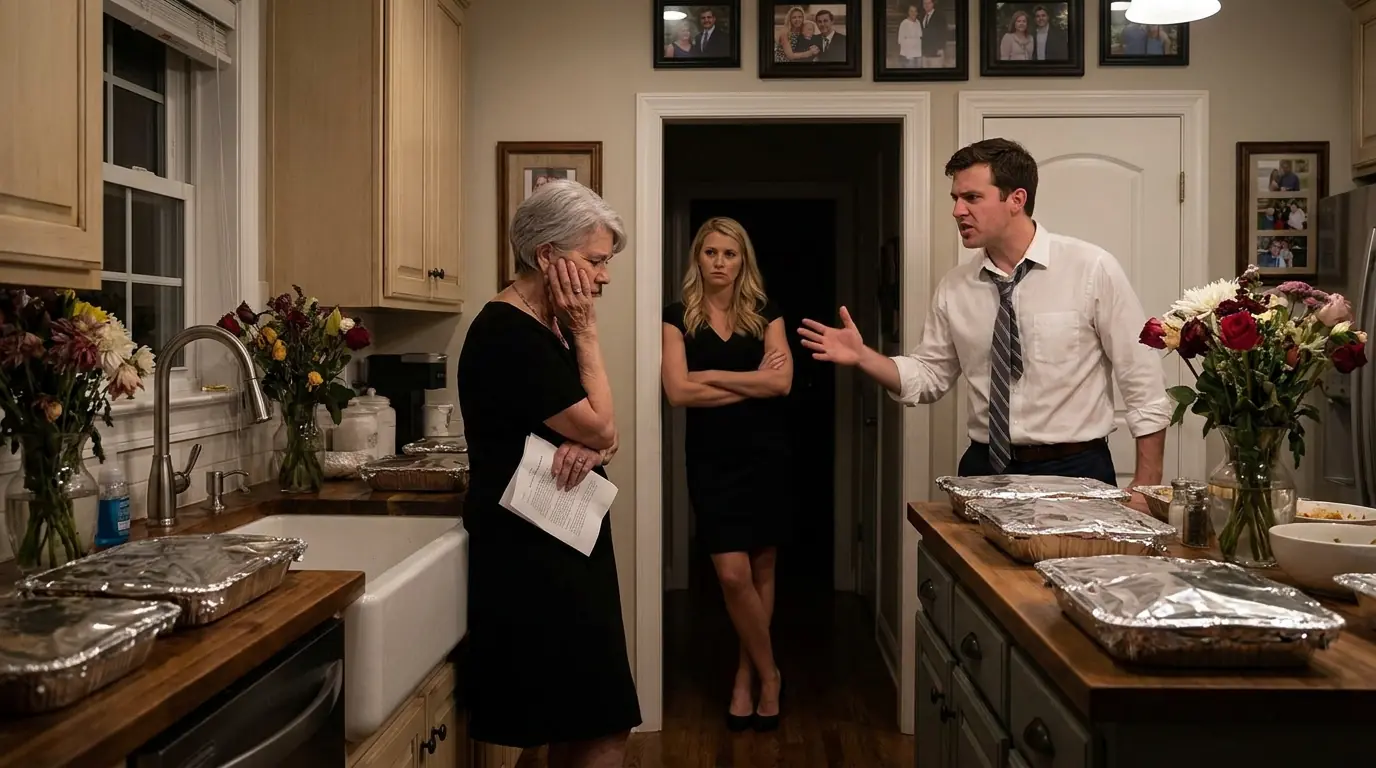
I pictured Chase reading it, scanning twice, then a third time, looking for his name. It wasn't there. It would never be there. And that was when the balance shifted.
The house still stood, but the ground beneath my son's feet had started to crumble. The envelope arrived on cream stock, the kind banks use when they want to make their message look dignified but carry the sting of a threat. A right to cure letter, printed before my deposit cleared.
It laid out timelines in black and white: if payment wasn't received by the deadline, the bank could accelerate the loan, call it due in full, and begin foreclosure. Of course, I knew better. My check had already been stamped into the suspense account; the money was there, waiting to be applied.
But Chase didn't know that. When the letter hit his mailbox, he must have thought the end had already begun, that his house teetered on the edge of foreclosure. That night, he came to the motel.
The security camera in the hallway caught his shadow pacing, his fist hammering against my door. "Mom, open up!" he shouted. The walls rattled with his anger. "You're destroying this family. You're destroying me."
I stayed still, my breath caught in my throat, the suitcase I had never unpacked clutched like a shield. I didn't open the door. Instead, I picked up my phone and dialed the non-emergency line.
When the officer arrived, his notebook open, I gave him everything—the funeral night slap, the threats, the pounding on my door. He scribbled quickly, then tore off a card: Case number 20025 to 4417. Documentation proof.
Another brick in the wall I was building around myself. The next morning I called Elena. Her voice was steady, clinical, the way only a lawyer's could be. "You've done right," she said.
"Two paths lie ahead: file for a civil no-contact order or hold that as leverage. And if Chase tries to list or rent the house, we're ready with a cease and desist. That would fall into slander of title. Judges don't look kindly on it."
Her words calmed me. Law was slow, but it was firm like numbers; it followed rules. Meanwhile, the cracks began to show in Chase's world. Without my autopay, the first of the bills landed on his lap: utilities, groceries, property upkeep.
For years, I had been the silent force that kept the lights on and the fridge stocked. Now the silence echoed differently—louder, harsher. Talia's patience wore thin. A neighbor told me she stormed out one night, shouting that she hadn't signed up for this mess.
Their marriage, already fragile, began to show the stress lines, and I sat at the motel desk, pen in hand, drafting what I knew I might one day need. It was a boundary letter—hard, uncompromising. In it, I wrote conditions for any future contact: sobriety, if he ever chose to face his demons; counseling to mend what anger had broken; a written apology for the slap, witnessed and notarized; restitution for the items he'd sold or damaged; and above all, recognition that the house, my house, belonged to me.
I folded the letter carefully and tucked it away. Someday, perhaps, I would read it aloud, or perhaps it would sit unread as a monument to what could have been. Later that week, Mr. Carter called. His tone was brisk but warmer now.
"Mrs. Hollowell, your payment has posted. The default clock is stopped. You're current." I let out a breath I hadn't realized I was holding. "And the HELOC?"
"Frozen," he said, "until you, the borrower, direct otherwise." I hung up, pulled Henry's old financial calculator from my purse, and set it on the motel desk. The plastic keys were yellowed, the display faint, but when I pressed the power, it blinked to life.
It still ticked as steady as ever. Numbers obeyed rules, and so did this story. But peace never lasted long. That evening, my phone buzzed with a message from Mrs. Alvarez—a photo, grainy from her window, of a man in a realtor's jacket shaking Chase's hand on the porch.
The caption read, "They're taking photos inside. Looks like a listing." I stared at the screen, anger sharpening into clarity. A handshake deal, a coming soon sign prepared illegally.
Chase thought he could cheat paper with promises, but I had the calculator. I had the note. And I had patience. The next move would be mine.
The glass walls of the conference room made everything feel exposed. Outside, I could see the rhythm of the bank customers at the counters, tellers clicking keys. But inside, the air was heavy, waiting.
Mr. Carter sat at the head of the table, his file open, pages neatly stacked like a verdict waiting to be read. To my left, Chase leaned back in his chair with arms crossed, his chin lifted high in false confidence. Beside him, Talia crossed her legs, lips pursed, eyes sharp with the same disdain I had seen at the funeral.
I set my manila folder on the polished wood in front of me, Henry's watch on my wrist ticking like a metronome. Carter cleared his throat. "Let's be very clear about the file. Borrowers of record: Henry Hollowell and Mina Hollowell."
"Surviving borrower: Mrs. Hollowell. Payments current by Mrs. Hollowell. Home equity line suspended at the borrower's direction." His eyes flicked toward Chase, who stiffened. The inspector's report lay on top of the file, and Carter tapped it lightly.
"Inspection notes: occupants on property could not produce documentation. No deed, no note, no power of attorney. Evidence of imminent sale preparation: boxes, measuring tape, realtor flyers, all logged." Chase shifted forward, his tone defensive.
"This house is mine by inheritance. My father is gone, that means the deed transfers to me. She's keeping me out of what's rightfully mine." Carter's gaze didn't waver.
"Mr. Hollowell, probate and deed transfer are separate legal processes. They do not override the obligations of a note. The bank enforces the note, and the note is signed by your parents, not you." The silence that followed was thick.
Chase's face reddened, his jaw clenched. He tried again, louder this time, but the words felt brittle. "So she gets to control everything? Even though I'm the son?"
"Yes," Carter said simply. "As long as she remains the borrower of record." I leaned forward then, my voice low and even.
"Chase, I'll make this very clear. Vacate the house within seventy-two hours. Leave it in broom-swept condition. In return, I won't pursue charges for the assault at the funeral or damages for your attempt to interfere with collateral that doesn't belong to you."
For the first time, Talia's composure cracked. She turned to Carter, her voice sharp, almost panicked. "We just wanted to pull a little equity, do some quick upgrades. It would have increased the value. Isn't that reasonable?"
Carter's tone hardened. "That constitutes misuse of credit. If not authorized by the borrower, it's a violation of the line's terms. It could be considered fraud if pursued." Her face drained of color.
Chase muttered something under his breath, but it sounded less like defiance and more like desperation. Carter slid a printed sheet across the table toward me. "Mrs. Hollowell, we've updated the account. Communications are restricted to you. Any third-party attempts to access will be flagged immediately."
I opened my folder then—not with drama, but with precision. One by one, I placed the contents on the table: photographs of the bruise on my cheek, transcripts of threatening texts, the neighbor's signed statement from Mrs. Alvarez, the police case card, and printed emails from the bank confirming my actions. My evidence lay there in silence, heavier than any raised voice.
Chase's last card was the old one. He slammed his palm against the table. "You're ruining this family!" I met his eyes without flinching.
"Marcus, you mistook kindness for weakness and family for free collateral." For a moment, no one spoke. The ticking of Henry's watch seemed to echo in the room.
Then Carter stood, gathering his file. His tone was final, professional. "We're done here. Mrs. Hollowell, we'll confirm vacancy." Chase's face fell, the false bravado draining.
Talia whispered, too low for him, but not for me, "We can't afford a fight." And in that moment, I knew this was no longer a battle of family; it was a matter of records, of law, of truth. And on every line, my name remained.
On the morning of their departure, I stood a little ways down the block, the sun just lifting over the rooftops, the air still damp with dew. From her porch, Mrs. Alvarez watched, arms crossed, as Chase and Talia hauled boxes into a dented U-Haul. Their movements were stiff, not triumphant.
Each slam of a box against the truck bed sounded more like defeat than progress. At one point, I caught sight of him slipping something small into his pocket: Henry's old tape measure, the one with the faded yellow casing and a crack in the clip. A final pettiness.
I felt the ache of it, but I let it go. If he needed that relic to nurse his pride, he could have it. The house itself, the walls, the ledger—the peace remained with me. By the time the truck pulled away, I was already on the phone with the locksmith.
New codes for the smart locks, new keys for me alone. Within the hour, I called my insurance agent, updating the policy to reflect the changes. Then the bank: autopay reinstated, but this time on my terms, under my control. Every detail tucked back into order.
That afternoon, I walked into the house. It smelled faintly of dust and stale anger, the residue of their occupation. I set Henry's watch, which I had carried for weeks, back onto its dish atop the freshly polished foyer table. It ticked softly, filling the silence.
I breathed deep; this was mine again. The days that followed became a quiet reset, each action a reclamation. I repainted the kitchen walls in soft sage, the kind of green Henry once said reminded him of Carolina spring. I rehung our wedding photo, straightened at last, no longer shoved into a closet.
And I boxed up the remnants that carried bad memories, items tainted by Chase's cruelty or by my own hesitation. Some went to donation, others into the trash. One evening, I drove to the office of a local housing nonprofit.
With a firm signature, I donated a portion of Henry's life insurance to fund programs that teach seniors how to protect themselves from mortgage scams and predatory equity lines. "In Henry's name," I told the director. She clasped my hands, her eyes damp, promising it would make a difference.
For the first time in weeks, I felt my grief transform into something useful. On the porch, the azaleas bloomed as if they too had been waiting for peace. One morning, Mrs. Alvarez strolled by, pausing at the gate.
She looked at me with something more than curiosity, something like respect. "You're stronger than most," she said softly. I smiled, rocking gently on the porch swing. "I didn't just keep the house," I told her, "I kept my peace."
A few days later, a letter came. The handwriting was familiar—hurried, messy, Chase. Inside were half-apologies mixed with excuses, a plea for "just a little help until we sell our condo." I read it once, twice, letting each word wash over me.
Then I slid it into a folder I had already prepared, labeled simply: "Boundaries." I placed it high in a cabinet, out of reach where it belonged. Afterward, I stepped outside, the sun warming my shoulders. Hose in hand, I watered the azaleas, the gentle spray catching the light.
Behind me, the house stood still. No boxes, no threats, no raised voices—only the steady metronome of Henry's wall clock, marking time in quiet dignity. I drew in a deep breath and squared my shoulders. I was not just the note holder; I was the keeper of this home. And finally, it remembered me.
I learned that family can love you, but they can also see you as a resource to be claimed. Grief taught me clarity. The value of a lifetime isn't measured in possessions, but in the dignity of knowing what you've built and the right to protect it. I discovered that silence can be power and boundaries are a gift to yourself. Respect must be earned, even by your own children.