My wife said calmly, “My ex is part of my life. That is not changing.”
I did not argue.
I just noted it.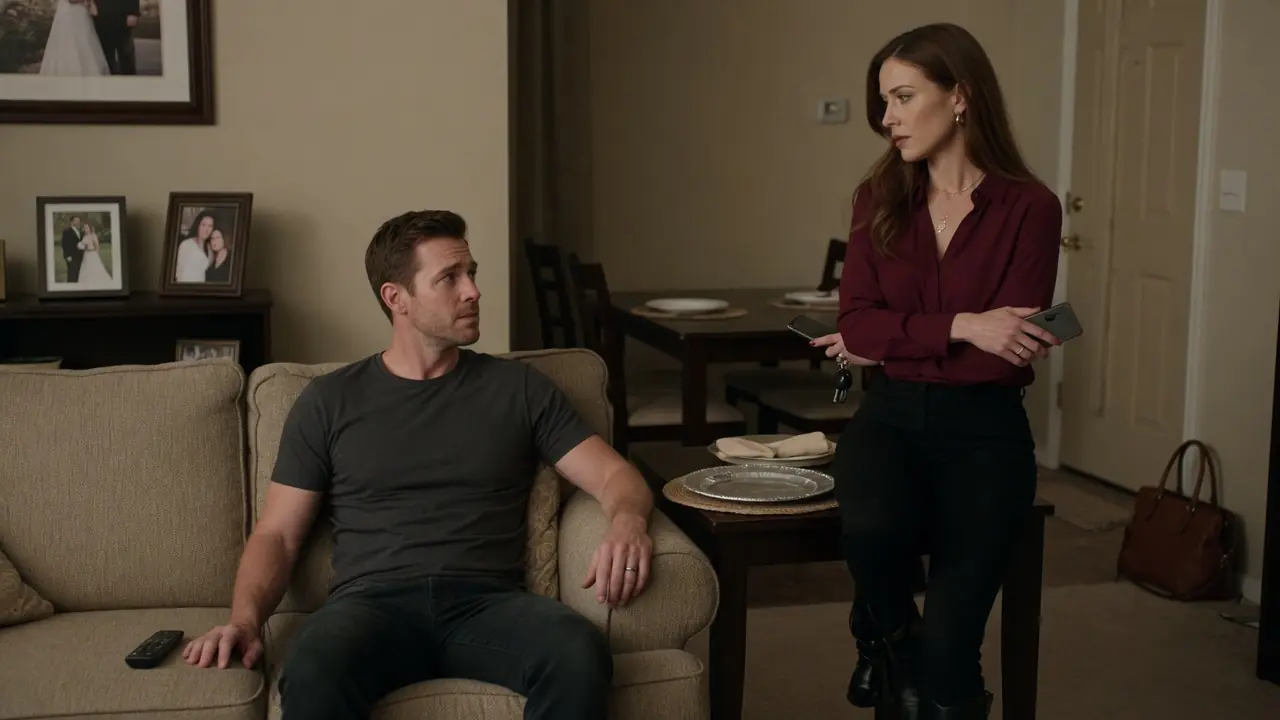
I stopped checking in. I stopped rearranging my days. Later that night, she noticed something missing that had always been there.
And that was when everything stopped.
I am thirty-five, married for six years, and I just learned that some people will keep one foot in their past while expecting you to build their future.
My wife reconnected with her ex about four months ago. They dated in college and broke up when he moved across the country for work. They had stayed loosely in touch over the years, nothing that bothered me initially.
Then he moved back to our city for a new job.
She mentioned grabbing coffee with him to catch up.
I said, “Sure.”
I did not think twice about it.
That one coffee turned into regular lunches, then dinners, then weekend hangouts, always with the same explanation.
“We are just friends. He’s going through a tough time with the move. I am helping him adjust.”
I trusted her.
I still do, actually. I do not think anything physical happened, but emotional boundaries started blurring in ways that made me uncomfortable.
Last Tuesday, she came home from another dinner with him around nine in the evening. I was watching television and had already eaten.
She sat down next to me. She did not apologize for missing the dinner plans we had made that morning.
“We need to talk.”
“Okay.”
“You have been distant lately. Cold. I can feel it.”
“I have been giving you space to spend time with your friend.”
“He has a name.”
“I know his name. I am choosing not to use it.”
“That is petty.”
“That is self-preservation.”
She crossed her arms.
“I do not like this version of you. You are being passive-aggressive.”
“I am being clear. You are spending more time with your ex than with me. That bothers me. I have mentioned it before. Nothing changed.”
“Because nothing needs to change. We are friends. That is it. I can have male friends.”
“You can. But when those male friends are exes you see three times a week while I see you maybe once, that is not friendship. That is a relationship.”
“You are being ridiculous. There is nothing romantic between us.”
“Then why does he get more of your time than I do? Why do his needs come before our plans? Why am I always the one adjusting?”
“Because you are secure. He needs support right now. I thought you would understand that.”
She stood up.
“I’m not having this conversation again. My ex is part of my life. That is not changing. You need to accept that.”
I looked at her for a long moment.
She was not asking. She was telling, making a unilateral decision about our marriage and expecting me to fall in line.
“Noted,” I said.
“What does that mean?”
“It means I heard you. You have made your priority clear. I am adjusting my expectations accordingly.”
“Do not be like that.”
“Like what? Honest?”
“You just told me your ex matters more than my comfort. I am acknowledging that reality.”
“I did not say he matters more.”
“You did not have to. Your actions have been saying it for months. You just confirmed it verbally.”
She grabbed her phone and keys.
“I am going for a drive. I cannot deal with this right now.”
“Say hi to him for me.”
She left without responding.
I sat on the couch for another hour, then went to bed around eleven. She came home around midnight and slept on the couch without saying good night.
Wednesday morning, I woke up at six like always. I got ready for work quietly. She was still asleep on the couch when I left.
I used to text her throughout the day. Good morning messages, lunch check-ins, evening updates about when I would be home. Just little connection points that kept us close.
I did not text her Wednesday.
I did not check in. I did not ask about her day. I just went about my work, handled my responsibilities, and existed without orbiting around her.
She noticed around noon.
She texted, “You did not say good morning.”
I did not respond immediately. I had a meeting at one and dealt with some emails after. I saw her text around three, but I did not reply.
At five, another text came in.
“Are you okay?”
At six, I finally replied.
“I am fine.”
“You are being weird.”
“I am being consistent with your stated priorities.”
“What is that supposed to mean?”
“You said your ex is part of your life and that is not changing. I am adjusting my behavior to reflect that reality.”
“By ignoring me?”
“By not making you my priority when I am clearly not yours.”
“This is childish.”
“This is proportional.”
She called me.
I let it ring.
She called again.
I declined it.
Then she texted, “We need to talk when you get home.”
I got home at seven.
She was in the kitchen making dinner for herself.
“I did not know if you would be home,” she said.
“I have been coming home at seven for six years. You know my schedule.”
“Your schedule has been unpredictable lately.”
“My schedule has not changed at all. Your attention has.”
She sat down with her plate.
“Are you going to eat?”
“I will make something later.”
“Stop being difficult.”
“I am not being difficult. I am being independent. That is what you wanted, right? Me accepting that your ex is part of your life.”
“I wanted you to be mature about it, not punish me.”
“I am not punishing you. I am just not centering my life around you anymore. You are busy. I am adjusting.”
“By ignoring me?”
“By not checking in.”
“I checked in today. You asked if I was okay. I said I was fine. That is checking in.”
“That is not what I mean, and you know it.”
“Then what do you mean? Spell it out, because I am confused about what you actually want from me.”
She put down her fork.
“I want you to support me having friends.”
“I do support that. I do not support you prioritizing an ex over your husband. Those are different things.”
“He is not just an ex. He is someone important to me.”
“Cool. I used to be someone important to you, too.”
“Past tense?”
“Apparently.”
“That is not fair.”
“Isn’t it? When is the last time we had dinner together? A real conversation? Quality time that was not interrupted by your phone buzzing with texts from him?”
She did not answer.
“That is what I thought. I am going to take a shower.”
I left her sitting at the table and took a long shower.
When I came out, she was on the couch scrolling through her phone, probably texting him about what a jerk I was being.
Thursday, I woke up early again. She was in bed this time. I got ready quietly, left without waking her, and did not leave a note or text.
Around ten, she called. I was in a meeting and did not answer.
She called again at eleven. I was free, but I still did not pick up.
At one in the afternoon, she texted, “Why aren’t you answering me?”
“I was busy. What is up?”
“We need to talk about what is happening.”
“What is happening is you have your priorities, and I have mine. We are coexisting.”
“We are married. We are supposed to be partners.”
“Partners communicate. Partners compromise. Partners prioritize each other. We have not been doing any of that.”
“I have been communicating. You are the one shutting down.”
“I communicated for months that I was uncomfortable with how much time you spend with him. You dismissed it every time. So I stopped communicating that discomfort and started adjusting my behavior instead.”
“By pulling away from me?”
“By giving you the space you clearly wanted. You are welcome.”
“I do not want space. I want my husband back.”
“Then act like you want a husband, not a roommate who is supposed to be okay with coming second.”
She did not respond for hours.
I went about my day.
That evening, I had dinner with a coworker who had asked earlier in the week. I told my wife via text at six.
“Having dinner with a friend. Home late.”
She replied immediately.
“Who?”
“A friend.”
“I would like to know who.”
“Someone from work. We are discussing a project.”
“Is it a woman?”
“Does it matter?”
“Yes.”
“Interesting. Suddenly, who I spend time with matters. That is new.”
“Do not do this.”
“Do what? Have dinner with a friend like you have been doing three times a week for months?”
“That is different.”
“How?”
“Because I have been transparent about it.”
“So am I. Having dinner with a coworker. That is transparent.”
“You are doing this to hurt me.”
“I am doing this to live my life without centering it around someone who does not center theirs around me.”
I turned off my phone and had a nice dinner.
We talked about work, life, normal things.
I got home around ten. She was waiting up.
“Who were you with?”
“I told you. A coworker.”
“Man or woman?”
“Why does it matter?”
“It matters.”
“It was a woman. We have worked together for three years. Nothing romantic, just dinner between colleagues.”
“You have never mentioned her before.”
“You have never asked about my work friends. You have been too busy with yours.”
“I do not like this.”
“Now you know how I have felt for four months.”
“That is not the same thing.”
“You having regular dinners with an ex you used to love. Me having dinner with a colleague. What is the difference?”
“The difference is I have been honest with you.”
“So have I. You asked where I was, I told you. You asked who I was with, I told you. That is honesty.”
“You are trying to make me jealous.”
“I am trying to make you understand how I have felt. If you are jealous, that is interesting, because I have been telling you I felt that way for months, and you told me I was being insecure.”
She started crying.
“I do not like who you are becoming.”
“I do not like who you have been for the past four months. Guess we are both disappointed.”
Friday, she tried a different approach.
She left me a note on the kitchen counter before she left for work.
I’m sorry. I miss you. Can we please talk tonight?
I did not respond to the note. I went about my day.
She texted around noon.
“Did you see my note?”
“I did.”
“And?”
“And what?”
“Can we talk tonight?”
“I have plans.”
“What plans?”
“Going to the gym after work, then probably grabbing dinner out. Home around nine.”
“You are avoiding me.”
“I am living my life like you have been doing.”
“Please, I need to see you.”
“I will be home by nine.”
“That is not what I mean.”
“I know what you mean, but my time is not available at your convenience anymore. You will have to work around my schedule.”
I did go to the gym. I worked out longer than usual. It felt good to focus on myself for a change.
I grabbed food after, ate slowly, and did not rush home.
I got back around 9:15.
She was on the couch. She had been crying.
“You said nine.”
“I said around nine. It is 9:15. That is around nine.”
“You used to always be home when you said you would.”
“Used to. A lot of things are different now.”
“I hate this.”
“Join the club. I have been a member for months.”
“Can we please just talk? Really talk?”
“Sure. Talk.”
She took a shaky breath.
“I am sorry for making you feel second, for not seeing how my friendship with him was affecting you. I was selfish. I see that now.”
“Okay.”
“That is all you are going to say?”
“What do you want me to say? You are sorry. I heard that. It does not change anything.”
“Why not?”
“Because sorry without change is just words. You are sorry because I pulled back and you do not like how it feels, not because you actually understand what you did wrong.”
“That is not true. I do understand.”
“Then explain it to me. What did you do wrong?”
She struggled to answer.
“I spent too much time with him.”
“And?”
“And I did not prioritize you.”
“And?”
“And I dismissed your feelings.”
“Getting warmer, but still missing the core issue.”
“What is the core issue?”
“You chose him over me over and over for months. Every time I expressed discomfort, you made it about my insecurity instead of your choices. You made me feel like I was the problem. Then, when I finally stopped fighting it and adjusted my behavior to match your priorities, you suddenly cared about my attention.”
“I did not gaslight you.”
“You told me I was being insecure. You told me I was being controlling. You told me I needed to be more secure. All while spending three nights a week with an ex and canceling plans with me. That is gaslighting.”
“I never canceled plans.”
“You canceled dinner Tuesday. We made plans that morning. You went out with him instead. You did not even call to tell me. You just came home and acted like it was normal.”
“I forgot about dinner.”
“Exactly. You forgot about me because he was more important. That is the problem.”
She was crying again.
“What do I have to do to fix this?”
“I do not know if you can.”
“What does that mean?”
“It means I spent four months trying to fix this. Trying to communicate. Trying to set boundaries. You did not listen. Now you want me to tell you how to fix it. I am tired. I am done doing the emotional labor.”
“So what? We are just over?”
“I did not say that. I said I do not know if you can fix it. That is different. You broke something. I am not sure how to repair it. And I am not sure I want to expend the energy figuring it out.”
“Do you still love me?”
“I love the person I married. I do not know who you are anymore.”
The weekend was tense.
We coexisted in the same house but barely spoke. She tried to initiate conversations. I kept them brief.
She asked what I wanted for breakfast Saturday. I told her I would handle my own food.
She asked if I wanted to watch a movie. I said I had other plans.
By Sunday evening, she finally snapped.
“This is ridiculous. You are punishing me.”
“I am protecting myself.”
“From what?”
“From continuing to invest in someone who does not invest back.”
“I am trying to invest now.”
“Now, after I pulled back. After you realized you might actually lose me. That is not investment. That is panic.”
“What do you want me to do?”
“I want you to want our marriage more than you want your ex’s friendship. But I cannot tell you to want that. You have to choose it.”
“I choose you.”
“Words. Show me how.”
“I do not know how.”
“That is your job to figure out. I have been showing you for six years how to prioritize a partner. You have been showing me for four months how to deprioritize one. Learn from your own example.”
Monday morning, she tried something different.
She got up early and made breakfast for both of us. I walked into the kitchen and saw two plates on the table.
“I made breakfast.”
“I see that.”
“Will you eat with me?”
“I appreciate the gesture, but I am not hungry.”
“Please, just sit with me.”
“Why?”
“Because I am trying.”
“You are trying to get back what you had. You are not trying to understand what you lost.”
“What is the difference?”
“The difference is you want things to go back to normal. I do not. Normal was not working for me. I was unhappy for months, and you did not notice or did not care. Now that I am adjusting to that unhappiness by disengaging, you want the old dynamic back. I do not.”
“What do you want?”
“I want a wife who chooses me first. Who does not need me to pull away to realize I matter. Who sees my value before I have to demonstrate my absence.”
“I see your value.”
“You see my absence. There is a difference.”
Tuesday, she cut contact with her ex.
She told me that evening that she had explained to him they needed space, that their friendship was hurting her marriage, and that she needed to prioritize me.
“I told him we cannot hang out anymore.”
“Okay.”
“That is it? Just okay?”
“What do you want? A medal? You did what you should have done months ago when I first asked.”
“I thought you would be happy.”
“I am not happy or unhappy. I am neutral. You removed a symptom. The disease is still there.”
“What disease?”
“You do not prioritize us. The ex was just the most obvious example. But even without him, I do not trust that you will choose me first.”
“How do I prove that?”
“Time. Consistency. Actually following through, not just when I am pulling away, but as a default.”
“I can do that.”
“We will see.”
Over the next few weeks, she tried.
She made dinners, initiated conversations, planned date nights, all things she used to do before he came back into the picture.
But something was different now.
I was not eager or grateful. I was cautious, observant, waiting to see if this was real change or temporary performance.
She noticed my guardedness.
“You are still distant.”
“I am observing.”
“Observing what?”
“Whether this is who you are or who you are pretending to be to get me back.”
“That is not fair.”
“You lost the benefit of the doubt. That is fair.”
It has been three months since the conversation where she told me her ex was part of her life.
She has not seen him since.
She has texted him a few times, brief check-ins that she shows me proactively, making an effort at transparency.
We are in couples counseling now. We started about a month ago.
The therapist asked me in our second session why I pulled away instead of fighting harder.
“Because I would have been fighting for months alone,” I said. “I was tired. Pulling away was not giving up. It was stopping the losing battle and conserving energy.”
The therapist asked my wife why she did not see it earlier.
She did not have a good answer.
She said she was caught up in helping a friend. She said she did not realize how much it was affecting me. She said she thought I was secure enough to handle it.
The therapist pointed out that security does not mean tolerating neglect. Asking your partner to accept less is not the same as asking them to be secure.
We are making progress slowly.
She is learning to prioritize differently. I am learning to trust again.
Neither is easy.
She asked me last week if I forgave her.
I told her I was working on it.
She asked if I still loved her.
I told her I was figuring that out.
“You do not know if you love me?”
“I know I loved who you were. I am getting to know who you are now. I will let you know when I decide if I love this version.”
“That is harsh.”
“That is honest. You wanted honesty. You are getting it.”
The thing that was missing, the thing she noticed that night after I said “noted,” was my presence.
My attention.
My automatic inclusion of her in my daily life.
The constant small gestures of love and partnership I used to do without thinking.
I stopped checking in. I stopped rearranging my schedule around hers. I stopped making her the center of my world.
And the absence of that was louder than any argument I could have made.
She is working to earn it back. Time will tell if she succeeds.
But I learned something important through this.
Sometimes the most powerful response to being deprioritized is to stop prioritizing back.
Not out of spite.
Out of self-preservation.
You cannot make someone value you, but you can stop devaluing yourself by accepting less than you deserve.
I accepted less for months.
When I stopped, she finally noticed what she had been taking for granted.
Whether that awareness turns into lasting change is still being determined. But at least now, we are both clear on what the stakes are.
She knows what she could lose.
I know what I am not willing to accept.
And that clarity, painful as it is, might be the only chance we have at salvaging this.