My name is Randy Cole, and if you had asked me two years ago what held a marriage together, I would have given you a simple answer: steady loyalty, shared decisions, and the comfort of knowing the person beside you was on your side.
I never imagined I would one day stand in the middle of my own living room wondering when the woman I married had drifted so far away that I barely recognized her. 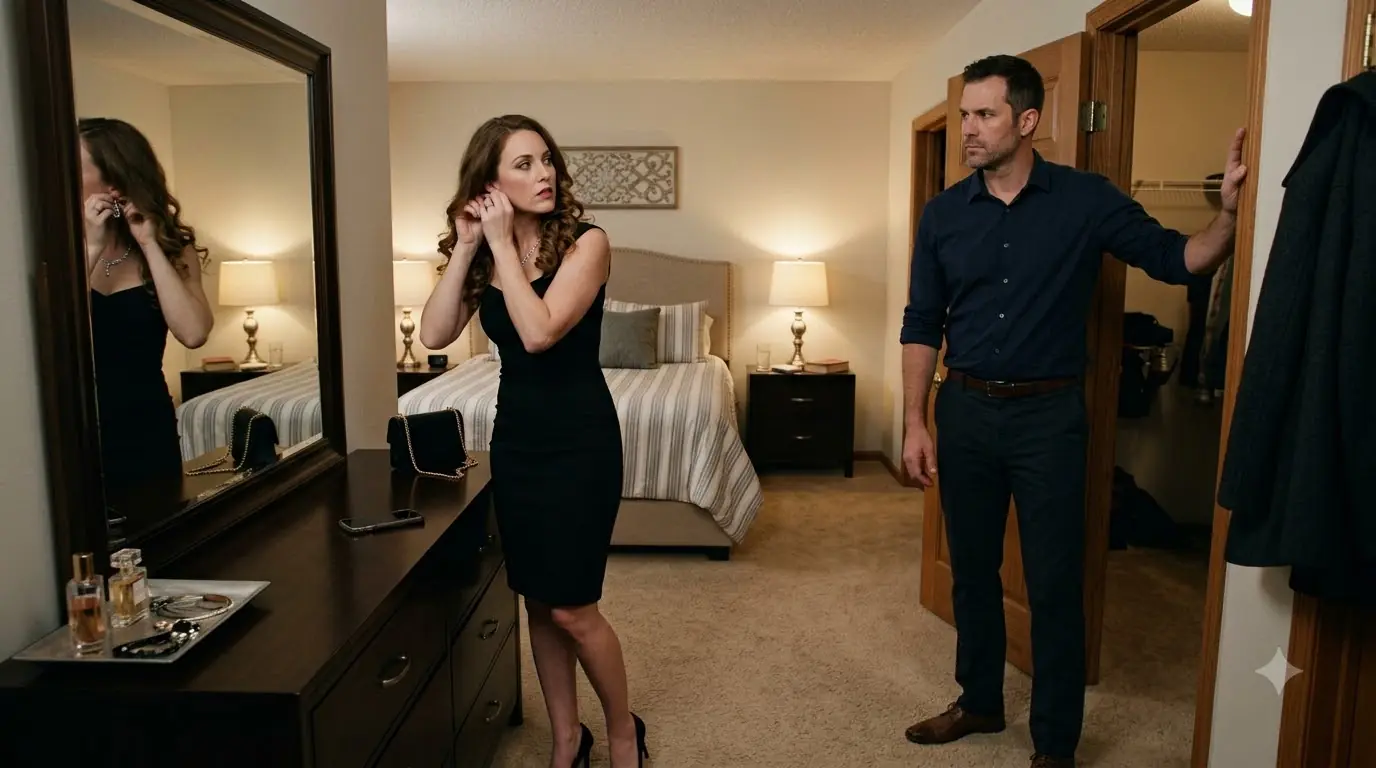
Betty and I had been married for ten years, not perfect years, but stable ones.
We paid our bills on time, kept our promises, and talked about plans the way ordinary married couples do.
The cracks did not appear overnight. They came slowly, the way rust moves along metal, quiet and almost invisible until one day you realize it is everywhere.
At first, Betty simply started spending more evenings out with her friend Crystal. A happy hour every few weeks became girls’ nights two or three times a week, and she would come home smelling like clubs, complaining that the music was too loud and the drinks were too sweet even though she kept going back.
I noticed how often her phone lit up. Quick glances, quick swipes, the screen turned face down whenever she set it beside her.
She told me it was nothing, and I did not turn every small concern into an argument. I had never believed in chasing explanations people were unwilling to give.
I watched instead, because patterns usually say more than excuses.
Our conversations gradually became thinner. Betty stopped asking about my day, and whenever I asked about hers, she gave short answers or said she was tired.
The closeness we once had, the late-night conversations and weekend plans, began to feel like memories from another life. Even then, I did not panic, accuse her, or raise my voice; I simply paid attention.
The moment I knew something was truly wrong came one Sunday morning. I walked into the kitchen and found Betty staring at her phone with an expression I had not seen directed at me in years, soft and almost shy.
The instant she saw me, her face closed like a door slamming shut. She smiled too quickly and said, “Morning,” as if nothing had happened.
That was when I knew something was coming. I did not know when or how, but I felt the change the way you sense a storm before it reaches your street. I was right. The Friday everything finally snapped did not begin dramatically at all.
I came home around eight that night expecting to find Betty in leggings, maybe making pasta or sitting on the couch scrolling through her phone.
Instead, I walked into the bedroom and saw her standing in front of the mirror wearing a tight black dress I had not seen since one of our anniversaries years earlier.
She had heels on, fresh makeup, and her hair curled carefully around her shoulders. She looked far too prepared for the casual story she was about to give me.
She did not even look up when she said, “I’m heading out.”
I leaned against the doorway. “Going where?”
“Blue Ember,” she answered casually while putting in her earrings. “Girls’ night.”
I let the words sit between us. “You didn’t mention anything about going to a nightclub.”
She shrugged. “Crystal texted last minute. I need a break.”
“A break from what?” I asked, not angrily, just steadily.
She sighed as though I were another chore she needed to finish. “Randy, can we not do this?”
“Do what? Talk? Ask questions? Be married?”
Her eyes flashed. “See? This is why I need space.”
“You can have space. You don’t need a nightclub for that.”
She turned toward me, irritation spreading across her face. “What exactly is your problem?”
“Why Blue Ember? Why that dress? Why now?”
Betty crossed her arms. “I don’t owe you a schedule.”
That hit her harder than I expected. “You’re being dramatic. It’s just a night out.”
“A night out you hid until the last second.”
She rolled her eyes. “It’s a club, Randy, not a crime scene.”
I stayed where I was. “Who are you dressing up for?”
That was when she snapped completely. She grabbed her purse and fired back, “If you don’t like it, then divorce me.”
She said it quickly, sharply, as if she wanted the sentence to hurt. But the moment those words left her mouth, something inside me stopped shifting and finally settled into place. It did not feel like breaking. It felt like alignment.
I looked at her and said only, “Understood.”
Betty blinked, clearly thrown by how calm I sounded. For two seconds, she hesitated as though waiting for me to argue or beg her not to leave. When I did neither, she brushed past me, heels clicking against the floor and perfume trailing behind her. Then she walked out the door.
She thought it was another argument she could simply leave behind. She did not know that one sentence had already decided everything for me. The house became strangely quiet after she left, as if the walls were waiting to see how I would react. I did not chase her, call Crystal, or sit on the couch staring at the door.
I walked straight into my office.
The documents were exactly where I had left them months earlier, inside a plain manila folder in the bottom drawer of my desk. My friend Derek handled family law, and some time earlier he had helped me understand what a clean separation would look like if things ever reached that point. I had not prepared the information because I wanted a divorce then. I had prepared because I refused to be completely helpless if Betty ever pushed the marriage beyond repair.
That night, she had.
I sat down and read through everything carefully. Financial disclosures, property division, account information, and a straightforward exit plan that was fair to both of us and difficult to turn into unnecessary conflict. Derek once told me, “The strongest position is calm clarity.” Sitting there that night, I understood exactly what he meant.
I picked up my pen and signed every page I needed to sign. My hands did not shake. I felt no burst of anger or triumph, only a quiet acceptance that the marriage I thought I was protecting had already changed into something else. When I finished, I scanned the documents.
I attached them to an email addressed to Betty and copied Derek so he could begin handling the filing. I left the subject line empty. In the body of the message, I wrote only three words.
“As you requested.”
Then I placed my phone screen-up on the coffee table and sat in the armchair across from it. I was not waiting for Betty to come home. I was not hoping she would call or dreading it. I simply sat there with the same mindset I had carried for months.
Observing.
It took less than five minutes.
My phone lit up with her name.
Once.
Twice.
Again.
Calls, voicemails, and text messages came rapidly.
“Randy, call me.”
“What is this?”
“Randy, answer your phone right now.”
“Is this a joke?”
I did not reply. I did not block her either. I simply allowed the messages to accumulate while my heartbeat stayed steady. The version of me she had become accustomed to, the man who asked for reassurance and backed down to keep the peace, was gone.
Ten minutes later, headlights swept across the living room wall. A car door slammed outside. Fast footsteps hit the porch, and the front door opened hard enough to strike the stopper.
Betty stood in the doorway barefoot, her heels clutched in one hand. Her black dress was wrinkled, and her carefully curled hair had come loose from running. She looked nothing like the woman who had walked out less than an hour earlier.
“Randy, what did you do?”
I stayed seated. “Exactly what you told me to do.”
She stared at me. “You sent me divorce papers?”
“Yes.”
“Are you out of your mind?”
“No. I’m listening.”
“To what?”
“To you.”
The words stopped her.
Her eyes moved around the room as though she were searching for the version of me she knew how to argue with. She could not find him. All she found was somebody who had finally decided not to negotiate against his own dignity.
“You can’t be serious,” she said. Her voice was shaking now. “Randy, that was just words. I didn’t mean it.”
“Then why did they come out so easily?”
She opened her mouth and closed it again. I could almost see her replaying the argument. One defense after another began disappearing from her face.
“I was mad,” she said finally. “You were questioning me for no reason.”
“No reason?”
I tilted my head.
“You hid your plans. You dressed like you were trying to impress someone who wasn’t your husband, and you walked out after telling me to divorce you. That isn’t nothing.”
“That’s not—”
She stopped.
The lie died before she finished it.
“I just needed a night out. Crystal said—”
“Crystal covers for you a lot,” I said quietly.
The color drained from Betty’s face.
“Don’t.”
“Don’t what?”
“Please don’t do this right now.”
“Tell the truth?”
She looked away.
I continued. “Ask why you’ve been deleting conversations? Ask why your phone is always face down when you get a message after midnight?”
Her eyes filled rapidly. Panic changed into something heavier.
Fear.
“Randy, I swear it’s not what you think.”
“Then what is it?”
She exhaled a shaky sound that was half sob and half surrender.
“I messed up.”
I said nothing.
“I messed up and I didn’t know how to fix it.”
There it was.
The first honest sentence she had given me in months.
And it was only the beginning.
Betty remained standing in front of me like someone waiting for a verdict. Her breathing was fast and uneven, and she wiped her face with the back of one hand, smearing what remained of her mascara. Finally, she whispered, “Please sit with me.”
“I’m already sitting.”
She swallowed and lowered herself onto the edge of the couch. Her hands shook badly enough that when she dropped her heels onto the floor, they clattered against each other. For a long moment, she stared down at her own fingers twisting together.
“I didn’t go to Blue Ember for Crystal.”
I nodded once.
“I know.”
Her eyes lifted.
“I was meeting someone.”
“Frank.”
Her head snapped up. “How do you know?”
“Patterns.”
I leaned back.
“You can delete messages. You can’t delete behavior.”
The truth hit her hard. Her eyes filled again, but I did not move toward her. I was not there to make her feel better about choices she had spent months hiding from me.
“It wasn’t supposed to become anything,” she whispered. “It started harmless. We talked. We laughed. I liked the attention.”
She stared at the floor.
“I liked feeling wanted.”
“And then you crossed the line.”
She nodded.
Tears slipped down her face.
“It was one night.”
I waited.
“One stupid night. A few weeks ago. I thought I could bury it. I told myself it didn’t mean anything.”
“Did Frank know you were married?”
“Yes.”
“He didn’t care?”
She shook her head.
“I cared,” I said. “But apparently you didn’t enough.”
Betty flinched.
“I didn’t plan any of this. I wasn’t looking for it. I just got lost. I made the worst mistake of my life, and then I kept making it worse because I lied.”
“That part I believe.”
She shifted toward me as if she wanted to reach for my hand, then stopped herself.
“I pushed you away. I ignored you. I treated you like an afterthought. I know that now.”
Her voice broke.
“But Randy, I never thought you would actually leave.”
“That’s the problem.”
She stared at me.
“You thought my loyalty meant I would tolerate anything.”
“I don’t want a divorce.”
I remained silent.
“I’ll do anything. I’ll cut Frank off completely. I’ll switch jobs. I’ll stop going out with Crystal. Whatever you want.”
She wiped her cheeks.
“Please don’t let this be the end.”
I studied the woman sitting across from me.
Scared.
Broken.
Finally honest.
But honesty had arrived only after consequences.
“It already started.”
She stopped breathing for a moment.
“The filing is in motion.”
Betty covered her mouth as a sob escaped. The consequences she had treated as impossible were suddenly real. For the first time, she understood that I was not threatening her.
I was finished.
The following week moved like a slow and steady march toward an ending we both knew was coming. Derek handled everything with the same calm professionalism he brought to every case, sending emails, organizing timelines, and keeping unnecessary emotion out of the legal process. Betty moved through those days like somebody trying to hold together the pieces of a vase after it had already shattered.
We met at Derek’s office on Tuesday morning. Betty arrived first, dressed neatly with her hair pulled back and almost no makeup. Her eyes were swollen. She stood when I entered, as though that small gesture might change something.
Derek greeted us and opened a folder.
“We’ll review the property division, the accounts, and the agreement. Once everything is confirmed and signed, I’ll submit the required documents to the court.”
Betty nodded.
“Can we talk about adjustments?”
“No,” I said. “It’s fair as written.”
She lowered her eyes.
“Okay.”
We worked through each section. The house would remain with me under the terms we had discussed, while our savings would be divided fairly. Each of us would keep the vehicle already in our possession, and there were no children whose lives had to be pulled through the dispute.
Every signature seemed to remove another piece of something Betty had assumed would exist forever.
Halfway through, she looked at me.
“Do you really want this?”
“I want peace.”
Her eyes filled again.
“This is how I get it.”
She inhaled sharply.
Derek finished explaining the remaining process and expected timeline. Once everything was formally filed, there would be a required period before the divorce became final. Nothing dramatic. Just procedure.
When the meeting ended, Betty followed me into the hallway.
“Randy.”
I stopped.
“Can I come home tonight?”
I said nothing.
“Just for another week. Until I find somewhere.”
“You already did.”
Her expression changed.
“What?”
“The apartment you applied for contacted me because my number was still listed as an emergency reference. You got approved.”
She stared.
“I also secured the house. Your belongings are being kept safely until you collect them.”
Her chin trembled.
“You planned everything.”
“No.”
I looked at her.
“I just stopped waiting for you to care.”
Betty leaned against the hallway wall as though the reality had finally struck her all at once. The marriage was no longer ending theoretically. It was ending in paperwork, addresses, separate belongings, and separate lives.
Her new apartment sat above a laundromat on Oak Street. It was small, with aging paint and very little of the comfort she had taken for granted at home. She moved in with two suitcases and several boxes. For the first time since the night she left in the black dress, Betty looked truly alone.
The fallout reached her quickly. Crystal stopped appearing once the situation became serious, sending two messages before disappearing back into the nightlife Betty had been using as an escape. The club crowd that made her feel interesting and wanted suddenly had little interest in the woman dealing with a collapsing marriage.
Frank disappeared even faster.
No calls.
No messages.
No attempt to see whether Betty was okay.
Once she was no longer sneaking around behind a husband’s back, whatever excitement Frank had found in the situation apparently vanished with it.
Meanwhile, I rebuilt my own routine. The house felt different, not empty, but lighter, as if even the walls had finally relaxed. I slept through the night without waiting for the sound of Betty returning home late. I started running again in the mornings, something I had stopped doing when the tension in our marriage began consuming all the energy in my days.
I reconnected with friends I had neglected. People told me I looked calmer. I felt it too. The absence of constant suspicion created a kind of quiet I had forgotten existed.
Betty sent messages every few days.
They were no longer demanding.
No bargaining.
Mostly apologies.
“I’m sorry for how I treated you.”
“I’m trying to fix myself.”
“I know I don’t get another chance.”
Sometimes I responded politely.
Sometimes I did not answer.
I was not trying to punish her.
I simply no longer believed I owed her immediate access to my emotions.
About six weeks after she moved out, I ran into her at a grocery store.
She wore a hoodie, no makeup, and her hair was tied in a messy bun. Her cart was half empty. When she saw me at the end of an aisle, she stopped.
“Hi, Randy.”
“Hey.”
Her eyes moved across my face and posture.
Something in her expression shifted.
She could see I was not collapsing.
I was not waiting for her.
I was not standing frozen in the life she left behind.
“You look better,” she said.
“I am.”
Betty nodded.
Her eyes became glassy.
Then she pushed her cart past me without another word.
She did not look back.
That was the moment I think she finally understood what the divorce had truly cost her.
Three months later, the divorce became final.
There was no courtroom confrontation or dramatic last speech. I simply received confirmation that a marriage of ten years had become a closed legal file. I read the message once, then sat quietly for several minutes.
Betty sent me one text that morning.
“Thank you for signing. I hope someday you’ll forgive me.”
I did not reply.
Some things do not need an immediate answer.
A week later, she contacted me again because she had remembered a few boxes still stored with her belongings. I agreed to have them ready for collection. When she arrived, the boxes were waiting near the porch.
She surprised me by asking, “Can we talk for five minutes?”
Her voice was not dramatic.
Just tired.
I stepped outside and leaned against the railing.
“Five minutes.”
Betty folded her arms as though she needed to physically hold herself together.
“I’m not asking for anything.”
I waited.
“I just want to say this correctly.”
She took a breath.
“I ruined our marriage.”
I remained silent.
“Not you. Not Crystal. Not alcohol. Me.”
Her eyes stayed on mine.
“I hurt someone who actually cared about me, and I didn’t understand how far I’d gone until I lost everything.”
Her voice remained steady.
“I’m going to therapy now. I stopped going to clubs. I’m trying to understand why I needed attention from people who didn’t matter when I had someone at home who did.”
For the first time since the separation, she was speaking without excuses.
“I know I can’t fix what I broke,” she continued. “I just wanted you to know I finally see it clearly.”
There was no hope hidden in her expression.
No expectation that I would invite her inside.
Just honesty.
“I hope you keep doing the work,” I said.
She nodded.
“Not for me.”
“I know.”
“For you.”
A small, sad smile appeared.
“I will.”
We stood quietly for a moment.
No anger.
No tension.
Just two people who had finally run out of ways to hurt each other.
Betty picked up her boxes.
“Thank you.”
I nodded.
She carried them toward her car.
Before opening the door, she turned around.
“You look stronger now.”
“I am.”
She nodded once.
Then she got inside and drove away.
That was the last time we spoke.
As I walked back into the house, I thought about the night she had looked at me in that black dress and said, “If you don’t like it, divorce me.”
She meant it as a weapon.
She assumed the words would frighten me into backing down.
Instead, they forced me to finally look directly at what our marriage had become.
For years, I thought loyalty meant staying.
I thought commitment meant enduring rough periods without walking away.
I still believe both things matter.
But loyalty without respect becomes permission.
Commitment without honesty becomes a trap.
Betty did not lose our marriage because of one angry sentence alone.
She lost it through months of secrecy, distance, deleted conversations, dishonesty, and finally an affair she assumed I would forgive simply because I had always been the dependable one.
Her sentence merely removed the last excuse I had for ignoring what was already happening.
Leaving was not revenge.
I did not divorce Betty so she would suffer.
I did it because staying would have required me to accept a version of marriage in which my loyalty mattered only because it made betrayal safer for her.
I could not live that way.
Maybe someday Betty became a different person.
I genuinely hope she did.
I hope therapy helped her understand what she was trying to escape from inside herself. I hope she learned the difference between attention and love. I hope the next person she cares about gets the version of Betty who understands that trust is not something you test repeatedly just because someone has always forgiven you before.
But that person will not be me.
My part of the story ended when I stopped trying to save a marriage that only one of us was still protecting.
Respect, not fear, holds two people together.
And once respect disappeared, choosing myself was not cruelty.
It was the first real peace I had felt in years.