Margaret Ellis first noticed the little girl because of the pennies.
They were spread across the pharmacy counter in tiny copper circles, some bright, some dark with age, some sticky from the bottom of a child’s pocket. The girl stood on her toes, pushing them forward with both hands, her lips moving silently as she counted.
“One, two, three…”
Behind her, the line was growing restless.
It was a cold March afternoon in Columbus, Ohio, and rain tapped against the front windows of Dawson’s Pharmacy. People came in shaking umbrellas, wiping their shoes on the mat, and hurrying toward shelves of cold medicine, cough drops, and paper towels. The air smelled faintly of rubbing alcohol and old wood, the way small neighborhood pharmacies often did.
Margaret Ellis had come in for blood pressure pills and a bottle of vitamins she probably did not need but bought anyway because her doctor insisted she take better care of herself. She was seventy-four years old, a widow with soft gray hair, careful blue eyes, and hands that trembled slightly when she was tired. She wore a navy wool coat, simple black shoes, and a knitted scarf her late husband, Raymond, had given her on their last Christmas together.
She had planned to be in and out quickly.
Then she saw the child.
The little girl could not have been more than eight. Her brown hair was tied back with a yellow ribbon that had come loose on one side. Her coat was too light for the weather, and the sleeves were short enough to show thin wrists. Her cheeks were flushed, not from warmth, but from hurry and worry. Beside her on the floor sat a small backpack decorated with faded stars.
The pharmacist, Mr. Dawson, leaned over the counter with a patient but troubled expression.
“Sweetheart,” he said gently, “you’re still short.”
The girl stopped counting.
“How much?” she asked.
Mr. Dawson looked at the prescription bag in his hand. “Almost eighteen dollars.”
The girl’s face fell as though eighteen dollars were eighteen hundred.
She looked down at the pennies. “I thought I had enough.”
A man in line behind her sighed loudly. “Can this move any faster? Some of us have places to be.”
Margaret turned her head slowly and looked at him.
The man suddenly became very interested in the cough drops display.
The little girl gathered the coins with shaking fingers. “Can I get half?”
Mr. Dawson’s expression tightened. “Medicine doesn’t work that way, honey.”
“But my brother needs it.”
Margaret felt something inside her go still.
She stepped out of line.
“What’s your name, dear?” she asked.
The girl turned quickly, startled. Her eyes were dark, wide, and defensive in the way children’s eyes became when they had been told no too many times.
“Annie,” she said.
Margaret smiled softly. “Annie. That’s a lovely name.”
The girl looked down again. “I’m not begging.”
“I didn’t think you were.”
“I brought money.”
“I can see that.”
Annie swallowed. “It’s for my little brother, Milo. He’s four. He keeps coughing, and my mom said she would get the medicine after work, but he couldn’t sleep last night, and I found the prescription on the table, so I came.”
Mr. Dawson closed his eyes briefly.
Margaret looked at him. “How much is the medicine?”
He lowered his voice. “With the discount applied, twenty-three dollars and sixty cents. She has five dollars and some change.”
Annie’s small shoulders stiffened. “I have more at home. I can come back.”
Margaret opened her purse.
Annie immediately shook her head. “No.”
Margaret paused. “No?”
“I can’t take money from strangers.”
“Then don’t take money,” Margaret said. “Take medicine.”
Annie blinked.
Margaret placed a twenty-dollar bill and a five on the counter. “That should cover it.”
Mr. Dawson hesitated only a second before taking the money.
Annie stared as if she could not understand what had just happened.
“I’ll pay you back,” she said quickly.
Margaret shook her head. “No need.”
“I will. I promise. My mom works at the hospital laundry. She gets paid Friday.”
“This isn’t a loan.”
Annie’s eyes filled with panic. “Then what is it?”
Margaret looked at the prescription bag, then at the pennies still scattered on the counter.
“It’s a grandmother’s rule,” she said.
Annie frowned. “What rule?”
“When a child is trying to help someone smaller than herself, an old woman is allowed to help too.”
Mr. Dawson looked away, pretending to organize labels.
Annie’s mouth trembled. “I’m not supposed to talk to strangers.”
“That is a very good rule,” Margaret said. “You may tell your mother that Mrs. Margaret Ellis from Willow Street helped you at Dawson’s Pharmacy. And Mr. Dawson knows me well enough to say I’m mostly harmless.”
Mr. Dawson gave Annie the medicine. “She is mostly harmless.”
Margaret raised an eyebrow. “Mostly?”
The pharmacist smiled faintly.
Annie clutched the paper bag against her chest.
“Thank you,” she whispered.
Margaret reached into her purse again and pulled out a folded umbrella. “Take this too.”
Annie shook her head. “I can’t.”
“You can return it to Dawson’s next time.”
The girl hesitated, then accepted it carefully.
Margaret walked her to the door and looked out at the rain. “How far is home?”
“Three blocks.”
“May I walk with you?”
Annie stiffened.
Margaret lifted both hands slightly. “Only to make sure you cross safely. You can walk ahead. I’ll stay behind.”
Annie thought about it. Then she nodded once.
They walked through the wet afternoon with Annie several steps ahead, holding the umbrella with both hands. Margaret moved more slowly, but she kept the girl in sight. At the corner of Briar Lane, Annie stopped in front of a narrow brick apartment building with peeling paint around the entrance.
“This is me,” she said.
Margaret nodded. “All right.”
Annie looked down at the medicine, then at Margaret.
“Mrs. Ellis?”
“Yes, dear?”
“My brother really does need it.”
“I believe you.”
The answer seemed to surprise her.
After a second, Annie said, “People don’t always.”
Margaret’s heart tightened. “Then those people have not been listening well.”
Annie stared at her for a long moment, then ran inside.
Margaret stood in the rain until the door closed.
That night, Margaret could not stop thinking about the girl.
She warmed soup for dinner, but it tasted plain. She turned on the television, but the voices felt too loud. She sat in Raymond’s old chair with a blanket over her knees and remembered another child, many years earlier, standing in a hospital hallway with tears on his face.
Her son, David.
He had been seven when he first became sick. Margaret and Raymond had spent months moving between doctor’s offices, hospital rooms, insurance calls, and late-night prayers. There were medicines they could afford and medicines they could not. There were bills they paid and bills they hid in drawers because looking at them too long made breathing difficult.
David had survived childhood, grown tall, gone to college, become a teacher, and then died at thirty-two in a car accident on an icy highway.
Margaret had learned that grief did not always arrive in one form. Sometimes it was a hospital bracelet tucked in a box. Sometimes it was a birthday cake no one ate. Sometimes it was a little girl at a pharmacy counter counting pennies for her brother.
The next week, Margaret returned to Dawson’s Pharmacy.
Not because she needed anything.
Because she hoped to hear that Annie’s brother was better.
Mr. Dawson saw her and smiled knowingly.
“You’re looking for the umbrella,” he said.
Margaret pretended surprise. “What umbrella?”
He reached beneath the counter and pulled it out. Taped to the handle was a folded note.
Margaret opened it carefully.
Dear Mrs. Ellis,
Milo is sleeping better. Mom cried when I told her what you did. She said thank you and sorry I went alone. I am sorry too. I will pay you back one day.
Annie Parker
Margaret read the note twice.
“Do you know the family?” she asked.
Mr. Dawson nodded. “Tessa Parker. Good woman. Works too hard. Two kids. No husband around. She’s been trying to get back on her feet since they moved here.”
Margaret folded the note and placed it in her purse.
“Do they need food?”
Mr. Dawson looked at her gently. “Most people who count pennies for medicine need more than medicine.”
That afternoon, Margaret stopped at the grocery store. She bought chicken, rice, carrots, apples, bread, milk, and a small box of cookies shaped like animals. Then she went home and made the kind of chicken soup Raymond used to say could bring a person back from the edge of death, though he had always been dramatic about food.
At five thirty, she walked to the apartment building on Briar Lane carrying two bags.
Annie opened the door.
Her eyes widened. “Mrs. Ellis?”
Margaret smiled. “I came to return my umbrella to myself.”
Annie looked confused.
A woman appeared behind her. She was in her early thirties, thin and exhausted, with brown hair pulled into a loose bun and work shoes still on her feet. In her arms, a small boy rested against her shoulder, his face pale but peaceful.
“You must be Mrs. Ellis,” the woman said.
“And you must be Tessa.”
Tessa’s eyes filled almost immediately. “I don’t know how to thank you for last week.”
“You can start by letting me set these bags down. They’re heavier than I expected.”
Tessa looked at the groceries and shook her head. “Oh, no. I can’t accept all that.”
Margaret stepped inside anyway. “Then think of it as too much soup accidentally happening in my kitchen.”
Annie looked at the bags. “Soup can happen accidentally?”
“In my house, yes.”
Milo lifted his head slightly and whispered, “Cookies?”
Margaret smiled. “Those happened accidentally too.”
That evening, Margaret stayed only twenty minutes. Long enough to pour soup into bowls, hear Milo’s tiny thank you, and learn that Tessa worked long shifts at the hospital laundry department. She had moved to Columbus after leaving a difficult marriage in Indiana. Annie was doing well in school but had become too serious for her age. Milo had asthma, and every cold became a frightening battle.
“I try not to let Annie worry,” Tessa said quietly while the children ate at the small kitchen table. “But children hear everything.”
Margaret looked at Annie, who was carefully breaking animal cookies in half so Milo could choose first.
“Yes,” Margaret said. “They do.”
Over the next months, Margaret became part of their life slowly enough that no one felt overwhelmed.
At first, she came once a week with soup or a casserole. Then she began meeting Annie after school on the days Tessa worked late. Then she stayed with Milo when Tessa had double shifts. She helped Annie with reading assignments, though Annie rarely needed help. She taught Milo how to water plants without drowning them. She kept a small basket of toys in her living room and pretended she had bought them for herself.
Annie resisted kindness longer than Milo did.
Milo was easy. He climbed onto Margaret’s couch, asked for cookies, fell asleep under blankets, and called her “Grandma Margaret” before anyone suggested it.
Annie watched everything.
She watched how Margaret spoke to Tessa without judgment. She watched how Margaret always knocked before entering their apartment. She watched how Margaret never asked questions in front of other people that might embarrass them. She watched how Margaret said, “This is extra,” instead of, “You need help.”
One afternoon, Annie came to Margaret’s house after school and found her pruning dead leaves from a potted fern.
“Why do you keep giving us stuff?” Annie asked.
Margaret looked up. “Because I have stuff to give.”
“That’s not a reason.”
“It is a perfectly good reason.”
Annie frowned. “People want things back.”
Margaret set down the scissors. “Sometimes.”
“So what do you want?”
Margaret considered giving a light answer, but Annie deserved honesty.
“I had a son,” she said. “His name was David. When he was little, he was sick often. People helped us. Some with money, some with meals, some just by sitting beside me in hospital waiting rooms when I was afraid. I could never repay all of them.”
Annie’s expression softened.
“So I suppose,” Margaret continued, “when I saw you trying to help Milo, I remembered what it felt like to need kindness. And I remembered what it felt like to receive it.”
Annie looked down. “Is David grown now?”
Margaret’s hands stilled.
“He passed away many years ago.”
Annie’s face changed. “I’m sorry.”
“Thank you.”
They sat quietly for a moment.
Then Annie said, “Milo would have liked him.”
Margaret smiled through the ache in her chest. “I think David would have liked Milo too.”
That was the day Annie stopped calling her Mrs. Ellis.
Not all at once. The first “Grandma Margaret” slipped out when she needed help tying a ribbon around a school project. She froze after saying it, as if she had broken a rule.
Margaret only said, “Hold the ribbon steady, dear.”
After that, it became natural.
Years passed in small ordinary pieces.
Annie grew from a cautious little girl into a bright, determined teenager. She loved science, especially anything connected to the human body. She checked Milo’s inhaler before school, read medical pamphlets above her grade level, and once corrected a nurse’s pronunciation of a medication with such seriousness that Tessa apologized for three minutes.
Margaret encouraged her.
When Annie was thirteen, Margaret bought her a secondhand microscope from a retired teacher.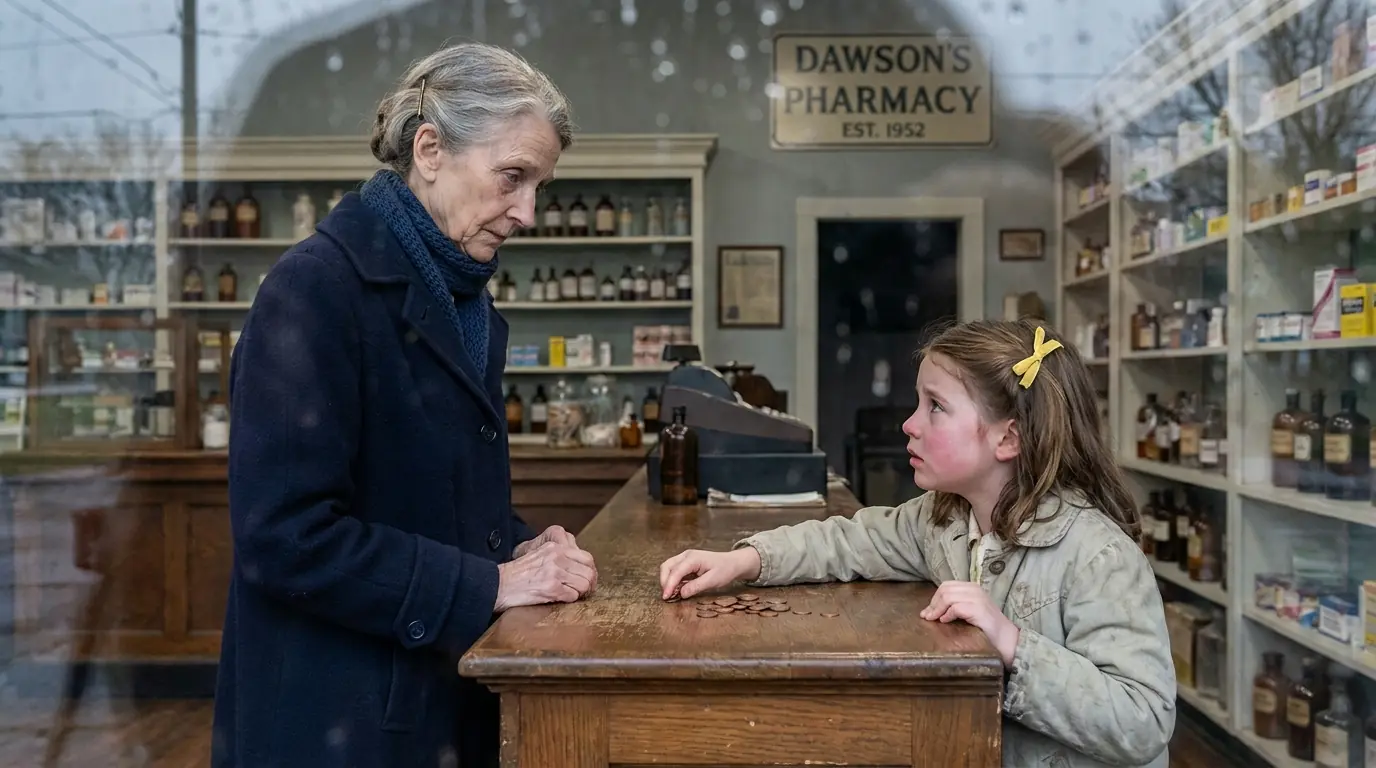
When Annie was fifteen, Margaret helped her apply for a summer hospital volunteer program.
When Annie was seventeen, Margaret sat in the front row at her high school graduation and cried harder than Tessa.
Annie wore a white dress beneath her gown and had a scholarship letter folded in her pocket. She was going to Ohio State to study biology, then, she announced firmly, medical school.
After the ceremony, Annie found Margaret near the gym doors.
“You’re crying,” Annie said.
“I am not.”
“You are.”
“It’s allergies.”
“You don’t have allergies.”
Margaret took a tissue from her purse. “Then perhaps I developed them from pride.”
Annie hugged her tightly.
“I’m going to pay you back one day,” she whispered.
Margaret closed her eyes. “You already have.”
“No,” Annie said. “Not yet.”
College pulled Annie into a wider world. Classes, labs, long nights, part-time work, internships. She called Margaret every Sunday at seven, no matter how busy she was. Sometimes the calls lasted an hour. Sometimes only five minutes. But she always called.
Milo grew stronger too. His asthma improved with better care, and by high school he was tall, funny, and obsessed with music. Tessa became a supervisor at the hospital laundry department, then trained for administrative work. Life did not become easy, but it became steadier.
Margaret aged quietly.
At first, it was small things. More stiffness in the mornings. A forgotten appointment. Difficulty opening jars. Then came dizzy spells. Then trouble climbing the porch steps.
She never told Annie how bad it was.
Annie was in medical school by then, working harder than anyone Margaret had ever known. Margaret did not want to become another worry.
Tessa noticed, of course.
So did Milo.
“Grandma Margaret,” Milo said one afternoon when he found her sitting on the porch instead of tending her flowers, “you look tired.”
“I am seventy-nine,” Margaret replied. “Tired is part of the package.”
Milo did not laugh. “Have you seen a doctor?”
“I see one often enough.”
“That is not an answer.”
“You sound like your sister.”
“Good. She’s usually right.”
Margaret waved him off, but the truth was harder to dismiss.
Medical bills began arriving. Her insurance covered some things, not others. The old house needed repairs too. The porch railing wobbled. The roof leaked over the back hall. The heating system made a grinding sound every time it started. Margaret used savings for prescriptions, then repairs, then groceries, then prescriptions again.
She stopped buying vitamins.
She cut meals smaller.
She told herself it was temporary.
One winter evening, she stood in Dawson’s Pharmacy holding a prescription bag in one hand and counting money with the other.
History has a cruel sense of humor.
She was short.
Not by much, but enough.
The young pharmacy technician, who had replaced Mr. Dawson after he retired, looked uncomfortable.
“I can hold it until tomorrow,” she said.
Margaret smiled politely. “That would be fine.”
But it was not fine.
The medicine was for her heart.
She turned to leave, and for one dizzy second, the floor shifted beneath her. She caught the edge of the counter.
“Mrs. Ellis?” the technician said.
“I’m all right.”
She was not.
A voice behind her said, “No, you’re not.”
Margaret turned.
Milo stood near the aisle, now nineteen, tall and broad-shouldered, wearing a university sweatshirt and carrying a bag of cough drops.
His face had gone pale.
“Milo,” Margaret said, trying to sound cheerful. “What a surprise.”
He looked at the prescription bag, then at the money in her hand.
Understanding moved across his face, followed by hurt.
“Were you going to leave without your medicine?”
“I was going to come back tomorrow.”
“Grandma Margaret.”
She looked away.
Milo stepped to the counter and took out his card. “Put it on this.”
“Milo, no.”
“Yes.”
“I won’t have you spending your money on me.”
He stared at her. “Do you know how many times you bought my medicine?”
“That was different.”
“How?”
“You were a child.”
“And you’re family.”
The word silenced her.
Milo paid. Then he drove her home, despite her protests. He fixed her tea, checked the refrigerator, noticed too little food, noticed the leaking ceiling, noticed everything.
That night, Annie called.
Margaret answered with forced brightness. “Hello, dear.”
Annie’s voice was tight. “Why did Milo just send me pictures of your roof?”
Margaret closed her eyes. “That boy talks too much.”
“He said you almost left the pharmacy without heart medication.”
“I did not almost leave. I was simply postponing.”
“Grandma Margaret.”
The old nickname, spoken in Annie’s grown-up doctor voice, nearly made Margaret smile.
“I’m fine.”
“No,” Annie said. “You helped us because someone needed to notice. Now we’re noticing you.”
Two weeks later, Annie came home.
She was twenty-six, nearly finished with her residency, and looked both exhausted and powerful in the way young doctors sometimes do, as if sleep had become optional but purpose had become oxygen. She arrived at Margaret’s door with Tessa, Milo, and two contractors behind her.
Margaret opened the door and stared.
“What is this?”
Annie held up a folder. “A plan.”
“I dislike plans that arrive with contractors.”
“You’ll like this one eventually.”
Margaret looked at Tessa. “Did you know about this?”
Tessa smiled. “I helped.”
“Milo?”
He lifted both hands. “I sent roof pictures. I regret nothing.”
Annie stepped inside and placed the folder on the kitchen table. Inside were estimates, medical assistance forms, repair schedules, and a carefully organized budget.
Margaret sat slowly.
“Annie…”
“No,” Annie said softly. “Please listen first.”
Margaret folded her hands.
Annie took a breath.
“When I was eight years old, I stood in Dawson’s Pharmacy counting pennies for Milo’s medicine. I thought the world was a place where children had to solve adult problems alone. Then you stepped forward.”
Margaret looked down.
“You bought his medicine. Then you brought soup. Then you showed up again and again until we stopped being afraid you would disappear. You helped Mom breathe. You helped Milo get healthy. You helped me believe I could become someone who healed people instead of just worrying about them.”
Her voice trembled.
“I became a doctor because of many things. But one of them was you.”
Margaret’s eyes filled.
Annie continued, “So now here is what is going to happen. Your roof will be repaired. Your porch railing will be replaced. Your medical bills will be reviewed, negotiated, and handled properly. Your prescriptions will be delivered monthly. You will stop pretending toast is dinner. And you will not argue with me because I have waited eighteen years to pay you back.”
Margaret gave a watery laugh. “That sounds less like repayment and more like a command.”
“It is both.”
The repairs began that week.
Margaret complained about the noise. She complained about dust. She complained about the contractor moving her flowerpots. She complained when Tessa filled her freezer with meals and when Milo replaced the porch light without asking.
Annie listened lovingly and ignored most of it.
The roof was fixed. The porch became safe. The heating system was repaired. A small ramp was added along the side of the house, hidden neatly behind rose bushes so Margaret would not call it “hospital-looking.” Her prescriptions were placed on a schedule. Her doctor appointments were arranged properly.
But Annie was not finished.
Six months later, after becoming Dr. Annie Parker officially, she invited Margaret to a community health clinic opening on the east side of Columbus.
Margaret arrived with Tessa and Milo, wearing her navy coat and Raymond’s scarf. She expected a small office with folding chairs and coffee.
Instead, she found a renovated brick building with bright windows, a waiting room full of families, and a sign near the front desk.
THE ELLIS FAMILY CHILDREN’S CARE FUND
Margaret stopped walking.
“What is that?” she whispered.
Annie appeared beside her in a white coat.
“It helps families pay for children’s prescriptions, asthma treatments, emergency visits, and basic care when money gets in the way.”
Margaret stared at the sign.
Below the name was a framed photograph.
It was old and slightly faded: Margaret sitting on her porch years earlier, Annie on one side, Milo on the other, both children smiling with soup bowls in their hands.
Margaret covered her mouth.
Annie spoke softly. “No child should have to count pennies for medicine.”
Margaret turned to her.
Annie’s eyes were shining. “You taught me that.”
People gathered for the opening ceremony. There were speeches, though Margaret hated speeches. The clinic director thanked donors. Tessa spoke briefly about what it meant for working families to have help before a crisis became a tragedy. Milo played a song on guitar because he insisted music belonged at every important moment.
Then Annie stepped forward.
“I was once the little girl at a pharmacy counter,” she said. “I had pennies in my hands and fear in my throat. My brother needed medicine, and I thought if I counted carefully enough, love could become money. It couldn’t. But a woman behind me stepped forward. She did not make me feel poor. She did not make me feel ashamed. She simply made sure my brother got what he needed.”
Margaret cried quietly in the front row.
Annie looked at her.
“That woman became our family. She changed the direction of my life with one act of kindness, then kept showing up until kindness became home. This fund exists because of her. Every child helped here is part of the thank-you she never asked for but always deserved.”
The room applauded.
Margaret wanted to disappear and stay there forever at the same time.
After the ceremony, Annie placed something in her hand.
It was a small framed note, carefully preserved.
Margaret recognized it immediately.
Dear Mrs. Ellis, Milo is sleeping better. Mom cried when I told her what you did. She said thank you and sorry I went alone. I am sorry too. I will pay you back one day. Annie Parker.
Margaret touched the glass with trembling fingers.
“You kept this?”
Annie smiled. “Of course.”
“You were eight.”
“I meant it.”
Margaret shook her head, crying. “I never wanted repayment.”
“I know,” Annie said. “That’s why it mattered.”
Years later, Margaret would sometimes sit in the clinic waiting room while Annie worked. Children came in coughing, crying, limping, laughing. Parents arrived worried and left breathing easier. Prescription vouchers were handed out quietly. No one was made to feel small. No one was turned away because they were short eighteen dollars.
Every time Margaret saw a child receive medicine, she thought of pennies on a pharmacy counter.
She thought of David.
She thought of Raymond.
She thought of how grief had once made her house feel empty, and how two children and their tired mother had filled it again.
One rainy afternoon, much like the day she first met Annie, Margaret sat near the clinic window watching water slide down the glass. She was older now, slower, wrapped in a soft blue shawl Annie had given her. Milo sat beside her, tuning his guitar before playing for children in the waiting room.
A little boy approached her, holding a sticker from the nurse.
“Are you the lady on the sign?” he asked.
Margaret smiled. “I suppose I am.”
“My medicine was free today,” he said.
“That’s wonderful.”
“My mom cried.”
Margaret’s eyes softened. “Mothers do that sometimes.”
He looked at her seriously. “Thank you.”
Margaret looked across the room at Annie, who was kneeling beside a young patient, listening carefully, her white coat sleeve pushed up, her expression gentle and focused.
Then Margaret looked back at the boy.
“You’re very welcome,” she said.
That evening, Annie drove Margaret home. The rain had stopped, leaving the streets shining beneath the city lights.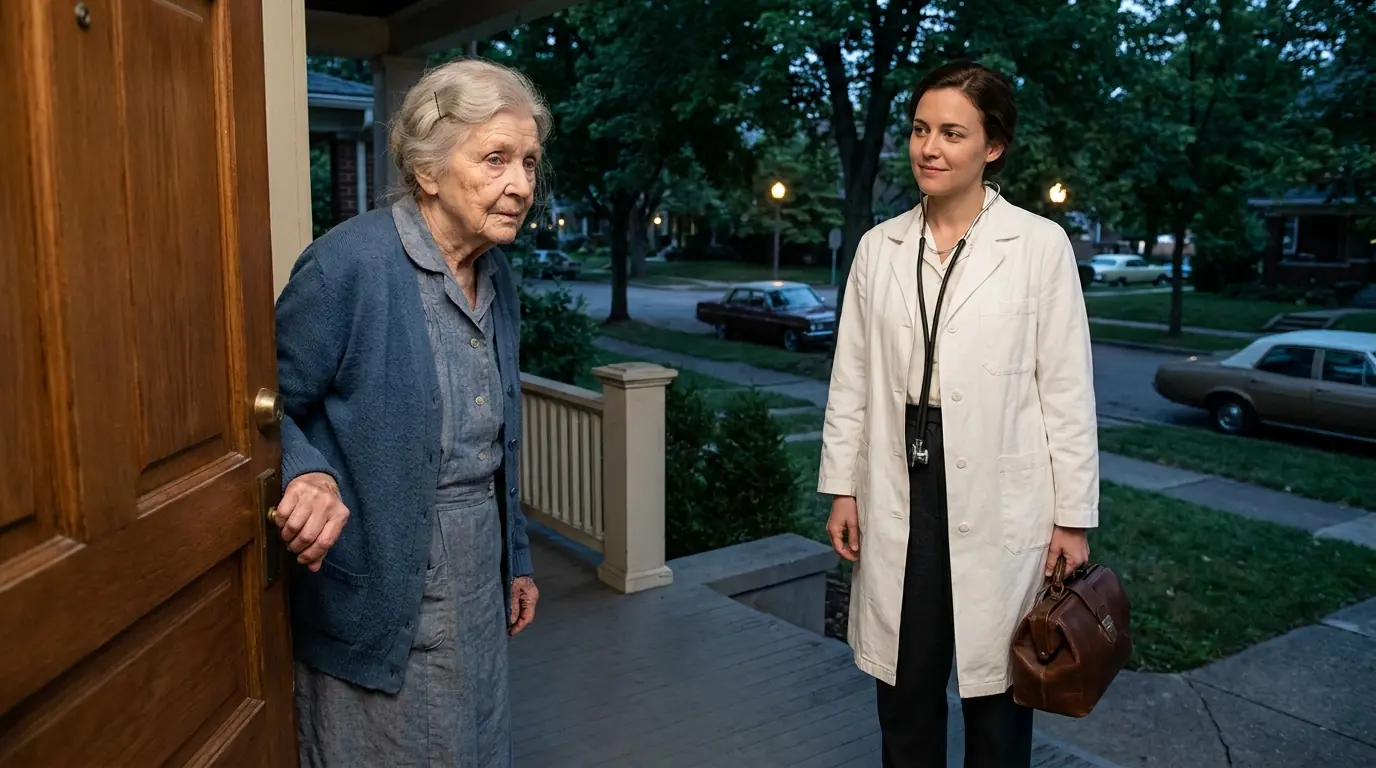
At the porch, Annie helped her up the steps.
Margaret paused at the door. “Do you remember what you said at the pharmacy?”
Annie smiled. “I said I would pay you back.”
“You did more than that.”
Annie shook her head. “No. I just continued what you started.”
Margaret looked at the repaired porch, the safe railing, the warm light glowing through her windows. Inside, Tessa had left soup on the stove. Milo’s guitar case rested in the hallway. Annie’s medical bag sat on the chair.
Her house was no longer quiet in the way it had been after Raymond and David were gone.
It was quiet like a place that knew people would return.
Margaret took Annie’s hand.
“I thought I was buying medicine,” she said softly. “But I think I was opening a door.”
Annie squeezed her hand. “You opened ours.”
Margaret smiled through tears.
Long ago, she had stood behind a frightened little girl counting pennies and chosen not to look away. She had thought it was a small thing. A few dollars. A bag of medicine. A walk through the rain.
But kindness rarely stays the size it is when given.
A paid prescription became a bowl of soup.
A bowl of soup became a weekly visit.
A weekly visit became family.
A little girl became a doctor.
And an old woman who once believed her best days were behind her lived long enough to see her love become a place where children were healed.
Margaret opened her front door, and Annie stepped inside beside her.
The house smelled of soup, rain, and home.
And somewhere across the city, beneath the sign that carried Margaret’s name, another child received the medicine they needed without counting pennies first.