The security guard had already reached for Daniel Carter's badge when the first SUV stopped outside the glass doors.
Then a second one pulled in behind it.
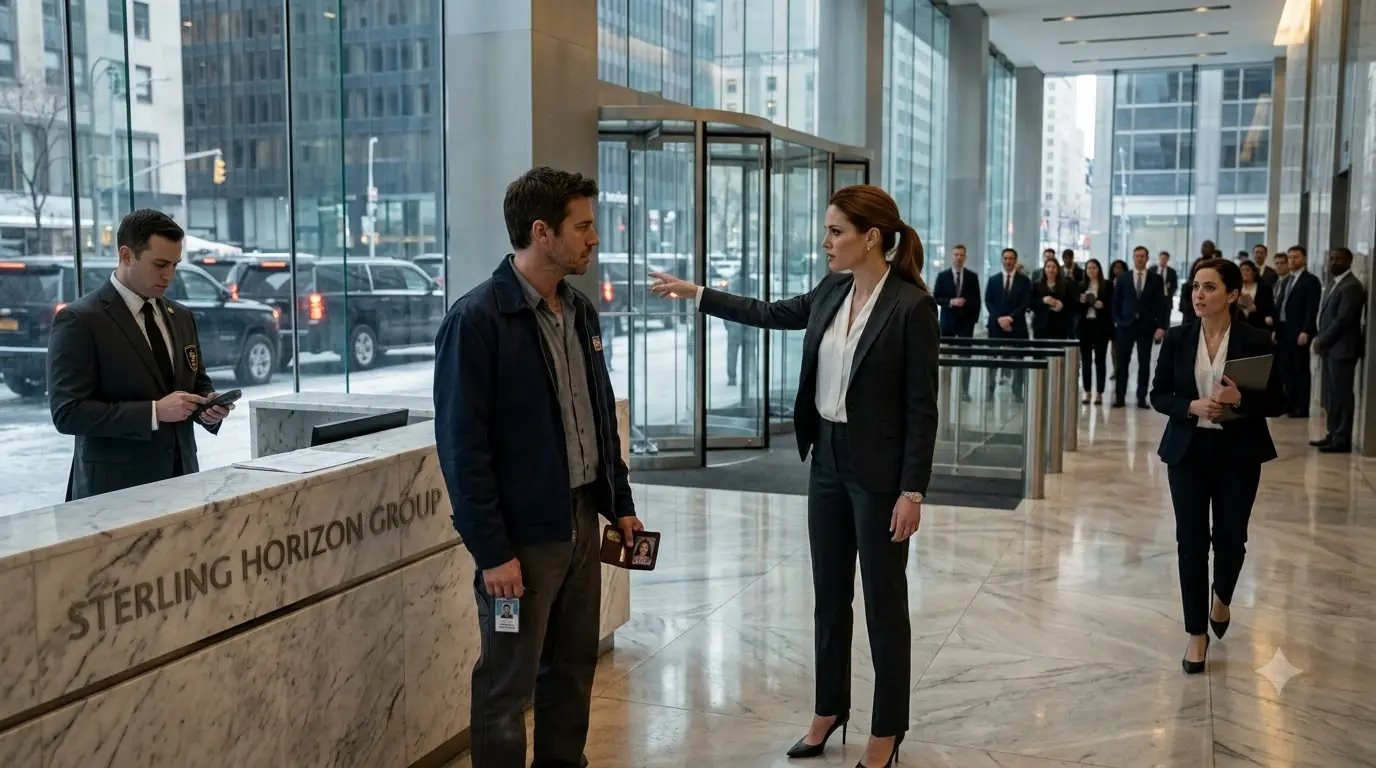
Then a third. Within seconds, seven identical black SUVs lined the entrance of the company headquarters, their engines humming beneath the cold morning sky.
Everyone in the lobby stopped moving. Daniel stood frozen beside the security desk, his worn jacket still damp from the rain, his six-year-old daughter's photograph tucked inside his wallet.
Only five minutes earlier, the CEO had looked him straight in the eyes and told him to pick up his badge and leave. Now, seven vehicles had arrived for the man everyone in the building believed was nothing more than a struggling single father who worked on the night maintenance crew.
Daniel had never been the kind of man people noticed. He arrived before sunrise, cleaned conference rooms after executives left, repaired broken locks, replaced damaged equipment, and quietly walked home after his shift because taking the bus meant saving enough money to buy his daughter medicine.
His name was Daniel Carter, thirty-eight years old, widowed father of a little girl named Lily. Three years earlier, his wife had died after a sudden illness, leaving Daniel with a child who still asked why Mommy had become a star in the sky.
Daniel had no easy answers. So he worked.
He worked until his hands cracked, until his back ached, until sleep became something he borrowed instead of something he enjoyed. Every sacrifice had one purpose: Lily.
Daniel had been employed at Sterling Horizon Group for nearly four years. Most executives did not know his name.
Some called him the maintenance guy. Others simply walked past him without looking.
But Daniel never complained. He understood that dignity did not come from a job title.
It came from how a person treated others when nobody was watching. He remembered the receptionist whose mother had needed surgery, so he quietly left money in an envelope on her desk.
He remembered the young intern who had locked himself out of his apartment, so Daniel drove across town after his shift and helped him get inside. He even remembered the elderly security guard who could not afford lunch one winter, and every Friday Daniel left an extra sandwich beside his chair.
But the company had recently changed. Sterling Horizon had a new CEO, Victoria Hale, a brilliant thirty-five-year-old woman known for turning struggling businesses into profitable empires.
Victoria was respected, feared, and almost impossible to impress. She believed emotions had no place in business.
Numbers mattered. Results mattered.
Weakness was something to eliminate. Daniel had never expected to meet her personally.
That changed one Tuesday morning when Victoria walked through the executive floor and noticed him repairing a damaged security panel outside a conference room. Daniel had been called there because the system had failed twice.