The lawyers slid the folder across the mahogany table, and Elias Warren’s hands trembled before he even opened it.
Not because he understood what was inside.
Because men like him did not usually sit in rooms like this.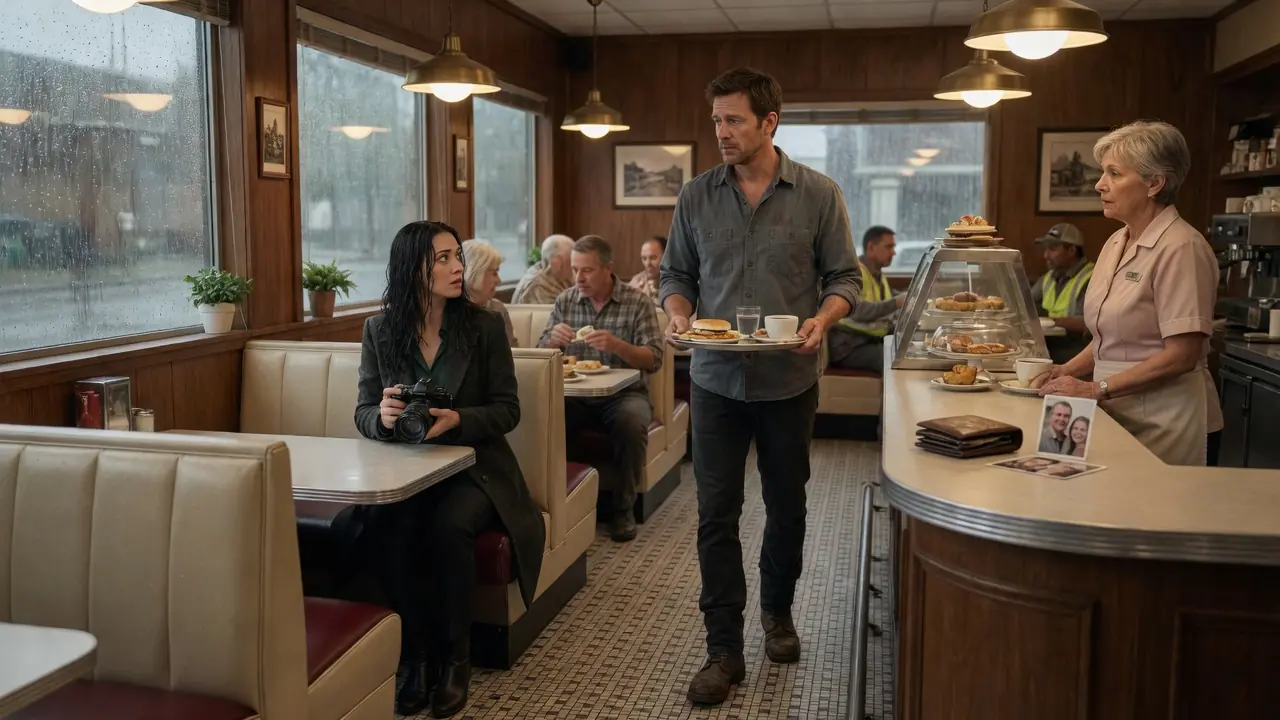
The conference room was on the twenty-third floor of a glass tower downtown, with windows that looked out over the city as if the people inside owned the sky. The table was polished so clean Elias could see the faded collar of his only good shirt reflected back at him. The chairs were soft leather. The coffee came in porcelain cups instead of paper.
Everything smelled expensive.
And Elias, sitting there with warehouse-calloused hands and shoes he had polished twice that morning to hide the scuffs, felt like someone had made a mistake letting him past the lobby.
Across from him sat two attorneys in dark suits. Katherine DeLuca, sharp-eyed and composed, folded her hands over the file. Beside her, an older man named Mr. Hoffman watched Elias with the solemn expression of someone who had seen enough money change lives to know it should never be handled casually.
“Mr. Warren,” Katherine said gently, “before you read this, I want you to understand something. This is not a loan. It is not charity with hidden conditions. It is a private grant established in your name.”
Elias stared at her.
A grant.
People used words like that in news articles and college brochures, not in conversations with men who still counted quarters for laundry.
“I don’t understand,” he said.
Katherine’s face softened.
“She remembered you.”
Elias looked down at the folder.
“Who?”
“The woman from the diner.”
For a second, the whole room seemed to lose sound.
The rain came back to him first.
The hard November rain against Murphy’s Diner windows. The smell of bacon and burnt coffee. The woman in the doorway, soaked through, shaking, clutching a broken camera against her chest like it was the last piece of the world she still trusted.
Elias swallowed.
“Seren.”
Katherine nodded.
“Yes. Seren Vale.”
He barely remembered giving away that breakfast.
That was not true.
He remembered all of it.
He remembered counting the eleven dollars and forty-seven cents in his palm. He remembered being so hungry that the smell of fried potatoes had made his stomach hurt. He remembered deciding, for once, to buy himself a real breakfast instead of pretending black coffee could be a meal.
He remembered the sandwich arriving.
He remembered not taking a single bite.
He remembered pushing the plate toward a stranger because she looked like hunger had hollowed her out from the inside.
But he did not understand how one soggy breakfast sandwich, one secondhand jacket, and five crumpled dollars could lead him here.
A lawyer’s office.
A mahogany table.
A folder thick enough to contain a future.
His fingers trembled as he opened it.
The first page showed a number.
Elias read it once.
Then again.
His throat closed.
It was enough money to change everything.
Not “help a little.”
Not “catch up for now.”
Enough to move his daughter Lara into a safe apartment. Enough to pay off the rent he owed. Enough to cover food, clothes, utilities, medical bills, school supplies, and the quiet emergencies poor people never mention because naming them does not make them easier to pay.
Enough for training.
Enough for college savings.
Enough for breathing room.
The kind of breathing room Elias had not felt in years.
“She remembered you,” Katherine said again. “And she asked us to find you.”
Elias could only stare at the number.
“How?” he whispered. “How could one breakfast do this?”
Mr. Hoffman leaned forward slightly.
“It was not just the breakfast, Mr. Warren.”
Katherine slid another envelope toward him.
The cream paper was thick, expensive, and handwritten with his name.
“She wanted you to understand who she was,” Katherine said. “And why she was running for her life that morning.”
Elias did not open the letter yet.
He closed his eyes.
And before he could stop it, he was back under the rusted awning outside Murphy’s Diner, three weeks earlier, with rain soaking through his jacket and eleven dollars and forty-seven cents in his palm.
The rain had come down like nails that November morning.
It hammered the cracked sidewalk outside Murphy’s Diner with relentless fury, bouncing off puddles, gutters, and the rusted awning that had been promising repair since before Elias Warren moved to the neighborhood.
He stood beneath that awning, hunched against the wind, counting the damp bills in his hand for the third time.
Eleven dollars.
Forty-seven cents.
That was all he had until Friday’s paycheck.
Friday was three days away.
He had already done the math a dozen times during his warehouse shift, during the bus ride, while walking the six blocks from the stop to the diner, and now standing outside with rainwater dripping from his hair onto the collar of his jacket.
If he bought breakfast, a real breakfast, he would have enough left for one pack of instant ramen, maybe two if the corner store still had the sale. He could stretch coffee at home. He could skip lunch and drink water from the warehouse break room fountain. He had done worse.
But Lara had eaten the last decent meal the night before.
Boxed mac and cheese.
He had added extra water to make it seem like more, stirred in the last spoonful of butter, and served it in their two chipped bowls. Lara had smiled at him like he had cooked her a feast.
“Dad, this is actually perfect,” she had said.
Actually perfect.
That smile was worth every hunger pang.
Lara was eleven years old, with her mother’s thoughtful eyes and Elias’s stubborn chin. She was too young to worry about rent and too smart not to. She kept her backpack packed even when they had no plans to move, because they had moved three times in two years and children learn instability faster than adults want to admit.
Elias hated that.
He hated the way she checked the pantry before asking for snacks. Hated the way she pretended not to notice when he skipped dinner. Hated the way she said, “I’m not that hungry,” in the same gentle voice adults used when lying politely.
He closed his fist around the money.
The smell from inside the diner slipped through the door when someone opened it.
Bacon.
Eggs.
Hot coffee.
Fried potatoes crisping on the grill.
It was almost cruel.
Murphy’s Diner was not fancy. It sat between a laundromat and a pawn shop, with a cracked red sign, fogged windows, and a bell over the door that had been slightly off-key for as long as Elias could remember. The counter stools had duct tape holding the vinyl together. The menus were laminated and curling at the corners.
But it was warm.
And warmth mattered.
Elias closed his eyes.
Just once, he thought.
Just this once.
He would buy breakfast. Not for Lara. Not for the bills. Not for some emergency waiting around the corner. For himself.
One meal to remind his body that it was still a body, not just a machine powered by coffee, worry, and warehouse dust.
He pushed open the door.
The bell chimed.
Heat hit him first, followed by the deep greasy comfort of the diner. He nearly sighed out loud.
Martha looked up from behind the counter.
She had been working at Murphy’s longer than Elias had been alive, and she possessed the mysterious diner-waitress ability to know who needed coffee before they sat down. She was in her sixties, with silver hair pinned into a loose bun, reading glasses hanging from a chain around her neck, and a heart she disguised under sarcasm because kindness lasted longer when people did not mistake it for weakness.
“Elias Warren,” she said, already reaching for the coffee pot. “Don’t usually see you in here on a Wednesday morning. You celebrating something?”
He slid onto a stool at the counter.
“Just treating myself.”
Martha raised one eyebrow.
“About time.”
He tried to smile.
“Been a while.”
“Too long, sweetheart. Too long.”
She poured coffee into a chipped white mug without asking.
Steam rose like a blessing.
Elias wrapped both hands around it.
The heat moved into his fingers first, then his wrists, then something deeper that had been cold for weeks.
“What’ll it be?” Martha asked.
He opened his mouth to order the cheapest thing on the menu.
Scrambled eggs and toast.
No hash browns.
No meat.
Water instead of orange juice.
But something in him rebelled.
He was tired of the constant arithmetic of poverty. Tired of calculating every bite before he allowed himself to be hungry. Tired of turning menus into spreadsheets and hunger into a moral weakness.
For one morning, he wanted to order like a regular person.
Like someone who had the luxury of appetite.
“The breakfast sandwich,” he heard himself say. “With bacon. And hash browns.”
Martha’s smile widened.
“Coming right up, honey.”
She paused.
“And don’t you worry about a thing.”
He knew that tone.
Martha had been slipping him extra food for months.
An extra biscuit wrapped in foil. A cup of soup “accidentally” made too much. Pancakes she claimed had been sent back untouched, though Elias knew nobody sent back Martha’s pancakes.
At first, pride made him refuse.
Then Lara needed dinner.
Pride became less important after that.
The coffee was hot, bitter, strong enough to make his empty stomach clench with anticipation. Elias held the mug and let himself exist inside the moment.
The diner hummed with late-morning life.
A trucker in a corner booth worked through a stack of pancakes while studying a road atlas, even though his phone sat beside it. An elderly couple shared the newspaper two booths down, the wife reading the headlines aloud while the husband pretended not to need her glasses. A construction crew occupied the long table near the back, laughing loud enough to fog the windows with their own warmth.
Normal people.
Regular people.
People who could buy Wednesday breakfast without measuring the cost against a daughter’s winter coat fund.
Martha set the plate in front of him ten minutes later.
The sandwich was beautiful in the way food becomes beautiful when you have been hungry too long.
Bacon tucked inside toasted bread.
Eggs folded thick.
Cheese melted at the edges.
Hash browns golden and crisp.
Elias stared at it.
He actually smiled.
Then the front door opened behind him.
A gust of wind and rain struck the room so violently that everyone turned.
At first, Elias thought the storm had forced the door open by itself.
Then he saw her.
She stood on the threshold like someone who had crawled out of a nightmare and followed the light until her body stopped obeying her.
Her dark hair was plastered to her face in twisted ropes. Her coat was soaked through, hanging heavily from her narrow shoulders. Her clothes, expensive once, clung to her frame in torn, filthy layers. Water streamed from her sleeves onto the diner floor.
But her eyes were what stopped Elias’s breath.
They were not merely frightened.
They were emptied.
The eyes of someone who had been running so long that fear had become the only thing keeping her upright.
“Help,” she whispered.
The word was so quiet it barely crossed the room.
Nobody moved.
The construction crew stared.
The elderly couple stiffened.
The trucker lowered his fork.
Even Martha froze with the coffee pot in her hand.
The woman took one unsteady step forward, then another. Her body trembled violently, not with ordinary cold, but with shock. She clutched something to her chest with both arms.
A camera.
Old-looking, professional, battered.
The lens was cracked.
The strap was wrapped around her wrist twice.
“I’m sorry,” she said, louder now, every syllable breaking. “I’m so sorry. I just…”
She swayed and caught the back of a chair.
“I need…”
Someone should help her, Elias thought.
Someone should do something.
Then he realized he was already standing.
His body moved before his mind finished making excuses.
He approached slowly, palms visible, the way he did when Lara woke from nightmares and needed him to prove the room was safe before he touched her.
“Hey,” he said gently. “Hey, it’s okay. You’re safe here.”
Up close, she looked worse.
There was a bruise blooming along her jawline, half hidden by wet hair. Scratches crossed her hands. Her lip was split. The shoulder of her coat was torn, and beneath it, he could see a rip in a blouse that looked too expensive for a woman standing barefoot in disaster.
She smelled of rain, mud, sweat, and panic.
“I don’t…” she started.
She swallowed hard.
“I haven’t eaten since yesterday. Maybe before. I don’t remember.”
Martha found her voice.
“Honey, sit down. Let me call someone.”
“No.”
The woman’s terror spiked so sharply that Elias felt it in his own chest.
“No police. No calls. Please. I just need…”
Her eyes moved past Elias.
To the counter.
To his plate.
The steam rising from his breakfast sandwich.
Something in her face crumpled.
“Food,” she whispered. “Just food.”
Elias turned.
His breakfast sat untouched.
His eleven dollars and forty-seven cents had become one small miracle of normalcy.
One hot meal.
One reckless act of self-care.
He looked at the woman. At the way she tried not to stare at the plate. At the way her whole body leaned toward it without permission, like hunger was stronger than pride.
He thought about Lara.
What would it take, he wondered, to reduce his bright, careful daughter to this? What kind of terror could strip a person down until all she could say was food?
He thought about his own hunger, the two weeks of crackers and ramen, the way his hands had shaken around the mug.
Then he understood that none of it mattered.
“Come on,” he said, pulling out the stool beside his. “Sit down.”
The woman stared at him.
“What?”
“That breakfast is yours.”
“I can’t.”
“You can.”
“I don’t have money.”
“Didn’t ask if you did.”
Tears slid down her face, mixing with rainwater.
“I don’t have anything.”
Elias pushed the plate toward the empty stool.
“Then start with this.”
She looked at him as if he had spoken a language she had forgotten but somehow still understood.
“I can’t take your food.”
“You already did,” he said softly. “I gave it to you.”
Her knees seemed to fold beneath her. She sank onto the stool with careful, pained movements.
The diner remained silent.
Martha placed a mug of coffee in front of the woman without a word.
Elias gently pushed the plate closer.
“Go ahead,” he said. “It’s real. I promise.”
The woman picked up the sandwich with trembling hands.
She took one bite.
The sound she made was not a sob exactly.
Not relief exactly.
It was the sound of a body remembering it did not want to die.
Elias had to look away.
She ate quickly at first, then desperately, then with tears streaming down her cheeks. She did not wipe them away. She barely seemed to notice them.
The room slowly began pretending not to watch.
People are strange that way.
They witness something sacred and then become embarrassed by their own witnessing.
Elias flagged Martha down.
“Can you bring another sandwich? And water?”
Martha looked at him.
“Elias.”
There was a warning in her voice.
Not judgment.
Reminder.
She knew what eleven dollars meant to him. She knew what hunger looked like when a man carried it politely.
“Please,” he said.
Martha held his gaze.
Then nodded.
“On the house,” she said. “Both of them.”
“No, Martha, I can—”
“On the house,” she repeated, sharper now. “Don’t argue with an old woman. Bad luck.”
The woman ate through both sandwiches, the hash browns, and half a glass of water before slowing down. Color returned faintly to her cheeks, though fear still sat in her eyes like something with claws.
When she finally looked up, she seemed ashamed to find the empty plates in front of her.
“I’m sorry,” she whispered.
“Nothing to be sorry for,” Elias said.
She touched the camera against her chest.
“My name is Seren.”
The way she said it made the name sound uncertain.
“Or it was. I think I still am.”
Elias did not push.
“I’m Elias.”
She looked at him, really looked for the first time.
“Elias,” she repeated, as if storing it somewhere important.
“You don’t owe me your story,” he said. “Not if you’re not ready to tell it.”
She laughed once, bitter and broken.
“I don’t even know where it starts anymore.”
Her fingers tightened around the camera.
“Everything got tangled.”
“Are you in danger right now?” he asked quietly.
Her whole body tensed.
“I don’t know.”
That answer was worse than yes.
“I think so,” she continued. “Maybe. I’ve been running for two days. I don’t know if I lost them or if they’re still…”
She glanced toward the rain-streaked windows.
“I can’t stop. But I was so hungry I couldn’t walk anymore. I saw the lights and I just…”
“It’s okay.”
“No shelters,” she said suddenly, as if answering something Martha had not yet suggested. “They’ll look there. They’ll know.”
“Who?”
Seren stared at the camera.
“People who want something from me.”
“The camera?”
She nodded once.
The movement was small, but it told him enough.
Whatever she had captured, whatever that cracked lens contained, it had put terror into her bones.
Martha returned with a paper bag.
“Extra food,” she said. “For later.”
Seren took it like a person receiving a holy object.
“Thank you.”
Elias pulled out his wallet.
He had five dollars and some change left.
Not enough to save anyone.
Barely enough to matter.
He pressed it into her hand.
She immediately shook her head.
“No.”
“Take it.”
“I can’t take your money.”
“You can.”
“Elias, no.”
“You need it more than I do right now.”
She looked at the money, then at his face.
A flicker of understanding passed through her eyes.
She saw him then.
Not completely, but enough.
The worn cuffs. The tired face. The hollow beneath his cheekbones. The way Martha watched him with protective concern.
“You don’t have much,” Seren said.
“No.”
“And you’re still giving it to me?”
He shrugged out of his jacket. The zipper was broken, and the sleeve had a stain that would not come out, but it was dry and warm.
He draped it over her shoulders.
“I’ve got a car. You’re walking.”
“You’ll freeze.”
“I’ll survive.”
She gripped the jacket closed with one hand.
“Why?”
The question came out raw.
“You don’t know me. I could be lying about everything.”
“Could be.”
She flinched slightly.
“But I don’t think you are,” Elias continued. “And even if you were, you needed food and warmth. I had both for a minute. That’s enough.”
Tears welled again.
“I was someone before this,” she whispered. “Someone who mattered.”
“You matter now.”
She looked at him.
He said it again, firmer.
“Whatever happened before, whatever’s chasing you, you matter right now. You hear me?”
For a moment, something in her face changed.
Not healed.
Not saved.
But reached.
As if his words had found a person buried under fear and reminded her where the surface was.
She nodded.
“I need to go.”
Elias wanted to stop her.
Wanted to ask more.
Wanted to offer a ride, a phone, a plan, anything more substantial than a sandwich and five dollars. But Seren was already standing, already moving back into the storm inside her own mind.
“Where will you go?”
She tried to smile.
It failed.
“Somewhere else.”
“That’s not an answer.”
“It’s all I have.”
She clutched the paper bag, the camera, and his jacket.
At the door, she turned back.
The diner lights caught her face, and for one second, beneath the bruise and exhaustion, Elias saw the outline of someone striking. Someone who had once walked into rooms with purpose. Someone who had been reduced but not erased.
“Thank you,” she said.
The words carried more weight than thanks usually did.
“You gave me something today. More than food.”
Elias did not know what to say.
Seren’s eyes filled again.
“When I felt like a ghost, you saw me.”
Then she pushed the door open.
The storm swallowed her.
For a long moment, Elias stood staring at the door.
Martha came beside him and placed one hand on his shoulder.
“That was a good thing you did.”
He looked at the empty stool, the empty plate, his empty wallet.
“Was it?”
Martha squeezed his shoulder.
“She’s still out there,” he said. “Still running. What good did a sandwich really do?”
“More than you know, honey.”
He turned to her.
“You don’t know that.”
“No,” Martha said. “But I’ve worked in diners for thirty years. I know people. Sometimes a meal is just a meal. Sometimes it’s the thing that reminds a person to keep breathing.”
The diner returned to normal slowly.
The construction crew went back to their food.
The elderly couple left arm in arm.
The trucker paid and disappeared into the rain.
Martha made Elias eggs and toast, extra bacon piled high, and set it in front of him.
“Eat.”
“Martha—”
“Policy. Someone does something good in my diner, I feed them. Now hush.”
He ate because refusing would have insulted her.
But his mind remained with the woman in the storm.
The days after Seren disappeared moved slowly.
Elias went back to his life.
Warehouse shifts beginning before sunrise. Sore knees. Cold coffee. Forklifts beeping. Cardboard dust in the air. The supervisor shouting about quotas while men who had worked there ten years longer than Elias kept their heads down and moved faster.
He picked up Lara from school when he could.
He sorted bills at the kitchen table.
He stretched food.
He lied badly when Lara asked if he had eaten.
But something had shifted inside him.
He looked for Seren everywhere.
At bus stops. Under awnings. Near the shelter by Fifth Street. In every woman with dark hair walking quickly in the rain.
Nothing.
She had vanished.
At dinner one night, Lara caught him staring into space.
“Dad?”
He blinked.
“Sorry, sweetheart. What were you saying?”
She narrowed her eyes.
“You’re doing it again.”
“Doing what?”
“That thing where you leave but your body stays here.”
He tried to smile.
“Work stuff.”
“You’re lying.”
He looked at her.
She looked back with the calm suspicion of an eleven-year-old who had grown up too close to adult problems.
“Martha told Mrs. Chen about the lady at the diner,” Lara said. “Mrs. Chen told me when I was waiting after school.”
Elias sighed.
Small neighborhoods had no locked doors when it came to stories.
“She said you gave away your breakfast,” Lara continued.
“I did.”
“Were you hungry?”
He paused.
“Yes.”
Lara’s face softened.
“Was she really scared?”
“Yes.”
“Do you think she’s okay?”
Elias looked down at the table.
“I hope so.”
Lara pushed half her sandwich toward him.
He stared at it.
“I’m not hungry,” she said, too quickly.
His chest hurt.
“Baby.”
“I’m serious.”
He pushed it back.
“So am I. Eat.”
She did, but slowly, watching him with eyes too old for her face.
That Saturday, the landlord knocked.
Mr. Kozlov stood in the hallway with a folder under one arm and regret already written across his face. He was not a cruel man. Elias almost wished he were. Cruelty was easier to resent than ordinary pressure.
“Elias,” Kozlov said. “We need to talk.”
They were two months behind.
Elias knew it before Kozlov said it.
He knew the exact amount. Knew what he could pay Friday. Knew what he could not. Knew the shape of the hole he was standing in.
“I’ll have half this week,” Elias said. “The rest by next Friday. I just need a little more time.”
Kozlov rubbed his forehead.
“I gave time last month. And month before.”
“I know.”
“I have mortgage too. Taxes. Repairs. I’m not rich man.”
“I know.”
From the bedroom, the floor creaked.
Lara was listening.
Elias hated that most of all.
Kozlov sighed.
“Friday half. One week for rest. Then I file papers.”
“I understand.”
After Kozlov left, Elias stood in the living room and stared at the closed door.
Lara appeared in the hallway, hair messy, one sleeve of her sweatshirt stretched over her hand.
“Are we moving again?”
The question landed like a punch.
“No,” he said automatically.
Then he corrected himself because he had promised never to build Lara’s life out of lies if he could help it.
“I’m going to do everything I can to make sure we don’t.”
She nodded as if she appreciated the honesty more than the comfort.
“I hate this,” she whispered.
He pulled her into his arms.
“I know.”
“I hate being poor.”
He closed his eyes.
“I know.”
“I hate that you work all the time and we still don’t have enough.”
He held her tighter.
There was no speech that could fix that.
No lesson about gratitude.
No sermon about love being enough.
Love mattered.
But love did not pay rent.
The next week became a blur of desperation.
Elias picked up every extra warehouse hour available. He applied for jobs during lunch breaks. He sold his old toolbox, then hated himself for it because it had belonged to his father. He paid Kozlov half on Friday, exactly as promised, then walked back to his car knowing he had no idea how to produce the rest.
His friend Miguel found him sitting on the loading dock during break, staring at nothing.
“You good, hermano?”
Elias almost laughed.
“No.”
Miguel sat beside him.
Miguel was forty-seven, broad-shouldered, with a bad back and a good heart. He had survived enough life to recognize the sound of a man reaching the end of himself.
“How much short?”
“Three hundred.”
Miguel winced.
“I’d help if I could.”
“I know.”
“My daughter’s quinceañera is eating every dollar I look at.”
“I know.”
They sat in silence.
Then Elias told him about Seren.
The diner.
The breakfast.
The rain.
The jacket.
The camera.
Miguel listened without interrupting.
When Elias finished, Miguel said, “You did what you could.”
“What if it wasn’t enough?”
Miguel leaned back on his hands.
“My tia used to say something. Una vela no pierde nada encendiendo otra.”
Elias looked at him.
“A candle loses nothing by lighting another candle,” Miguel translated. “You gave her light. What she did with it after, that’s not yours to control.”
Elias thought about that.
“I gave away breakfast.”
“No,” Miguel said. “You gave away proof.”
“Proof of what?”
“That people can still be good when they have every reason not to be.”
Elias carried that sentence for days.
It did not solve the rent.
It did not fill the fridge.
But it stayed.
Sunday evening, his phone rang with an unknown number.
He almost ignored it.
Unknown numbers usually meant collectors.
But something made him answer.
“Is this Elias Warren?”
The woman’s voice was crisp, professional, and careful.
“Yes.”
“My name is Katherine DeLuca. I’m calling from Hoffman and Associates. Did you recently assist a woman named Seren Vale at Murphy’s Diner?”
Elias sat up.
“Is she okay?”
“She is safe, Mr. Warren.”
Safe.
The word moved through him with surprising force.
“She asked us to contact you. Would you be available to come to our office tomorrow morning at ten?”
“I work mornings.”
“We will compensate you for lost wages.”
“I don’t understand.”
“I know,” Katherine said gently. “But I assure you, this is worth your time.”
He wrote down the address with shaking hands.
That night, he barely slept.
The next morning, he put on his best shirt, the one with the stubborn stain near the collar, and drove downtown after dropping Lara at school. The financial district looked like another planet. Glass towers. People in suits. Coffee shops where one drink cost what he used to spend on dinner.
Hoffman and Associates occupied the twenty-third floor.
The receptionist smiled at him like he belonged there, which somehow made him feel more out of place.
Katherine DeLuca met him in the lobby and led him to the conference room.
Then came the folder.
The number.
The letter.
The explanation.
Seren Vale was not simply a woman from the diner.
She was an internationally acclaimed photographer. Her work had appeared in major magazines, galleries, and humanitarian exhibitions around the world. She was the daughter of wealthy parents who had died when she was young, leaving her a trust that people around her had been quietly trying to control for years.
Her agent.
Her business manager.
A man she once trusted.
A small circle of polished, smiling people who saw her not as a person, but as access.
Money.
Influence.
Art they could sell.
A name they could use.
When Seren discovered irregularities in her accounts and began gathering evidence, they turned on her. They isolated her. Took her phone. Controlled access to her apartment. Tried to pressure her into signing documents that would have effectively handed them authority over her trust and career.
But Seren was a photographer.
She observed.
She documented.
She captured details people assumed went unnoticed.
The camera she carried into Murphy’s Diner held the evidence.
Emails photographed from a laptop screen.
Recorded images of documents.
A video clip of a conversation outside her bedroom door.
Proof.
She escaped during a storm when one of them made the mistake of believing fear had made her weak.
She ran for two days.
No wallet.
No phone.
No one she trusted.
By the time she reached Murphy’s Diner, she had not eaten in almost forty hours.
“And you fed her,” Katherine said. “When no one else moved.”
Elias stared at the grant documents.
“I didn’t know who she was.”
“That is why it mattered.”
He opened the letter.
Dear Elias,
I have tried to write this many times, and every version felt too small.
When I walked into that diner, I was not simply hungry. I was disappearing.
For three days, people I trusted treated me like something they owned. They spoke around me, over me, through me. They tried to convince me that no one would believe me, that no one cared, that I was only valuable because of what they could take.
By the time I escaped, I had started to believe them.
Then I walked into Murphy’s Diner, soaked, terrified, and starving.
Everyone looked at me.
You saw me.
That is different.
You did not ask who I was. You did not ask what I could give you. You did not make me prove I was worthy of help.
You gave me your food.
I knew you were hungry. I saw it. I saw the way the waitress looked at you. I saw the worn cuffs on your jacket. I saw the kind of poverty that tries very hard to remain polite.
You gave anyway.
That breakfast did not just feed me. It reminded me that I was still human.
The money, the jacket, the kindness in your voice when you told me I mattered, those things carried me far enough to make the call that saved my life.
Now I am safe.
Because you helped me reach safety, I want to help you and your daughter reach something more than survival.
Please do not call this charity. Charity is given downward. This is gratitude moving sideways, from one human being to another.
You gave me what you had.
Let me give you what I have.
Thank you for seeing me when I felt invisible.
With more gratitude than I can fit on this page,
Seren
Elias read the letter three times.
By the third time, the words blurred.
He covered his face with one hand and cried silently in a conference room that smelled like polished wood and expensive coffee.
He cried for Seren.
For Lara.
For all the mornings he had pretended hunger was discipline.
For the shame of needing help.
For the shock of receiving it.
Katherine waited without speaking.
That was kind of her.
When Elias finally lowered his hand, he said the only thing that made sense.
“She doesn’t owe me this.”
“No,” Katherine said. “She doesn’t. She chose it.”
He looked at the grant again.
Monthly living support for three years.
Immediate emergency funds.
Rent paid.
Utilities covered.
An education fund for Lara through college.
Professional development funds for Elias.
Financial advising.
Legal support.
Counseling, if he wanted it.
A path.
Not a handout.
A path.
His hand shook as he signed.
When he left the building, the city looked different.
Not prettier.
Not kinder.
Just possible.
His first call was to Mr. Kozlov.
“I can pay the rest today,” Elias said. “And next month in advance.”
Kozlov was silent for several seconds.
“You won lottery?”
Elias laughed.
It burst out of him unexpectedly.
“Something like that.”
His second call was to Lara’s school.
“I need to pick up my daughter early,” he said. “Family emergency. The good kind.”
Lara came out worried.
Then confused.
Then terrified when Elias picked her up and spun her in a circle, laughing and crying at the same time.
“Dad, what happened?”
“Everything changed,” he said.
They got ice cream in the middle of the day.
Elias told her everything he could explain.
The woman from the diner was safe.
She had remembered him.
She had helped them.
They would not lose the apartment.
They would not have to count every bite.
Lara listened with wide eyes.
“You gave her your breakfast,” she said.
“Yes.”
“And now she’s helping us?”
“Yes.”
Lara looked down at her melting ice cream.
“So being kind actually works?”
The question broke his heart.
He reached across the table and took her hand.
“Not always like this,” he said. “But it always matters.”
They paid the rent.
They bought groceries without calculating each item three times.
They bought Lara new shoes that fit, and a winter coat with a hood that did not tear when she lifted her arms.
At the grocery store, Elias stood in front of the cart and cried for the second time that day.
Not because the cart was full.
Because he had not been afraid filling it.
A month later, they moved.
Not far.
Just far enough.
A two-bedroom apartment in a safer neighborhood, with working heat, clean hallways, a secure entrance, and a bedroom for Lara that had space for a desk by the window.
Lara stood in the middle of it, holding one moving box.
“Dad,” she whispered, “are we allowed to have this?”
Elias knelt in front of her.
“Yes.”
“But it’s nice.”
“I know.”
“People like us can have nice things?”
He felt the question cut deeper than any insult ever could.
“Yes, baby,” he said. “People like us can have nice things.”
Miguel helped them move.
So did Martha.
So did Mrs. Chen from Lara’s old school, who brought towels and said she had “extra,” though the tags were still on them.
Their whole life fit in one truck.
That hurt.
But it also meant the new apartment had room to become something more.
Elias enrolled in a technical drafting program at the community college.
He had always liked design. Lines. Measurements. Structures. The way an idea could become a plan, and a plan could become something real enough for people to live inside.
At first, he felt foolish sitting in a classroom at thirty-nine beside students nearly half his age.
Then he turned in his first assignment.
The instructor, Mr. Paulson, pulled him aside.
“You’ve done this before?”
“No.”
“You sure?”
Elias almost smiled.
“Pretty sure I would remember.”
Mr. Paulson studied the drawings.
“You have an eye for structure. Don’t waste it.”
Elias went home that night and told Lara.
She cheered like he had won an Olympic medal.
A few weeks later, Seren asked to meet.
The meeting took place in a small gallery downtown, quiet and bright, with black-and-white photographs on white walls. Elias arrived early and nervous, wearing the same good shirt, now properly cleaned, and new shoes that still felt strange on his feet.
He was looking at a photograph of a woman laughing in the rain when he heard her voice.
“That one is from Lisbon.”
He turned.
Seren Vale stood behind him.
She looked different.
Clean hair falling in soft waves. A gray sweater. Dark jeans. No bruises visible. No rainwater. No panic.
But her eyes were the same.
Deep.
Watchful.
Carrying memory.
“Hi,” Elias said.
“Hi.”
For a moment, neither of them moved.
Then Seren stepped forward and hugged him.
Not dramatically.
Not for display.
Just a short, fierce embrace from someone who had carried a thank you inside her body for too long.
When she stepped back, her eyes were wet.
“I promised myself I wouldn’t cry immediately.”
“You lasted almost ten seconds.”
She laughed.
That laugh changed her face.
They sat on a bench near the back of the gallery.
Seren told him what had happened. Not everything. Not the worst details. Enough.
The trust. The betrayal. The isolation. The camera. The storm. The two days running.
Elias listened.
Then he told her his side.
The hunger.
The eleven dollars.
Lara.
The rent.
The shame of nearly walking past the diner because breakfast felt irresponsible.
Seren covered her mouth when he said he had been hungry too.
“I knew,” she whispered. “I saw it.”
He nodded.
“I figured you did.”
“And you still gave it to me.”
“You needed it more.”
“Maybe.”
“No,” Elias said gently. “Not maybe.”
Seren looked at him for a long moment.
“You know what stayed with me most?”
“The sandwich?”
“No. The way you said I mattered. You said it like a fact. Not comfort. Not pity. A fact.”
“It was a fact.”
“I had forgotten.”
They sat quietly.
Around them, people moved from photograph to photograph, reading placards, whispering, pausing.
Finally, Seren said, “I don’t want the grant to be the end of this.”
Elias looked at her.
“I don’t either.”
“I want to build something out of it. A foundation, maybe. Emergency grants for people stuck in the space between disaster and help. People like you. People like I was that morning. People who do not need a lecture or a form first. They need food, rent, medication, transportation, a locked door, a lawyer, one safe night.”
Elias thought of Lara’s old shoes.
The rent notice.
The way he had counted bills under the awning.
“That would help,” he said.
“I want you involved.”
“Me?”
“You know what actually matters. I know money. You know survival.”
He looked down at his hands.
Warehouse hands.
Father hands.
Hands that had pushed a plate across a counter.
“I can help,” he said.
Seren smiled.
“I know.”
The foundation began small.
Seren named it The Light Table Fund after something Miguel said when Elias told her about the candle.
A candle loses nothing by lighting another candle.
At first, it helped a few families.
Rent assistance before eviction.
Emergency groceries.
Medical co-pays.
Car repairs so parents could get to work.
Childcare during court appointments.
Not huge amounts.
Not grand speeches.
Practical kindness.
The kind that arrives before everything collapses.
Elias helped design the intake process to preserve dignity.
“No begging essays,” he said during one planning meeting.
Seren looked up.
“What?”
“No making people prove their pain beautifully. Poor people get asked to perform suffering to deserve help. Don’t do that.”
Seren wrote it down.
No performing pain.
That became one of the foundation’s principles.
Martha became an advisor without knowing what an advisor was.
“Feed people first,” she said. “Questions later.”
That became another principle.
Miguel helped identify workers at risk of losing housing because of missed checks, reduced hours, injury, or predatory loans.
Lara designed the first handwritten thank-you card template.
It showed a small candle lighting another candle.
Seren framed it.
Within a year, The Light Table Fund had helped eighty-three families.
Elias finished his drafting program and accepted a junior position at Bergman Associates, a mid-sized architecture firm downtown. The salary was not enormous, but it was stable. Benefits. Paid time off. A career path.
On his first day, he stood in the elevator wearing a clean shirt, a company badge, and a terrified expression.
He texted Seren.
I feel like I snuck into someone else’s life.
She replied almost immediately.
No. You walked into yours.
He saved that message.
Lara joined art club.
Then won second place in a student exhibition.
Seren showed up to the school gym with flowers and pretended not to cry when Lara’s drawing won a ribbon.
The drawing was of Murphy’s Diner in the rain.
Inside the window, two figures sat at the counter.
One pushing a plate toward the other.
Lara titled it The First Light.
Elias stood in front of it for a long time.
“Too much?” Lara asked nervously.
He shook his head.
“No, sweetheart. It’s exactly right.”
Two years after the morning at Murphy’s Diner, Seren held an exhibition called After The Storm.
One photograph stood at the center of the gallery.
Murphy’s Diner.
The counter.
The stool.
A chipped white coffee mug.
Rain streaking down the window.
The placard beneath it read:
The place where I remembered I was human.
Elias stood in front of it with Lara beside him.
Seren came to stand on his other side.
“I went back a month after,” she said softly. “Martha made me pie and threatened to adopt me.”
“That sounds like Martha.”
“I sat there for two hours.”
“Thinking about what?”
Seren looked at the photograph.
“That I had spent years in rooms full of people who knew my name, my bank accounts, my work, my awards. And then, when I was most myself and least impressive, the only person who truly saw me was a hungry father in a diner.”
Elias swallowed.
“I was just trying to do the right thing.”
“I know,” Seren said. “That is why it mattered.”
The foundation grew.
Bergman Associates promoted Elias.
Lara got older, taller, more confident.
Their apartment filled with art supplies, real food, books, plants Seren kept giving them even though Elias killed half of them by accident.
Some nights, Elias still woke at three in the morning, heart racing, convinced he had forgotten a bill. Poverty leaves alarms inside the body long after the emergency has passed.
On those nights, he walked to the kitchen, opened the fridge, and looked at the food inside.
Not because he needed to eat.
Because he needed to remember.
They were safe.
One rainy November morning, three years after everything changed, Elias returned to Murphy’s Diner alone.
Martha was still there.
Older.
Slower.
Still terrifying.
She poured coffee before he sat down.
“Breakfast sandwich?” she asked.
“With bacon,” he said. “And hash browns.”
She smiled.
“Big spender.”
He laughed.
The diner had not changed much. The same counter. Same duct-taped stool. Same bell above the door. Same rain streaking the windows.
But Elias had changed.
He sat there in a good coat, with a steady job, a daughter who no longer packed her life into a backpack just in case, and a foundation meeting scheduled for later that afternoon.
Martha set the plate down.
He looked at it.
Then at the door.
No one came in from the rain.
No haunted woman.
No broken camera.
No impossible moment.
Just the ordinary morning.
The sandwich steamed in front of him.
Martha leaned on the counter.
“You okay, honey?”
Elias nodded.
“Just remembering.”
She softened.
“That was the day, wasn’t it?”
“Yes.”
“The day everything changed.”
He looked at the sandwich.
Then he smiled faintly.
“No,” he said. “Everything changed later. That day, I just shared breakfast.”
Martha shook her head.
“Men are so stupid about miracles.”
He laughed.
She patted his hand.
“You lit a candle, Elias. Don’t argue with me. I was there.”
He picked up the sandwich and took a bite.
It tasted exactly the way he remembered.
Warm.
Greasy.
Ordinary.
Human.
That afternoon, at the foundation office, Elias met a young mother whose car repair would be covered so she could keep her job. A retired man whose medication co-pay would be paid. A teenage boy who needed shoes for a restaurant job interview.
No one was asked to perform their pain.
No one was made to beg beautifully.
They were seen.
Helped.
Fed first, questioned later.
At the end of the day, Seren stopped by Elias’s desk.
“You look tired.”
“I am.”
“Good tired?”
He thought about it.
“Yes.”
She sat in the chair across from him.
“Do you ever think about how strange it is? How one morning became all of this?”
“All the time.”
“Does it still scare you?”
“Sometimes.”
“Why?”
He looked around the office.
At the case files.
The applications.
The photo of Lara’s candle drawing on the wall.
“Because it reminds me how many lives turn on moments nobody knows are important until afterward.”
Seren nodded.
“That’s why we keep showing up.”
Years passed.
The story spread, though neither Elias nor Seren told it often.
People liked the dramatic version.
A poor father gave breakfast to a mysterious woman in the rain, and she turned out to be wealthy enough to change his life.
But that was not the whole story.
The real story was not about money.
Money mattered. Elias would never insult poverty by pretending otherwise. Money bought time, safety, medicine, school supplies, heat, dignity, and sleep.
But the story was not about wealth rescuing poverty.
It was about recognition.
A man who felt invisible saw a woman who felt erased.
A woman who had been treated like property was fed by a man who had almost nothing.
A child learned that kindness could be stronger than fear.
A photographer rebuilt her life around proof that humanity survives in dark places.
A father rebuilt his life because someone insisted his struggle was not a character flaw.
And from one breakfast came a table large enough for others.
When Lara graduated high school, Seren sat beside Elias in the audience.
Lara crossed the stage with honors cords, art scholarships, and a grin that made Elias press both hands to his face.
Afterward, Lara hugged her father first.
Then Seren.
Then Martha, who had somehow brought muffins into the ceremony.
Miguel shouted loud enough to embarrass everyone.
That evening, at dinner, Lara raised a glass of lemonade.
“To breakfast,” she said.
Everyone laughed.
But Elias knew exactly what she meant.
Years later, the original grant documents remained in a folder in Elias’s desk.
He rarely opened it.
But he kept Seren’s letter framed on the wall beside Lara’s drawing of Murphy’s Diner.
Not to remember the money.
To remember the sentence that had changed the shape of his life.
You saw me.
That was where everything began.
Not with the lawyers.
Not with the mahogany table.
Not with the number that made his hands tremble.
It began with seeing.
It began with a man standing in the rain counting eleven dollars and forty-seven cents, deciding to buy himself breakfast.
It began with a woman stumbling through a diner door, holding a broken camera and the last evidence of her own truth.
It began when hunger met hunger and one person chose compassion anyway.
The rain from that November morning dried long ago.
But what it watered kept growing.
In the foundation’s waiting room, a small sign hangs above a table where fresh coffee, fruit, sandwiches, and soup are available to anyone who walks in.
The sign is simple.
No one here has to prove they are hungry.
Under it, in smaller letters, is a sentence Lara wrote when she was eleven.
A candle loses nothing by lighting another candle.
People read it while waiting for help.
Some cry.
Some pretend not to.
Elias understands both.
He still remembers what it felt like to stand under an awning with damp bills in his palm, wondering whether he deserved breakfast.
He still remembers what it felt like to push the plate away.
He still remembers Seren’s eyes when she realized the food was hers.
And every time someone walks through the foundation doors afraid, ashamed, hungry, or carrying paperwork they do not understand, Elias tries to do for them what he did for Seren without knowing he was doing anything extraordinary.
He sees them.
He feeds them if they are hungry.
He reminds them that they matter before asking what they need.
Because sometimes the smallest act carries more weight than anyone sees.
A sandwich.
A jacket.
Five dollars.
A kind sentence spoken to someone who has forgotten they are human.
Elias Warren once thought he had given away his only breakfast.
He did not know he had planted the first seed of his future.
He did not know the woman in the rain would survive.
He did not know she would remember.
He did not know that one day, lawyers would slide a folder across a mahogany table and tell him his daughter would never again have to wonder if people like them were allowed to have nice things.
He only knew, in that moment, that someone was hungry.
And he had food.
That was enough.
Sometimes, that is how the whole future begins.