The first pallet arrived behind Lana Dickstra’s rental house on a Tuesday morning in March 2009.
She had never ordered a pallet of anything.
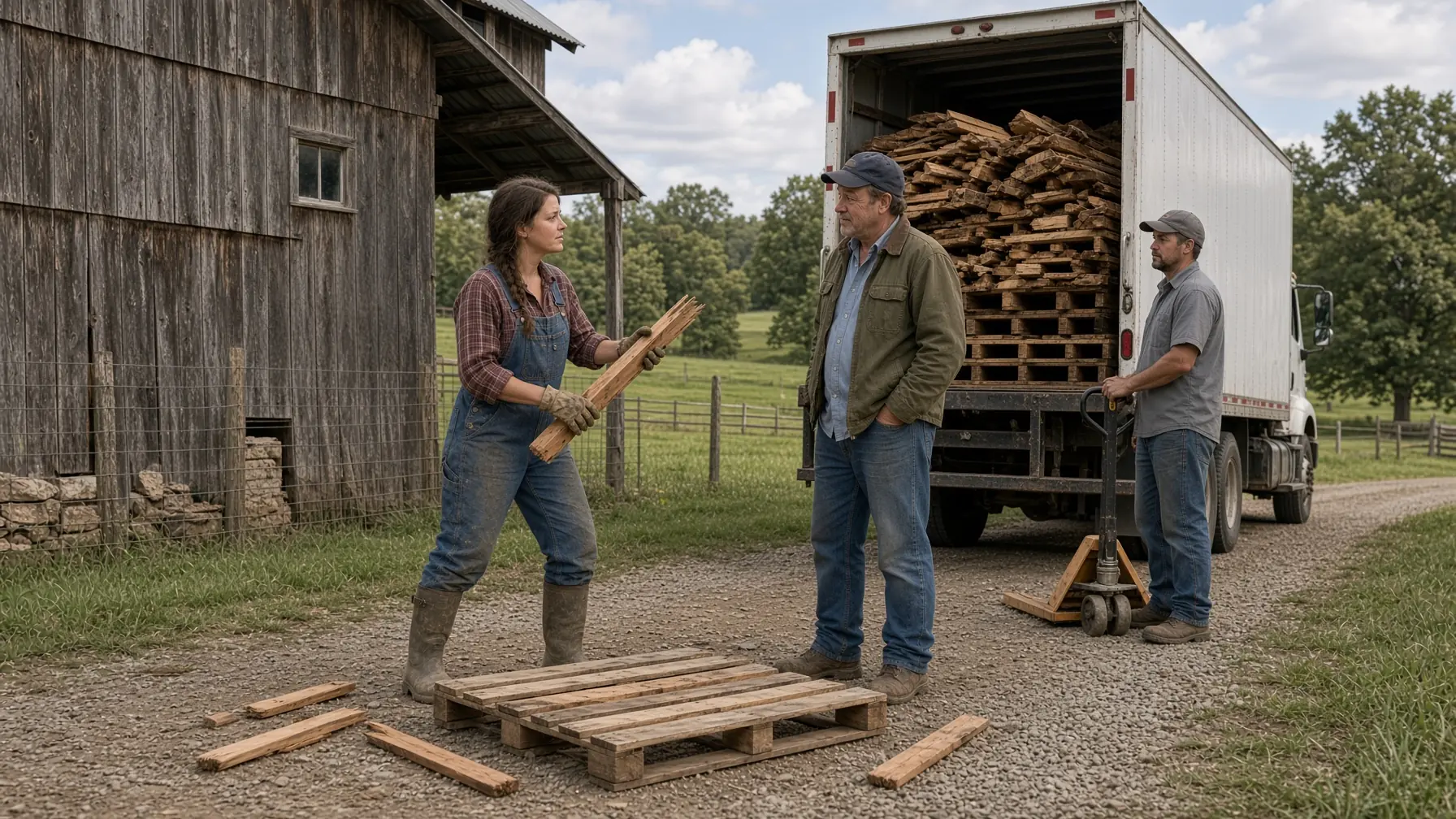
At twenty-two, she usually bought materials in quantities she could lift herself, paid attention to the balance in her checking account, and made a purchase only after deciding what else would have to wait. She owned secondhand tools that did not match and had forty dollars available until someone paid her.
Now a forklift was lowering a stack of cedar behind the house.
The driver maneuvered into place while Lana stood clear, watching the rough ends of the wood. Some pieces were too narrow. Others were split, crooked, short, or chipped along an edge. There were enough variations to make the stack look less like useful material than the aftermath of making something useful elsewhere.
That was exactly what it was.
The pieces had failed the requirements for pencil production.
The driver withdrew the forks, leaving the pallet on the ground. In the cool air, the scent rose around her—sharp, familiar cedar.
He held out a clipboard.
“Where do you want to sign?”
Lana looked at the wood, then at the form.
She signed.
Her strongest evidence that this might work was a Craigslist listing that had attracted eleven inquiries in four days. Eleven strangers had been interested enough in a closet organizer to send a message.
None of them had promised to build a business for her.
The forklift pulled away, and Lana remained beside the pallet. She lifted one slat from the top, ran her thumb near a damaged edge, and turned it to examine the grain.
There was usable wood beyond the split.
She put it aside and picked up another.
Her father would have started with a different question.
Garrett Dickstra would have wanted to know how many pieces were usable, how long each would take to process, what it would cost to store them, and what Lana intended to do with everything she could not sell.
He had good reasons.
Garrett had once farmed hundreds of acres in Iowa. A serious back injury had ended that part of his life, forcing the family to sell and relocate to Tennessee. He knew what it meant to own something that appeared valuable and still be unable to make the numbers work.
He distrusted plans that depended on everything going right.
Lana had inherited his willingness to work. She had also inherited his habit of examining an object before deciding it was finished. But where Garrett saw exposure to loss, she often saw a way around a problem.
Their disagreements usually began there.
She had completed a community-college program in interior design, a choice that sounded to some people like an interest in matching fabrics. The course that stayed with her most had been about materials.
Dr. Wanda Okafor taught it.
She could put an ordinary object on a table and make a roomful of students stop seeing it as ordinary. A panel was also a source of raw material, a series of manufacturing decisions, a transportation cost, a use, and an eventual disposal problem.
For one assignment, Lana researched the historical uses of a domestic wood.
She chose eastern red cedar.