My name is Phil, and I learned that the moment someone threatens divorce as a manipulation tactic, the marriage is already over. You are only deciding whether to acknowledge it or keep pretending.
I had been married to Molly for six years when she handed me divorce papers with a smile, expecting me to beg. Instead, I signed them and walked out of a marriage that had been dying for longer than either of us wanted to admit.
We met when I was 28 and she was 29. I was working as a registered nurse at a hospital in Minneapolis, and she was starting her career as a morning radio host at a local station.
We met through mutual friends, started talking, and discovered we had an easy connection. The early relationship was genuinely good.
We spent hours talking whenever our schedules allowed, which was not easy because Molly worked early mornings and I often worked overnight shifts. Still, we made it work. When our days off aligned, we stayed up together talking about everything and nothing. We built the kind of friendship and attraction that good relationships need.
In those early years, we were a team. We supported each other’s career challenges and celebrated each other’s successes. There was a real sense of partnership, the kind where you genuinely enjoy each other’s company and want to build something together. After dating for two years, we got married.
The wedding was held at a nice venue, with a reception full of family and friends, followed by a honeymoon in Costa Rica. After that, we settled into married life in a two-bedroom apartment near downtown. The first few years were solid. My nursing schedule was demanding and irregular, and Molly’s radio show required her to wake up at 4:00 in the morning most days, but we prioritized each other.
We had date nights when our schedules aligned. We cooked dinner together on weekends. We maintained physical and emotional intimacy, and we talked about long-term plans. Eventually, we wanted to buy a house and have children once we were more financially stable.
Around year five, something subtle changed in our relationship. At first, it was easy to dismiss it as normal relationship evolution or pressure from demanding careers. Molly developed a serious attachment to her phone. That was not unusual by itself, because she used social media heavily for her radio career, building her personal brand and engaging with listeners.
She seemed distracted during conversations. Even during the rare time we had together, she often chose her phone over engaging with me. I noticed it, but I did not act on it immediately. I tried to convince myself that Molly was building her career and that social media engagement was part of her job.
I told myself I was being oversensitive about normal behavior. But as the months passed, the distance became impossible to ignore. We went from feeling like partners to feeling like roommates who happened to share a bed. A parallel existence had replaced the emotional connection that had defined our early relationship.
After about six months of this pattern, I decided to address it directly. I chose a quiet evening when we were both home, with no immediate work pressure and a relatively relaxed atmosphere. I asked her gently if everything was okay. I told her she seemed constantly on her phone, that we were not connecting the way we used to, and that I felt disconnected from her.
Molly’s response was immediate and defensive. She asked if I was trying to police her life. She said she was an adult and could use her phone as much as she wanted. Then she accused me of being controlling and insecure.
The reaction was so disproportionate to my gentle question that it confirmed something was wrong. Still, I backed off because I did not want to push if Molly was not ready to talk. I hoped she would reflect and return to the conversation more constructively. She did not.
The distance continued. The phone use remained constant. The emotional withdrawal persisted. I tried trusting that she still loved me despite the growing gap between us.
I tried believing it was just a phase related to work stress or career growth. I told myself we would eventually reconnect if I gave her space and time. But things did not get better. They got worse.
By about eight months into this pattern, I decided I needed to understand what was actually happening. I wanted to know whether my concerns were legitimate or whether I was being paranoid and controlling, the way Molly had accused. So I started paying closer attention to the patterns. I watched how she reacted when messages came through and whether she angled her screen away from me.
Once I knew what to look for, the signs were everywhere. She smiled at messages, then quickly composed her face. She took her phone to the bathroom. She kept it close at all times, either in her hand or locked in her bag.
I needed to see her phone, not to violate her privacy for its own sake, but to confirm or disprove what I increasingly suspected. It took weeks to find an opportunity. Molly was very protective of her phone and almost never left it unattended. Then one evening, I came home from a 12-hour shift, exhausted and hungry.
Molly was at the dining table with her laptop open, intensely focused on work. She barely looked up when I came in. She said she had a deadline for segment preparation that needed to be finished that night and could not break concentration to make dinner. Then she handed me her phone and asked me to order food from our usual delivery app.
I took the phone to the kitchen and ordered from our favorite place. Then I looked back toward the dining room. Molly was still engrossed in her work, wearing headphones and paying no attention to me. I opened her messages quickly.
I started with iMessage. There was nothing particularly notable there, just work conversations, messages with family, and normal exchanges with friends I knew. Then I opened Instagram. She had thousands of followers from her radio work and was relatively well-known locally, so her direct messages were extensive.
I scrolled through them quickly. There were messages from listeners, professional contacts, and friends. Then I saw a conversation near the top that made my stomach drop. It was with a man I had never heard of, and the last message preview was clearly flirtatious.
I opened the conversation. What I found was worse than I expected. There were months of messages, daily conversations that were emotionally intimate and clearly inappropriate. He complimented her appearance, and she responded with playful emojis and suggestive comments.
There were private jokes and references to shared experiences I knew nothing about. He called her beautiful and said he wished they could spend more time together. She told him she was working on that. It was not explicitly physical, but it was deeply inappropriate for a married woman.
And he was not the only one. I found similar conversations with two other men, all following the same pattern. Flirtation, emotional intimacy, and her giving them attention and validation she was no longer giving me. I took screenshots quickly, sent them to my own email, deleted the screenshots from Molly’s phone, and returned to the main screen just as the food delivery notification came through.
I went back to the dining room and told Molly the food would arrive in 20 minutes. She nodded absently, still focused on her laptop. I sat on the couch feeling numb. I wanted to confront her immediately, but I knew doing it while she was stressed and I was exhausted would not lead anywhere productive.
So I waited until the next day. The following evening, I approached her when we were both home and relatively calm. I asked if we could talk. She agreed, but she already looked wary.
I brought up the Instagram messages directly. I told her I had seen the conversations and that the content was inappropriate for a married woman. I said I was hurt and confused about why she was having emotionally intimate conversations with other men. Molly’s face went from confusion to shock to anger in seconds.
She erupted. She accused me of violating her privacy and said I had no right to go through her phone without permission. She called me controlling and invasive. I stayed calm and pointed out that she had handed me her phone voluntarily, but once I had seen the messages, I could not ignore them.
She deflected completely. She said I was making a big deal out of nothing, that those men were just friends, and that I was jealous and insecure. I tried to explain that I was not against her having male friends. The problem was the nature of those conversations.
She was giving other men emotional intimacy and attention that she had withdrawn from me. I told her the first man in particular had crossed clear boundaries. Calling another man attractive, exchanging flirtatious messages, and discussing wanting to spend more time together was not innocent friendship. It was an emotional affair.
Molly scoffed at that. She said I was overthinking everything and that the man was like a brother to her. I asked how flirting with someone qualified as brotherly friendship. I asked how telling him he was attractive, responding to his compliments with suggestive emojis, and sharing intimate details about our marriage problems was appropriate.
She did not answer. Instead, she said I was being ridiculous and walked away. As she left the room, she called me jealous and controlling. That conversation ended without resolution.
Over the next week, we avoided each other. I worked my nursing shifts, Molly did her radio show, and we existed in the same apartment but barely spoke. The silence was heavy, but it was also clarifying. It gave me time to process everything and understand that the distance I had been feeling for months had a specific cause.
Molly had been investing emotionally in other men while withdrawing from me. After a week of cold distance, I decided to try one more time. I wanted to give our marriage a genuine chance by addressing the issue directly and asking for specific change. I approached her one evening and said we needed to talk about our marriage.
I told her I could not keep living in limbo. I said I was willing to work on our relationship and address whatever she felt was lacking from my side. But I needed her to cut off contact with the men she had been having inappropriate conversations with. We could not rebuild our marriage while she was emotionally invested in someone else.
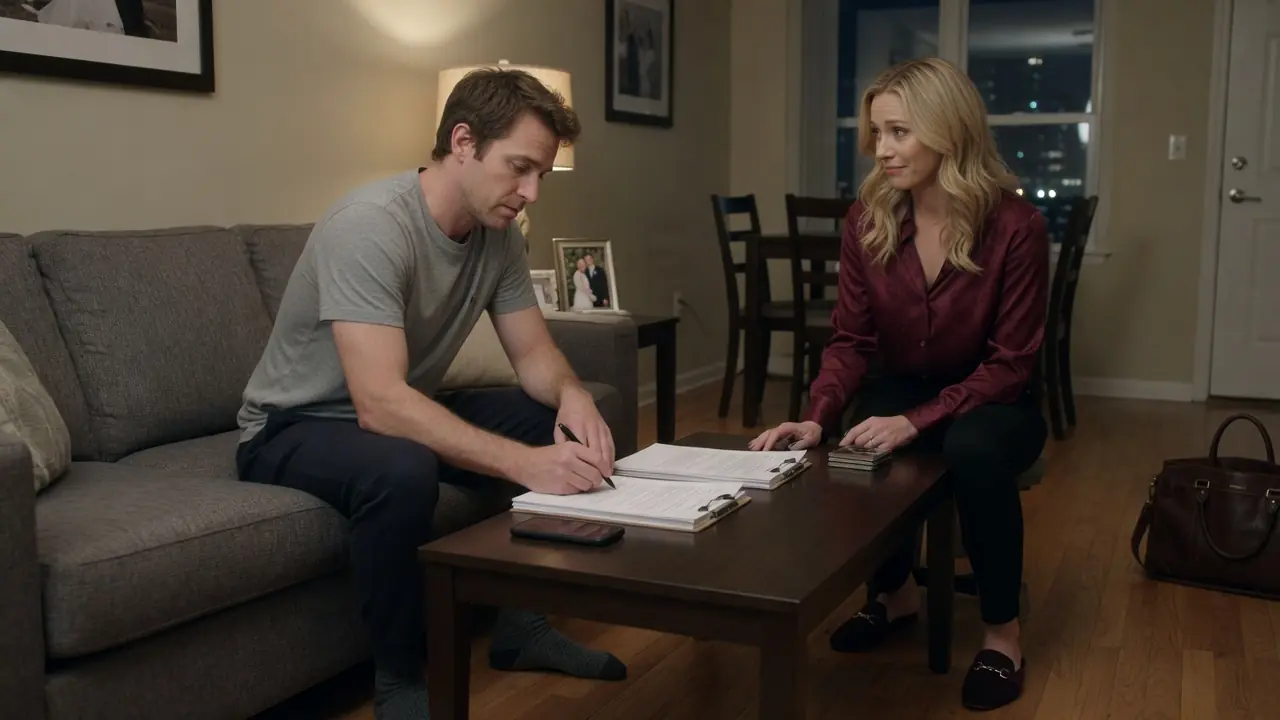
Molly’s expression hardened. She said she was tired of my insecurity and that she was not going to end friendships just because I could not handle her having male friends. I tried again to explain that the issue was not male friends in general. It was specific men with whom she was having emotionally intimate, flirtatious conversations.
Those relationships were threatening our marriage. She stood up abruptly, walked to her work bag near the door, pulled out a stack of papers, and placed them on the coffee table in front of me. Divorce papers. Already filled out with our names and information.
She looked at me with an expression that was part challenge, part smugness. She said that if I could not accept her friendships, then maybe we should not be married. She said she would not live under my control and jealousy. I stared at the papers and felt something wash over me that I still find hard to describe.
This was the moment of truth. Molly was using divorce as a threat, as leverage to get me to back down and accept behavior I knew was wrong. She was trying to force me to choose between my self-respect and my marriage. The choice was clearer than she expected.
I picked up the pen from the side table. I flipped through the papers to the signature lines. I signed each one carefully and deliberately. Then I slid the papers back across the table to her.
I told her simply that if our marriage had come to this, if she would threaten divorce rather than respect basic boundaries, then there was nothing left to fix. The smile drained from Molly’s face immediately. She started backpedaling. She said I had misunderstood, that she did not mean we were actually getting divorced, and that she only wanted me to understand how serious she was about not ending her friendships.
I cut her off gently. I told her she wanted me to surrender my self-respect. She wanted me to accept her inappropriate emotional relationships with other men because she valued those relationships more than she valued our marriage. I told her she had gotten her answer, and I was not going to live like that.
I stood up, took my car keys from the counter, and walked toward the door. Molly called after me, saying we needed to talk, that I was overreacting, and that the papers were not even real. I left anyway. I got in my car and drove.
I went to a coffee shop and sat there for hours, processing what had just happened. I understood that my marriage had effectively ended in that moment. When I finally returned to the apartment late that night, Molly was waiting up. She tried to explain that the divorce papers were not legitimate.
She had downloaded a template online and filled it out to make a point. She had not filed anything. She said she just wanted to shock me into seeing how unreasonable I was being. It was meant to be a wake-up call, not an actual threat of divorce.
I listened without responding. Then I realized it did not matter whether the papers were legally filed or just a printout from the internet. What mattered was that she thought threatening divorce was an acceptable way to manipulate me into accepting her emotional affairs. The papers being fake did not change what they revealed about how she saw me and our relationship.
I told her I needed space. I slept in the guest room that night. The next day, I took a personal day from work and made an appointment with a divorce attorney a colleague had recommended during his own divorce. I met with the attorney that afternoon and explained everything.
The attorney was direct. She asked if there were children or significant shared assets. I explained that we had no kids, a jointly leased apartment, separate vehicles, some shared savings, and retirement accounts, but nothing too complicated. She said we would file, serve Molly, go through the required process, divide assets, and probably finalize everything within a year if it went smoothly.
I authorized her to proceed. I wanted the marriage officially ended. Over the next few days, I started preparing to move out because I did not want to live in the apartment with Molly while the divorce proceedings happened. The environment was too toxic and too full of failed history.
I found a one-bedroom apartment available for immediate occupancy. It was smaller and more expensive than splitting rent on our current place, but I needed my own space. I signed the lease and started packing my belongings. Molly watched it happen, growing increasingly panicked.
She kept trying to start conversations about working things out. She said she would cut off contact with the other men if that was what I wanted. She said we could go to counseling, fix our communication, and save the marriage. I told her it was too late.
Threatening divorce had shown me she did not value our marriage the way I did. I could not trust someone who would use our relationship as a manipulation tactic. She cried and said she realized she had made a mistake. She said she had been stupid and scared and had not meant any of her threats.
I felt sympathy for her pain, but no urge to fix it. Whatever love I had felt had been buried under months of emotional distance, inappropriate relationships with other men, defensive anger when confronted, and finally the divorce threat. There was nothing left to salvage. Molly was served with actual divorce papers about two weeks after I signed her fake ones.
My attorney handled the service through a professional process server. After being served, Molly started calling constantly, texting, and leaving voicemails. She said we needed to talk, that the papers had just been a bluff, a stupid mistake, that she missed me, loved me, and wanted to fix everything. I did not respond except to tell her to send all communication through my attorney.
The divorce process took over a year to finalize. We had to go through the required steps and mediation to divide assets, even though we did not have complicated holdings. Molly tried several times to use the proceedings as opportunities to discuss reconciliation. She sent messages through her attorney about meeting in person and reconsidering the divorce.
I declined every attempt. I maintained firm boundaries through my attorney and focused on finalizing the legal dissolution as efficiently as possible. The asset division was relatively straightforward. We both worked and had similar incomes, so no spousal support was required or requested.
We split our joint savings 50/50 and divided retirement contributions made during the marriage. I took my car, she took hers, and we divided household items through negotiation without significant conflict. The divorce was finalized about 14 months after I first consulted the attorney. When I signed the final decree, what I felt most was relief.
The marriage that had started with genuine love and partnership had become unrecognizable. Ending it officially was closing a chapter that had functionally ended long before. During those 14 months of legal proceedings, I rebuilt my life. The apartment I moved into became home.
I started going to therapy to process everything, including the betrayal, the manipulation, and the loss of what I thought we had. My therapist helped me understand several things. Molly’s behavior suggested someone who had checked out emotionally long before, but did not want to be the one to end the marriage officially. By threatening divorce but expecting me to refuse, she had been trying to have it both ways.
She wanted the freedom to pursue other connections while keeping me as security. Therapy also helped me see my own patterns. I had ignored warning signs for months because I wanted to trust her. I had tried to fix things by being understanding instead of setting firm boundaries earlier.
I needed to develop better skills at recognizing manipulation and protecting myself. I also started focusing more intentionally on my career. I took a position at a different hospital with better hours and more stability. I advanced my nursing credentials through additional certifications, built stronger professional relationships, and found work satisfaction that had been overshadowed by marital stress.
Looking back now, more than two years after I signed those papers Molly handed me with a smile, I understand what happened much more clearly. I learned that threatening divorce is emotional manipulation. It uses the most destructive option as leverage to force compliance. Once someone does that, the relationship is fundamentally broken, regardless of whether they meant it or not.
I learned that emotional affairs are still betrayals. Giving emotional intimacy, attention, and romantic energy to people outside your marriage violates the relationship, even if it never becomes physical. I learned that defensive anger, when confronted with legitimate concerns, is a red flag. Molly’s immediate pivot to accusing me of being controlling was classic deflection from someone who knew she was wrong.
I learned that someone’s actions reveal their priorities more clearly than their words. Molly could say she loved me and valued our marriage all she wanted. Her actions told a different story. The emotional affairs, the phone obsession, the withdrawal, and the manipulation showed what she actually prioritized.
Most importantly, I learned that self-respect requires action. I could not preserve both my dignity and a marriage where I was being disrespected. Choosing myself over a broken relationship was not selfish. It was necessary.
If I had stayed, we would have fallen back into the same patterns. Molly would have become more careful about hiding her inappropriate friendships, and I would have become more anxious about monitoring her behavior. We would have lived in distrust and resentment disguised as reconciliation. The divorce was the right choice.
It was painful, yes, but it was necessary for both of us to move forward. Molly needed to face the consequences of her choices instead of having me absorb the impact while she remained unchanged. I needed to escape a situation where I was being manipulated and disrespected. I do not wish her harm, and I hope she eventually learned from everything and built healthier relationships.
But I am grateful every day that I am no longer in that marriage. I am no longer walking on eggshells around her phone use, wondering which male friend she is flirting with. I am no longer accepting being treated as disposable while still being expected to remain committed. I want to build a life that honors my worth.
I want a partner who respects boundaries and communicates honestly. I want friends who support healthy choices. I want work that is fulfilling and manageable. That is what I deserve, and it is what everyone deserves.
Molly handed me divorce papers with a smile, expecting me to beg and surrender my self-respect. Instead, I signed them and walked into a better life. That was not giving up. That was refusing to participate in my own diminishment.
I would make the same choice again without hesitation. The moment someone uses divorce as a weapon rather than a last resort, they have already ended the marriage. You are only deciding whether to acknowledge reality or live in denial. I chose reality, I chose myself, and I chose freedom from manipulation.
I have never regretted it, not for a single day.