In April of 1891, nobody in Cedar Hollow, Montana, would have described Clara Whitmore as fortunate.
She was twenty-seven years old, unmarried, and living alone on thirty-six rocky acres left to her by an uncle who had died the previous winter. The farm sat several miles outside town beneath low green mountains that remained capped with snow well into spring. It came with a weather-beaten house, a leaning barn, a shallow well, six hens, one stubborn milk cow, and debts large enough that most neighbors assumed Clara would sell before summer.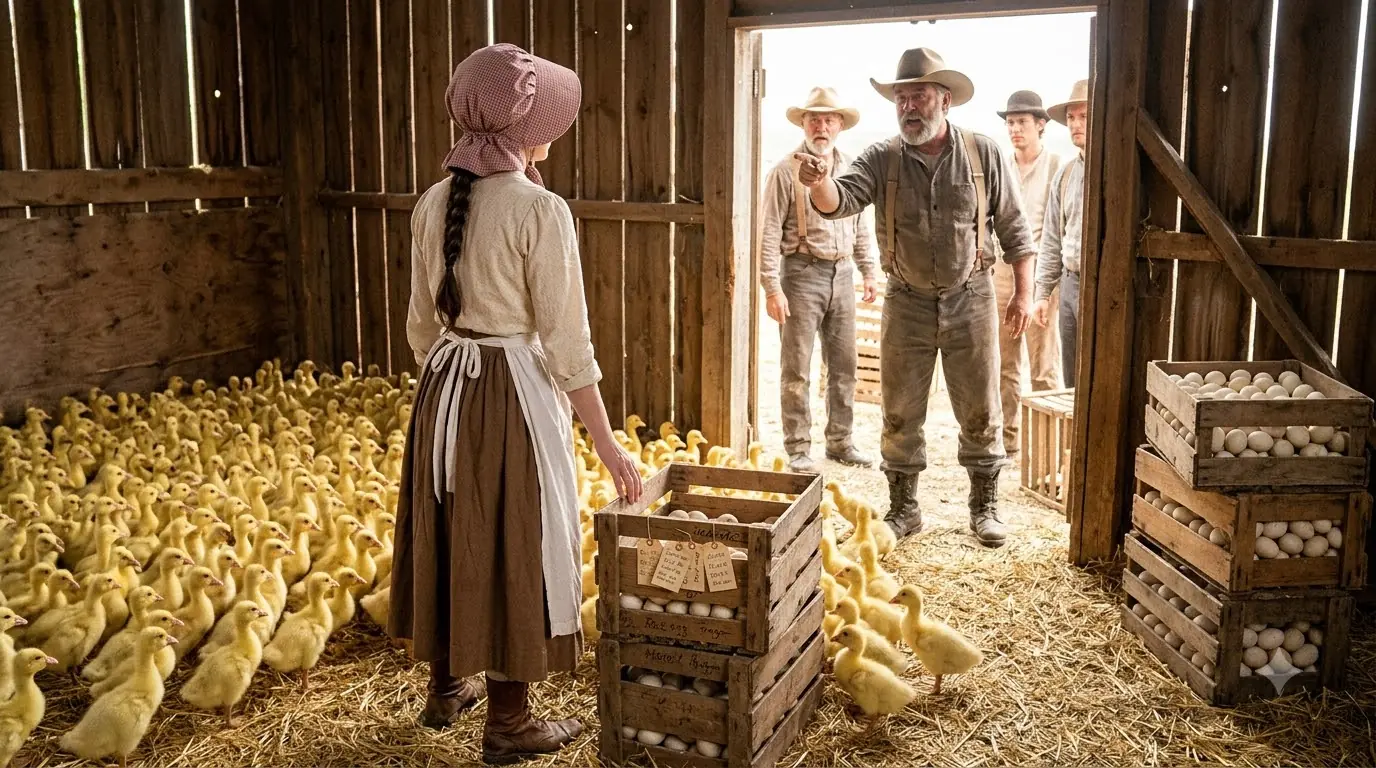
Clara had no intention of selling.
She had spent most of her life being told that practical people understood when to surrender. Her father had said it when the family farm in Nebraska failed. Her older brothers said it when Clara decided to remain in Montana after her uncle’s death. Even the lawyer handling the estate suggested she accept the first respectable offer and return east to relatives who could “look after her.”
Clara disliked being looked after.
She preferred work.
What she lacked was money.
Her uncle’s farm had once produced wheat, but several poor harvests had exhausted both the soil and his savings. Clara knew she could not compete with larger grain farms. She needed something smaller, something she could manage herself, and preferably something that did not require buying expensive machinery.
That was why she became interested in geese.
Cedar Hollow sat along a route used by freight companies, mining camps, ranches, and several growing hotels farther west. Eggs, feathers, and dressed poultry all brought steady money. Chickens were common, but good breeding geese were expensive enough that small farmers rarely kept more than a few.
Clara began making calculations.
One successful flock could provide eggs in spring, feathers after molting, breeding stock, and meat for winter markets. Geese could graze much of their food during warm months and were hardy enough for Montana if given shelter.
The arithmetic worked beautifully.
The problem was obtaining the first flock.
That problem led Clara to Briggs Western Hatchery.
Harold Briggs owned the largest poultry operation within sixty miles. His barns stood beside the rail spur east of Cedar Hollow, where thousands of chickens, ducks, and geese moved through fenced yards. Hotels, restaurants, ranches, and general stores ordered from him.
Harold understood exactly how important he had become.
At fifty-four, he was broad, gray-bearded, and louder than necessary. He wore a tan cowboy hat even inside his office and carried himself with the confidence of a man accustomed to having people wait while he decided whether their business mattered.
Clara visited him in early April.
“I need six breeding geese,” she said.
Harold leaned against his desk.
“Six?”
“Five females and a gander.”
He looked her over.
“You running a farm?”
“Yes.”
“Where?”
“Whitmore place north of Willow Creek.”
Recognition crossed his face.
“Elias Whitmore’s old property?”
“My uncle.”
Harold whistled.
“That land killed him before the fever did.”
Clara ignored the remark.
“What would six geese cost?”
Harold named the price.
Clara’s stomach dropped.
It was nearly three months of what she expected to earn from milk, eggs, and sewing combined.
“That much?”
“Good stock costs money.”
“I understand.”
Harold smiled.
“You can always buy chickens.”
“I have chickens.”
“Then you’re set.”
Clara left without arguing.
Two days later she returned for feed.
That was when she saw the wagon.
It had tipped beside one of the hatchery barns after a wheel broke. Several wooden egg crates lay smashed across the yard. Men were gathering intact eggs while sweeping cracked ones into buckets.
Clara stopped.
There were hundreds.
Some shells were crushed beyond recognition.
Others carried only narrow fractures.
One worker dumped a full bucket into a wagon filled with manure and rubbish.
“What happens to those?” Clara asked.
The worker shrugged.
“Trash.”
“All of them?”
“Boss says so.”
Clara crouched beside another broken crate.
She lifted one egg.
A hairline crack ran halfway across one side.
The inner membrane appeared intact.
“Were these set for hatching?”
The worker nodded.
“Breeding stock shipment. Came down from Helena yesterday.”
“How old?”
“Don’t know.”
Harold appeared around the barn.
He frowned when he saw Clara holding the egg.
“You planning to buy that too?”
“You’re throwing these away?”
“Obviously.”
“How many?”
Harold looked toward the broken crates.
“Three hundred, maybe four.”
Clara turned the egg carefully.
“May I have them?”
Harold stared.
“For what?”
“To hatch.”
The nearest workers began smiling.
Harold laughed.
“That shell’s cracked.”
“I can see that.”
“Then you know what happens.”
“Some won’t hatch.”
“Most won’t.”
“Maybe.”
Harold shook his head.
“You planning to raise geese from garbage?”
“If you don’t want them.”
“Lady, you’re welcome to every broken egg in that pile.”
Clara looked toward him.
“I want that in writing.”
That produced another laugh.
“You’re serious.”
“Yes.”
Harold wiped one hand against his vest.
“Fine.”
He walked into the office.
Several minutes later he returned carrying a small inventory tag.
He wrote:
350 CRACKED GOOSE EGGS - DISCARDED AS WASTE - NO VALUE
Below it he added:
Released to Clara Whitmore. No hatchery responsibility.
Harold signed his name.
Then he handed it to her.
“There. Now when they rot, don’t bring them back complaining.”
Clara folded the paper.
“I won’t.”
One worker called out.
“Mr. Briggs, maybe charge her a nickel for the wagon.”
The men laughed.
Clara spent the next hour sorting eggs.
She did not take every damaged shell.
If the membrane was torn, she left it.
If the shell had collapsed, she left it.
If liquid had leaked, she left it.
But she found hundreds with narrow fractures rather than catastrophic breaks.
By afternoon, she had exactly 350 eggs packed carefully in straw.
Harold watched her finish.
“You know what they’re worth?”
Clara looked up.
“You already wrote it down.”
Harold grinned.
“Nothing.”
Clara lifted the first crate.
“We’ll see.”
The trip home took nearly two hours.
Clara drove slowly enough that the old wagon seemed barely to move. Every rut in the road made her tense, and several times she climbed down to inspect the eggs.
When she finally reached the farm, daylight was fading.
She carried each crate into the barn.
Then she stared at 350 damaged eggs and understood the size of the foolishness she might have just committed.
She had never incubated goose eggs without a brooding bird.
She owned no commercial incubator.
She had no electricity.
She had no experienced employee to help.
What she possessed was an old barn, a cast-iron stove, several kerosene lamps, blankets, shallow wooden trays, and notebooks filled with observations from years of helping her mother raise poultry.
Clara began building.
She converted a small enclosed tack room into a warming chamber. She sealed drafts with old flour sacks, moved a small stove inside, hung two thermometers she borrowed from neighbors, and built wooden shelves large enough to hold the egg trays.
Water pans provided moisture.
Blankets helped stabilize temperature.
The arrangement looked ridiculous.
Clara did not care.
The more difficult problem was the cracks.
Her mother had once saved a cracked chicken egg intended for food by sealing the shell with melted beeswax, though nobody had attempted to hatch it. Clara wondered whether the same principle might prevent damaged goose eggs from losing too much moisture or becoming contaminated.
She melted clean beeswax.
Using a tiny brush, she sealed only the fracture lines.
Not the whole shell.
One egg at a time.
By midnight, she had repaired forty-three.
By dawn, seventy-eight.
She slept for two hours.
Then continued.
It took nearly three days.
Her fingers cramped.
Her back hurt.
More than once she looked at the rows of repaired eggs and wondered whether Harold Briggs was right.
Three hundred fifty pieces of garbage.
Three hundred fifty opportunities for failure.
Her neighbor Samuel Pike came to borrow a shovel and discovered the operation.
Samuel was sixty-two, quiet, and rarely shocked by anything.
He stood in the warming room for nearly a minute.
“Those all goose eggs?”
“Yes.”
“Where did you get them?”
“Briggs.”
“You bought them?”
“No.”
Samuel inspected one.
“Cracked.”
“Yes.”
“All of them?”
“Yes.”
He looked at Clara.
“You planning to hatch these?”
“Yes.”
Samuel slowly returned the egg.
“I’ll bring that shovel back tomorrow.”
Clara smiled.
“You think I’m crazy.”
“I think you should keep the stove low.”
That was as much encouragement as Samuel ever gave anyone.
Clara turned every egg by hand.
Morning.
Midday.
Evening.
She kept notes on temperature, shell condition, odor, and changes in weight.
Several eggs failed immediately.
A sour smell appeared.
Clara removed them.
Others developed dark spots that worried her.
She built a simple candling box around a lamp and began checking the eggs in darkness.
The first time she saw branching blood vessels inside one, she nearly cried.
Life.
Inside a cracked shell Harold Briggs had labeled worthless.
She marked it with a pencil.
Then another.
And another.
Not every egg showed development.
Many did not.
But enough did that Clara began allowing herself to hope.
The work became relentless.
The stove needed tending through cold nights.
Montana temperatures dropped sharply after sunset, and a single careless hour could ruin weeks of effort. Clara began sleeping on a cot in the barn.
Her cow bellowed for attention.
The hens escaped twice.
Her laundry remained unfolded.
She forgot meals.
But the eggs continued developing.
Word spread.
Cedar Hollow enjoyed unusual projects, especially when failure seemed likely.
Farmers stopped by under the excuse of checking on Clara.
Women brought baked goods and asked innocent questions about the “little experiment.”
Children tried looking through the barn windows.
Someone told Harold.
He laughed.
At the general store, he announced that Clara Whitmore was attempting to hatch cracked eggs with candle wax.
“That woman is going to perfume half the county when those things spoil.”
The store erupted in laughter.
Samuel Pike happened to be purchasing nails.
He looked at Harold.
“You seen them?”
“No.”