Della Voss counted the goats twice before she handed over the money. The second count took longer because a small brown one had lain down behind a broken feed trough, and for a moment she thought it was dead.
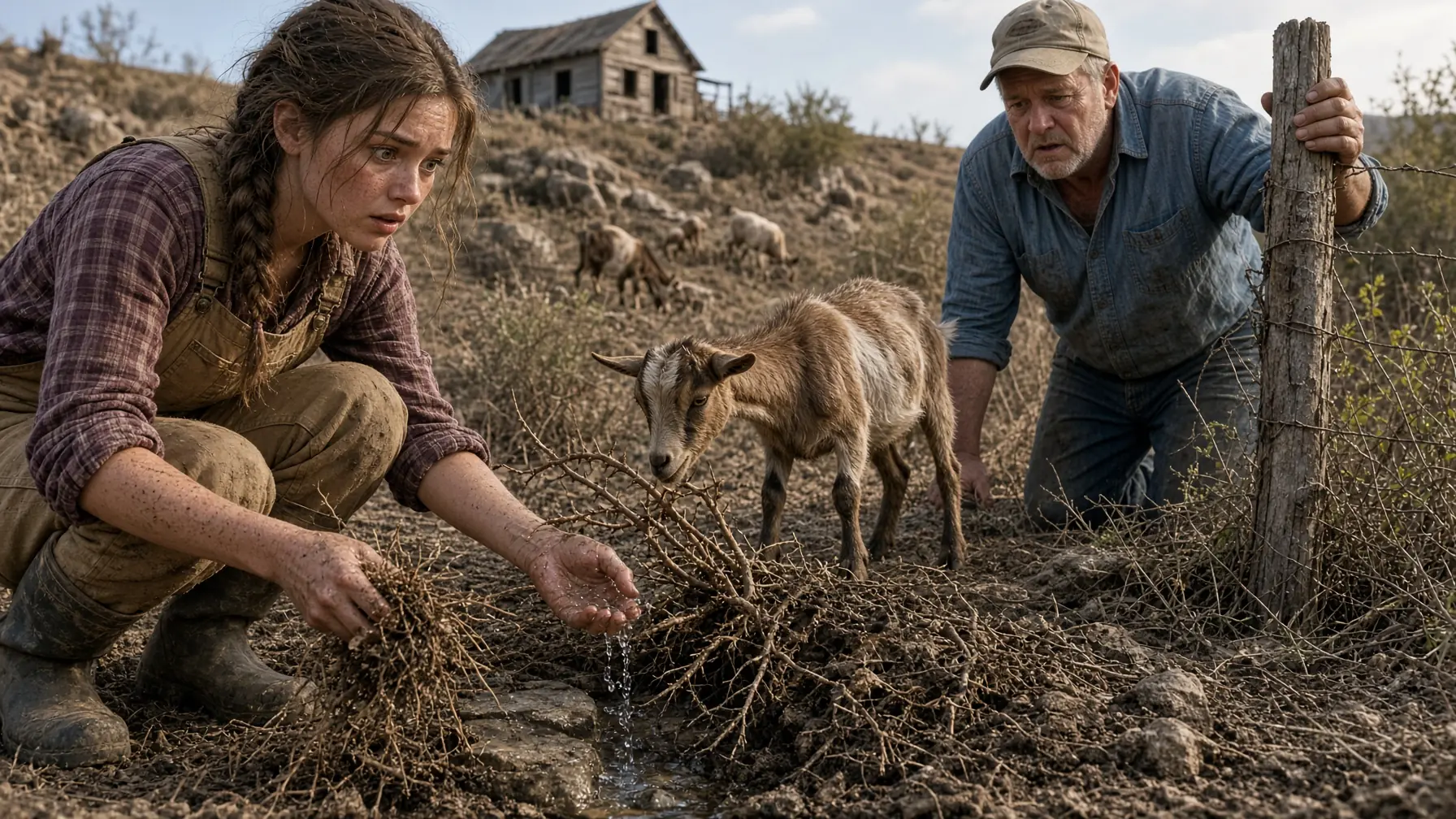
Then its ear moved.
“Forty for the lot,” the man beside the pen said. “You take them as they stand.”
Della looked at the folded bills in her hand. She had already separated that money from everything she owed, though separating it on the kitchen table had not made it any less necessary.
Forty dollars could keep fuel in the old truck a little longer. It could buy groceries she would not have to stretch, or replace the split hose she had wrapped so many times that more tape showed than rubber.
It could not make the overdue payment waiting beneath a magnet on her refrigerator.
Inside the pen, a gray doe pushed her nose between two boards. Her hips stood out beneath a rough coat, but her eyes followed Della’s hand with an alertness the others seemed too tired to manage.
Della held the bills out.
The man took them before she could change her mind.
By the time the borrowed livestock trailer reached her farm outside Arrow Bend, the sun had dropped low enough to lay the crooked farmhouse’s shadow across the yard. Della stood at the open trailer gate in her faded plum checked shirt and worn tan canvas overalls, trying to decide whether she had made the first useful decision in weeks or the worst one of her life.
The goats hesitated at the ramp. Behind her, the pasture waited under weeds, thorn bushes, and vines so tangled that the fence disappeared into them in places.
“Come on,” she said softly.
The gray doe stepped down first.
There was nothing graceful about the unloading. A little black goat jumped off the side of the ramp, another refused to move until Della shifted out of its way, and the brown one from behind the trough came down carefully, placing each hoof as though the ground might object.
Della counted them through the gate. When the last animal passed her, she closed the latch and held it a moment longer than necessary.
Fifty-five.
She had bought fifty-five mouths with the last money she could freely spend.
Beyond the fence, the hillside rose in a scrub-covered slope toward a stand of weather-beaten trees. Cattle had grazed what they could reach and left the rest, and the rest had kept growing through every season in which Della and her husband had planned to get ahead of it.
There had always been a more urgent job. A roof leak, a sick animal, a repair that could not wait until morning.
Now the jobs remained, but her husband did not.
Della stood with her fingers around the gate latch while the goats spread uncertainly into their new enclosure. She was twenty-four years old, and people had begun speaking to her in the careful voices they used with children who had wandered too near a road.