Nobody at the Platt County Consignment Auction expected the faded green tractor in the back row to sell.
It had sat in the same place through two previous sales, a 1979 John Deere 4440 bleached by sun until the green had gone dull and mossy. The rear tires were dry-rotted. The seat was split. Dust sat in the seams of the hood and dash. A hand-lettered sign wired to the grille read: NEEDS ENGINE — SOLD AS IS. Most buyers slowed long enough to read the warning, shake their heads, and move toward equipment that still had a pulse.
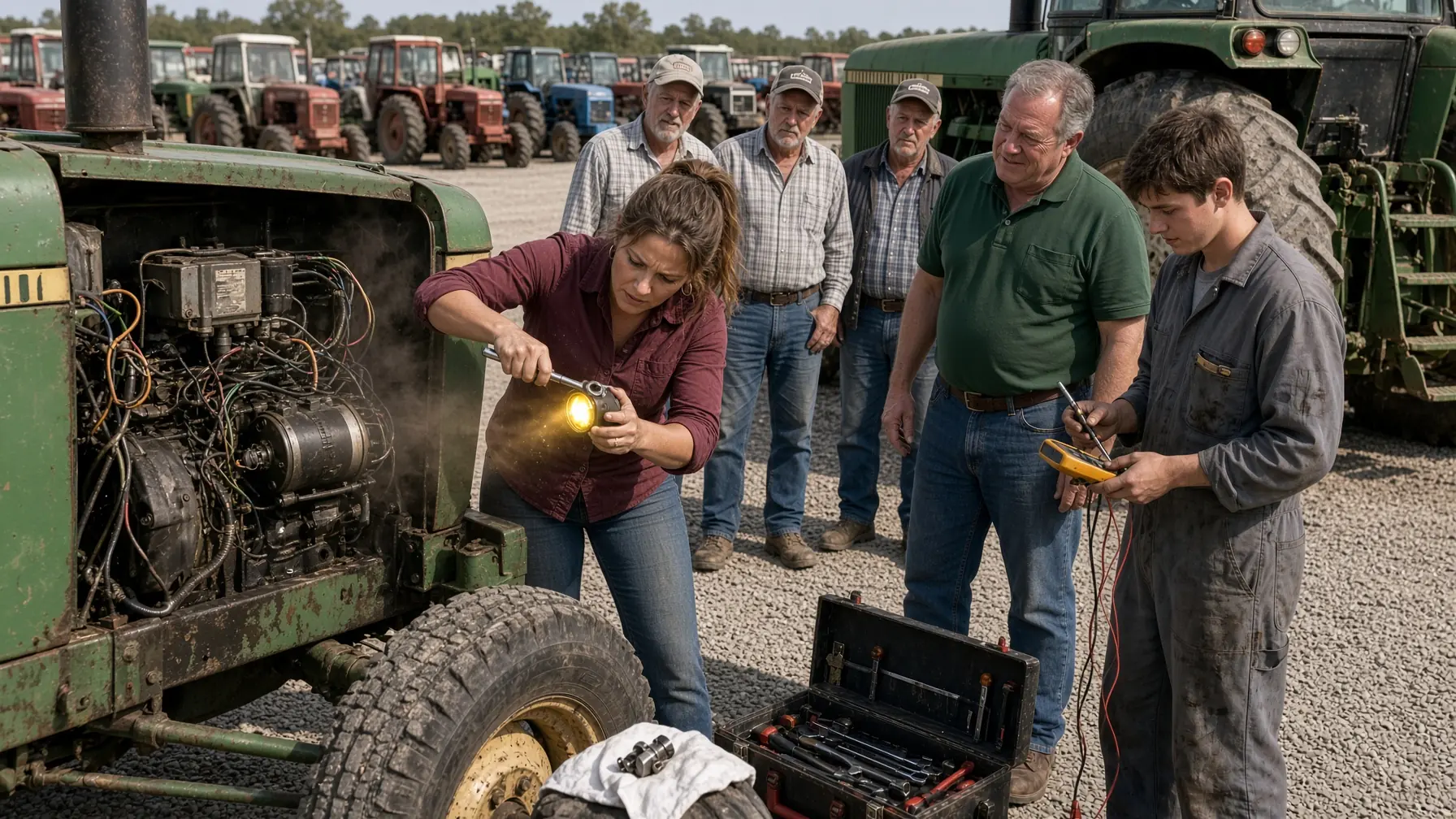
Royce Hammond had written the sign himself.
He ran the largest equipment lot in three counties and carried himself like a man who believed volume and certainty were the same thing. He was broad through the shoulders, silver beginning to show at the sides of his hair, and loud without needing to shout. When he told a story, people around him tended to accept the ending before he reached it.
That morning, just after eight, he stood beside the 4440 with a paper coffee cup balanced on the drawbar and a loose half-circle of men around him. He was telling a buyer from Schuyler that the old tractor had been through three shops and all three had reached the same conclusion.
“Engine’s done,” Royce said. “Only thing holding it together now is paint and optimism.”
A few men laughed.
Norah Vance heard the laugh as she walked down the row.
She was thirty-four, ten years out of a dealership service bay in Columbus and eighteen months into working for herself. The transition had cost more than she admitted publicly. A steady paycheck had become variable repair work. Benefits had become invoices. A climate-controlled break room had become a folding chair in her own shop and whatever she remembered to eat between jobs. But eighteen months on her own had also built something she had wanted badly enough to risk security for: a reputation that belonged to her name instead of someone else’s logo.
In the service truck parked near the auction office sat a folder full of work she had turned away all summer. Small farms. Forty acres. Sixty. Seventy. Hay jobs too small for custom operators with wider schedules and bigger machinery. Men who owned ground but not enough acres to justify the equipment they needed on the exact days weather demanded it.
Norah could rebuild a baler in an afternoon. She could diagnose a hydraulic leak by smell before the oil hit the floor. She could tell a bad bearing from a loose shield by the rhythm of a rattle. What she could not do was pull the baler once she fixed it. Her own tractor was too small for several of the jobs sitting in that folder.
That was why she stopped in front of the 4440.
Dell Pike stopped behind her with her meter bag over one shoulder. He was nineteen, thin, careful, and still young enough to believe every tool deserved to be cleaned before being put away. He swept Norah’s shop on Saturdays in exchange for the chance to hand her tools, watch repairs, and ask questions. For the first half of the summer he had apologized before every question. Norah had spent the second half trying to cure him of that.