The October wind did not just blow through the streets of Riverside.
It cut through them like a knife made of ice and malice.
It was the kind of cold that found every gap in your clothing, every weakness in your resolve, the kind that made you question why you had left the house at all.
Daniel Reeves pulled his jacket tighter as he hurried down Maple Avenue, a crumpled pharmacy bag clutched in his fist like it contained liquid gold.
In a way, it did.
Inside was the antibiotic that would break his daughter’s fever, the medicine that would let him sleep tonight without checking her breathing every 20 minutes.
Mia had been sick for three days.
Three days of a temperature that climbed and climbed, of her small body shaking with chills one moment and burning up the next.
Three days of Daniel calling in sick to the auto shop where he worked.
Three days of surviving on coffee and anxiety.
Three days of being both mother and father to a seven-year-old who kept asking when Mommy was coming back.
Even though Mommy had been gone for two years now, taken by cancer that moved faster than any of them could process.
“Just hold on, sweetheart,” Daniel had whispered before leaving, brushing Mia’s damp hair back from her forehead. “Daddy will be right back. Mrs. Chen is right next door if you need anything.”
The elderly neighbor had agreed to listen for Mia through the thin apartment walls, and Daniel had run, actually run, the six blocks to the 24-hour pharmacy on the edge of town.
The prescription had taken forever to fill.
The pharmacist moved with the kind of deliberate slowness that suggested he had nowhere better to be.
No feverish child waiting.
No clock ticking down in his head.
Now, at nearly midnight, Daniel just wanted to get home.
The street was empty.
The businesses were shuttered.
The world was reduced to pools of sickly yellow streetlight punctuating vast stretches of darkness.
His breath came out in visible clouds.
Somewhere in the distance, a dog barked.
Lonely, repetitive, hopeless.
That was when he saw her.
At first, Daniel thought it was a pile of clothes or garbage bags slumped against the bus stop shelter.
The wheelchair did not register immediately.
His brain was too focused on forward motion, on getting home, on the antibiotics in his hand and the daughter in his apartment.
But something made him slow down.
Some instinct, some whisper of his wife’s voice in his head.
Daniel, look.
The way she used to say it when he was too absorbed in his own thoughts to notice the world around him.
He stopped walking and turned fully toward the bus stop.
It was not garbage.
It was a person.
A young woman sat in a wheelchair, her body tilted at an awkward angle against the shelter’s plexiglass wall, as if she had simply run out of energy to sit upright.
Her head was bowed, chin nearly touching her chest, dark hair hanging in tangles that obscured her face.
She wore a thin jacket, too thin for October, way too thin for this particular October night, and jeans that looked like they had seen better days.
No gloves.
No scarf.
No blanket.
Daniel glanced up and down the street.
Empty.
The last bus had stopped running hours ago.
He knew because he had missed it himself once, had to walk home at 11:00 p.m. on a Tuesday, and arrived to find Mia crying because she had had a nightmare and he was not there.
The pharmacy bag crinkled in his grip.
Mia was waiting.
Mia needed him.
But this woman was not moving.
“Hey,” Daniel called out, his voice sounding too loud in the quiet street. “Hey, are you okay?”
No response.
His heart kicked into a different gear.
The gear that activated when Mia fell off her bike, or when the smoke detector went off, or when any of the thousand small disasters of single parenthood struck without warning.
He crossed the distance to the bus stop quickly, his shoes scuffing against the cracked sidewalk.
Up close, he could see she was younger than he had first thought, maybe late 20s or early 30s.
Her face, what he could see of it through the curtain of hair, was pale in the streetlight, her lips tinged with an alarming shade of blue.
“Miss, can you hear me?”
Daniel reached out, hesitated, then touched her shoulder gently.
She jerked at the contact, her head snapping up so fast that Daniel stepped back instinctively.
Her eyes were wide, startled, the pupils dilated with what looked like fear or exhaustion, or both.
For a moment, they just stared at each other.
A man with a pharmacy bag and a woman in a wheelchair at midnight on an empty street.
“I’m sorry,” Daniel said quickly, holding up his free hand in a gesture of peace. “I didn’t mean to scare you. I just... you looked like you might need help.”
The woman blinked slowly, as if processing his words through layers of fog.
When she spoke, her voice was barely above a whisper.
“I’m fine.”
“You don’t look fine.”
The words came out before Daniel could stop them, and he immediately regretted their bluntness.
But it was true.
She looked half frozen, and he could see now that she was shivering.
Continuous, violent tremors shook her entire frame.
“I’m waiting for the bus,” she said.
But even as she spoke, her eyes slid away from his, unable to maintain the lie.
“There are no more buses tonight. Last one left at 11:00.”
“Then I’ll wait for the morning bus.”
Daniel crouched down to be at eye level with her, his knees protesting the cold concrete.
“It’s 28 degrees out here. You can’t stay here all night.”
“I don’t have much choice.”
There was something sharp in her voice now, an edge of defiance that sounded like it was trying to cover up something softer, more vulnerable.
Pride.
Daniel recognized the kind of pride that came from having nothing else left to hold on to.
“There are shelters.”
“Not for me, there aren’t.”
She pulled the thin jacket tighter around herself, a gesture that would have been more effective if the jacket had been made of something heavier than what looked like windbreaker material.
“Most of them aren’t wheelchair accessible. The ones that are don’t have space, or they don’t take women after 7:00 p.m., or they have a wait list, or a hundred other reasons why I don’t qualify.”
Daniel felt something twist in his chest.
He thought of Mia safe in her bed, sick, yes, but warm, sheltered, loved.
He thought of his own exhaustion, the way it pulled at him like gravity, making every movement feel like wading through deep water.
He thought of the antibiotics in his hand and how he had promised his daughter he would be right back.
“How long have you been here?” he asked, instead of standing up and walking away like logic told him to do.
The woman’s shiver intensified, and for a moment, Daniel did not think she would answer.
Then, so quietly he almost did not hear it, she said, “Since yesterday.”
Yesterday.
That meant she had been out here through the whole previous night, through the entire day, and now into this night.
Over 24 hours exposed to temperatures that had barely climbed above 40 degrees during daylight and were now below freezing.
“Jesus,” Daniel breathed.
“He hasn’t shown up yet either,” the woman said, and there was a ghost of humor in her voice, dark and bitter.
Daniel made a decision then.
Not a logical one, not a smart one by most measures, but the kind of decision that comes from somewhere deeper than logic.
From the place where his wife’s voice still lived.
Where his own childhood memories of being hungry and scared still echoed.
Where the sheer randomness of suffering met the equally random possibility of kindness.
“Come with me,” he said.
The woman’s head snapped up again, her eyes searching his face with sudden intensity.
“What?”
“Come with me,” Daniel repeated. “You can’t stay here. I live about four blocks from here. You can warm up, get something hot to drink, figure out your next move when you’re not hypothermic.”
“I don’t know you.”
“No, you don’t. And I don’t know you. But I know you’re going to die if you stay out here much longer, and I can’t...”
His voice cracked slightly, and he cleared his throat.
“I can’t just walk away from that.”
She studied him for a long moment, and Daniel could see the calculation happening behind her eyes.
Danger versus cold.
Risk versus certainty.
The possible threat of a stranger versus the definite threat of freezing to death alone at a bus stop.
“Why would you help me?”
The question came out flat, suspicious.
Daniel thought about that.
Why was he helping her?
He had his own crisis at home, his own responsibilities, his own barely held together life that did not have room for complications.
But then he thought about the night Sarah died.
How the hospital room had been full of machines and monitors and busy nurses, but he had never felt more alone in his life.
How the grief had been compounded by the sheer isolation of it.
The way the world had just kept turning while his had ended.
“Because someone should,” he said simply. “Because it’s cold and you’re alone, and I can’t fix much in this world, but I can fix that at least for tonight.”
The woman’s expression did something complicated.
Collapsed and rebuilt itself in the span of a heartbeat.
For just a second, the defensive walls came down, and Daniel saw the raw terror underneath.
The exhaustion that went beyond physical tiredness into something existential.
“I can’t walk,” she said.
And there was shame in her voice that made Daniel’s heart ache.
“The chair, it’s not electric. Someone has to push it.”
“I figured,” Daniel said, standing up and moving behind the wheelchair.
His hands gripped the handles, which were cold enough to burn even through his thin gloves.
“I’ve got you.”
“You don’t understand. I’m heavy. Dead weight. My legs don’t work. They just...”
“I work at an auto shop,” Daniel interrupted gently. “I’ve pushed cars heavier than you. Trust me, we’re good.”
For a moment, nothing happened.
The woman sat frozen, literally and figuratively, in the wheelchair, her hands gripping the armrests so tightly her knuckles had gone white.
Daniel waited.
Not pushing.
Not forcing.
Just standing behind the chair with his hands on the handles and his daughter’s medicine in his jacket pocket and his heart beating too fast.
Then slowly, the woman’s grip on the armrests loosened.
She took a shaky breath that Daniel could see even from behind her, a cloud of white in the frigid air.
“Okay,” she whispered. “Okay.”
Daniel began to push.
The wheelchair’s tires were underinflated, and the bearings needed oil, creating a rhythmic squeak, squeak, squeak that accompanied their progress down Maple Avenue.
The woman sat rigid in the chair, her shoulders tensed as if expecting some kind of trick, some cruel punchline to this late-night rescue.
“I’m Daniel, by the way,” he said after they had gone half a block. “Daniel Reeves.”
Silence.
Then, “Hannah. Hannah Blake.”
“Nice to meet you, Hannah.”
Another silence, longer this time.
Then so quietly he almost missed it.
“Is it?”
Daniel thought about that question as he pushed the squeaking wheelchair through the cold October night.
Was it nice to meet someone in the worst moment of their life?
Was it nice to intersect with someone else’s disaster when you were barely managing your own?
“Yeah,” he said finally, and meant it. “Yeah, it is.”
They passed a closed bodega, a darkened laundromat, a check cashing place with bars on the windows.
Riverside was not a bad neighborhood exactly, but it was not a good one either.
It was the kind of place where people worked hard and still fell behind, where dreams went to downsize, where resilience was measured in getting up one more time than you got knocked down.
Daniel had grown up three neighborhoods over.
Not much different from this one.
He had met Sarah at the community college they had both attended part-time while working full-time jobs.
He had thought they were on their way up when Mia was born.
When they had managed to scrape together enough for a two-bedroom apartment instead of a one-bedroom.
Then Sarah got sick, and up became down so fast Daniel still sometimes felt like he was falling.
“You said you live around here?” Hannah asked, breaking into his thoughts.
“Four blocks. Well, three now. The Riverside Arms.”
He felt Hannah’s shoulders tense even more, if that was possible.
“The apartment building with the broken elevator.”
“That would be the one.”
“I can’t.”
Her voice went tight.
“I can’t do stairs.”
“Damn.”
Or rather, he had been so focused on getting Hannah out of the cold that he had not thought past the immediate crisis to the logistical problems.
He lived on the third floor.
There was an elevator, but it had been broken for six months with a handwritten out-of-order sign that had become a permanent fixture.
His mind raced.
He could take her to the emergency room.
But no.
They would just stabilize her, and then what?
Release her back onto the street?
He could call who?
He did not know any organizations, any services.
And it was midnight, and Mia was waiting.
“There’s a first-floor unit,” Daniel said suddenly, remembering. “Old Mrs. Patterson’s place. She died three months ago, and they haven’t rented it out yet. The landlord is lazy as hell. He might not have even changed the locks.”
“You’re suggesting breaking and entering?”
There was a note of something in Hannah’s voice that might have been amusement or might have been hysteria.
“I’m suggesting borrowing an empty apartment for a few hours until we figure something else out.”
Daniel turned the corner onto Oak Street, where the Riverside Arms loomed ahead.
Six stories of faded brick and flickering exterior lights.
“Unless you have a better idea.”
Hannah was quiet for a moment.
Then, “I used to. I used to have lots of better ideas. Now I just have this.”
The weight of defeat in her voice was so heavy that Daniel felt it settle on his own shoulders.
He wanted to say something comforting, something hopeful.
But he was too tired and too worried about Mia and too aware that comforting words from a stranger probably meant less than nothing.
So instead, he just kept pushing, the wheelchair squeaking its way up the cracked sidewalk path to the Riverside Arms front entrance.
The main door was locked, but Daniel had his key.
He maneuvered the wheelchair through the doorway, more difficult than he had anticipated, requiring him to pull the chair backward while holding the heavy door open with his foot.
Hannah did not say anything, but he could feel her humiliation in the rigid way she held herself, in the careful way she kept her eyes forward.
The lobby was overheated and smelled like industrial cleaner and something else.
Cooking cabbage, maybe, or just the accumulated scent of too many lives pressed too close together.
The fluorescent lights buzzed overhead, and somewhere above them, someone’s television blared loudly enough that Daniel could hear the canned laughter of a sitcom.
Mrs. Patterson’s apartment, number 104, was at the end of the first-floor hallway.
Daniel wheeled Hannah to the door and then, feeling somewhat ridiculous, tried the handle.
It was locked.
“Of course,” he muttered.
“It’s okay,” Hannah said, and her voice had gone flat again, resigned. “This was stupid anyway. You should go take care of your daughter. I’ll figure something out.”
But Daniel was already checking the door frame, running his fingers along the top.
Mrs. Patterson had been 93 when she died, prone to locking herself out.
She had mentioned once, complaining to Daniel in the mail room, that she kept a spare key hidden.
But where?
His fingers found it.
A small magnetic key holder stuck to the back of the decorative molding that ran along the top of the door frame.
He pulled it down, opened it, and extracted a slightly rusty key.
“Huh,” Hannah said. “You’re either really resourceful or you’ve done this before.”
“Little bit of both,” Daniel admitted, fitting the key into the lock.
It turned with a click that sounded too loud in the quiet hallway.
The door swung open, and stale air rushed out to meet them.
Daniel fumbled for the light switch, found it, and illuminated Mrs. Patterson’s former domain.
The apartment was small, a studio really, with a kitchenette in one corner and a bathroom visible through an open door.
But it was empty of furniture, the carpet showing dark squares where pieces had sat for decades.
The landlord had cleared out everything after Mrs. Patterson’s nephew had come to collect her few valuables.
What remained was just space.
Neutral.
Impersonal.
But warm.
Blessedly, impossibly warm after the October cold.
Daniel pushed Hannah inside and closed the door behind them.
In the sudden silence, he could hear both of their breathing.
Hannah’s was shallow and rapid, his own deeper and starting to show the strain of pushing a wheelchair four blocks.
“Okay,” he said, unsure what came next. “Okay, let me just... I need to run upstairs and check on my daughter. She’s sick. That’s why I was out getting medicine, but I’ll be right back. I promise.”
Hannah’s head turned to look at him, and in the harsh overhead light, he could really see her for the first time.
She was younger than he had thought, probably not even 30.
Her face was angular with high cheekbones and a pointed chin, but it was the pallor and the blue-tinged lips that caught his attention.
Her eyes, though, her eyes were old.
They held the kind of weariness that came from fighting too long against impossible odds.
“You don’t have to come back,” she said.
“I know. But I will.”
“Why?”
The question was almost aggressive in its confusion.
“You don’t owe me anything. You’ve already done more than anyone.”
Her voice caught, and she looked away sharply, blinking hard.
Daniel thought about Mia upstairs, sick and waiting.
He thought about his shift at the auto shop tomorrow that he would probably miss, which meant losing a day’s pay they could not afford to lose.
He thought about all the sensible reasons to walk out that door and never look back.
“Because I said I would,” he answered finally. “And I try to be the kind of person who means what they say. Just stay here, okay? Stay warm. There’s no food or anything, but at least it’s not freezing. I’ll be back in 15 minutes. Twenty tops.”
Hannah nodded slowly, and Daniel saw that she was still shivering despite the relative warmth of the apartment.
Shock maybe, or just the toll of too many hours in the cold working through her system.
He shrugged out of his jacket, just a lined denim thing, not fancy, but warmer than the windbreaker Hannah wore, and draped it over her shoulders before she could protest.
“Daniel,” she started.
“Fifteen minutes,” he repeated.
Then he was out the door, locking it behind him to give her at least the illusion of security and taking the stairs two at a time up to the third floor.
His apartment was exactly as he had left it.
Small, cluttered with the detritus of single parenthood, but home.
He moved quietly through the living room to Mia’s bedroom, easing the door open.
She was asleep, her breathing slightly raspy, but even.
Her forehead was still too warm when he touched it gently, but not as blazing as before.
He coaxed her awake just enough to take the antibiotic, watched her swallow it with water from the glass on her nightstand, then tucked her back in.
“Daddy’s here, sweetheart,” he whispered, kissing her forehead. “Daddy’s got you.”
Mia mumbled something incomprehensible and burrowed deeper into her pillow, clutching her stuffed bunny, a threadbare thing that had been Sarah’s when she was a child, passed down with love and now serving as Mia’s primary comfort object.
Daniel watched her for a moment, making sure she settled back into sleep, then moved quickly.
He grabbed a spare blanket from the linen closet, filled a thermos with hot water from the tap, and raided the kitchen for anything portable.
Crackers.
A slightly bruised apple.
A packet of instant soup.
Mrs. Chen’s apartment door opened as he passed it, and the elderly woman peered out, her face creased with concern.
“She okay?” Mrs. Chen asked in her accented English, jerking her chin toward Daniel’s apartment.
“Yeah, fever’s breaking. Gave her the antibiotic.”
Daniel shifted the bundle of supplies in his arms.
“Listen, Mrs. Chen, could you...”
“I listen,” she interrupted, understanding without explanation. “You need to go out. I listen for her. She cries, I go to her. You have key under mat, yes?”
“Yes. Thank you. I won’t be long.”
Mrs. Chen’s sharp eyes took in the blanket, the thermos, the food.
She raised one skeptical eyebrow, but said nothing.
Just nodded and closed her door.
Daniel returned to the first floor, to apartment 104, to Hannah.
He unlocked the door and found her exactly where he had left her, still sitting in the wheelchair, his jacket pulled tight around her shoulders.
But she had stopped shivering quite so violently, and some of the blue had faded from her lips.
She looked up when he entered, and the relief that flashed across her face was so naked, so raw, that Daniel had to look away.
“Told you I’d come back,” he said, trying for lightness as he closed the door and set down his bundle of supplies.
“I know,” Hannah said quietly. “I just didn’t believe you.”
And there it was, the real story in four words.
How many people had made promises to Hannah Blake and then broken them?
How many times had she been left waiting, left behind, left to fend for herself until fending became impossible?
Daniel spread the blanket over her lap and legs, tucking it around her carefully.
Hannah sat very still during this process, as if afraid that moving might make him disappear.
He opened the thermos and poured hot water into the cap, which doubled as a cup, then tore open the instant soup packet and mixed it in.
“It’s not much,” he said, handing her the cup. “Just chicken noodle from a packet, but it’s hot.”
Hannah took the cup with both hands, holding it close to her face and breathing in the steam before taking a tentative sip.
Daniel watched her throat work as she swallowed, saw the way her eyes closed briefly, as if the warmth was almost painful.
“When did you last eat?” he asked.
“I don’t remember. Wednesday, maybe. Someone gave me a sandwich.”
She took another sip, and Daniel could see her hands were steadier now, the warmth beginning to penetrate.
“I should probably tell you my story. Why I was at that bus stop. Why I’m...”
She gestured vaguely at the wheelchair, at herself, at the entirety of her circumstances.
“You don’t have to,” Daniel said, settling himself on the floor with his back against the wall.
Every muscle in his body was screaming for rest, but he was not going to sit in Mrs. Patterson’s empty apartment while making a woman in a wheelchair strain her neck looking up at him.
“Not unless you want to.”
Hannah was quiet for a long moment, drinking the soup in small sips, and Daniel thought she was not going to say anything.
He was fine with that.
Sometimes the weight of explaining your own disaster was heavier than the disaster itself.
But then she started talking.
“I was a construction site manager,” she said, her voice taking on a distant quality as if she was narrating someone else’s life. “Commercial builds mostly. Made decent money. Had my own apartment. Was saving for a house. Had a boyfriend I thought I was going to marry. Life was... it was good. Really good.”
She paused to take another sip of soup, and Daniel waited.
“Fourteen months ago, there was an accident. A crane operator, new guy, not properly trained, lost control of a load. Steel beams, two tons of them, right where my crew was working. I saw it happening. Saw it swinging toward us. Pushed two of my guys out of the way.”
Her voice went very flat.
“Didn’t have time to get myself clear.”
Daniel felt his breath catch.
“Hannah.”
“Crushed my spine,” she continued.
Almost clinical now.
“T10 complete. That means I have no sensation or voluntary movement from about mid-torso down. Paralyzed from the waist down, permanent. No chance of recovery. They were very clear about that in the hospital. No chance of recovery.”
The cup trembled slightly in her hands, and she gripped it tighter.
“The company I worked for, they blamed me. Said I was negligent. That I’d approved the crane operator when I hadn’t. That I’d been responsible for site safety, which was technically true, but...”
Her voice cracked slightly.
“The insurance investigation took months. During those months, I was in the hospital, then a rehab facility. My boyfriend visited twice, then sent me a text saying he couldn’t handle this. The apartment I’d been renting, I couldn’t go back to it, even if I’d had money for rent. Third-floor walk-up.”
She laughed, a sound with absolutely no humor in it.
“My parents died in a car crash when I was 19. No siblings. A few friends, but once I couldn’t work anymore, couldn’t go out, couldn’t be the person they remembered...”
She shrugged.
“People disappear. It’s not always malicious. Sometimes they just don’t know what to say, and eventually not saying anything becomes the same as not being there.”
Daniel thought about the two years since Sarah died.
About how some people had rallied around him and how others had faded away, unable to handle his grief or their own discomfort with it.
He understood what Hannah meant about people disappearing.
“The insurance company finally ruled in the corporation’s favor,” Hannah continued. “No fault found with them, which meant no compensation for me. I had some disability payments, but not nearly enough. Ended up in a group home for a while, but they lost their funding. Then a shelter, but like I said, accessibility issues. I’ve been floating, I guess, staying places until I can’t anymore. Sleeping in my chair when there’s nowhere else.”
She finished the soup and lowered the empty cup to her lap, staring down at it.
“Yesterday, I was at a different shelter, one that sometimes has space, but they had an inspection or something. Needed to clear people out. I went to the bus stop thinking I’d ride somewhere, anywhere, but I didn’t have money for fare. The driver told me there’s a church on the other side of town that might help. Gave me directions. I was going to wheel there, but it’s 10 miles, and my arms gave out after three. So, I went back to the bus stop to rest. Just to rest. And then it got dark and cold, and I thought...”
Her voice finally broke completely.
“I thought maybe I’d just stay there. Just stay there and stop fighting because I’m so tired, Daniel. I’m so tired of fighting and losing and fighting again. And I thought maybe if I just stopped, if I just gave up, it would be easier for everyone, especially for me.”
The silence that followed was heavy enough to have its own weight.
Daniel sat against the wall of Mrs. Patterson’s empty apartment and listened to Hannah Blake cry.
Not dramatic sobs, but quiet, almost businesslike tears, as if crying was just one more thing she had to get through.
He wanted to say something profound, something healing.
But he had learned from Sarah’s illness that there were no magic words that fixed things.
No perfect combination of syllables that made cancer disappear or wheelchairs walk or grief hurt less.
So instead, he said the only true thing he could think of.
“You matter, Hannah. I know we just met. I know I’m a stranger, but you matter. Your life matters. Not what you can do or what job you have or whether you can walk. Just you. You matter.”
Hannah looked up at him, tears still streaming down her face, and Daniel saw something in her expression that hurt his heart.
She looked like someone hearing a foreign language, unable to quite translate the words into anything that made sense.
“Do I?” she asked.
And it was not rhetorical.
She genuinely seemed to want an answer, as if she had forgotten what mattering felt like and needed someone to remind her.
“Yes,” Daniel said firmly. “Yes, you do.”
They sat in silence after that.
Hannah in the wheelchair, wrapped in a blanket and his jacket.
Daniel on the floor with his back against the wall.
The thermos sat between them, still half full of hot water.
The overhead light buzzed quietly.
Somewhere in the building, a toilet flushed and someone’s footsteps passed in the hallway outside.
It was not comfortable exactly.
It was not a solution.
It was just a pause.
A temporary reprieve from the cold, from the isolation, from the relentless forward motion of disaster.
After a while, Hannah’s eyes began to droop.
The adrenaline and fear that had kept her upright were fading, replaced by the exhaustion of someone who had been awake and alert and terrified for too long.
Her head nodded forward, jerked back up, nodded forward again.
“You should sleep,” Daniel said softly.
“Can’t,” Hannah mumbled. “Have to stay alert. Not safe to...”
But even as she said it, her eyes were closing, her body slumping in the wheelchair.
Daniel stood up quietly and arranged the blanket more securely around her, making sure it covered her arms and legs completely.
She was already asleep, her breathing evening out into the deep rhythm of someone whose body had simply shut down from sheer necessity.
Daniel checked his watch.
2:17 a.m.
He should go back upstairs, should check on Mia, should sleep himself because he had to be up in four hours to call in sick again to the auto shop, to figure out what the hell came next.
But he found himself sitting back down against the wall, watching Hannah sleep in Mrs. Patterson’s empty apartment.
She looked younger in sleep, the lines of stress and pain smoothing out slightly.
But even unconscious, she held herself with a certain tension, as if some part of her was still on guard, still waiting for the next blow.
Daniel thought about the choice he had made at the bus stop.
Come with me.
And about how it had seemed simple in the moment, but was revealing itself to be anything but.
He had brought Hannah here, given her warmth and soup, and somewhere to sleep.
And tomorrow, what happened when morning came and she woke up and the immediate crisis was over, but the larger disaster of her life remained unchanged?
He did not have an answer to that.
Did not have a plan beyond the next few hours.
But Sarah used to say that the only way to solve impossible problems was to break them into smaller possible ones.
You could not cure cancer, but you could make today less painful.
You could not change everything, but you could change something.
Tomorrow, today really, since it was past 2:00 a.m. now, would bring its own problems.
Mia would wake up hopefully feeling better.
Daniel would have to decide what to tell Mrs. Chen, what to tell anyone who asked why there was a woman in a wheelchair in the dead tenant’s apartment.
Hannah would have to decide if she trusted Daniel enough to stay or if she would rather take her chances elsewhere.
But right now, in this moment, one thing was solved.
Hannah Blake was not freezing to death at a bus stop.
She was warm and fed and sleeping somewhere safe, even if temporarily.
It was not much, but it was something.
Daniel’s own eyes began to close, exhaustion finally overwhelming anxiety.
His last coherent thought before sleep took him was that the apartment did not feel as empty as it had when he first opened the door.
It felt almost peaceful in a way that made him remember what home used to feel like when Sarah was alive, when Mia was a baby, when their small family filled the spaces they inhabited with something more than just bodies and furniture.
Maybe, Daniel thought as consciousness faded.
Maybe that was what rescue really was.
Not fixing everything, but making one moment bearable enough that another moment became possible.
Outside, the October wind continued to howl through empty streets.
But in apartment 104 of the Riverside Arms, two people who had both run out of options slept side by side.
Survivor and rescuer.
Neither quite sure what came next, but both still breathing, still here, still alive against odds that had seemed insurmountable just hours before.
And sometimes, in the darkest hours of the coldest nights, alive was enough.
Daniel woke to sunlight streaming through the bare window of apartment 104 and the immediate panic of not knowing where he was.
His neck screamed in protest from sleeping slumped against the wall.
For a disorienting moment, he thought he had fallen asleep at the auto shop again, pulled a double shift, and passed out in the break room.
Then he saw the wheelchair.
Saw Hannah still sleeping in it with his jacket draped over her shoulders and the blanket tucked around her legs.
Everything from the previous night came rushing back.
His watch read 6:43 a.m.
He had slept for over four hours in a dead woman’s apartment with a stranger he had found at a bus stop.
Mia.
The thought jolted him fully awake.
He needed to check on Mia.
Daniel pushed himself to his feet, his joints popping in a symphony of complaints.
Hannah stirred at the movement but did not wake, just shifted slightly in the wheelchair and made a small sound that might have been distress or might have been the normal noise of someone still deep in sleep.
Her face looked less pale in the morning light, though dark circles shadowed her eyes like bruises.
He let himself out quietly and took the stairs up to the third floor, his legs protesting each step.
The hallway was empty, though he could hear morning sounds from behind closed doors.
Showers running.
Coffee makers gurgling.
A child’s high voice asking insistent questions.
Normal life.
Carrying on.
His apartment was still quiet when he entered.
He moved straight to Mia’s room and found her sitting up in bed, looking significantly better than she had the night before.
The flush was gone from her cheeks, replaced by a healthier color, and her eyes were clear instead of fever-bright.
“Daddy.”
She held out her arms, and Daniel crossed to her, scooping her up in a hug that squeezed maybe a little too tight.
She smelled like sleep and the lavender detergent he used on her sheets, and underneath it all, still faintly like Sarah.
Or maybe that was just wishful thinking, just Daniel’s memory imposing itself on reality.
“How do you feel, sweetheart?”
“Better,” Mia said, her voice stronger than it had been in days. “My head doesn’t hurt anymore. Can I have pancakes?”
The mundane request made Daniel want to laugh or cry or both.
Pancakes.
His daughter had been sick enough to scare him half to death.
And now she wanted pancakes like it was any other Saturday morning.
“Sure thing. Let me just... I need to make a quick phone call first. Okay? You stay here and pick out what you want to wear today.”
Mia nodded and immediately began the serious business of selecting an outfit from her limited wardrobe, holding up different combinations and frowning with the concentration of a fashion designer at work.
Daniel stepped into the living room and called the auto shop.
“Reeves, you better be dying,” his manager, Tony, answered without preamble. “That’s three days this week.”
“My daughter’s been sick, Tony. High fever. I couldn’t leave her.”
A sigh on the other end.
“Yeah, okay. Is she better now?”
“Getting there.”
“Good, because I need you Monday. No excuses. We’re backed up, and Jimmy called out, probably hung over again. You miss Monday, we’re going to have to have a conversation about reliability.”
Daniel closed his eyes.
He could not afford to lose this job.
Could not afford the gap in paychecks.
Could not afford to start over somewhere else.
“I’ll be there Monday. 6:00 a.m. sharp.”
“6:00 a.m. sharp,” Daniel echoed.
The line went dead.
He stood for a moment in his small living room, looking at the accumulation of their life.
Mia’s drawings taped to the walls.
Sarah’s favorite throw blanket still draped over the couch, even though she had been gone two years.
The stack of bills on the counter that seemed to multiply like rabbits.
And downstairs, a woman in a wheelchair who had nowhere else to go and no one else to help her.
The responsible thing would be to call social services, to hand Hannah off to people whose job it was to deal with situations like this.
The responsible thing would be to focus on his own crisis, his own daughter, his own barely solvent existence.
But Daniel kept thinking about the way Hannah had looked at him when he said she mattered, like he was speaking a language she had forgotten how to understand.
“Daddy, I picked purple.”
Mia appeared in the doorway holding up a purple shirt with a cartoon dinosaur on it.
“Can we have chocolate chip pancakes?”
“We don’t have chocolate chips, baby. Regular pancakes.”
“Okay.”
Mia’s face fell for just a moment, but she rallied quickly.
“With lots of syrup.”
“With lots of syrup,” Daniel agreed. “But first, I need to talk to you about something.”
Mia came and sat on the couch, her legs swinging because they did not quite reach the floor yet.
She looked so small sitting there, so much like Sarah with her dark hair and serious eyes that Daniel felt his chest tighten.
He sat down next to her.
“Remember how Daddy always tells you that we should help people when we can?”
Mia nodded solemnly.
“Like when we gave that man our umbrella in the rain.”
“Exactly like that. Well, last night when I went to get your medicine, I found someone who needed help. A lady who was very cold and didn’t have anywhere safe to stay.”
“Where is she?”
“Downstairs in Mrs. Patterson’s old apartment. I let her stay there so she wouldn’t freeze.”
Mia processed this, her face scrunching up the way it did when she was thinking hard about something.
“Is she still there?”
“Yes.”
“Is she nice?”
Daniel thought about how to answer that.
He barely knew Hannah, had only spoken to her for maybe an hour total.
But there had been something in her eyes when she told her story, something that suggested the person she used to be was still in there somewhere, buried under layers of trauma and exhaustion.
“I think so,” he said. “But she’s also very sad. She got hurt and lost her home, and she doesn’t have family to help her.”
“Like how Mommy died and it made you sad.”
The direct comparison caught Daniel off guard, but children had a way of cutting through complexity to find the essential truth.
“Yeah. Kind of like that. Sometimes bad things happen to people, and they need help getting through it.”
Mia was quiet for a moment.
Then she said, “We should share our pancakes with her.”
And just like that, his seven-year-old daughter made the decision Daniel had been circling around.
Not because it was logical or sensible or financially viable, but because it was the right thing to do.
The kind thing.
The thing that would let them both look at themselves in the mirror without flinching.
“Yeah, sweetheart. We should.”
They made pancakes together.
Or rather, Daniel made pancakes while Mia supervised and insisted on helping pour the batter, which resulted in several misshapen lumps that barely qualified as pancakes, but which Mia declared were perfect.
The apartment filled with the smell of vanilla and butter.
For a few minutes, Daniel let himself pretend this was just a normal Saturday morning, nothing more complicated than breakfast and cartoons, and maybe a trip to the park if Mia felt up to it.
But reality waited downstairs in apartment 104, and eventually they had to face it.
Daniel loaded pancakes onto three plates, added syrup to two of them per Mia’s exacting specifications, and gathered forks and napkins.
Mia insisted on carrying her own plate, walking carefully ahead of him down the stairs with the concentration of someone transporting something precious.
“Remember,” Daniel said as they reached the first floor. “She might be scared. She doesn’t know us, and she’s been through a lot, so we’ll be gentle, okay? Quiet voices, no sudden movements, like with the cat at the shelter.”
Mia had desperately wanted to adopt a cat last year, had spent an afternoon at the animal shelter falling in love with every feline there.
They had not been able to afford the adoption fees, but she still remembered the instructions about how to approach nervous animals.
“Just like that.”
Daniel knocked softly on the door of 104, then used the key to let them in.
Hannah was awake, sitting in the wheelchair in exactly the same position he had left her, except now her eyes were open and trained on the door with an expression of weary alertness.
“Morning,” Daniel said, keeping his voice light. “Brought breakfast. Hope you like pancakes.”
Hannah’s eyes moved from Daniel to Mia, who stood partially behind her father’s legs, peeking around with open curiosity.
For a moment, no one moved.
Then Hannah’s expression did something complicated, cycling through surprise and confusion and something that might have been the beginning of tears before settling into careful neutrality.
“You didn’t have to do that,” she said, her voice rough with sleep.
“I know. We wanted to.”
Daniel set the plates down on the floor and handed Hannah one along with a fork.
“This is my daughter, Mia. Mia, this is Miss Hannah.”
Mia stepped fully out from behind Daniel and executed a small formal wave.
“Hi, Miss Hannah. I helped make the pancakes. Some of them are lumpy because I poured them, but Daddy says they’ll taste the same.”
The ghost of a smile crossed Hannah’s face.
“I’m sure they’re perfect.”
They ate sitting on the floor of the empty apartment, all three of them, because Hannah insisted she would not eat unless they did, and because somehow it felt wrong to stand while she sat.
The pancakes were slightly burned on one side and underdone in the middle, but no one complained.
Mia kept up a steady stream of chatter about her stuffed animals and her best friend Emma and the science project they were supposed to do about plants.
Hannah listened, really listened, asking questions that suggested genuine interest rather than polite tolerance.
And slowly, as the morning sun climbed higher and the pancakes disappeared, some of the desperate tension in her shoulders began to ease.
“How are you feeling?” Daniel asked when Mia had finished eating and wandered to the window to look out at the courtyard below. “Warmer?”
“Much warmer. Thank you for all of this.”
Hannah gestured vaguely at the empty apartment, the blanket, the remnants of breakfast.
“You didn’t have to...”
“You said that already,” Daniel interrupted gently. “And I’ll tell you what I told Mia. We wanted to. But we do need to figure out what comes next.”
Hannah’s expression shuddered immediately, the walls slamming back up.
“Right, of course. I should go. You’ve done more than enough, and I don’t want to impose.”
“Daddy,” Mia said from the window, not turning around. “There’s a bird out there with a hurt wing. It’s trying to fly, but it can’t.”
Daniel and Hannah both looked at Mia, who was pressing her nose against the glass, her breath fogging the window.
“Sometimes birds hurt their wings, and they need time to heal,” Daniel said carefully, aware of the parallel his daughter was drawing. “Sometimes they need help.”
“Can we help it?”
“We can try.”
Mia turned around then, fixing her father with a look that was far too knowing for seven years old.
“Miss Hannah is like the bird with the hurt wing.”
The silence that followed was heavy.
Hannah stared at Mia with an expression that suggested she was not sure whether to laugh or cry.
Daniel cleared his throat.
“Mia, that’s not... You can’t just...”
“But it’s true,” Mia insisted. “She needs time to heal. She needs help. We have time and help.”
“It’s not that simple, baby.”
“Why not?”
And there was the question that had no good answer.
Why wasn’t it that simple?
Because Daniel was barely keeping his own life together?
Because he had a job that was threatening to fire him and bills he could not pay and a daughter who needed him?
Because inviting a stranger to stay was reckless and complicated and would inevitably lead to problems he could not foresee?
All of that was true.
But it was also true that Hannah had nowhere else to go.
That the systems meant to help people like her had failed completely.
That without intervention, she would end up back at that bus stop or somewhere similar, waiting for the cold or hunger or despair to finish what the falling steel beams had started.
“Mia’s right,” Hannah said softly.
When Daniel looked at her, he saw she was crying, silent tears that tracked down her face unchecked.
“It’s not simple. It’s incredibly complicated, which is why I should go. I can’t. I won’t be your burden. You have your own life, your own problems. I’m not your responsibility.”
“No,” Daniel agreed. “You’re not. But that doesn’t mean we can’t help anyway.”
“For how long? A day? A week? And then what?”
Hannah’s voice was rising, desperation creeping in around the edges.
“I appreciate what you’ve done. I really do. But charity has an expiration date, and I can’t... I can’t get attached to something that’s going to disappear. I can’t let myself believe that this...”
She gestured at the apartment, at them, at everything.
“Is anything more than temporary.”
Mia came over and stood directly in front of Hannah’s wheelchair, tilting her head up to look at the woman who sat several feet above her.
“When my mommy died, people said they would help. Some of them did for a little while, then they stopped. Daddy says it’s because they didn’t know what to say, and sometimes people run away from hard things.”
Hannah’s breath caught audibly.
“But Daddy didn’t run away,” Mia continued with the brutal honesty of childhood. “He stayed even when it was really hard. Even when he was sad, even when I was sick and he was tired, he stayed because that’s what people who care about you do.”
“Mia,” Daniel said gently.
“Maybe I’m not saying we’re going to keep you forever like a pet,” Mia added.
Despite the tension in the room, Hannah made a sound that might have been a laugh.
“I’m just saying maybe you could stay until you figure out where to go next. We have this apartment that nobody’s using, and you could help us. Daddy’s always saying he wishes there was more time in the day. Maybe you could help him find more time.”
Daniel opened his mouth to explain that was not how time worked.
That you could not create more hours in a day no matter how many people were looking for them.
But then he thought about all the things that did not get done because he was one person trying to do the work of two.
The broken light fixture in the bathroom.
The pile of mending that kept growing.
The meals that came from boxes because he did not have energy for actual cooking after work and parenting and basic survival.
Hannah was looking between them with an expression of such naked longing and terror that Daniel’s chest ached.
He recognized that look.
It was the same way he had looked at the oncologist when they had explained Sarah’s treatment options.
Desperate hope warring with the certainty of disappointment.
The knowledge that hoping for something only made it hurt more when it was taken away.
“Here’s what I’m thinking,” Daniel said slowly, working it out as he spoke. “This apartment, it’s empty. It’s on the first floor, and the landlord is so lazy, he probably won’t notice someone staying here for at least a few weeks. Maybe longer if we’re careful. No rent, no lease, just borrowing a space that would otherwise sit empty.”
“That’s illegal,” Hannah said.
But her voice lacked conviction.
“Probably,” Daniel admitted. “But so is leaving someone to freeze to death at a bus stop. Morally speaking, at least. I’m willing to risk the former to avoid the latter.”
“You could get evicted. You could lose your home.”
“Or the landlord might not notice. Or he might notice and not care. Or we might be able to convince him that having someone in the apartment who can keep an eye on the place is actually doing him a favor.”
Daniel shrugged.
“I don’t have all the answers, Hannah. I just know that you need somewhere to stay, and we have somewhere you could stay, at least temporarily. At least until we figure out something better.”
“Why?”
The question was almost a whisper.
“Why would you risk anything for me?”
Daniel thought about Sarah in the hospital.
About the nurses who had stayed past their shifts to hold her hand.
About the social worker who had helped him navigate the insurance nightmare without charge.
About Mrs. Chen bringing over soup when he had been too overwhelmed to cook.
Acts of kindness that had kept him afloat when drowning seemed easier.
“Because someone helped me once when I needed it,” he said simply. “And because my daughter is seven years old and already understands that people matter more than rules. And because I keep thinking about what would have happened if I had walked past that bus stop last night without stopping.”
Hannah was quiet for a long moment, her hands gripping the armrests of her wheelchair so tightly her knuckles went white.
Then barely audible, she said, “I don’t know how to accept help.”
“That makes two of us,” Daniel said. “I’m terrible at it. After Sarah died, people wanted to help, and I kept saying, ‘No, I can handle it. I’m fine.’ Spoiler alert, I was not fine. Eventually, you learn that accepting help isn’t weakness. It’s just survival.”
“Can you stay, Miss Hannah?” Mia asked, still standing in front of the wheelchair like a tiny guardian. “At least for a little while?”
Hannah looked at the little girl, then at Daniel, then around the empty apartment that was not legally theirs to offer.
When she finally spoke, her voice was thick with emotion.
“Just for a little while,” she agreed. “Until I figure something else out.”
“Good,” Mia declared with satisfaction. “Then you can meet my bunny. His name is Mr. Flopkins, and he’s very soft.”
The practicalities of the arrangement revealed themselves quickly.
Hannah needed basic supplies, toiletries, clean clothes, food.
She had nothing except the clothes on her back and the wheelchair she sat in.
Daniel made a mental inventory of what they could spare from their own apartment, what they could afford to buy on his razor-thin budget, what could be borrowed or improvised.
“I have some money,” Hannah said when Daniel started listing necessities. “Not much, but some. Disability payments go into an account. I’ve been afraid to use the ATM because I wasn’t sure how much was left. Wasn’t sure I wanted to know, but there should be something.”
“Okay, that’s good. We can go to the bank, get you set up with cash, right?”
Hannah looked down at herself, still wearing yesterday’s clothes, wrinkled from sleeping in them, her hair tangled.
“I’m sure they won’t think it’s suspicious at all. A homeless woman in a wheelchair showing up to withdraw money.”
“You’re not homeless anymore,” Mia said matter-of-factly. “You live here now, in 104.”
Hannah smiled at that.
A real smile that transformed her face, made her look younger and less beaten down by circumstance.
“104,” she repeated. “Okay.”
They spent the morning making trips between the third floor and the first.
Mia helped by carrying small items one at a time with great ceremony.
A bar of soap.
A towel.
A plastic cup from their kitchen that had come free with a kids’ meal months ago.
Daniel brought down more substantial items, a pillow, another blanket, a small lamp that had been in storage since they downsized after Sarah’s death.
Mrs. Chen appeared in the hallway during one of these trips, her sharp eyes taking in the procession.
“You adopting a tenant?” she asked in her no-nonsense way.
Daniel hesitated, unsure how much to say.
But Mrs. Chen had lived in the Riverside Arms for 30 years, had survived a revolution in her home country, had immigrated with nothing, had raised three children in a one-bedroom apartment while working two jobs.
If anyone would understand, it was her.
“Something like that,” he admitted. “She needs help.”
Mrs. Chen looked past him toward the open door of 104, where Hannah sat in her wheelchair, watching their conversation with obvious anxiety.
The older woman’s expression was unreadable.
Then she disappeared into her own apartment and returned a moment later with a pot of something that smelled like heaven.
Star anise and beef and vegetables.
“Pho,” she announced, thrusting the pot toward Daniel. “For sick girl and for new tenant, who looks like she hasn’t eaten real food in month. You tell her Mrs. Chen says welcome to building. You tell her Mrs. Chen mind her own business very well. You understand?”
Daniel understood perfectly.
Mrs. Chen was offering both food and secrecy.
Nourishment and protection.
“Thank you,” he said, accepting the heavy pot with both hands.
“Also,” Mrs. Chen added, dropping her voice. “Landlord comes first Tuesday of month, usually morning. You make sure nobody sees her that day.”
Then she was gone, her door closing with a firm click that suggested the conversation was over.
“Who was that?” Hannah asked when Daniel brought the pot into 104.
“That was Mrs. Chen. She’s been here forever. Knows everything that happens in this building. She just gave us soup and a warning about when to hide you.”
“Hide me?” Hannah laughed, but it sounded slightly hysterical. “Like I’m contraband.”
“You kind of are,” Mia pointed out. “But the good kind. Like when Daddy let me keep that stray cat for three days before Mrs. Chen found out and said no pets allowed.”
“What happened to the cat?” Hannah asked.
“Mrs. Chen’s grandson adopted him,” Daniel said. “Turns out she just didn’t want the liability in the building, but she made sure he went somewhere good. She’s tough, but not cruel.”
They ate Mrs. Chen’s pho sitting on the floor again.
It was becoming their default dining arrangement, and the food was extraordinary.
Rich broth, tender beef, fresh herbs that somehow Mrs. Chen kept growing on her fire escape even in October.
Hannah ate two full bowls, and Daniel noticed color returning to her face, the hollow look around her eyes softening slightly.
“I can’t remember the last time I had a home-cooked meal,” Hannah said, setting down her empty bowl. “Months, maybe. You forget what real food tastes like when you’re living on whatever you can find.”
“Mrs. Chen’s pho is special occasion food,” Mia informed her seriously. “She only makes it when somebody needs it. She made it when Daddy’s friend Tony broke his leg, and when I had the flu, and when Mr. Rodriguez lost his job.”
“So, I’m somebody who needs it,” Hannah said quietly.
“Yep,” Mia agreed. “But that’s okay. Everybody needs something sometimes.”
In the afternoon, they went to the bank.
An adventure that involved figuring out how to navigate the wheelchair down the front steps of the Riverside Arms.
Awkward and requiring Daniel to essentially carry the front end while Hannah gripped the armrests.
Across three blocks of uneven sidewalk.
Exhausting for Daniel, terrifying for Hannah every time they encountered a crack or curb, and through a bank entrance that was technically ADA compliant, but felt like it was deliberately designed to make wheelchair users feel unwelcome.
The teller looked at Hannah with undisguised suspicion when she presented her ID and asked to withdraw $500.
Daniel could see the calculations happening behind the woman’s eyes.
Disabled, disheveled, accompanied by a man who might be controlling her, asking for cash instead of using an ATM.
“This is your account?” the teller asked, her tone suggesting she doubted it.
“Yes,” Hannah said, her voice steady despite the humiliation in her eyes. “I’d like to withdraw $500, please.”
“And what will you be using this money for?”
Daniel felt his jaw tighten.
“I don’t think that’s any of your business.”
The teller’s eyes snapped to him.
“Sir, I’m just following protocol. We have to verify.”
“Verify what? That a person has the right to access their own money? She showed you her ID. The account is in her name. What else do you need?”
A manager materialized from somewhere, drawn by the rising tension.
“Is there a problem?”
“No problem,” Hannah said quickly.
Daniel could hear her trying to deescalate, to make herself smaller and less threatening, to apologize for the inconvenience of existing.
“I just need to withdraw some money from my account. I have my ID.”
The manager looked between them, then at the teller’s computer screen, then back at Hannah.
For a long moment, Daniel thought they were going to refuse.
Going to manufacture some reason why Hannah could not have her own money.
Going to add one more indignity to the mountain she had already endured.
Then the manager nodded.
“Process the withdrawal, please.”
The teller did, her movements stiff with disapproval, counting out $500 in twenties and tens like she was doing them a favor.
Hannah took the money with hands that trembled slightly, folded it carefully, and tucked it into her jacket pocket.
“Thank you,” she said, because even after being treated like a potential criminal, she still said thank you.
Outside the bank, Hannah was silent as Daniel pushed the wheelchair back toward the Riverside Arms.
Her shoulders were rigid again, that defensive tension returning.
“I’m sorry,” Daniel said finally. “That was... They had no right to treat you like that.”
“They had every right,” Hannah said flatly. “I look like exactly what I am. Homeless, broke, desperate. People like that teller see someone like me and they make assumptions. Most of the time they’re not wrong.”
“That doesn’t make it okay.”
“No, but it makes it normal.”
She was quiet for a moment, then added, “Thank you for standing up for me in there. Most people don’t.”
“Most people should.”
They stopped at a dollar store on the way home, and Hannah used her newly accessed funds to buy basics.
Soap.
Shampoo.
A toothbrush.
Deodorant.
A pack of cheap underwear.
A pair of sweatpants.
Simple things that everyone needed, but which had been impossible to obtain when you had no money and no address and no way to carry anything, even if you did.
Daniel watched her face as she selected each item, saw the way she calculated the price of everything, adding it up in her head to make sure she did not overspend.
Survival math.
He recognized it because he did the same thing every time he bought groceries.
Every time Mia needed new shoes.
Every time an unexpected expense appeared and threatened to topple the precarious tower of his finances.
“We could...” he started to offer to pay, but Hannah cut him off.
“I’ve got this,” she said firmly. “You’ve given me shelter and food and more kindness than I’ve experienced in over a year. Let me buy my own toothbrush.”
So Daniel did, understanding that dignity sometimes meant being allowed to pay for your own soap.
Back at the Riverside Arms, they encountered their first real problem.
How to help Hannah use the bathroom in an apartment that had a standard tub and shower combination, with no safety bars or accessible features.
Hannah had been managing to avoid the question all day, but eventually biology demanded attention.
“I can do it myself,” she insisted when Daniel asked if she needed help. “I’ve been doing it myself.”
But the apartment’s bathroom was small, and the wheelchair barely fit through the door.
And Daniel could see from Hannah’s expression that doing it herself was going to involve an unsafe transfer and a lot of struggling and potential injury.
“How about this?” he suggested. “I’ll help you get situated, then leave you privacy. Not trying to take over, just trying to make it safer.”
Hannah’s jaw worked, pride warring with practicality.
Finally, “Okay.”
It was awkward and uncomfortable for both of them.
Daniel supported Hannah’s weight as she transferred from wheelchair to toilet, averting his eyes as much as possible, trying to maintain her dignity while acknowledging the reality of her situation.
When she was safely seated, he retreated quickly, closing the door behind him.
He waited in the empty main room, listening to the sounds of Hannah managing her personal needs, and felt a wave of exhaustion crash over him.
What had he gotten himself into?
He barely had the bandwidth to manage his own life and Mia’s.
And now he had taken on responsibility for a paralyzed stranger who needed constant accommodation in a world that was not built for her.
But then he thought about the alternative.
Hannah back at that bus stop, or one like it, struggling alone with no help and no hope.
He knew he could not have made any other choice.
When Hannah called that she was finished, Daniel helped her transfer back to the wheelchair, and they did not speak about it afterward.
Both of them pretended the intimacy and vulnerability of the moment had not happened.
Evening came and with it the realization that they were actually doing this.
Hannah was actually staying, actually living in apartment 104, actually part of their lives now in a way that felt both natural and completely surreal.
Mia brought Mr. Flopkins down for Hannah to meet, presenting the stuffed bunny with great solemnity.
“He’s very special,” she explained. “Mommy gave him to me when I was a baby. He makes people feel safe.”
Hannah took the worn bunny carefully, as if it were made of glass instead of fabric and stuffing.
“He’s perfect,” she said. “Does he have any special powers?”
“He keeps bad dreams away,” Mia said. “And he’s good at listening when you’re sad.”
“Those are excellent powers.”
Hannah handed the bunny back, but Mia shook her head.
“You should keep him tonight in case you have bad dreams.”
“Mia, that’s your special bunny,” Daniel started.
“Miss Hannah needs him more right now,” Mia interrupted. “She has more bad dreams to keep away. I’ll be okay for one night.”
Hannah looked at the little girl standing before her, offering comfort in the form of a threadbare stuffed animal, and whatever walls she had been maintaining finally crumbled completely.
Tears streamed down her face.
Not the quiet, restrained crying from earlier, but full sobs that shook her whole body.
Mia climbed carefully onto Hannah’s lap, something Daniel probably should have warned her not to do given Hannah’s paralysis, and wrapped her small arms around the woman’s neck.
“It’s okay to cry,” Mia said, her voice muffled against Hannah’s shoulder. “Daddy cries sometimes, too. He thinks I don’t hear him, but I do. Crying means you’re brave enough to feel things.”
Hannah held the little girl and cried into her hair.
And Daniel stood watching them both, his own eyes stinging, wondering how his seven-year-old had gotten so wise, and whether it was beautiful or tragic that she had had to learn those lessons so young.
That night, Daniel set up the lamp and the pillow and laid out the borrowed blankets to make 104 as comfortable as possible.
It was not much.
Still just an empty apartment with no furniture, no decorations, nothing that made it feel like home.
But it was warm and dry and safe, which was more than Hannah had yesterday.
“Thank you,” Hannah said when Daniel was getting ready to leave, to go back upstairs to his own apartment and his own daughter and the pretense of normal life. “For all of this, for everything. I don’t know how to... I don’t have words big enough.”
“You don’t need words,” Daniel said. “Just get some rest. Tomorrow we’ll figure out more. We’ll get you some actual furniture. Make this place more comfortable. Maybe see about getting you some clothes that fit better. One day at a time, okay?”
“One day at a time,” Hannah echoed, clutching Mr. Flopkins to her chest.
Daniel locked the door behind him, giving Hannah the security of knowing she could not be disturbed, and climbed the stairs back to the third floor.
Mrs. Chen’s door opened as he passed.
“You good man,” she said without preamble. “Stupid, but good. Your wife would be proud.”
She closed the door again before Daniel could respond, but the words stayed with him as he let himself into his own apartment, checked on Mia, who was already asleep, and collapsed onto his own bed without bothering to undress.
Sarah would be proud.
Or she would be terrified.
Probably both.
She had always been the practical one, the planner, the one who thought three steps ahead.
Daniel was the impulsive one, the one who made decisions based on gut feeling and moral imperative rather than careful consideration of consequences.
But Sarah had also been the one who stopped to help anyone who needed it, who gave money to every panhandler and brought home stray animals and volunteered at the food bank every Thanksgiving.
She had believed fundamentally that people mattered, that kindness was never wasted, that the small acts of compassion were the ones that held the world together.
So maybe she would understand.
Maybe she would see Hannah in 104 and nod and say, “Of course you brought her home, Daniel. What else could you do?”
Or maybe Daniel was just exhausted and projecting his own choices onto his dead wife’s imagined approval.
Either way, it was done.
Hannah Blake was living in their building now.
Was part of their lives in a way that could not be easily undone.
For better or worse, three separate disasters, Daniel’s grief, Mia’s motherlessness, Hannah’s paralysis, had collided on a cold October night and created something new.
Something that felt almost like family.
The first week was chaos dressed up as routine.
Daniel returned to work on Monday as promised, leaving at 5:30 in the morning while Mia still slept, and Hannah was presumably doing the same in 104.
He worked his shift at the auto shop with hands that knew the motions so well his mind could wander, and his mind wandered constantly to the woman living illegally in his building, to all the ways this arrangement could fall apart.
Tony noticed his distraction around noon and appeared beside the car Daniel was working on with his usual scowl firmly in place.
“You here or somewhere else, Reeves?”
“Here,” Daniel said, refocusing on the brake assembly in front of him. “Sorry.”
“Don’t be sorry. Be present. Jimmy’s out again, which means we’re short-handed, which means I need you at 100%, not whatever fraction you’re giving me right now.”
Daniel worked faster, pushing everything else out of his mind, and by the end of his shift had done enough work for two people.
Tony grunted something that might have been approval and sent him home with a reminder that they opened at 6:00 sharp tomorrow, and Daniel better not be late.
The apartment building felt different when he returned, though he could not immediately identify why.
Then he realized someone was cooking.
Real cooking, not just heating up something from a can or box.
The smell of garlic and onions filled the stairwell, rich and complex and utterly unexpected.
He found Mia in 104, sitting cross-legged on the floor next to Hannah’s wheelchair, both of them peeling potatoes into a bowl.
The lamp they had brought down was on, casting warm light across the scene.
And someone had hung one of Mia’s drawings on the wall with tape, a crayon masterpiece featuring what might have been three stick figures holding hands or possibly three trees.
It was hard to tell.
“Daddy!”
Mia jumped up, scattering potato peels.
“Miss Hannah is making real food with vegetables and everything.”
Daniel looked at Hannah, who had the grace to appear slightly embarrassed.
“I hope this is okay. Mia came down after school. Mrs. Chen walked her back. Very sweet lady. And I thought maybe I could make myself useful. Pay you back a little for the hospitality.”
“You don’t have to pay us back.”
“I know, but I want to. And honestly, I was going crazy sitting here all day with nothing to do. Turns out being homeless is exhausting, but being housed with nothing to occupy your time isn’t much better.”
Daniel noticed then that the apartment looked different.
The floor had been swept, the corners that had accumulated dust and debris from months of vacancy now clean.
The window sparkled like someone had actually washed it, and a few grocery bags sat in the kitchenette corner.
“I can’t do much,” Hannah continued, her hands still working the potato peeler with practiced efficiency. “But I can cook. Used to cook for my whole crew on big construction jobs. So, I thought... Mia said you had some money for groceries this week, and there’s a corner store two blocks over that delivers if you order over $20. So, I ordered some basics. Hope that’s all right.”
It was more than all right.
It was borderline miraculous.
Daniel had not had a home-cooked meal that he did not make himself since Sarah died.
Mrs. Chen’s pho had been an exception, but that was emergency rations, not everyday sustenance.
“What are you making?”
“Nothing fancy. Shepherd’s pie. Figured it was cheap, filling, and I could make a big batch that would give you leftovers for a few days.”
She paused in her peeling to look up at him.
“I’m not trying to take over or anything. I just needed to feel like I was contributing something.”
“You’re contributing,” Daniel assured her. “Trust me, coming home to food I didn’t have to think about is contribution enough.”
They ate together again, the three of them on the floor of 104, because that had apparently become their dining room now.
The shepherd’s pie was extraordinary, perfectly seasoned, the mashed potatoes on top crispy at the edges, the meat and vegetables underneath savory and rich.
Mia declared it the best thing she had ever eaten, which was probably the enthusiasm of a seven-year-old who had been living on her father’s limited culinary repertoire.
But Daniel privately agreed.
“My mom taught me,” Hannah said when Mia asked where she learned to cook. “Before she died. She was British, and shepherd’s pie was her comfort food. She’d make it whenever things were tough. Said it was impossible to feel completely hopeless when you had a warm belly full of good food.”
“Was she right?” Mia asked.
Hannah considered this seriously.
“Yeah, I think she was. Doesn’t fix everything, but it helps. Makes you feel human again, you know? Reminds you that you still have a body that deserves to be taken care of, even when your brain is telling you otherwise.”
Daniel watched something shift in his daughter’s expression.
That moment when a child absorbs wisdom without fully understanding its weight.
“We should make sure everybody has shepherd’s pie then, so nobody forgets they’re human.”
“That’s a good plan, kiddo,” Hannah said softly. “Very good plan.”
The routine established itself with surprising speed.
Daniel would leave for work early, checking on both Mia and Hannah before he went.
Mrs. Chen would walk Mia home from school, the seven-year-old having apparently convinced the elderly woman that visiting 104 was a necessary part of her afternoon.
Hannah would help with homework, make dinner, keep the apartment clean in a way that spoke of someone desperate to justify their existence through usefulness.
“She doesn’t have to do all this,” Daniel said to Mrs. Chen one evening when he found her in the hallway. “I don’t want her to feel like she’s a servant or something.”
Mrs. Chen gave him a look that suggested he was being deliberately obtuse.
“She not doing it because she have to. She doing it because she need to. You understand difference?”
Daniel thought he did.
When Sarah was dying, he had felt useless, helpless, unable to fix anything that mattered.
The only thing that had kept him sane was being able to do small things.
Bring her water.
Adjust her pillows.
Read to her when the pain was too much for her to focus.
Not because those things changed the outcome, but because doing nothing would have broken him completely.
Hannah needed to feel useful.
Needed to feel like she had value beyond being someone’s charity case.
The cooking and cleaning were not about obligation.
They were about survival, about maintaining a sense of self when everything else had been stripped away.
“Yeah,” Daniel said. “I understand.”
“Good. Now you tell her she can use my laundry machine. Girl been washing clothes in bathroom sink. Ridiculous.”
So Daniel told Hannah, who initially refused, who insisted she could not impose any more than she already was.
But Mrs. Chen appeared at the door of 104 the next morning with a bottle of detergent and instructions delivered in a tone that brooked no argument.
After that, Hannah’s clothes stopped looking quite so worn and hopeless.
The second week brought new challenges.
Mia’s school sent home a permission slip for a field trip that cost $15, which might as well have been $1,500 given the state of Daniel’s bank account.
He stared at the paper for a long time, trying to figure out where the money would come from, which bill he could delay paying, what he could sacrifice.
Hannah found him that evening sitting at the tiny kitchen table in 104.
It had become their gathering place somehow, easier than constantly climbing stairs with his head in his hands and a calculator surrounded by crumpled receipts.
“What’s wrong?” she asked.
Daniel explained about the field trip, about the way money never stretched far enough, about the constant calculation of which need was most urgent.
“I just hate telling her no. She’s lost so much already. A field trip to the science museum seems like such a small thing, but it’s not small to her, you know?”
Hannah was quiet for a moment.
Then, “How much do you have in your account right now, honestly?”
“$83. Rent’s paid until the end of the month, but utilities are due next week, and I need gas to get to work.”
He gestured helplessly at the scattered receipts, the evidence of survival math that never quite added up.
“I have money,” Hannah said. “From the bank. I’ve barely spent any of it because you won’t let me pay for anything.”
“Hannah, no.”
“Listen to me.”
Her voice was firm.
“You’ve given me shelter, food, safety. You’ve given me back my dignity piece by piece. Let me do this one thing. Let me pay for Mia’s field trip, please.”
“That’s your money. You need it for...”
“For what? I have nowhere to go that costs money. I have food because you feed me. I have shelter because you let me stay here. That money is just sitting there making me feel guilty because I’m not contributing. Let me contribute this.”
They argued about it for another 10 minutes.
Daniel insisting it was not her responsibility.
Hannah insisting it was her choice.
Finally, she played the card that ended the argument.
“Your daughter gave me her most precious possession to keep me safe from nightmares. She did that without hesitation, without asking anything in return. You don’t think I can spare $15 for her field trip?”
Mr. Flopkins still sat on the floor next to where Hannah slept each night, a guardian made of fabric and love.
Daniel saw him there and felt his resistance crumble.
“Okay,” he said quietly. “Thank you.”
“You’re welcome. Now, show me these bills. Maybe I can help you figure out a better way to organize them.”
It turned out Hannah was frighteningly good with money.
She had to be, she explained, managing construction budgets where a single miscalculation could cost thousands.
Within an hour, she had reorganized Daniel’s finances, identified places where he was spending slightly more than necessary, and created a payment schedule that would keep everything current without sending him into overdraft.
“You should be an accountant,” Daniel said, staring at the neat spreadsheet she had created in a notebook.
“I should be a lot of things. But right now, I’m a woman living in a borrowed apartment, so I’ll settle for being helpful.”
The edge in her voice caught Daniel’s attention.
“Hey, you okay?”
Hannah’s hand stilled on the notebook.
“Define okay. I’m warm and fed and safe, which is more than I had two weeks ago. But I’m also living on borrowed time in borrowed space. And I don’t know what happens next. So yeah, I’m okay. And also, I’m terrified.”
“Of what?”
“Of this ending. Of you deciding I’m too much trouble. Of the landlord finding out. Of Mia getting too attached and then losing someone else she cares about. Of letting myself believe this is real and then having it yanked away.”
Her voice dropped to almost a whisper.
“Of hoping.”
Daniel understood that fear intimately.
After Sarah died, he had been terrified of hoping for anything.
Not just big things like happiness or love, but small things like a good day, a moment of peace, an hour without grief.
Because hope required vulnerability.
And vulnerability meant the possibility of more pain.
“I can’t promise nothing will go wrong,” he said carefully. “I can’t guarantee this works long term. But I can promise you this. We’re not going to just kick you out. We’re not going to abandon you. Whatever happens, we’ll figure it out together. You’re not alone anymore, Hannah. Not unless you choose to be.”
She looked at him, then really looked at him, and Daniel saw hope and terror warring in her expression.
“How do you do it?” she asked. “How do you keep going when everything’s broken?”
“You find something to hold on to. For me, it’s Mia. She needs me. So, I get up. I go to work. I keep moving. Some days that’s all I can manage. Just movement. But movement is better than staying still.”
He paused.
“What did you hold on to before?”
“Anger, mostly. I was so angry at the company, at my boyfriend who left, at my body for betraying me. Anger kept me moving for a while, but anger burns out eventually, and then you’re just left with exhaustion.”
“So, find something else. Something better than anger.”
“Like what?”
Daniel gestured around the small apartment, at the drawing Mia had hung on the wall, at the notebook with its careful budget calculations, at the evidence of Hannah’s integration into their strange little family.
“Like this. Like being part of something. Like mattering to people who matter to you.”
Hannah was quiet for a long time.
Then so softly he almost did not hear, she said, “I’d forgotten what that felt like.”
The third week, Hannah fixed the wiring.
Daniel came home to find her with the cover off the light switch, a screwdriver she had borrowed from Mrs. Chen, and a look of intense concentration on her face.
“What are you doing?”
He tried not to sound panicked, but electricity and amateur repairs were a combination that usually ended badly.
“The overhead light kept flickering. Drove me crazy all day. So, I checked the wiring. Loose connection. Easy fix.”
She tightened something, replaced the cover, and flipped the switch.
The light came on.
Steady and strong.
No flickering.
“I used to do electrical work on construction sites. Still remember most of it.”
Daniel looked at the functioning light, then at Hannah’s satisfied expression, and felt something shift in his understanding of her.
She was not just someone who needed help.
She was someone with skills, with knowledge, with the ability to solve problems.
The wheelchair was part of her story, but it was not the whole story.
“What else can you fix?” he asked.
Hannah’s smile turned mischievous.
“Want to find out?”
Over the next few days, she tackled everything in the building that Daniel had been meaning to fix, but had not had time or energy for.
The leaky faucet in 104 that wasted water and drove Hannah crazy at night.
The loose door handle in Daniel’s apartment that had been sticking for months.
The running toilet that Mrs. Chen had complained about, but the landlord ignored.
The broken shelf bracket in the hallway that made the fire extinguisher hang crooked.
She worked from her wheelchair, tools spread around her, Mia serving as her assistant and learning the names of different screwdrivers in the process.
Daniel would come home to find them in the middle of some project, Hannah explaining the mechanics while Mia nodded seriously and handed over the tool she had just learned to identify.
“You know, the landlord should be paying someone to do this,” Daniel said after Hannah fixed the third thing in a week.
“Yeah, well, the landlord should be doing a lot of things. Like maintaining his building. Like making sure the elevator works. Like not ignoring his tenants.”
Hannah shrugged.
“Besides, I’m not doing this for him. I’m doing it because I can and because it needs doing and because fixing things makes me feel like I’m not completely useless.”
“You’re not useless.”
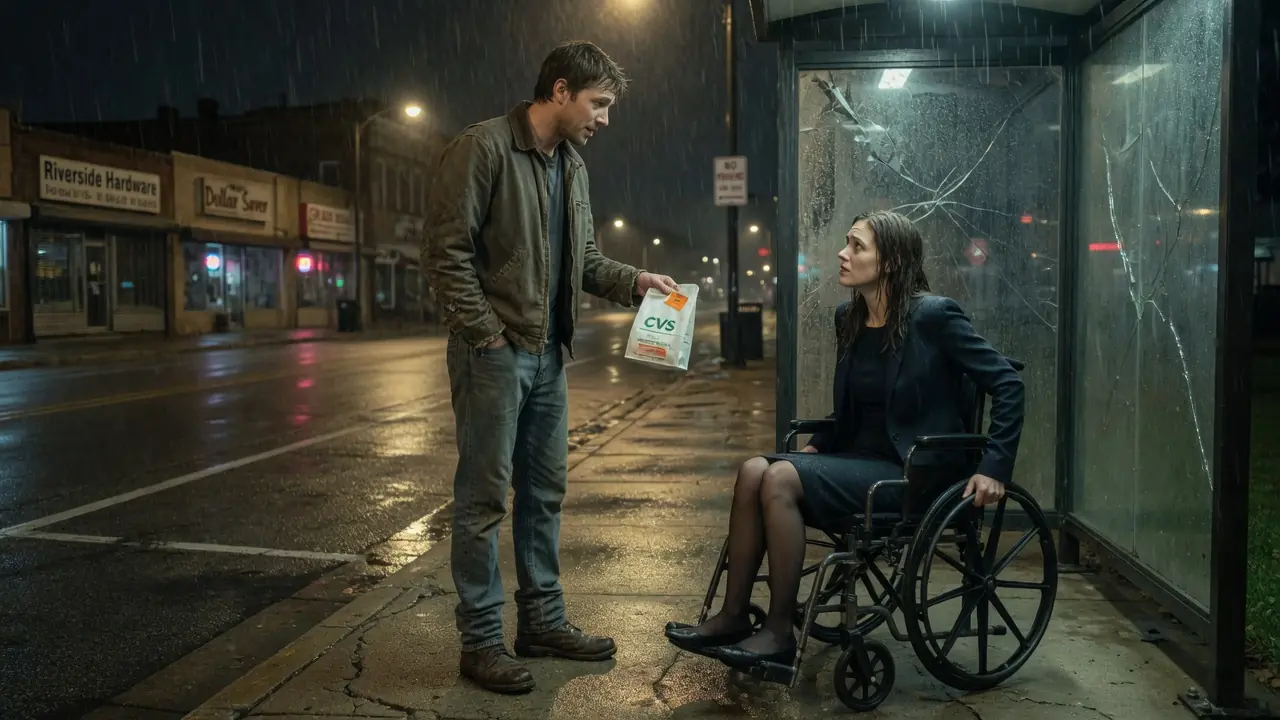
“I know that up here.”
She tapped her forehead.
“But knowing something intellectually and feeling it emotionally are different things. Every time I fix something, every time I solve a problem, I feel a little more like the person I used to be. The person who was good at things, the person who mattered.”
Daniel understood that, too.
After Sarah died, he had thrown himself into maintaining their apartment, fixing everything that broke, keeping everything running.
Because doing those things made him feel competent in a life that otherwise felt completely out of control.
“You matter now,” he said. “Not because of what you can fix, but because you’re here. Because Mia lights up when she sees you. Because dinner tastes better when you make it. Because the apartment feels less empty when you’re in it.”
Hannah’s eyes got that shine that meant tears were threatening.
“You’re dangerous, Daniel Reeves. You say things like that and make people believe them.”
“Good. Someone should.”
The fourth week, everything almost fell apart.
The landlord made his first Tuesday morning visit, and despite Mrs. Chen’s warning, they did not quite manage to hide Hannah’s presence completely.
He knocked on 104’s door, probably just checking that it was still empty, that he had not forgotten to show it to a potential tenant.
Hannah froze in the wheelchair, her eyes wide with panic.
Daniel, who had stayed home from work specifically for this, pressed a finger to his lips and moved to the door.
“Who is it?” he called through the closed door.
“Building management. Need to check the apartment.”
Daniel’s mind raced.
He could pretend the apartment was empty, but the landlord had keys.
He could try to claim Hannah was a guest, but guests did not live in empty apartments.
He could tell the truth, but the truth meant almost certain eviction for both of them.
He opened the door just wide enough to stand in the gap, his body blocking the view inside.
“Hey, Mr. Morrison. What’s up?”
The landlord was in his 60s, perpetually rumpled with the air of someone who had inherited property and considered it more burden than blessing.
“Just doing monthly checks. This unit’s been empty since Patterson died. Need to make sure everything’s in order.”
“Actually, I’ve been keeping an eye on it,” Daniel said, surprised by how smoothly the lie came. “Making sure no pipes burst, no leaks, that kind of thing. Better than letting it sit completely empty, right?”
Morrison’s eyes narrowed slightly.
“That’s not your responsibility.”
“I know, but I figured it was the neighborly thing to do. Plus, I’ve been using it for storage. Hope that’s okay. Just temporarily until I can clear some stuff out of my apartment upstairs.”
It was a weak excuse, but Morrison seemed more irritated by the interruption to his routine than suspicious of the explanation.
“Fine, whatever. Long as you’re not subletting it or doing anything stupid. I don’t need more problems.”
“No, sir. No problems.”
Morrison moved on to the next apartment on his list, and Daniel closed the door with hands that trembled slightly.
Hannah had gone pale, her breathing fast and shallow.
“That was close,” she whispered.
“Too close. We need a better plan for next month.”
But creating a better plan required predicting the unpredictable, and life had a way of throwing curveballs that no amount of planning could prepare for.
Three days after the landlord’s visit, Mia came down with something worse than a simple fever.
She was lethargic, complaining of a headache so bad it hurt to keep her eyes open.
And when Daniel took her temperature, it read 103.6.
“Hospital,” Hannah said immediately when Daniel appeared in 104 with Mia in his arms, the little girl barely conscious. “That’s not normal fever. Go now.”
Daniel went, his heart hammering.
Memories of Sarah’s illness flooded back in vivid detail.
The waiting room.
The antiseptic smell.
The doctors with their careful faces delivering news you did not want to hear.
It was meningitis.
Viral, thank God.
Not bacterial, but serious enough to require overnight observation.
They admitted Mia, started her on IV fluids and medications, and Daniel sat by her bed watching her sleep, feeling helpless in the way only a parent whose child is suffering can feel.
His phone buzzed around 10:00 p.m.
A text from Hannah sent via a messaging app she had set up on a borrowed tablet Mrs. Chen had apparently loaned her.
How is she?
Daniel typed back with one thumb.
Stable. Meningitis. They’re keeping her overnight.
I’m so sorry. Do you need anything?
What Daniel needed was for his daughter to be healthy.
For medical emergencies to cost less than a year’s salary.
For the universe to stop targeting his family.
But what he typed was, No, I’m good. Thanks.
Another message came through.
I know you’re not good, but I’ll be thinking of you both. Mia’s strong. She’ll get through this.
The confidence in those words, coming from someone who had survived her own medical catastrophe, meant more than Hannah probably realized.
Daniel held on to them through the long night, through Mia’s restless sleep and worried whimpers, through the constant parade of nurses checking vitals and adjusting medications.
By morning, Mia was significantly better.
The fever had broken.
She was more alert, complaining about the hospital food, which the doctors said was actually a good sign.
They released her that afternoon with prescriptions and instructions for rest.
Daniel carried her home feeling like he had aged 10 years in 24 hours.
Hannah met them at the door of the Riverside Arms, actually outside in her wheelchair on the sidewalk, which meant she had somehow navigated the front steps alone, which was both impressive and terrifying.
“What are you doing out here?” Daniel asked.
“Waiting for you. Figured you could use a friendly face.”
She looked at Mia, whose head was pillowed on Daniel’s shoulder.
“Hey, tough girl. Heard you gave your dad a scare.”
“My head hurt really bad,” Mia said, her voice small. “But they gave me medicine, and now it’s better.”
“Good. That’s really good. We missed you. The apartment’s been too quiet.”
“We?”
Daniel raised an eyebrow.
“Me and Mrs. Chen. She’s been coming down to check on me, make sure I’m not dying of boredom or loneliness. Turns out when you sit still long enough, people tell you their whole life stories.”
Hannah started wheeling herself back toward the entrance.
“Did you know she escaped Vietnam on a boat? With three children under five? The stories she has, they’re incredible.”
Daniel helped Hannah navigate back inside, easier going up than down, gravity being what it was, and they made their way to 104.
Someone, probably Mrs. Chen, with Hannah’s guidance, had made soup.
Real soup, not from a can, with vegetables and broth that smelled like comfort itself.
They ate together, Mia between them on the floor, covered in blankets like a small cocoon.
She fell asleep halfway through eating, exhausted from her ordeal, and Daniel carried her upstairs to her own bed, tucking her in with Mr. Flopkins, who had been temporarily returned from Hannah’s keeping.
When he came back down to 104, Hannah was cleaning up the dishes, balancing them on her lap to wheel them to the tiny kitchenette sink.
“Let me do that,” Daniel said.
“I’ve got it. Sit down before you fall down. You look exhausted.”
Daniel sat because she was right.
He was beyond exhausted, running on empty, the adrenaline that had kept him going through Mia’s crisis finally draining away.
“Thank you,” he said. “For being here. For caring.”
Hannah paused in her washing.
“Of course I care. Mia’s... she’s special. You both are. You saved my life, Daniel. Not in some abstract way, but literally. I was dying at that bus stop, giving up. And you stopped. You saw me. You brought me here. You gave me a reason to keep going.”
“You would have found a reason eventually.”
“I don’t think I would have. I think I would have stayed there until the cold or hunger or just sheer despair finished the job the steel beam started. But you didn’t let that happen. So yeah, I care what happens to Mia. I care what happens to you. You’re my family now. Whether that was the plan or not.”
Family.
The word hung in the air between them.
Weighted with possibility and danger.
Family meant responsibility, commitment, the risk of loss.
Daniel had lost his family once already, had watched Sarah die slowly, painfully, inevitably.
The thought of building a new family, of letting himself care that deeply again, terrified him.
But it was too late.
He already cared.
Mia already cared.
They had all crossed a line somewhere in the past month, moved from strangers to something else entirely.
“Yeah,” Daniel said finally. “Family.”
The fifth week brought an unexpected visitor.
Hannah’s former boyfriend, Marcus, somehow tracked her down through a series of phone calls to homeless shelters and social services.
He appeared at the Riverside Arms on a Thursday afternoon, asking neighbors if they had seen a woman in a wheelchair.
Mrs. Chen naturally said nothing, but one of the other tenants, less invested in discretion, pointed him toward 104.
Hannah was alone when he knocked.
Daniel was at work, Mia at school, and Hannah had been in the middle of fixing a crack in the wall plaster when the knock came.
She froze at the sound, some instinct warning her before she even opened the door.
Marcus looked different than she remembered.
Thinner.
More worn.
With guilt etched into the lines around his eyes.
“Hannah,” he said when she opened the door. “Thank God. I’ve been looking for you for weeks.”
“Why?”
The question came out flat, emotionless.
“Because I... because I made a mistake, leaving you like that. I was scared and confused, and I handled it wrong. But I want to make it right. I want to help.”
Hannah stared at the man she had once thought she would marry.
The man who had sent her a text message ending their relationship while she was still learning how to transfer from bed to wheelchair in the rehab facility.
The man who had promised to be there through sickness and health and had broken that promise at the first real test.
“You want to help?” she repeated. “Now? After more than a year? After I lost everything? After I ended up on the street? After I nearly died? Now you want to help?”
Marcus had the grace to look ashamed.
“I know I don’t deserve it, but I’m asking for another chance. I have a place now, a decent job. I can take care of you. We can figure this out together.”
“Figure what out? My paralysis? That’s not something we figure out, Marcus. It’s permanent. This is my life now.”
She gestured at the wheelchair.
“And you made it clear this wasn’t a life you wanted to be part of.”
“I panicked. I’m not proud of it, but I panicked. You have to understand, seeing you in that hospital bed, the doctors saying you’d never walk again. I couldn’t handle it.”
“Right. Because it was so hard for you. You, who could walk away. Literally walk away.”
Hannah’s voice was rising, anger that had been dormant for months suddenly flaring to life.
“Do you have any idea what it was like? Not just the accident, not just the paralysis, but knowing that the person I loved, the person I trusted, couldn’t love me if I wasn’t whole.”
“That’s not... I never said you weren’t whole.”
“You didn’t have to say it. You sent a text message. A text message, Marcus. After three years together, after talking about marriage and kids and growing old together, when it came down to it, I was only worth a text message.”
Daniel arrived home to find them arguing, Hannah’s voice carrying through the thin walls of the building.
He took the stairs to the first floor two at a time, protective instinct overriding everything else.
“Is there a problem here?” he asked, stepping into the open doorway of 104.
Marcus turned, sizing Daniel up with obvious suspicion.
“Who are you?”
“I’m the person who actually helped Hannah when she needed it. What’s your excuse for being here?”
“That’s between me and Hannah.”
“Actually,” Hannah said, her voice steady now, “it’s not between us at all. You made your choice 14 months ago. You don’t get to come back now and pretend you care.”
“I do care. Hannah, please let me make this right.”
“You can’t make it right. Some things can’t be fixed with apologies and second chances.”
She wheeled herself backward, creating distance.
“I’ve built a life here. It’s not perfect. It’s not what I planned, but it’s mine. I’m not going to give that up for someone who already proved they’ll leave when things get hard.”
“What life? Living in someone else’s apartment? Dependent on charity?”
Marcus’s tone turned sharp, defensive.
“That’s not a life, Hannah. That’s just survival.”
“Maybe that’s all I’m capable of right now,” Hannah shot back. “But at least I’m surviving with people who actually give a damn about me, not people who pretend to care when their conscience finally catches up with their cowardice.”
The words hit their mark.
Marcus flinched, his face flushing.
“Fine. I tried. When this falls apart, and it will, because charity always does, don’t come looking for me.”
“I wouldn’t dream of it.”
Marcus left, his footsteps heavy on the stairs, and Hannah sat very still in her wheelchair, breathing hard like she had just run a marathon.
Daniel closed the door and moved to stand beside her.
“You okay?”
“No. Yes. I don’t know.”
Her hands were shaking.
“I thought I was over it. Over him. Over the anger and hurt. But seeing him again, hearing him try to justify what he did, it all came back.”
“That’s normal. Trauma doesn’t just disappear because time passes.”
“He called this charity. Called what we have here charity.”
Hannah looked up at Daniel.
“Is that what this is? Charity?”
Daniel thought about the past five weeks.
About Hannah’s cooking and budgeting and repairs.
About Mia’s homework getting done with patient help.
About coming home to a space that felt less empty, less lonely.
About the way the three of them had fallen into a rhythm that felt less like obligation and more like family.
“No,” he said firmly. “This isn’t charity. Charity is one-sided. This is... We’re helping each other. You think I could have managed Mia’s hospital stay without knowing you were here, that she’d have someone checking on her, making sure she was okay? You think those repairs you’ve been doing don’t matter? The meals? The company?”
He shook his head.
“You’re not a charity case, Hannah. You’re part of this. Part of us.”
“He’s right,” came Mrs. Chen’s voice from the doorway.
Neither of them had heard her approach.
“Charity is for people who take and give nothing back. You give plenty. You just don’t see it because you measure worth wrong way.”
Hannah wiped at her eyes roughly.
“How do you measure worth the right way?”
“You measure by what you add to world, not what you take from it. You add good food, fixed things, happy child, less lonely man.”
Mrs. Chen shrugged.
“That worth more than most people give in whole lifetime. So boyfriend is wrong. This not charity. This is family.”
There was that word again.
Family.
It seemed to keep appearing, refusing to be ignored or dismissed.
“I’m sorry,” Hannah said after Mrs. Chen had left, after they had both had time to absorb the confrontation with Marcus. “I’m sorry for bringing drama to your door, for having history that shows up uninvited.”
“Everyone has history,” Daniel said. “Mine includes a dead wife and grief that sometimes hits out of nowhere. We all carry things. That doesn’t make us burdens.”
“You really believe that?”
“I’m learning to. You’re helping me learn it, actually. Seeing how you keep going, keep contributing, keep trying even when it would be easier to give up. It reminds me that survival is worth something all by itself.”
Hannah was quiet for a long moment.
Then, “Marcus was partially right about one thing. This situation, me living here illegally, all of us pretending this is sustainable. It can’t last forever. Eventually, something will happen. The landlord will notice or social services will find me or something else will go wrong.”
“Then we’ll deal with it when it happens. But Hannah, you don’t have to plan your exit right now. You don’t have to have all the answers. You can just be here in this moment, in this place. That’s enough.”
“Is it? Is it enough for you? Having a paralyzed woman taking up space in your building, complicating your life?”
Daniel moved to sit on the floor in front of her wheelchair, looking up at her the way she usually had to look up at everyone else.
“You want to know what’s enough? Coming home and not feeling completely alone is enough. Seeing my daughter laugh and learn and trust again is enough. Having someone to share the weight of daily life with is enough. You didn’t complicate my life, Hannah. You made it fuller.”
The tears came then, streaming down Hannah’s face, unchecked.
“I don’t know how to do this. How to let myself stay. How to believe this is real.”
“One day at a time. Same way we do everything else. Just one day at a time.”
That night, after Mia had come home from school and they had eaten dinner together and Mia had gone to bed, Daniel and Hannah sat in the dimly lit space of 104 and talked.
Really talked.
About more than just logistics and practicalities.
About Sarah and how Daniel still sometimes forgot she was gone.
About Hannah’s parents and their car accident and the particular loneliness of being orphaned as an adult.
About fear and hope and the strange way disaster could sometimes lead to unexpected grace.
“I never wanted to need anyone again,” Hannah admitted. “After Marcus left, after everyone else disappeared, I told myself it was better to be alone. Safer. If you don’t need people, they can’t hurt you by leaving.”
“But you also can’t heal alone,” Daniel said. “I tried that after Sarah died. Tried to be entirely self-sufficient, to not need help or support or connection. Almost destroyed me. Mia saved me really. She needed me so badly that I had to keep going, had to accept help even when I didn’t want to.”
“So, we’re both learning the same lesson.”
“That needing people isn’t weakness. That needing people is human, and being human is enough.”
They sat in comfortable silence after that, the kind of silence that only happens between people who have moved past the need to fill every quiet moment with words.
Outside, the October night had given way to November cold.
But inside 104, there was warmth and light and the sense of something being built slowly and imperfectly from the broken pieces of three separate lives.
Daniel thought about Marcus’s visit, about his accusation of charity, and realized that what they had here was something much more complicated and real than simple giving and receiving.
They were surviving together, healing together, building something that did not have a name but felt essential nonetheless.
As he climbed the stairs to his own apartment later, leaving Hannah to her makeshift bedroom on the floor of 104, Daniel felt something he had not felt in the two years since Sarah died.
Not happiness exactly, but something close to it.
Something that felt like possibility, like the future might hold more than just endless repetition of grief and struggle.
And in apartment 104, Hannah Blake sat in her wheelchair holding Mr. Flopkins, Mia having decided the stuffed bunny should live with Hannah permanently, and let herself believe just for a moment that maybe charity was the wrong word after all.
Maybe the right word was home.
November brought rain that turned the world gray and cold.
The kind of persistent drizzle that seeped into everything and made the walls of the Riverside Arms feel paper thin.
Hannah had been living in apartment 104 for nearly two months now, long enough that the arrangement had stopped feeling temporary and started feeling like something neither of them wanted to name out loud.
The phone call came on a Tuesday morning while Daniel was at work.
Hannah answered using the cell phone Daniel had added to his plan, another expense he could not afford but had insisted on anyway, saying everyone needed a way to reach emergency services.
The voice on the other end was professional, crisp, belonging to a woman who introduced herself as Patricia Wilkins from the State Department of Social Services.
“I’m calling regarding Hannah Blake. Our records show you’ve been receiving disability payments at this number. We need to verify your current living situation for our quarterly review.”
Hannah’s stomach dropped.
She had known this was coming eventually.
The system had ways of checking up on people, of making sure disability recipients were still eligible, still properly impoverished, still appropriately desperate.
But knowing something was coming and being prepared for it were different things entirely.
“I’m currently staying with friends,” Hannah said carefully. “Temporary arrangement while I look for permanent housing.”
“And the address of this temporary arrangement?”
Hannah gave the address of the Riverside Arms, her mouth dry.
She could hear typing on the other end of the line.
“According to our records, that’s a residential building. Can you provide the apartment number and the name of the leaseholder?”
This was the trap.
If she gave Daniel’s apartment number, questions would be asked about their relationship, about whether his income should be counted against her disability eligibility.
If she gave 104, they would discover she was living in an apartment with no lease, no legal tenancy, essentially squatting.
“I’d prefer to discuss this in person,” Hannah said. “If that’s possible.”
A pause.
More typing.
“We can arrange a home visit. Would Friday at 2:00 p.m. work for you?”
Friday.
Three days away.
Three days to figure out how to explain her situation without losing her benefits or getting Daniel in trouble or both.
“Friday works,” Hannah agreed.
Because what else could she say?
When Daniel came home that evening, she told him about the call.
He went very still, the way people do when they are processing bad news and trying not to panic.
“What happens if they find out you’re living here illegally?” he asked.
“They could cut my benefits, report the situation to the landlord, start an investigation into whether you’re somehow profiting from housing me, which could affect your own housing assistance if you receive any.”
“I don’t receive housing assistance. We’re barely staying afloat on my income alone.”
Daniel ran a hand through his hair, a gesture Hannah had come to recognize as his tell for stress.
“But if they report to Morrison, he could evict all of us. I’m pretty sure having an unauthorized tenant violates my lease.”
They sat with that knowledge for a moment, the precariousness of their situation suddenly spotlit in harsh relief.
Mia was upstairs doing homework, blissfully unaware that the fragile stability they had built might collapse in three days.
“I could leave,” Hannah said quietly. “Before Friday. Find somewhere else to be when they come. You could tell them I moved on. You don’t know where I went.”
“And then what? Where would you go?”
“I don’t know, but I’m not going to let you lose your home because of me, you and Mia. You’ve already risked too much.”
Daniel shook his head firmly.
“No, we’re not doing that. We’re not throwing you back out on the street just because the system is designed to punish people for trying to survive. There has to be another way.”
“Daniel.”
“I mean it, Hannah. We’ll figure something out. We always do.”
But figuring something out proved harder than either of them anticipated.
They spent Wednesday evening researching tenant rights, disability regulations, housing laws, trying to find some loophole or provision that would make their situation legal or at least defensible.
Every avenue led to dead ends or complications.
Mrs. Chen, when consulted, had her own suggestion delivered with characteristic bluntness.
“You marry her. Simple.”
Both Daniel and Hannah stared at the elderly woman standing in the doorway of 104 with a container of leftover rice and the solution to all their problems stated like it was as simple as crossing the street.
“Marry her?” Daniel repeated.
“You deaf now? Yes, marry her. Then she is family, not tenant. Wife can live with husband. Nobody question this. Problem solved.”
“Mrs. Chen, we can’t just... That’s not...”
Hannah floundered for words.
“Marriage is complicated. It’s not something you do just to solve a housing problem.”
“Why not? People marry for worse reasons. For money, for citizenship, for family pressure. You marry because you need each other, because you help each other. This is better reason than most.”
Mrs. Chen set down the container of rice with a definitive thunk.
“You think about it. Better than losing home and benefits both.”
She left them sitting in stunned silence.
The idea hung in the air between them like smoke.
“She’s not wrong,” Daniel said finally. “I mean, legally speaking. If we were married, you’d have every right to live here. The disability people couldn’t say anything about it.”
“Daniel, you can’t seriously be considering this.”
“Why not? Mrs. Chen’s right. People get married for all kinds of reasons. This would be a practical arrangement, a way to protect both of us.”
Hannah wheeled herself to the window, looking out at the rain-soaked courtyard.
“You don’t marry someone out of practicality. You marry someone because you love them, because you want to build a life with them, not because the Department of Social Services is breathing down your neck.”
“But we are building a life together. We have been for two months. This isn’t some stranger I just met. This is you. You’re already part of our family.”
“A family you didn’t choose. A family I imposed myself on because I had nowhere else to go.”
Daniel stood and moved to stand beside her wheelchair, both of them looking out at the gray November afternoon.
“You think I didn’t choose this? I chose to stop at that bus stop. I chose to bring you home. I’ve chosen every day since then to make this work. Those were all choices, Hannah. You didn’t impose anything.”
“But marriage, that’s different. That’s permanent, or it’s supposed to be. What happens when you meet someone you actually want to marry? When you fall in love with someone who isn’t a broken woman in a wheelchair.”
The bitterness in her voice made Daniel’s chest ache.
He crouched down beside the wheelchair so they were eye level, forcing her to look at him.
“First of all, stop calling yourself broken. You’re not broken. You’re adapted. You’re surviving in a world that wasn’t built for you, and you’re doing it with more strength and grace than most people could manage. Second, I’m not looking to fall in love with anyone. I had my great love story with Sarah, and it ended. I’m not trying to replace her or recapture that. What we have here, you, me, Mia, it’s different. It’s not a romance novel, but it’s real, and it works, and it matters.”
“So, you’re suggesting a marriage of convenience, like something out of a Victorian novel.”
“I’m suggesting a marriage of survival, of partnership. Of two people who need each other, making that need official so the system can’t tear us apart.”
He paused.
“Unless you hate the idea. Unless spending the rest of your life legally tied to me sounds worse than going back to shelters and bus stops.”
Hannah was quiet for a long time, watching the rain, and Daniel stayed crouched beside her chair, even though his knees were protesting.
Finally, she spoke.
“I don’t hate the idea. That’s what scares me. I should hate it. It’s insane. It’s rushing into something huge for all the wrong reasons. But when you say it, when you explain it, it almost makes sense. And that terrifies me because it means I’ve gotten comfortable here. I’ve let myself believe this could last. And believing things can last is how you get hurt when they don’t.”
“What if it does last? What if we make it last?”
“How?”
“Through sheer determination.”
“That’s not how marriages work, Daniel.”
“Actually, I think that’s exactly how marriages work. Sarah and I, we didn’t stay together because every day was perfect. We stayed together because we chose to. Even on the hard days, especially on the hard days, we were determined to make it work. And we did.”
His voice softened.
“Until we couldn’t anymore. Until cancer made that choice for us.”
Hannah reached down and put her hand on his shoulder, the first time she had voluntarily touched him outside of necessary physical assistance.
“I’m sorry that you lost her, that you had to watch her die.”
“I’m sorry, too, for a lot of things. But I’m not sorry you’re here. And if marrying you means you get to stay, means Mia doesn’t lose another person she loves, means we can stop looking over our shoulders waiting for everything to fall apart, then I’m not sorry about that either.”
They stayed like that for a moment.
Daniel crouched beside her wheelchair, Hannah’s hand on his shoulder, the rain providing a steady soundtrack to their impossible conversation.
Then Mia’s voice called down from upstairs, something about needing help with math homework, and the moment broke.
“Think about it,” Daniel said, standing up and feeling his knees crack in protest. “You don’t have to decide right now, but the offer’s there. Real, legal, whatever you need it to be. Marriage before Friday.”
Hannah nodded slowly, and Daniel headed upstairs to help with homework, leaving her alone with the weight of an offer that was either the most practical or most insane thing anyone had ever proposed.
Thursday morning, Hannah woke up having made a decision.
She found Daniel before he left for work, catching him in the building’s entrance as he was heading out.
“Okay,” she said simply.
“Okay, what?”
“Okay, let’s do it. Let’s get married before Friday, before the home visit.”
Daniel blinked, visibly recalibrating.
“You’re sure?”
“No. But I’m sure that I don’t want to leave. I’m sure that what we have here is worth protecting. I’m sure that Mia shouldn’t have to lose someone else because the system is broken. So yes, let’s do this.”
A slow smile spread across Daniel’s face, and Hannah felt something flutter in her chest that might have been hope or might have been terror or might have been both at once.
“Okay, then. I’ll make some calls during my lunch break. See what we need to do to make this happen fast.”
It turned out getting married quickly in their state was possible, but required jumping through several bureaucratic hoops.
They needed a marriage license, which required appearing together at the county clerk’s office with identification and $35.
Then there was a 48-hour waiting period before the ceremony could take place, which meant they would have to get the license Thursday and marry on Saturday after the home visit.
Unless...
The clerk Daniel spoke to on the phone said, “If you can prove immediate necessity, medical emergency, military deployment, that sort of thing, then we can waive the waiting period.”
Daniel looked at Hannah sitting across from him at the small table in 104, at the wheelchair that was both mobility aid and constant reminder of how close she had come to dying.
“My fiancée has a medical condition that makes delays risky. If we don’t formalize her housing situation immediately, she could lose her disability benefits and end up back on the street, which could be life-threatening given her paralysis.”
It was bending the truth, but it was also fundamentally accurate.
The clerk sighed, consulted with someone else, and finally agreed to waive the waiting period if they could provide documentation of Hannah’s disability and the housing crisis.
They spent Thursday afternoon gathering paperwork.
Hannah’s disability determination letter.
Medical records Daniel had helped her obtain from the hospital.
A statement from Mrs. Chen attesting to Hannah’s homelessness prior to moving into the Riverside Arms.
It felt surreal, assembling evidence of trauma and disaster in order to justify a marriage neither of them had planned.
Friday morning arrived with bright sunshine that felt incongruous with the nervous energy filling apartment 104.
Patricia Wilkins from social services was due at 2:00 p.m.
Daniel had taken a personal day from work, claiming a family emergency that was truer than his manager knew.
They decided on a strategy.
Be honest about Hannah living in the building, but frame it as a temporary situation that was about to become permanent through marriage.
Show enough compliance to satisfy the review without revealing the full extent of their irregular arrangement.
Patricia Wilkins arrived exactly on time.
A woman in her 40s with sensible shoes and an expression that suggested she had heard every sob story and excuse in the book.
She looked around apartment 104 with sharp eyes that missed nothing.
The makeshift sleeping area.
The borrowed furniture.
The general sense of impermanence.
“So, you’re staying here temporarily,” she said, consulting her tablet. “With friends. Can you explain the nature of your relationship with the leaseholder?”
“He’s my fiancé,” Hannah said, and watched Patricia’s eyebrows rise slightly. “We’re getting married tomorrow, actually. At the courthouse.”
“I see. And when did this engagement happen?”
“Recently, but we’ve known each other for a while.”
It was technically true if you counted two months as a while.
Patricia made notes on her tablet, her expression neutral.
“Mr. Reeves, is it? Is he here?”
“Right here,” Daniel said, emerging from the kitchenette where he had been hovering anxiously. “Daniel Reeves. I live upstairs in 304 with my daughter.”
More notes.
“And after the marriage, Ms. Blake will be moving into your apartment?”
“That’s the plan,” Daniel confirmed. “We’re still figuring out logistics. My place is on the third floor, and there’s no working elevator, but we’ll make it work.”
Patricia’s expression suggested skepticism, but she continued her questions.
How long had they known each other?
How did they meet?
What were their future plans?
Daniel and Hannah had rehearsed answers to likely questions, trying to strike a balance between truth and strategic omission.
“I have to tell you,” Patricia said finally, setting down her tablet. “This situation raises some concerns. Sudden engagements right before benefit reviews aren’t uncommon. Sometimes they’re legitimate. Sometimes they’re attempts to game the system to establish household income below the threshold while actually sharing resources inappropriately.”
“We’re not gaming anything,” Hannah said, fighting to keep her voice steady. “Yes, the timing is convenient, but the relationship is real. Daniel and his daughter, they saved my life. Literally. I was homeless, hypothermic, giving up. They gave me shelter and hope and a reason to keep going. The marriage is just making official what’s already true. We’re a family.”
Patricia studied them both for a long moment.
“I’ll need to verify your marriage license after the ceremony, and we’ll be doing a follow-up visit in three months to ensure the living situation is stable and appropriate. In the meantime, your benefits will continue. But be aware that Mr. Reeves’s income may affect your eligibility going forward once you’re legally married and cohabitating.”
“We understand,” Daniel said.
“I hope you do. Marriage is a serious commitment, not something to be entered into lightly for bureaucratic convenience.”
“It’s not light for us,” Hannah said quietly. “Believe me, nothing about any of this has been light.”
After Patricia left, they sat in silence for a while, processing what had just happened.
They had passed the first test, but barely.
And tomorrow they would have to follow through on the commitment they had made, stand in a courthouse, and legally bind their lives together.
“Second thoughts?” Daniel asked.
“About a thousand of them. You?”
“At least that many. But I’m still in if you are.”
Hannah looked around apartment 104 at the space that had been her refuge and salvation, at the evidence of the life they had been building together without really acknowledging it.
“I’m in. Terrified. But in.”
That evening, Mia learned she was getting a stepmother.
They told her together, sitting on the floor of 104 in their usual arrangement, and watched her process the information with a seven-year-old’s straightforward logic.
“So, Miss Hannah will be my mom?” Mia asked.
“Not exactly like that,” Daniel said carefully. “She’ll be my wife, which makes her your stepmom. But she won’t be replacing your mom. Nobody could replace your mom.”
“I know that,” Mia said with the exasperation of a child who thought adults were sometimes remarkably dense. “Mommy’s in heaven. Miss Hannah’s here. They’re different. But Miss Hannah takes care of me and makes dinner and helps with homework, so she’s kind of like a mom anyway. Making it official just means she can’t leave, right?”
The simplicity of that statement, she can’t leave, cut through all the complexity and landed on the core truth Mia needed.
Stability.
Permanence.
The assurance that another person she loved would not disappear.
“Right,” Hannah said, her voice thick. “Making it official means I’m staying for good.”
“Then I’m happy about it.”
Mia climbed into Hannah’s lap with the unself-conscious ease of a child who did not see wheelchairs as barriers.
“Can I come to the wedding?”
Daniel and Hannah exchanged glances.
They had been planning to do the courthouse ceremony alone, quick and clinical, no fuss or pretense of romance.
But looking at Mia’s eager face, at the hope and excitement there, they both knew that was not possible.
“Of course you can come,” Daniel said. “You’re the most important person to both of us. We wouldn’t do it without you.”
Saturday morning dawned clear and cold, the kind of November day where the sky was impossibly blue and the air sharp enough to hurt your lungs.
Daniel woke early, anxiety and anticipation churning in his stomach.
He was getting married today to a woman he had known for two months.
A woman he had found at a bus stop.
A woman he was not in love with in any conventional sense, but who had somehow become essential to his life anyway.
He put on his one good suit, the one he had worn to Sarah’s funeral, which felt grimly appropriate, and helped Mia into her favorite dress, the purple one with the dinosaur that she had insisted was fancy enough for weddings and also practical for playing.
They collected Hannah from 104, and Daniel felt his breath catch when he saw her.
Mrs. Chen had produced a dress from somewhere, blue, simple, but clean and new-looking.
Hannah had managed to wash her hair, had borrowed makeup from a neighbor, and looked nervous and beautiful and terrified all at once.
“You look nice,” Daniel said inadequately.
“So do you. Very official.”
“It is an official occasion.”
“That it is.”
They stood there awkwardly until Mia grabbed both their hands.
“Come on, we don’t want to be late to your wedding.”
The courthouse was busy with other people’s dramas.
Divorces, custody hearings, and traffic violations.
They waited their turn in a hallway that smelled like floor wax and anxiety.
Hannah in her wheelchair.
Daniel beside her.
Mia swinging their joined hands and humming to herself.
“We can still back out,” Hannah whispered. “If you’re having doubts.”
“Are you having doubts?”
“Constantly, but I’m here anyway.”
“Same. So, I guess we’re doing this.”
Their names were called.
They entered a small room with a judge who looked like she had performed a thousand ceremonies and found them all equally routine.
Two witnesses were required.
One of the courthouse staff and another couple waiting their turn graciously agreed to serve.
The ceremony was brief.
Bureaucratic.
Nothing like the church wedding Daniel had shared with Sarah, or the romantic celebration Hannah had once imagined for herself.
The judge recited the legal requirements, asked if they understood the commitment they were making, requested their affirmation.
“Do you, Daniel Reeves, take Hannah Blake to be your lawfully wedded wife? To have and to hold from this day forward, for better, for worse, for richer, for poorer, in sickness and in health, until death do you part?”
Daniel looked at Hannah, at the woman who had come into his life during one of the hardest periods he had ever faced, who had somehow made that life fuller instead of more complicated.
“I do.”
“And do you, Hannah Blake, take Daniel Reeves to be your lawfully wedded husband? To have and to hold from this day forward, for better, for worse, for richer, for poorer, in sickness and in health, until death do you part?”
Hannah’s eyes were wet, but her voice was steady.
“I do.”
They did not have rings.
They had not thought that far ahead, but the judge pronounced them married anyway, and suddenly it was done.
Legal.
Binding.
Real.
“You may kiss the bride,” the judge said with the first hint of warmth she had shown.
Daniel and Hannah looked at each other, both clearly thinking the same thing.
They had never kissed, had barely even touched beyond necessary physical assistance.
But they were married now, and the judge was waiting, and Mia was watching with bright, excited eyes.
Daniel leaned down, and Hannah tilted her face up, and they shared the most awkward, gentle, chaste kiss in the history of weddings.
It was over in a second, but it felt significant anyway, like the seal on a contract they had both signed in blood.
Outside the courthouse, Mia insisted on taking pictures using Daniel’s phone, posing them in front of a fountain and declaring them perfect wedding pictures.
“Even if Daddy’s suit is too big, and Miss Hannah, I mean Mom Hannah, looks like she’s going to cry.”
“Happy tears,” Hannah assured her. “These are happy tears.”
Were they?
Daniel was not entirely sure what he was feeling.
Relief that the legal situation was resolved, certainly.
Gratitude that Hannah would be protected now.
Anxiety about what came next, about navigating an actual marriage with someone who was essentially a stranger who had become family through circumstance rather than courtship.
They went out for lunch.
Not a fancy wedding meal, just burgers at a diner near the courthouse.
Mia chattered the whole time about school and her friends and how she could not wait to tell Emma that she had a new mom.
Hannah and Daniel let her talk, grateful for the distraction from their own swirling thoughts.
The reality of what they had done hit later back at the Riverside Arms when they had to figure out the practical aspects of being married.
Hannah’s belongings were in 104, but Patricia had said they needed to be cohabitating, which meant somehow getting Hannah and all her things up to the third floor despite the broken elevator and Hannah’s inability to climb stairs.
“I could carry you,” Daniel suggested.
“And the wheelchair? You going to carry that separately?”
“Maybe we could rig up some kind of pulley system, get Mrs. Chen to help.”
They were still debating logistics when Mrs. Chen herself appeared, having apparently developed a sixth sense for when she was needed.
She took one look at their predicament and made a sound of disgust.
“You think I let new bride spend wedding night separated from husband? No, we fix elevator.”
“Mrs. Chen, the elevator’s been broken for months. The landlord says it needs parts, a specialist.”
“Landlord is lazy and cheap. Elevator needs reset. Nothing more. I fix.”
And somehow, impossibly, Mrs. Chen did fix it.
Or rather, she recruited Mr. Rodriguez from 204, who used to be a building superintendent before retirement, and together they went into the elevator control room with tools and determination, and 20 minutes later emerged with a working elevator.
“You tell landlord it fixed itself,” Mrs. Chen instructed. “He too stupid to question. Now bride goes upstairs with husband like proper married people.”
So Hannah rode the newly functioning elevator up to the third floor, her few possessions loaded into the wheelchair’s storage bag and a garbage bag they had pressed into service.
Daniel unlocked the door to apartment 304, and Hannah wheeled herself into what was now legally her home.
The apartment was small, cluttered with the accumulated debris of Daniel and Mia’s life together.
Toys scattered across the living room.
Dishes in the sink.
Sarah’s photos still on the walls, a shrine to a past that Daniel had not yet figured out how to integrate with his present.
“It’s not much,” Daniel said, suddenly seeing the space through Hannah’s eyes and finding it wanting.
“It’s more than I had two months ago. It’s more than I ever thought I’d have again.”
Hannah wheeled herself slowly through the rooms, taking inventory.
“We’ll need to rearrange some things, make space for the chair to navigate, but it’s doable.”
They spent the evening doing exactly that.
Moving furniture.
Clearing pathways.
Creating room for Hannah to exist in the space.
Mia helped by relocating her toys from the living room to her bedroom, a process that involved carrying three items at a time and getting distracted by each one.
By the time they finished, the apartment looked different.
Less like a shrine to the past and more like a space where present and future could coexist.
Sarah’s photos stayed up, but they were joined by one of Mia’s drawings, the one from apartment 104 with the three stick figures holding hands.
“She’ll always be here,” Hannah said, looking at Sarah’s smiling face in the wedding photo that held pride of place on the bookshelf. “I’m not trying to replace her or erase her.”
“I know. And I’m glad. Mia needs to remember her mom. Needs to know Sarah was real and loved her.”
Daniel paused.
“But she also needs what you give her. What we give her together. The present matters, too.”
That night, they faced the sleeping arrangements.
The apartment had two bedrooms, Mia’s and what had been Daniel’s, but was now theoretically theirs.
Hannah looked at the double bed with obvious anxiety.
“I can sleep on the couch,” Daniel offered quickly.
“On your wedding night? That sends a strange message.”
“This is a strange situation. Strange messages are kind of our specialty.”
Hannah smiled slightly.
“How about we both sleep in the bed, but with proper boundaries? You stay on your side, I stay on mine, like a historical marriage of convenience where the couple had separate chambers but couldn’t afford them.”
“That works, though fair warning, I sometimes have nightmares. Sarah’s death. Sometimes I dream about it. I might wake you up.”
“I have nightmares, too. The accident mostly. The feeling of the steel beams falling, not being able to move fast enough.”
She met his eyes.
“Maybe we can wake each other up when the nightmares come. Remind each other we survived.”
They prepared for bed awkwardly, taking turns in the bathroom, carefully not watching as the other changed clothes.
Daniel ended up in sweatpants and a T-shirt.
Hannah in borrowed pajamas that Mrs. Chen had provided from her seemingly endless supply of useful items.
The bed was big enough for both of them to maintain distance, but small enough that Daniel was acutely aware of Hannah’s presence, of her breathing, of the weight of another person beside him for the first time in two years.
It felt foreign and familiar all at once.
Comfort and discomfort tangled together.
“Daniel.”
Hannah’s voice came through the darkness.
“Yeah?”
“Thank you for everything. For stopping at that bus stop. For bringing me home. For marrying me today. For giving me a reason to believe life could be good again.”
“You don’t have to thank me. You’ve given us just as much. More, maybe.”
“Still. Thank you.”
They lay in silence after that, and eventually exhaustion pulled Daniel toward sleep.
His last conscious thought was that nothing about this day had gone according to any plan he had ever made for his life.
But somehow, it felt right anyway.
Somewhere in the building, Mrs. Chen was probably smiling in satisfaction at a problem solved with characteristic directness.
In apartment 104, Mr. Flopkins sat abandoned on the floor, his protective duties transferred to a new location.
And in the third-floor apartment of the Riverside Arms, a family that had been assembled from broken pieces fell asleep under the same roof.
Legally bound.
Practically partnered.
Emotionally complicated.
But together.
The marriage certificate sat on the kitchen counter, official proof that Daniel Reeves and Hannah Blake had become something new.
Not a love story in any traditional sense, but a survival story.
A partnership forged in necessity and solidified through mutual care.
And if that was not quite the same as romance, it was perhaps something more durable.
Something built on a foundation of reality rather than fantasy, on the knowledge that they had both already survived the worst and were still standing, or in Hannah’s case, sitting.
But standing was metaphorical anyway.
Sunday morning, they woke to Mia climbing between them in the bed, announcing that she was hungry and asking if married people made special breakfast or regular breakfast.
Daniel and Hannah exchanged glances over their daughter’s head.
Their daughter now, legally, even if Hannah would always be stepmom rather than mom.
And something in that shared look acknowledged that whatever they had gotten themselves into, they were in it together.
Now, for better or worse, in sickness and health, for richer or poorer.
They had already experienced the worse, the sickness, the poorer.
Maybe the better, the health, and the richer were still ahead.
Or maybe they were already here, just wearing different clothes than expected.
Either way, they were married now, and breakfast needed making, and life, as it tended to do, kept moving forward.
The first month of marriage was a study in awkward adjustments and small discoveries.
Daniel learned that Hannah was not a morning person, that she required at least 20 minutes and two cups of coffee before conversation became advisable.
Hannah learned that Daniel sang off key in the shower, and that Mia had inherited his complete inability to carry a tune.
They learned each other’s routines, the geography of personal space, the unspoken negotiations of shared living.
The three-month follow-up visit from Patricia Wilkins came in February on a day when ice crusted the windows and made the world look fragile.
Hannah had spent the previous week making sure everything looked appropriately domestic.
Photos of the three of them displayed prominently.
Hannah’s belongings integrated into the apartment rather than segregated.
Evidence of actual cohabitation rather than elaborate pretense.
Patricia arrived with the same neutral expression and sharp eyes, noting the changes since her last visit.
The apartment was more lived in now, the awkwardness of new arrangements smoothed by time.
She asked questions.
How were they managing the accessibility issues?
Had Hannah been able to find any employment?
What were their long-term plans?
“I’ve been doing consulting work,” Hannah said, which was technically true.
She had started helping other tenants in the building with small repairs and had been paid in cash or trade.
Fixing Mr. Rodriguez’s wiring in exchange for him babysitting Mia.
Helping Mrs. Chen’s grandson with his contractor licensing exam prep in exchange for groceries.
It was not formal employment, but it was income that made her feel less dependent.
“And the marriage?” Patricia asked bluntly. “How’s that working out?”
Daniel and Hannah looked at each other, an entire conversation happening in that glance.
How did you explain that they had started as strangers and become partners?
That they still slept on opposite sides of the bed, but had somehow learned to anticipate each other’s needs?
That love might not be the right word, but something equally significant had taken root?
“It’s working,” Daniel said simply. “We’re making it work.”
Patricia made notes, asked a few more questions, and finally closed her tablet.
“I’ll be honest, I was skeptical during the first visit. Sudden marriages right before benefit reviews usually don’t last three months. But this seems legitimate. You’ve integrated your household. You’re both contributing. The child appears happy and well cared for. I’m recommending continued benefits with the standard annual review.”
After she left, Hannah cried, not from sadness, but from relief so profound it felt like grief.
They had passed.
They were safe.
The immediate crisis was over.
“We did it,” Daniel said, pulling her into a hug that had become natural over the past months. “We actually pulled this off.”
“We got married and convinced a government agency it was real,” Hannah said into his shoulder. “That’s either the most elaborate con or the weirdest love story ever told.”
“Maybe it’s both.”
Spring came gradually, winter releasing its grip one grudging day at a time.
And with spring came unexpected developments.
The first was a phone call from a law firm in the city asking if Hannah Blake was available to speak about her construction accident case.
“We’ve been contacted by a former employee of Meridian Construction,” the lawyer explained. “A crane operator named James Walsh. He’s come forward with evidence that the company knew the crane had maintenance issues and failed to address them. He’s willing to testify that you were not responsible for the accident, that the company’s negligence was the direct cause.”
Hannah sat very still processing this information.
“Why now? It’s been almost two years.”
“Mr. Walsh says his conscience couldn’t take it anymore. He watched the company destroy your life to protect themselves, and he can’t live with that. With his testimony and the maintenance records he preserved, we believe we have a strong case. The company will likely settle rather than go to trial.”
The words felt unreal, like dialogue from someone else’s life.
“Settlement. You mean money?”
“Potentially significant money. Enough to cover your medical expenses, lost wages, pain and suffering, and an admission of fault, if that matters to you.”
It did matter, more than Hannah had realized until that moment.
Not just the money, though that would change everything, but the acknowledgment that she had been telling the truth.
That her life had been destroyed by someone else’s negligence and greed.
That she had not been crazy or incompetent or deserving of what happened.
She told Daniel that evening, and he held her while she cried for the second time in as many months.
These tears were different from the relief of Patricia’s approval.
These were tears for the person she had been before the accident.
For the life she had lost.
For the validation that had come too late to prevent years of suffering, but was still precious for arriving at all.
“What will you do?” Daniel asked. “If the settlement comes through?”
Hannah had been thinking about that all afternoon.
Money meant options.
Money meant she could leave.
Could get her own place.
Could stop being dependent on Daniel’s charity disguised as marriage.
Money meant freedom.
But freedom to do what?
Leave the man who had saved her life?
Leave the child who called her Mom Hannah and climbed into her lap every evening to share the day’s adventures?
Leave the strange, imperfect, utterly unexpected family they had built together?
“I don’t know,” she admitted. “Everything I thought I wanted. Independence, my own space, not being anyone’s burden. It all made sense when I didn’t have options. But now, if I have options, I’m not sure what I want anymore.”
Daniel was quiet for a moment.
“You know you don’t have to stay, right? I married you to protect you, to give you stability. But if the settlement gives you that stability on your own terms, you don’t owe me anything. You’re not trapped here.”
“What if I don’t feel trapped? What if I feel...”
Hannah struggled for words.
“What if I feel like I belong here?”
“Then stay. Not because you have to, but because you want to.”
The settlement negotiations took months.
Lawyers and insurance companies engaged in elaborate dances of liability and compensation.
Meanwhile, life continued its forward momentum.
Mia finished second grade with straight A’s and a social studies project on modern families that featured photos of Daniel, Hannah, and herself with the caption, “Family isn’t about blood, it’s about who stays.”
Hannah’s consulting work grew into something more substantial.
Word spread through the building and then the neighborhood about the woman in the wheelchair who could fix anything.
She started getting actual paying clients, enough that she opened a small business account and began tracking income and expenses like the construction manager she used to be.
“You should make this official,” Daniel said one evening, watching her work through a stack of invoices. “Like register as a business, get insurance, do this properly.”
“I’ve been thinking about that,” Hannah admitted. “But businesses need websites and marketing and all kinds of things I don’t know how to do.”
“So learn or find someone who can help. You’re brilliant at this, Hannah. You could build something real.”
The idea took root.
Over the summer, Hannah worked with the local community college’s small business development center to create a plan.
She registered Blake Accessibility Solutions as an LLC, created a website, and started marketing her services not just for repairs, but for accessibility consulting, helping homeowners and small businesses understand how to make their spaces wheelchair friendly.
The business grew slowly but steadily.
Hannah hired Mia as her assistant for $5 a week, teaching her about tools and problem-solving and how to talk to clients.
They became a team, rolling through neighborhoods in Hannah’s chair with Mia walking beside her, carrying the tool bag.
Both of them laughing at jokes only they understood.
Daniel watched them together and felt something shift in his understanding of their arrangement.
This was not charity or convenience anymore.
This was family.
Real and chosen.
Built from intention rather than obligation.
The settlement finally came through in October, almost exactly two years after the accident that had destroyed Hannah’s old life.
$1.7 million minus lawyer fees and medical liens, leaving Hannah with just over $1 million in her bank account.
The company also issued a formal apology and admission of fault, words that felt both hollow and essential.
“I have money now,” Hannah told Daniel that evening after Mia had gone to bed and they were sitting in the living room with the awkward formality of people about to have a serious conversation. “Real money, enough to buy a house. Start over. Do whatever I want.”
“That’s incredible. You deserve that and more after what you’ve been through.”
“The thing is...”
Hannah paused, gathering courage.
“I’m not sure what I want to do with it. Part of me thinks I should buy my own place, prove I can be independent, not need anyone. But another part of me thinks that’s just pride talking. Because the truth is, I like living here. I like being part of this family. And I don’t know if leaving would make me happy or just make me lonely again.”
Daniel leaned forward, elbows on his knees, choosing his words carefully.
“When we got married, it was for practical reasons. Protection, stability, survival. And I told you that you didn’t owe me anything. That this was a means to an end. I meant that then. But Hannah, things have changed. At least for me, they have.”
“Changed how?”
“I wake up in the morning and my first thought is whether you’ve had your coffee yet, because I know you’re impossible without it. I come home from work and look forward to whatever you’ve cooked. Not just because it’s good food, but because sharing a meal with you and Mia is the best part of my day. When Mia has a problem, she goes to you as often as she comes to me because you’re her parent too now. Not stepparent, not temporary guardian. Parent.”
Hannah’s eyes were shining, but she did not interrupt.
“I didn’t plan on this,” Daniel continued. “Didn’t plan on caring about you the way I do. Didn’t plan on this arrangement becoming real. But it has. Somewhere between the bus stop and now, you stopped being a responsibility and became my partner, my friend. My...”
He hesitated over the word.
“My wife. Actually, my wife, not just on paper.”
“Daniel.”
“Let me finish. You have money now. You have options. And I’m telling you that whatever you choose, I’ll support it. If you want to buy a house and start over, I’ll help you move. If you want to travel and see the world from a wheelchair, I’ll make sure Mia writes you letters. But if you want to stay, if you want to take that money and invest it in our family and our life together, then I’m telling you that I want that, too. Not because it’s convenient or practical, but because I love you. I’m in love with you, Hannah. I don’t know when it happened or how, but it did.”
The silence that followed felt enormous.
Hannah stared at him, tears streaming down her face, her mouth opening and closing like she was trying out different responses and finding them all inadequate.
“You love me,” she finally said, like she was testing the words for truth.
“I love you. The way you fix things that are broken. The way you’ve taught Mia to be brave and capable and kind. The way you’ve made this apartment feel like home instead of a mausoleum for my grief. The way you’re always cold in the morning and steal my coffee when you think I’m not looking. All of it. I love all of it.”
“I steal your coffee because mine always gets cold while I’m getting dressed,” Hannah said.
Then she laughed through her tears.
“That’s what I’m focusing on. Your coffee? I’m an idiot.”
“You’re not an idiot. You’re just processing.”
“I am processing. I’m processing the fact that the marriage of convenience I agreed to has apparently become a real marriage while I wasn’t paying attention. I’m processing the fact that you just said you love me, which is terrifying and wonderful, and I don’t know how to respond, except...”
She took a shaky breath.
“Except to say that I love you, too. I’ve been in love with you for months, probably since you stood up for me at the bank, or maybe since you gave me your jacket at the bus stop. I’ve been terrified to admit it because it made this whole situation so much more complicated. But there it is. I love you, Daniel. I love our weird life and our fierce daughter and the way you sing badly in the shower and the way you look at me like I’m not broken.”
They sat there for a moment, the words hanging between them, transforming everything and nothing all at once.
Then Daniel crossed the space between them, knelt in front of her wheelchair, and kissed her.
Not the awkward obligatory kiss from their courthouse wedding, but a real kiss full of months of repressed feeling and sudden permission to express it.
When they pulled apart, Hannah was smiling.
“We should probably tell Mia.”
“Tell Mia what? That her parents actually love each other? I think she already knows. She told Mrs. Chen three weeks ago that she was glad we’d figured it out.”
“That child is too perceptive for her own good.”
“She gets it from you. The perceptive part and the fixing-things-that-are-broken part.”
They told Mia the next morning anyway because she deserved to hear it officially.
Her response was characteristically straightforward.
“Finally. I’ve been waiting for you guys to stop being weird about being married. Can we have pancakes to celebrate?”
Over the following months, they discussed what to do with Hannah’s settlement.
She wanted to invest in their future, but Daniel was adamant that it was her money, her security, not something to be simply absorbed into their joint finances without thought.
They compromised.
Hannah bought a stake in the Riverside Arms building when old Mr. Morrison finally decided to sell, becoming part owner with two other tenants who had pooled resources.
She used more of the money to expand her business, hiring two employees and renting a small office space that doubled as an accessibility resource center.
She set aside funds for Mia’s college education, created a substantial emergency fund, and invested the rest conservatively.
But the most significant purchase was a house.
Not a mansion.
Not something ostentatious.
But a modest three-bedroom home on the other side of Riverside with a fully accessible first floor, a ramp instead of front steps, a bathroom that Hannah could navigate independently.
She bought it in both their names.
Daniel Reeves and Hannah Blake Reeves.
The hyphenated surname, a compromise they had settled on after months of debate.
“This is your money,” Daniel said when she showed him the house. “You shouldn’t spend it on me.”
“I’m not spending it on you. I’m spending it on us. On our family. On a future that isn’t defined by what we’ve lost, but by what we’re building together.”
Hannah looked around the empty house, seeing it filled with furniture and laughter and life.
“Besides, technically this is your wedding present. Two years late, but I’m told marriage is about patience.”
They moved in that spring, three years after the night Daniel found Hannah at the bus stop.
Mrs. Chen cried when they told her, claiming it was allergies even though it was clearly emotion.
The other tenants threw them a going-away party in the courtyard of the Riverside Arms, and Mr. Rodriguez made a speech about how they had proven that family was something you built, not something you were born into.
The new house became headquarters for Blake Accessibility Solutions.
Hannah’s office occupied what had been designed as a formal dining room, with custom desks at wheelchair height and shelving she could reach independently.
She hired a physical therapist who was also a wheelchair user to conduct accessibility assessments with her, expanding her business into a genuine consultancy that helped dozens of families navigate the challenges she had faced.
Daniel kept his job at the auto shop, but with less financial pressure, he was able to cut back his hours slightly, spending more time with Mia and Hannah.
He took up woodworking as a hobby, building custom adaptations for Hannah’s wheelchair and creating furniture designed with accessibility in mind.
He and Hannah would spend evenings in the garage, her consulting on design while he cut and sanded and assembled, both of them covered in sawdust and happy.
Mia thrived.
She joined her school’s science club and discovered a passion for engineering, influenced by watching Hannah problem-solve accessibility challenges.
For her fourth grade science fair project, she designed a prototype for a voice-activated wheelchair control system, crediting “my mom, Hannah,” as her inspiration and primary consultant.
“She doesn’t call me stepmom anymore,” Hannah noticed one evening, watching Mia practice her presentation in the living room.
“Does that bother you?” Daniel asked.
“No. It makes me feel like I’ve earned it. Like I’m not just the woman her dad married, but actually her parent.”
Hannah paused.
“I never thought I’d have this. After the accident, I assumed kids were off the table, that no one would want to build a family with someone like me. But then you stopped at that bus stop, and everything changed.”
“Everything changed for me, too. I thought I was done. That I’d had my chance at happiness with Sarah and that was it. One great love per lifetime. But love isn’t finite. It doesn’t run out because you’ve used it once. It just changes shape, finds new forms.”
They celebrated their third wedding anniversary quietly, just the two of them after Mia had gone to bed.
They had done a family celebration earlier, cake and presents, and Mia’s insistence on showing them every photo from their courthouse wedding three years prior.
But now, in the quiet of their house, they could acknowledge how far they had come.
“Three years ago, I married you to keep you off the street,” Daniel said, refilling their wine glasses. “Best decision I ever made for the worst reasons.”
“Three years ago, I married you because I had run out of options,” Hannah countered. “Second best decision I ever made.”
“What was the first?”
“Staying alive long enough for you to find me.”
They had invited Marcus to their first real anniversary party.
Not out of forgiveness exactly, but out of acknowledgment that his failure had led to something profound.
He declined, sending instead a card with a substantial donation to Hannah’s accessibility resource center and a note that said simply, “I’m glad you found happiness. I’m sorry I wasn’t brave enough to find it with you.”
Hannah had cried reading it, not for what might have been, but for the closure of what had not been.
Sometimes love meant letting go.
Sometimes it meant holding on.
Knowing the difference was what made the difference.
By their fifth anniversary, Blake Accessibility Solutions had expanded to three cities and employed 12 people, half of them wheelchair users themselves.
Hannah had been profiled in a national magazine about entrepreneurs overcoming adversity, though she had insisted the real story was not about overcoming, but about adapting.
About building a life that worked rather than forcing yourself to fit into a world that was not designed for you.
Mia was in middle school now, tall and confident, and already talking about becoming a mechanical engineer.
She had inherited Daniel’s work ethic and Hannah’s problem-solving skills, and had somehow developed her own brand of fierce compassion that came from growing up in a house where disability was normal and kindness was essential.
“Do you ever think about what your life would have been like?” Hannah asked Daniel one evening.
They were in the backyard watching Mia and her friends play basketball on the court they had installed with accessible sidelines so Hannah could referee.
“If you had walked past that bus stop, if you hadn’t stopped.”
Daniel thought about it seriously because Hannah deserved serious answers to serious questions.
“I think about it sometimes. I’d probably still be in that same apartment, still working at the shop. Still just surviving instead of living. Mia would be fine. She’s resilient. But we’d be less... less happy, less complete, less everything that matters.”
“I wouldn’t be,” Hannah said quietly. “I’d be dead or I’d wish I was, which is almost the same thing. You didn’t just change my life, Daniel. You gave me back my life. You and Mia, you’re the reason I’m still here.”
“You’re the reason we’re not just going through the motions anymore. You gave us purpose. You gave us joy. You gave us a future worth building.”
They sat in comfortable silence, watching their daughter play, listening to the sounds of their chosen family filling the space they had created together.
The basketball bounced rhythmically on the concrete.
Birds called from the trees they had planted their first year in the house.
Somewhere in the distance, a neighbor’s dog barked happily.
This was it, Hannah thought.
This was the life that almost did not happen.
This was the family built from desperation and determination and dumb luck.
This was the proof that broken did not mean finished, that endings could become beginnings, that three words spoken on the coldest night could lead to years of warmth.
Come with me.
That was all it had taken.
Three words from a stranger who decided to see someone others walked past.
Three words that had led to an apartment in a building with a broken elevator.
To a marriage of convenience that became a marriage of choice.
To a love story that did not look like anyone’s fantasy, but felt more real than fiction ever could.
Ten years after that October night, they were still there.
Still together.
Still building.
Still choosing each other every day.
Daniel had gone back to school part-time, studying social work, thinking maybe he could help others navigate the systems that had almost destroyed Hannah.
Hannah’s company had been bought by a larger disability advocacy organization, giving her resources to expand while maintaining creative control.
Mia was in high school, building robots and winning competitions and planning to study biomedical engineering at MIT.
They took a vacation that year, the three of them, plus Mrs. Chen, who had become honorary grandmother and refused to be left behind.
They went to the coast, stayed in an accessible beach house, watched Mia body surf while Mrs. Chen complained about sand and Daniel and Hannah sat on the deck drinking coffee and holding hands.
“Do you remember,” Hannah said, “when you told me that you measured worth by what you add to the world, not what you take from it?”
“Mrs. Chen told you that. I was just there.”
“Either way, I’ve been thinking about it. About what we’ve added. Your social work helps families navigate crisis. My company helps people stay independent. Mia is going to build things that change people’s lives. We’ve added something, haven’t we?”
“We’ve added a lot. But the thing we added that matters most isn’t the work or the impact or the legacy. It’s this. Us. The proof that people can save each other if they just pay attention, just stop, just care.”
Hannah leaned her head against his shoulder.
Something that had taken years to feel natural, but now felt essential.
“I love you. I know I say it all the time now, but I never want you to forget. You saved my life, and then you gave me a reason to want to live it.”
“I love you, too. And I’m glad I stopped at that bus stop. I’m glad I asked you to come with me. I’m glad you said yes.”
On the beach, Mia was teaching Mrs. Chen how to body surf.
Both of them laughing as waves knocked them over.
The sun was setting, painting the sky in shades of orange and pink.
Daniel’s phone buzzed with a text from one of his clients, someone he had helped navigate the disability system, someone whose life was a little less desperate because he had known how to help.
Hannah’s phone chimed, too.
An email from an architect she had consulted with, thanking her for the accessibility audit that had completely changed their approach to design.
Small impacts multiplying, ripples spreading outward from a single moment of choice on a cold October night.
This was the happy ending that did not look like a fairy tale.
This was the family assembled from catastrophe and compassion.
This was the marriage that started as paperwork and became partnership.
This was the proof that survival could transform into thriving, that rock bottom could become solid foundation, that the worst night of your life could lead to the best years.
Daniel thought about the Daniel from 10 years ago.
Exhausted, grieving, barely holding on.
He wished he could tell that Daniel what was coming.
That stopping at the bus stop would complicate everything and save everything.
That the woman in the wheelchair would teach his daughter to be brave and teach him to be whole.
That love did not follow rules or timelines.
That it showed up when you were not looking and stayed if you were brave enough to let it.
But maybe that Daniel would not have believed it.
Maybe some lessons had to be lived rather than learned.
Some futures had to be built rather than predicted.
They stayed at the beach until the stars came out, until Mia and Mrs. Chen were too exhausted to argue about leaving.
They drove back to their accessible beach house with its ramps and roll-in shower and kitchen designed at heights Hannah could navigate independently.
They made dinner together, all four of them working in comfortable coordination.
They told stories and laughed and made plans for tomorrow.
And later, when everyone else was asleep, Daniel and Hannah sat on the deck, listening to the ocean, holding hands, being quiet together in the way only people who have survived impossible things can be quiet.
“Thank you,” Hannah said finally.
“For what?”
“For seeing me. That night at the bus stop, you could have seen a problem or a liability or someone too broken to help. But you saw a person. You saw me. And that made all the difference.”
Daniel squeezed her hand.
“You made yourself seen. You were still fighting, still breathing, still here. I just gave you a chance to keep going.”
“We gave each other chances. That’s what family does.”
In the distance, waves crashed against the shore.
Relentless and beautiful.
The world kept turning.
Time kept moving.
But here, now, in this moment, everything was exactly as it should be.
Ten years from a bus stop to a beach house.
From desperation to joy.
From broken to whole.
Not fixed, because some things could not be fixed, but whole anyway, complete in their own right.
This was the story of how Daniel Reeves found Hannah Blake on the coldest night of October and said three words that saved both of them.
This was the story of how a family could be built from necessity and transformed into choice.
This was the story of how love could grow in the strangest soil and bloom into something more beautiful than anyone planned.
And it all started with a decision to stop, to see, to care, with three simple words that held infinite possibility.
Come with me.
The end was not really an ending at all, just a continuation.
They would keep building their life together, keep facing challenges and celebrating victories, keep being a family that did not make sense on paper, but made perfect sense in practice.
There would be hard days and good days and ordinary days, all of them mattering because they would be lived together.
But if someone had asked Daniel 10 years after that night whether he would do it again, whether he would stop at that bus stop, bring a stranger home, marry her out of convenience, and fall in love with her anyway, his answer would be immediate and certain.
Yes.
A thousand times yes.
Because some decisions do not need to make sense.
They just need to be right.
And stopping for Hannah Blake, choosing her, building a life with her, that was the rightest thing Daniel Reeves had ever done.
“Come with me,” he had said.
And she had.
Everything changed.
They lived not happily ever after, because life was not a fairy tale, but fully ever after, which was better.
They lived with intention and purpose and love.
They lived with the knowledge that they had saved each other and continued saving each other every day.
They lived.
And that was enough.
More than enough.
That was everything.