The refrigerator made a sound like a tired old man trying to clear his throat. A low, grinding hum that had been getting worse for two weeks.
Daniel Mercer had stopped noticing it the way you stop noticing traffic noise when you have lived near a highway long enough. It was just part of the silence now, part of the texture of a life that had come unraveled at the seams.
He stood in front of the open fridge for a long moment, the cold air drifting out and settling around his bare feet on the linoleum.
Two eggs. Half a jar of peanut butter. A single slice of American cheese, slightly dry at the corners. A carton of orange juice almost empty. Maybe enough for three small glasses if he was careful.
He was always careful now.
Three days.
It had been three days since the termination letter arrived. Not even in person, not even a phone call. An email.
Dear Mr. Mercer, we regret to inform you that your position has been eliminated effective immediately.
He had read it four times before his brain let the information in.
Twelve years.
Twelve years at Vantage Systems, and they had ended it with a subject line.
Behind him, the hallway light was still on. He had not had the heart to turn it off because Lily needed it. She was sick, and she still woke up in the middle of the night convinced there were things in the dark that wanted to find her.
The pediatrician had called it transitional anxiety. Daniel called it one more thing he did not know how to fix.
He closed the refrigerator quietly.
The apartment was on the third floor of a building in East Milbrook, the kind of neighborhood that real estate listings described as up-and-coming while residents described it as getting by. Two bedrooms, one bathroom, and a kitchen that opened into a living room roughly the size of a parking space.
He had moved here eighteen months ago after the divorce. After the house, the real house, the one with the yard and the garage, had been sold to cover the legal fees and the settlement.
He had taken the kids on weekends at first, then full-time when his ex-wife, Natalie, had taken a position in Portland that she said she could not turn down.
She had not been wrong.
It was a good opportunity.
He did not blame her for taking it. Not really. Not anymore.
But he had three children now, full-time, alone, and that was a different kind of mathematics than he had prepared for.
Owen was ten and already trying very hard to be the man of the house, which broke Daniel’s heart in a specific, quiet way every single day. He was the kind of boy who cleared his plate without being asked and then stood at the sink washing it himself because he had noticed that his father looked tired.
Caleb was eight, loud and bright and relentlessly physical, always crashing into furniture and laughing about it, blessedly unaware of the weight in the apartment.
And Lily, small, careful Lily, had been sick on and off since March with a respiratory infection that kept coming back no matter how many courses of amoxicillin the pediatrician prescribed.
The last prescription had cost sixty-two dollars after the insurance adjustment, and Daniel had paid for it with the emergency credit card he had sworn he would not touch until he had no other option.
He had had no other option.
He went to his bedroom and sat on the edge of the bed in the dark. His wallet was on the nightstand.
He picked it up and opened it, already knowing what was inside.
One ten-dollar bill folded once. A debit card connected to an account with $11.40. His health insurance card, which would be void at the end of the month. A library card. A photo of his three kids from last Christmas, slightly creased.
Ten dollars.
He had been saving it. Not for anything specific, just holding on to it the way a man holds on to the last dry match in a rainstorm.
You do not use it until you absolutely have to.
But tomorrow was Saturday, and Lily had been asking for soup. Real soup, not the kind from a can. He had been buying the store-brand canned chicken noodle for two weeks, and she ate it without complaining, which somehow made it worse.
She never complained.
She just got a little quieter each day, a little more still, the way sick children do when they are conserving energy for something important.
He was going to the grocery store in the morning.
He was going to buy her soup.
He set the wallet back on the nightstand and lay down without taking off his jeans, staring at the water stain on the ceiling that he had been meaning to report to the superintendent since October.
Outside, a car alarm went off and then stopped. Someone on the floor above was watching something with a lot of bass.
Lily coughed twice in the next room.
Just twice, then quiet.
Daniel Mercer closed his eyes and tried to remember what it had felt like to be secure.
He fell asleep before he could.
The Brookfield Market on Clement Street was the kind of grocery store that smelled like bread and floor wax and something faintly floral near the entrance, where they kept the cut flowers in buckets.
Daniel went on Saturday mornings because it was less crowded then, and because the deli counter ran a markdown on soup stock at nine that nobody seemed to know about except him and a few elderly regulars.
He had left the kids with Owen in charge, a responsibility the boy took with solemn, slightly alarming seriousness.
“We’ll be fine, Dad.”
Ten years old, hands on his hips.
Daniel had kissed the top of his head and told him to call if anything happened.
The store was quiet. He moved through the aisles with the focused efficiency of a man working from a mental list he had memorized, touching things he could not afford and returning them to the shelf with a neutrality he had practiced until it felt almost real.
Soup stock, $1.89.
A bag of carrots, ninety-nine cents.
Chicken thighs from the discount bin, just past their prime, perfectly fine if you cooked them today, $2.49.
A loaf of day-old bread, one dollar.
He stood at the bread shelf and did the math in his head.
$6.37.
He had $3.63 left.
He picked up a small container of applesauce for Lily. She always ate a little more when there was something sweet. He checked the price.
$2.19.
He put it in the basket.
$1.44 remaining.
He picked up a single banana.
Sixty-nine cents.
He put it back.
He stood there a moment longer than he needed to, then picked it up again and placed it in the basket. He could split it between the kids.
He moved toward the checkout lanes.
There were three open self-checkout stations on the left, two staffed lanes in the middle and right. He chose the staffed lane on the right because the self-checkout machines at this store had a habit of freezing on produce items and requiring an attendant anyway, which always felt like a particular kind of defeat.
That was when he noticed her.
She was two positions ahead of him in line, the woman at the register.
Mid-thirties, dark hair pulled back in a way that suggested it had been more carefully arranged earlier and had since begun to slip. She was wearing a blazer over a silk blouse, which was an odd thing to wear to a Saturday morning grocery run. But Daniel had stopped making assumptions about people’s lives a long time ago.
She had a basket with a few items: sparkling water, a rotisserie chicken, and some kind of expensive-looking crackers.
The cashier, a teenager with the long-suffering expression of someone who had been on shift since six, ran the card.
The machine beeped.
The teenager looked at the screen.
“It’s declined.”
The woman blinked.
“I’m sorry. Try it again.”
The teenager tried it again.
Same beep.
Same screen.
“Still declined.”
“That’s not possible.”
The woman’s voice was controlled, but only barely, the kind of control that comes from having learned somewhere along the way that showing distress in public is something to be managed.
“I have a different card. Let me...”
She reached into her bag and began searching.
The line behind her shuffled. Someone sighed. A man in a Patagonia vest muttered something to his wife that Daniel did not catch, but understood from the wife’s small, guilty laugh.
The woman found a second card.
The cashier ran it.
A longer pause this time, and then the same beep.
The woman’s face did something complicated, a private collapse that she pulled back from almost immediately, setting her jaw, tilting her chin up slightly.
“I don’t understand. I need to call my bank.”
“You can step aside if you want,” the cashier said, not unkindly, just practically.
“Could you just hold the order? I’ll only be a minute.”
The man with the Patagonia vest said, “Actually, some of us—”
Daniel was not thinking about the ten dollars.
He was not calculating. He was not running the math of his refrigerator, or Lily’s soup, or the banana he had put back and retrieved.
He was just watching a woman being slowly humiliated in a grocery store on a Saturday morning while people looked at their phones and exhaled through their noses.
And something in him, something that had nothing to do with strategy or sense, simply moved.
He stepped forward, set his basket down, opened his wallet, and took out the ten-dollar bill.
“Here,” he said.
He held it toward the cashier.
The woman turned to look at him.
Her eyes were dark brown. At that particular moment, they were wide and still a little wet at the edges, and she was looking at him the way you look at someone who has just done something that does not fit the shape of the world you were standing in five seconds ago.
“You don’t have to,” she started.
“It’s fine,” he said. “Go ahead and put her order through.”
The cashier took the bill.
The transaction completed.
The woman picked up her bag slowly, as though moving too quickly might break something.
“I don’t even know your name,” she said.
“You don’t need to,” Daniel said. “Everyone deserves a second chance.”
She looked at him for a moment longer than felt comfortable. And in that look, there was something he could not name. Recognition, maybe, or its opposite.
Then she nodded once, a small, precise movement, and walked out of the store.
The cashier looked at Daniel.
“You’re a dollar sixty short.”
He put the banana back.
Her name was Catherine Harlo, but almost nobody called her Catherine anymore.
To her board, she was Miss Harlo. To her assistant, she was Catherine. To the business press, and they had written about her often enough over the past four years, ever since the Vantage Systems turnaround had made her something of a minor celebrity in the tech and finance space, she was simply Harlo, the kind of one-name shorthand that got applied to people who had a reputation that preceded them into every room.
She sat in her car in the Brookfield Market parking lot for eleven minutes. She knew it was eleven minutes because she watched the clock on the dashboard without quite seeing it.
The paper bag sat in the passenger seat, the cracker packaging slightly visible through the brown paper.
She was a person who was almost never thrown off balance. She had given a keynote at the Meridian Tech Forum in front of 1,400 people three weeks ago and felt nothing but focused. She had fired people when she had to, sometimes had made calls that were painful and necessary, and she had made them with a clear head and a settled chest because that was what the role required.
She was thrown off balance now.
She did not know why exactly.
It was not the money. Ten dollars was an abstraction to her, not a meaningful sum. It was not even the gesture itself, though the gesture had been unexpected.
It was the way he had said it.
Everyone deserves a second chance.
Not looking for recognition.
Not angling for a reaction.
Just a man in a grocery store in jeans and a flannel shirt, slightly tired-looking, with a basket that contained chicken thighs and carrots and a container of applesauce, holding out a ten-dollar bill like it was something he did all the time.
She had not seen his face clearly. She had been too flustered, too focused on the humiliation of the moment.
But she had the impression of a man in his mid-thirties, dark eyes, the beginning of gray at his temples, something careful in the way he held himself.
Everyone deserves a second chance.
She started the car.
She had a board call at two and a briefing packet she had not finished reading. She had a VP of operations who was performing below expectations and a conversation she had been putting off for ten days.
She had a company to run.
She pulled out of the parking lot and drove toward the highway.
She did not think about the man at the grocery store again for the rest of the day.
She told herself she did not.
Meanwhile, Daniel walked home carrying the soup stock, the chicken, the carrots, and the bread, without the applesauce, which he had put back when he came up short.
Lily would have soup, though.
That was the thing that mattered.
Owen met him at the door with the expression of a lieutenant reporting to his commanding officer.
“Caleb broke the remote. The back came off, but I put the batteries back in, and it still works.”
“Good job,” Daniel said.
He set the bag down on the counter and started unpacking it.
From the bedroom, he heard Lily’s small voice.
“Did you get soup stuff, Daddy?”
“I got soup stuff,” he called back. “The real kind.”
“The real kind?”
A pause.
He stood at the counter with his hand resting on the bag of carrots, and he breathed very carefully for a moment, the way you breathe when you do not want to make a sound that a six-year-old might hear and wonder about.
Then he started making soup.
He had had the idea on Sunday night, lying in the dark the way he had been lying in the dark every night since Thursday.
He needed a job. Obviously, he had been applying, three applications on Friday, two on Saturday, but those were the slow channels, the HR portal submissions that went into the void and might generate a response in six to eight weeks if you were lucky.
He needed something faster.
The thought had arrived not with hope, but with the particular desperation that sometimes looks like courage from the outside.
Go back to Vantage Systems.
Not to beg. Not to make a scene. But to speak to someone, anyone, who might tell him what had actually happened, because the email had given him nothing, and the HR contact number had led to a recording, and twelve years felt like it deserved at least an explanation.
He left the kids with Mrs. Peterson from 3B, who was retired and had a soft spot for Owen’s formal, old-fashioned politeness. He wore the good shirt, the one he kept in the dry-cleaning bag in the closet for interviews and funerals.
He took the bus downtown.
Vantage Systems occupied floors twelve through seventeen of the Hartwell Building on Commerce Street. Daniel had walked through those glass doors roughly 2,400 times over the past twelve years.
He walked through them now and felt the weight of familiarity settle over him.
The particular smell of the lobby. The sound of the elevator banks. The security desk where Gerald had worked for as long as Daniel could remember.
Gerald looked up. Something shifted in his face, not quite guilt, but adjacent to it.
“Daniel. Hey.”
“Hey, Gerald.”
Daniel stopped at the desk.
“I need to go up. I want to speak with someone from HR or...” He hesitated. “Is Marcus still department head? Marcus Tully?”
“Marcus is in a meeting,” Gerald said carefully.
“I can wait.”
Gerald glanced at his monitor, then back at Daniel. There was something uncomfortable happening behind his eyes.
“Look, man. I’m not sure you should.”
The elevator bank opened.
A small group of people came out, the usual Monday morning dispersal of employees heading to the coffee station or the stairs.
Among them, in conversation with a woman Daniel did not recognize, moving with the unhurried authority of someone who had never needed to hurry because rooms rearranged themselves around her arrival, was Catherine Harlo.
She was mid-sentence, head slightly angled toward the woman beside her. She had not looked up yet. She was wearing a gray blazer today, structured, precise, and her hair was back in a way that suggested it had not slipped at all.
This was her territory.
He could see it in the architecture of her posture.
She looked up.
Their eyes met across twelve feet of marble lobby.
The recognition was immediate and double-sided.
He could see it happen. He could see the exact moment she placed him: the grocery store, the line, the ten dollars.
And he could feel his own recognition, the pieces clicking into place.
This woman.
This building.
Her name on the termination email he had read four times.
Catherine Harlo, chief executive officer.
The lobby seemed to get very quiet.
She said something quiet to the woman beside her. The woman nodded and moved away.
Catherine walked toward him, and her expression was controlled in a way that told him she was working to keep it controlled.
She stopped three feet away.
“You work here,” she said.
It was not quite a question.
“I used to,” Daniel said.
Neither of them moved.
Gerald had found something extremely interesting to look at on his monitor. The few people in the lobby were filtering toward the elevators or the exit, doing what people do when they sense they have wandered into the edge of something private.
They look away.
They create distance.
They become very interested in their phones.
Daniel stood very still.
He was aware of the good shirt, which had felt like armor on the bus and now felt like a costume. He was aware of how he must look, a man who had been fired via email three days ago, who had walked back into the building where it had happened carrying nothing but whatever it was that had made him think this was a reasonable idea.
He wanted to leave.
Every reasonable part of him was voting for the door.
He stayed.
“You were at the Brookfield Market,” Catherine said.
She looked at him with an expression he could not fully read. Not quite guilt, not quite calculation, something in between, something that had not finished deciding what it was.
“Your name,” she said. “What’s your name?”
“Daniel Mercer. I was in project coordination. Twelve years.”
She absorbed this.
He watched her absorb it, the way she went briefly, carefully still.
“You were terminated Thursday,” she said. Not as a question. “I signed that order.”
“I know.”
Another silence.
A longer one.
The lobby air moved slightly as the revolving door admitted a man in a winter coat, who slowed fractionally when he sensed the atmosphere, then kept walking with exaggerated casualness.
“Why did you come back?” Catherine asked.
“Because I have three kids and a refrigerator with two eggs in it,” Daniel said. “And I’ve been at this company for twelve years, and I deserved at least a phone call.”
She looked at him for a long moment.
Something in her face moved, not dramatically, not in any way a stranger would have noticed, just a small interior shift. The kind that happens when something lands somewhere it was not expected to.
“Come upstairs,” she said.
The conference room on the fourteenth floor had a view of the financial district that Daniel had seen from the hallway roughly a thousand times and from inside exactly twice. Once during a team review in 2019, once during an all-hands meeting in the first year of the pandemic when everyone was still pretending normal was nearby.
Catherine set her phone face down on the table and stood at the window for a moment before she sat.
She did not offer him coffee.
She did not make small talk.
Those were not the moves she made.
“At the market,” she said, “you didn’t know who I was. You just...”
She paused, and the pause was longer than he expected, as though she was working around something she did not quite want to name directly.
“You just gave me the money.”
Daniel looked at the table surface between his hands. He thought about how to answer that question, whether there was an answer that would sound reasonable rather than impulsive.
He did not think there was, so he told the truth instead.
“You looked like you were holding yourself together very hard,” he said. “And no one was going to help you. And I thought...”
He stopped.
“I don’t know. I thought everyone has a day that’s worse than it should be. Doesn’t mean they don’t deserve a little grace.”
Catherine was quiet.
Outside the window, the city moved.
“You said everyone deserves a second chance,” she said.
“I say that a lot,” he admitted. “My oldest son rolls his eyes at it.”
Something shifted in her expression. Not a smile, not exactly, but the place where a smile might grow if the soil were right.
Then she did something he did not expect.
She leaned forward slightly, and her voice changed. Not softer exactly, but more direct, stripped of the CEO register.
“I want to explain something to you, Mr. Mercer, about Thursday.”
“Okay.”
“Your position elimination. The order came through my office, and I signed it, but it was not my recommendation. It was packaged with eighteen others as part of a cost-reduction measure that my CFO and my head of operations brought to me three weeks ago.”
She paused.
“I approved the package without reviewing every individual file. I should not have done that. That was my failure.”
She said it without flinching, which he found surprising and then not surprising.
“This morning before I came downstairs, I received a complaint from someone in your former department. Not about you, about the circumstances of your termination.”
Daniel went still.
“What kind of complaint?”
“The kind I need to investigate before I say anything more.”
She held his gaze.
“But I want to ask you. Is there anything you want to tell me about the last six months in your department? Anything that felt wrong?”
He thought about Marcus Tully. He thought about the project reassignments in the fall, the way his accounts had been quietly redistributed to two other coordinators over a period of eight weeks. The performance review in November that had graded him “meets expectations” for the first time in eleven years, in categories where he had previously been rated “exceeds.”
He had asked about it.
He had been told it was a new evaluation framework.
He had accepted that because what else do you do when you have three kids and a mortgage you are still paying off from a house you no longer live in?
He told her.
He told her carefully, without anger, laying it out chronologically the way someone lays evidence on a table when they want it to be seen clearly and not dismissed.
She listened without interrupting.
When he finished, she was quiet for a moment.
Then she said, “I’m going to need you to stay available for the next few days.”
“I have nowhere else to be,” he said.
What unfolded over the following week was the kind of institutional reckoning that most companies prefer to conduct in the dark, behind legal language and HR mediation, so the mess never quite resolves into anything with a clean shape.
Catherine Harlo was not, in general, a person who preferred the dark.
Her head of operations was a man named Grant Whitfield, fifty-one, Yale MBA, the kind of man who had a very specific and practiced way of being in a room that made other people feel slightly less legitimate by comparison.
He had been at Vantage Systems for six years, three of them under Catherine, and he had over time assembled around himself a kind of gravitational field of loyalty from a cluster of mid-level managers who understood that their advancement was tied to his approval.
Daniel Mercer had, it emerged, been something of an inconvenience to Grant Whitfield.
The project reassignments in the fall. The performance review.
These were the paper trail.
Below the paper trail was something more structural.
Daniel had, two years ago, identified a significant billing discrepancy in a vendor contract that Whitfield had overseen. He had flagged it through the correct channels. It had been resolved quietly with the vendor in a way that had not reflected on Whitfield’s performance, but Whitfield had known who flagged it.
People in positions of authority who feel they have been quietly inconvenienced have a long memory and access to longer levers.
The internal review that Catherine initiated was not technically about Daniel at all. It was about the integrity of the cost-reduction package, whether the performance data used to select individuals for elimination had been accurate or whether it had been shaped by something other than performance.
What it found over the course of four days of interviews and data audits was that four of the eighteen terminations had been recommended on the basis of evaluations that showed specific, traceable patterns of downward adjustment in the eighteen months preceding elimination.
Daniel’s was one of the four.
Catherine called him on a Thursday afternoon, exactly one week after the termination email.
He was sitting in the kitchen while Lily napped, and Owen did homework at the table with the focused, slightly pained expression of a boy who found fractions personally offensive.
“The review is complete,” she said, “and I owe you an apology. A formal one in writing, and a personal one, which I am offering you now.”
She paused.
“The evaluation data used to include you in the termination package was manipulated. Your actual performance record, your real record, places you consistently in the top fifteen percent of your peer group. You should not have been on that list.”
Daniel looked at Owen, who was erasing something furiously.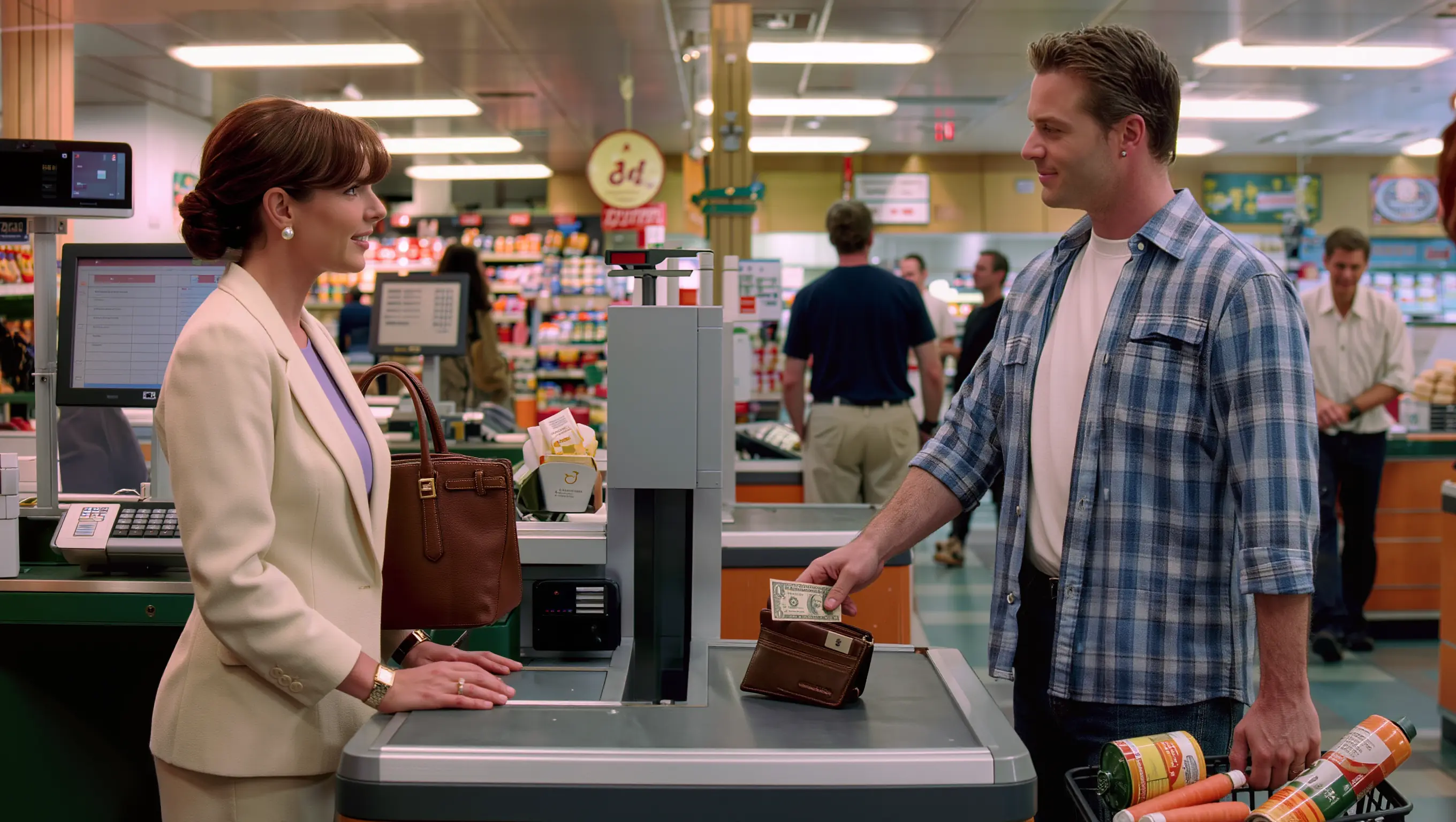
“Okay,” he said.
“Okay,” she repeated.
“I mean, thank you for telling me. I knew something was wrong, but knowing it and having someone confirm it are different things.”
A brief pause.
“The individual responsible has been placed on administrative leave pending a full disciplinary review. I expect the outcome of that process to result in termination.”
Another pause.
“Mr. Mercer, I’d like to offer you your position back.”
He had known it was coming. He had been turning it over in his mind for three days, examining it from different angles, running it through the part of him that wanted security and the part of him that still had some pride left.
“I need a day,” he said.
“Take whatever you need,” she said.
The truth, which Daniel turned over in his hands that night after the kids were in bed, was that going back to the same building, the same floor, the same team, walking past the desk where he had sat for twelve years, past the people who had watched him get quietly squeezed out and said nothing, felt like a particular kind of eraser.
As though the past three days had not happened, had not cost him anything, and could simply be folded back into the fabric of normal.
The past three days had cost him something.
He was not sure yet what to call it, but it was there.
He also had $11.40 in his checking account, a credit card with a balance that was going to require a payment in fourteen days, and a daughter with a recurring respiratory infection that the pediatrician was now recommending they see a specialist about.
He was not in a position to let pride be the thing that decided this.
But the thing about dignity is that it does not vanish just because your circumstances make it inconvenient.
He called Catherine the next morning.
“I’ll come back,” he said. “But I want to be clear. I’m coming back because the work is good and because my family needs stability, not because the company did me a favor by investigating the thing they should have caught in the first place.”
Silence.
Then, “That’s fair.”
“And I want a different manager.”
“Done.”
“And I want the corrected performance reviews included in my official file, not just amended internally.”
“Already in process.”
She sounded, he thought, almost approving, like a person who was more comfortable with directness than with gratitude.
“Is there anything else?”
He thought about it.
“No,” he said. “I’ll be there Monday.”
Meanwhile, the ripple from the internal review spread in the way that institutional revelations tend to spread, not in an explosion, but in a slow structural shifting, the kind where everyone suddenly finds reasons to quietly reassess things they had previously been comfortable not thinking about.
Three other managers who had been in Whitfield’s orbit began conducting themselves with a new and noticeable carefulness.
The CFO who had brought the cost-reduction package to Catherine without sufficiently vetting the underlying data submitted a memo taking accountability. It was a very careful memo, legal in its precision, but it was there.
Catherine addressed the full company on Friday afternoon in person on the fifteenth floor, which was the largest floor they had.
She did not name names.
She told them that an internal review had found issues with a recent termination process, that those issues had been addressed, and that the company’s commitment to fair evaluation and transparent process was not negotiable.
Then she said something that was not in the prepared remarks.
She said, “Integrity is not a policy. It is a decision you make or do not make every day. And sometimes it starts somewhere very small, smaller than you would expect.”
She did not explain what she meant.
Most people in the room thought she was speaking metaphorically.
She had not planned to go to his apartment.
It was not the kind of thing she typically did. Showing up at an employee’s home was an overstep of professional boundaries so obvious it barely needed naming.
But the Monday return was three days away, and she had something she needed to give him and something she needed to say that felt wrong to say across a conference table.
She looked up the address in his HR file.
She told herself it was efficient.
She drove there on Saturday afternoon, which was exactly one week after the grocery store.
The building was in East Milbrook.
She had never had reason to come to East Milbrook. She parked on the street and sat in the car for a moment, which had become, she was noticing, a thing she did when she needed to collect herself before walking into something uncertain.
She went in. Third floor.
She found the door, 3C, and knocked.
It was the boy who answered.
He was ten, maybe eleven, with his father’s dark eyes and a gravity about him that seemed like more than his age. He looked at her with polite weariness.
“Is your dad home?” she said.
“Who are you?”
“My name is Catherine. I work with him.”
The boy considered this.
“Dad,” he called over his shoulder without taking his eyes off her.
Daniel appeared from down the hallway, and his expression went through several changes in rapid succession: surprise, weariness, something she might have called embarrassment, but which she thought was closer to exposure. The feeling of being seen in a place that is yours when the person seeing you has only ever known you in a different context.
“Miss Harlo,” he said.
“I should have called,” she said.
“Yes,” he agreed.
But he stepped back and opened the door wider, which she understood as an invitation.
The apartment was small and lived in. There was a drawing on the refrigerator, a crayon horse, purple, with a tail that curved all the way to the bottom of the page. Sneakers by the door in varying sizes. The smell of something cooking.
She heard a child’s voice from another room, and then a smaller child appeared in the hallway.
A little girl, maybe six, with red, flushed cheeks and the careful, measuring look of a child who has learned to assess unfamiliar adults before committing to friendliness.
“Who’s that?” the girl said.
“A lady from Dad’s work,” the older boy said, with the authority of someone who had decided that answer was sufficient.
“Does she want soup?” the girl said. “We have soup. Dad made the real kind.”
Catherine looked at Daniel.
He looked back at her with an expression that contained something she had not seen before in the brief, strange history of their acquaintance. Something unguarded. The specific vulnerability of being seen in the place where you are most yourself.
“Lily,” he said, “go back to the couch, sweetheart.”
Lily retreated.
Catherine came into the kitchen.
Daniel stood with his arms loosely at his sides, not quite comfortable, not quite defensive.
“I brought the formal letter,” she said.
She took an envelope from her bag and held it out.
“Signed by me and countersigned by legal. It states clearly that the termination was improper, that your performance record has been corrected, and that the offer of reinstatement is unconditional.”
He took the envelope.
He did not open it.
“And the other thing?” he said, because he could see in her face that there was another thing.
She had not rehearsed this part. She was not, in her professional life, someone who went unscripted very often, and the discomfort of it was visible in the way she was standing slightly more carefully than she usually stood, like someone on new ice.
“Saturday at the market,” she said. “I was...”
She stopped.
“The cards were frozen, both of them. My financial accounts are linked to my corporate identity for a complicated legal reason that I won’t bore you with. And there was a compliance flag that had been triggered by a transaction I hadn’t authorized. By the time I got to the parking lot, I already had the notification. It was resolved in forty minutes.”
She paused.
“But those ten minutes in the line were awful,” Daniel said quietly.
“Yes.”
She looked at him directly, and in her eyes was something that Catherine Harlo almost certainly did not show often or easily.
“And you...”
She stopped again and started from a different angle.
“I’ve been a CEO for four years. I’m in rooms full of people all the time, and they’re always doing things. Assessing, positioning, calculating. And you just...”
She shook her head slightly.
“You just helped. That’s all. You just helped.”
Daniel was quiet for a moment.
From the other room, they could hear the faint sound of cartoon music, a child’s show, brightly scored.
“My dad used to say,” he said slowly, “that the things that cost you the most are usually the things most worth doing.”
He looked at the envelope in his hand.
“I spent a lot of years thinking that was the kind of thing fathers say because it sounds good. I’m starting to think it was just true.”
Catherine looked at the window, then back at him.
“How is she?”
“Your daughter?”
“Better,” he said. “The soup helped.”
A pause.
Then, from somewhere Daniel had not quite expected, something opened up in his chest.
“Just slightly. Enough. Do you want to stay for dinner?” he said.
She looked at him.
“It’s soup,” he clarified. “The real kind.”
A beat.
Something in her face did a small, private thing.
“Yes,” she said. “I think I would.”
The months that followed were not a fairy tale, which is to say they were not fast or frictionless or clean.
Real things do not grow that way.
Daniel came back to Vantage Systems on Monday as agreed.
His desk had been reassigned during the three days of his absence. Computers moved. His organizational system upended. He spent the first morning simply putting things back in order, which felt, in some way he did not examine too closely, like a metaphor he did not need to belabor.
His new manager was a woman named Patricia Reeves, methodical, fair, inclined to leave people alone to do their work, which was exactly the kind of management Daniel had always functioned best under.
Within three weeks, he was operating at full capacity.
Within six, he had taken on a new account that no one else had wanted because the client was famously difficult, and by the end of the quarter, he had turned them into one of the department’s most reliable revenue sources.
He did not see Catherine often.
The gap between project coordination on the fourteenth floor and the executive suite on the seventeenth was not a space that professional life provided many reasons to cross.
He occasionally passed her in the lobby. She always acknowledged him, not with the particular studied non-acknowledgment of a CEO who has an awareness that too much warmth toward a specific employee raises questions, but with a kind of quiet, direct recognition that said, “I see you.”
That was enough.
Lily saw the specialist in April.
It turned out she had a mild structural issue in her sinuses that had been causing the recurring infections, easily addressed, easily resolved, something that would have been caught sooner if the insurance disruption had not delayed the referral.
By May, she was running in the park with Caleb and shrieking at a volume that suggested her respiratory system had never been anything other than completely robust.
Owen watched her from a bench with the expression of someone who had been holding a very heavy thing for a very long time and had just been told he could set it down.
There was a dinner in June.
Catherine organized it.
Or rather, she sent him a message that said, “I know a place in the warehouse district that does good soup. Actual good soup, not the restaurant kind where it’s mostly cream.”
Which was a strange and specific invitation.
And he said yes because it was also a funny one, and because he had been thinking about her in the way you think about someone you are circling without quite admitting the direction of the orbit.
They sat across from each other at a small table in a restaurant on Fenwick Lane that had bare brick walls and a menu on a chalkboard.
And they ate soup.
Good soup.
She was right.
And they talked for three hours about things that had nothing to do with work.
She told him about growing up in western Pennsylvania, the younger daughter of a civil engineer and a high school English teacher, and how she had spent most of her twenties being told she was too intense, and most of her thirties channeling that intensity into something that paid well and felt purposeful.
He told her about the first year after the divorce, when he had been so convinced he was failing at everything that he had started writing lists of small daily successes: made lunch, remembered permission slip, fixed Caleb’s bike tire, just to have evidence that he was doing something right.
She had looked at him across the soup and said, “I didn’t know people did that.”
“Some people need a paper trail,” he said.
She had laughed.
Actually laughed.
Not the managed version.
And he had thought that under the architecture of the person she had built for the world, she was genuinely funny.
They had dinner again in July and August.
And at some point in September, Lily informed Owen, with the authority of someone who had decided a thing and considered it settled, “Catherine is coming to dinner again, and I am making her a drawing.”
Owen looked at Daniel with an expression that was somewhere between knowing and resignation.
“She’s nice,” Owen said, as though offering an assessment that had been pending.
“She is,” Daniel agreed.
“She seems like someone who’s used to being in charge,” Owen said.
“She is that too,” Daniel said.
Owen considered this.
“Is that going to be a problem?”
Daniel looked at his son, who was eleven years old and conducting an evaluation with the seriousness of a parole board.
“I don’t think so,” he said. “I think it’s mostly going to be interesting.”
The relationship, because that is what it became slowly and without announcement, the way most real things become themselves, was not without its complications.
Because two people who have independently survived difficult things do not typically fit together without some friction.
Catherine was wary of anything that moved toward the domestic, the soft-edged, the comfortable, in ways that had to do with a privacy she had worked hard to protect and a control she had learned to rely on.
Daniel was wary of anyone who moved through the world at the speed and altitude that Catherine did because he had seen up close what it looked like when that kind of person decided other things were more important.
They talked about it directly, with the kind of honesty that is slightly uncomfortable in the early stages of trusting someone and then gradually becomes the thing you would miss most if it went away.
They worked through it slowly, in the ordinary way things get worked through imperfectly, with setbacks, with moments of retreat, and then always with a decision to come back.
The wedding was small.
Neither of them had any interest in large. Catherine on principle. Daniel because three children had taught him that logistics above a certain scale were their own punishment.
It was in April, fourteen months after the grocery store. A restaurant in the neighborhood, not Fenwick Lane, a different place, one that had a small courtyard garden that held thirty people comfortably, and their guest list with room to spare.
Patricia Reeves was there.
Gerald from the lobby security desk was there because Daniel had sent him an invitation on impulse, and Gerald had shown up in a tie so enthusiastically knotted that it became a source of gentle ribbing for the rest of the afternoon.
Catherine’s mother came from Pennsylvania, a small, sharp-eyed woman who assessed Daniel in approximately ninety seconds and then nodded once, which Catherine later told him was the highest available endorsement.
Owen walked Lily down the makeshift aisle because Lily had insisted on it, and because the role had seemed, to Owen, appropriate. He was twelve by then and had grown two inches since the fall, and he walked with the same gravity he always walked with, his sister’s hand in his, his expression composed.
Caleb was the ring bearer and managed it without dropping anything, which he announced three separate times during the reception as his primary achievement of the day.
Daniel stood at the end of the garden path and watched Catherine come toward him, and he thought about the grocery store, about the woman with the declined card and the tilted chin and the careful control, the grocery bag in the passenger seat, the eleven minutes in the parking lot.
He thought about the email on Thursday morning.
He thought about the refrigerator with two eggs and a jar of peanut butter, and his son clearing his own plate at the sink, and Lily asking in her small voice, “Did you get soup stuff, Daddy?”
He thought, everything cost something, and here is what it bought.
Catherine reached him.
She was wearing a cream dress, not elaborate. Nothing elaborate would have been right for her, and her hair was down, which she almost never wore it.
She looked at him with an expression he had been learning to read for over a year. That landscape of reserve and warmth and dry humor and sudden disarming openness that she saved for people she trusted.
She looked at him with that from two feet away, in front of thirty people in a courtyard in April.
“Hi,” she said.
“Hi,” he said.
After the ceremony, while Caleb was attempting to explain to Catherine’s mother the correct way to eat a canapé, and while Owen stood at the edge of the courtyard in conversation with Patricia Reeves about something that appeared to be extremely serious, Daniel reached into his jacket pocket and took out a folded bill.
“Here,” he said.
He held it out to Catherine.
“I believe this is yours.”
She looked at the ten-dollar bill in his hand.
She looked at him.
Her expression did the thing he had come to love, that private interior thing before it reached her face, the smile that started somewhere behind her eyes.
She shook her head.
“Keep it,” she said. “Best investment you ever made.”
Lily, who had been nearby and was always nearby when something interesting was happening, looked up from her flower girl basket and said, “What’s an investment?”
“It’s when you give something away,” Daniel said, “and it comes back bigger.”
Lily thought about this with the focused seriousness she brought to anything she did not quite understand yet.
“Like soup,” she said.
Catherine laughed.
The real one.
The not managed one.
“Yes,” she said, crouching down to Lily’s level and looking at her with something that was not yet the full weight of a word, but was already in the territory it would grow into. “Exactly like soup.”
The courtyard held thirty people and the noise of an afternoon that smelled like spring and good food, and a life that had come back to itself from somewhere it had no business coming back from.
Owen watched from the edge with his hands in his pockets, and his face did something it did not do very often.
It let go of the weight, just for a moment.
Just enough.
Caleb knocked over a glass.
It did not break.
Lily held her flower basket with both hands and looked around the courtyard with the clear, unshadowed eyes of a child who is simply, for this moment, exactly where she should be.
Daniel stood in the middle of it and held the ten-dollar bill and did not put it away.
He kept it in his pocket for the rest of the day.
Later, much later, he would put it in a frame, a small one, the kind you buy at a drugstore, and hang it in the hallway of the house they moved into in June. The one with the yard and the garage, smaller than the old house, but more theirs, entirely theirs.
And whenever someone asked about it, whenever Owen’s friends came over and one of them noticed the framed ten-dollar bill on the wall, Owen would explain it in the economy of language that he had developed over a year of being asked.
“It’s the most expensive ten dollars my dad ever spent,” he would say.