Rain fell in long, silver lines across the empty highway, washing the world in cold silence.
At the small roadside bus stop near the edge of Fairhaven, Massachusetts, a young woman sat alone on a wooden bench, her expensive cream blouse soaked through, her tailored blazer clinging heavily to her shoulders.
One hand rested on a sleek leather suitcase, while the other held a dead phone she had checked at least twenty times, even though she knew it had no battery left.
Cars passed without slowing down.
Headlights swept over her face for one brief second, bright enough to reveal her pale skin, trembling lips, and long brown hair plastered against her cheeks by the rain. Then the vehicles disappeared into the storm, leaving her behind again.
Nobody wanted trouble on a stormy evening.
The woman’s name was Evelyn Hayes. She was 28 years old, founder and CEO of a fast-growing Boston tech company called Hayes Meridian, and for the first time in her carefully controlled life, she had absolutely nowhere to go.
Just six hours earlier, she had been standing inside a glass conference room on the forty-second floor of a Boston office tower, listening to the sound of her own company being taken away from her.
The room had been cold, polished, and impossibly quiet.
On the table in front of her sat a folder filled with emergency board resolutions, signed documents, legal notices, and carefully prepared lies.
Her chief financial officer, Martin Vale, had not even looked ashamed.
“Evelyn,” he had said in the calm voice of a man who had rehearsed the betrayal for weeks, “the board has lost confidence in your leadership.”
Evelyn had stared at him, certain she had misheard.
“My leadership built this company from a laptop in a rented bedroom,” she said slowly. “My leadership got us the contracts you’re all making money from.”
Martin folded his hands.
“No one is denying what you started.”
Started.
The word hit her harder than an insult.
He spoke as if Hayes Meridian had been some childish hobby she once played with, not the company she had sacrificed her twenties to build.
Across the table, investors she had once trusted avoided her eyes. One of them checked his watch. Another pretended to read the papers in front of him. Her assistant, Claire, stood near the door with a face so pale that Evelyn knew she had been forced to keep secrets.
Then Martin slid the folder toward her.
“There are concerns about reckless spending, unstable decision-making, and your inability to maintain investor confidence.”
Evelyn let out a humorless laugh.
“Reckless spending? You approved every department budget.”
“The record says otherwise.”
Her heart began to pound.
She opened the folder.
Inside were transaction reports, forged approvals, manipulated emails, and falsified signatures that looked close enough to hers to terrify her.
Someone had spent months building a cage around her, and she had been too busy running the company to notice the bars going up.
“You forged these,” she whispered.
Martin’s expression did not change.
“That’s a dangerous accusation.”
“You used my credentials.”
“Again,” he said, glancing toward the company attorney, “dangerous.”
The attorney cleared his throat.
“Ms. Hayes, as of 5:00 p.m. today, pending internal investigation, your access to all corporate systems has been suspended. You will temporarily step down as CEO. Your company phone, laptop, building pass, and executive cards are to be surrendered immediately.”
The room seemed to tilt.
Evelyn looked at the people around the table.
These were people she had hired, people whose children’s names she remembered, people whose mortgages and vacation homes and private school tuition existed because she had refused to give up when every bank had laughed at her first pitch.
Not one of them defended her.
Not one.
By 5:40 p.m., security had escorted her through the lobby of her own building.
By 6:15 p.m., her bank cards had been frozen due to “fraud review.”
By 7:20 p.m., her apartment building’s front desk informed her that access to her penthouse had been temporarily restricted under the authority of a court filing she had never seen.
By 8:00 p.m., the driver she had called from a borrowed phone abandoned her at a roadside bus stop after Martin’s office disputed the corporate billing account.
The driver had looked embarrassed, but not embarrassed enough to help.
“Sorry, ma’am,” he had muttered. “My dispatcher said I can’t take you any farther unless you can pay upfront.”
Evelyn had stood on the shoulder of the highway in her heels, rain pouring into her eyes.
“I can pay you tomorrow.”
The driver looked away.
“I’m sorry.”
Then he drove off.
Now she sat at the bus stop, shivering so hard her teeth clicked together.
Her shoes were ruined. The thin soles of her heels had soaked through during the walk from the drop-off point. Her blazer, which had cost more than some people’s monthly rent, offered no warmth at all. Her suitcase contained two silk blouses, a pair of dress pants, a dead laptop she could no longer access, and a contract folder that might be the only thing standing between her and losing everything.
She had spent years believing money bought safety.
But money only worked when the people around you allowed you to touch it.
Every few minutes, Evelyn lifted her face when a vehicle slowed down, hoping someone might stop.
Most never did.
Then an old pickup truck pulled onto the shoulder beside the shelter.
The engine rumbled low and uneven. The headlights cut through the rain, illuminating the empty road and the puddles around her feet.
Evelyn immediately straightened.
The driver’s door opened, and footsteps splashed through the water toward her.
A calm male voice spoke gently.
“Hey. Are you all right?”
There was something different in his tone.
No curiosity. No judgment. No greedy recognition.
Just concern.
Evelyn hesitated before answering.
“I’m fine.”
The man stood a careful distance away, as if he did not want to frighten her. Through the curtain of rain, she could make out a tall figure in a faded canvas field coat, worn jeans, and muddy work boots. He looked about 34 or 35, with short dark hair wet from the storm and a face shaped by work, exhaustion, and quiet patience.
He looked at the soaked suitcase beside her. Then at her trembling hands. Then at the dead phone she was gripping like a useless lifeline.
“You don’t look fine,” he said.
Evelyn almost laughed, but her throat was too tight.
“I’m waiting for a ride.”
“In this weather?”
“Yes.”
He looked down the empty highway.
“No buses come through here after seven.”
She closed her eyes briefly.
Of course they didn’t.
That would have been too easy.
“I’ll figure something out,” she said.
The man did not move closer.
“What’s your name?”
Evelyn hesitated.
A name had power. She had learned that in business. A name could open doors, start lawsuits, trigger headlines, invite opportunists, attract danger.
But she was too tired to lie well.
“Evelyn.”
He nodded once.
“I’m Daniel Carter.”
She said nothing.
Rain struck the metal roof of the shelter in a steady, merciless rhythm.
Daniel glanced back toward his truck, then at the road, then at her again.
“Evelyn, I can’t leave you sitting out here. Not like this.”
Her pride, wounded and half-frozen, reacted before her common sense.
“I don’t need rescuing.”
Daniel’s mouth softened slightly, not quite a smile.
“I didn’t say you did.”
“Then what are you offering?”
“A warm truck. A phone charger. A place to dry off. Maybe coffee if you can tolerate the cheap kind.”
Evelyn looked at him suspiciously.
“Why?”
He seemed surprised by the question.
“Because it’s raining, you’re soaked through, and the nearest town is twelve miles away.”
“That’s not an answer.”
“It is where I’m from.”
For some reason, that quiet sentence almost broke her.
Evelyn looked away fast, blinking against tears she refused to let fall.
She had sat in rooms with millionaires and billionaires who could talk for hours about values, integrity, mission, and community. But when her world collapsed, none of them had offered her even a ride.
Now a stranger in muddy boots was standing in the rain, offering her warmth without asking what she was worth.
“I don’t have cash,” she said.
“I didn’t ask for any.”
“My cards are frozen.”
“Still didn’t ask.”
“My situation is complicated.”
Daniel exhaled, looking briefly amused.
“Most people sitting alone at a highway bus stop in a storm have complicated situations.”
That did it.
A small, broken sound escaped her. It was not quite a laugh, but it was close.
Daniel took off his coat and held it out.
Evelyn stared at it.
“I can’t take that.”
“You can.”
“You’ll get soaked.”
“I’m already soaked.”
She wanted to refuse. She had built an entire life around not needing anything from anyone. But her body betrayed her. Her fingers reached for the coat before her pride could stop them.
The fabric was heavy, worn, and warm from his body.
When she pulled it around her shoulders, the sudden heat made her shudder.
“Come on,” Daniel said gently. “Let’s get you out of the rain.”
He picked up her suitcase before she could protest and carried it to the truck.
Evelyn followed carefully, her ruined heels slipping against the wet asphalt. Daniel noticed immediately. Without making a show of it, he moved close enough that she could steady herself on his arm if she needed to.
She did not take it.
Then she nearly fell.
His hand caught her elbow, firm but respectful.
“Careful.”
“I’m fine,” she said automatically.
“I’m starting to think that word means something different to you.”
She did not answer.
Inside the truck, the heater hummed loudly, pushing out air that smelled faintly of dust, motor oil, and peppermint gum. The dashboard was cracked. A child’s dinosaur sticker was stuck crookedly near the glove compartment. A pair of small rain boots sat on the passenger-side floor, forcing Evelyn to tuck her feet at an awkward angle.
The truck was old.
It was not polished, impressive, or powerful.
But it was warm.
For the first time in hours, Evelyn felt her shoulders lower.
Daniel climbed in, water dripping from his hair. He plugged her phone into a charging cable and set it in the cup holder.
“There,” he said. “Give it a few minutes.”
“Thank you,” Evelyn said stiffly.
“You’re welcome.”
They pulled away from the bus stop.
For a while, neither of them spoke.
The windshield wipers dragged back and forth, fighting the storm. The road ahead looked endless, a tunnel of wet asphalt and blurred headlights.
Evelyn sat rigidly with Daniel’s coat around her, trying not to think about the boardroom, the signatures, Martin’s calm face, the way security had refused to meet her eyes as they escorted her out.
She had not cried when her mother died.
She had not cried when her father told her she was wasting her life on an idea no serious investor would ever fund.
She had not cried when she slept three hours a night for two years building Hayes Meridian from nothing.
But now, sitting in a stranger’s truck with a dead phone and wet hair, she felt dangerously close.
Daniel seemed to sense it.
He did not ask what happened.
Instead, he said, “You hungry?”
Evelyn blinked.
“What?”
“You hungry?”
“I don’t know.”
“That usually means yes.”
“I don’t want to inconvenience you.”
“You’re not.”
“You don’t know that.”
Daniel glanced at her, then back at the road.
“I have a seven-year-old son. Inconvenience is kind of the basic operating system of my life.”
Despite herself, Evelyn looked over.
“You have a son?”
“Noah.”
His voice changed when he said the name. It softened around the edges.
“He’s seven, obsessed with space, hates green beans, thinks socks are optional, and believes every problem in life can be solved with pancakes.”
Evelyn’s mouth twitched.
“He sounds confident.”
“He is. Mostly because no one has told him how expensive therapy is yet.”
This time, she actually laughed.
It surprised both of them.
The laugh was small, exhausted, and almost immediately swallowed by the sound of rain. But it was real.
Daniel smiled faintly.
“There it is.”
“What?”
“Proof you’re alive.”
Evelyn looked down at her hands.
“I’m not sure that’s what I’d call it.”
Daniel did not push.
A few minutes later, her phone lit up.
Evelyn snatched it from the cup holder.
The screen showed 2%.
Then came the notifications.
Dozens of missed calls. Text messages. News alerts. Emails. Legal warnings. Messages from former employees asking if the rumors were true. Unknown numbers. Investors. Journalists.
Her chest tightened.
One headline preview appeared at the top of the screen.
Hayes Meridian CEO Temporarily Removed Amid Financial Misconduct Investigation
Evelyn turned the phone face down so fast it nearly slipped from her hand.
Daniel saw the motion but said nothing.
His silence was kinder than questions.
When they reached his house, it was nearly 9:30 p.m.
The house stood at the end of a narrow gravel lane, small and weathered, with white siding that needed repainting and a porch light that flickered in the rain. A single maple tree stood in the front yard, its wet branches bending in the wind. Warm yellow light glowed through the kitchen window.
Evelyn stared at it through the windshield.
It looked nothing like her penthouse.
No marble entryway. No floor-to-ceiling glass. No private elevator. No art selected by a consultant to suggest confidence and restrained elegance.
But something about the crooked porch light made her chest ache.
Daniel parked and turned off the engine.
Before he could speak, Evelyn said, “I can’t stay here.”
“I didn’t say you had to stay.”
“You brought me to your home.”
“Because the diner closes at nine, the motel in town has mold in the ceiling, and you looked about five minutes away from hypothermia.”
“I could call someone now.”
“Then call someone.”
He said it without challenge.
Just permission.
Evelyn picked up her phone.
It had charged to 6%.
She stared at the screen.
Who could she call?
Her attorney? He was probably already being pressured by the board. Her assistant? Claire had sent three messages, all terrified and vague. Her father? He would say he warned her. Her investors? Half of them had signed the documents.
There were hundreds of names in her contacts.
Not one felt safe.
The realization settled over her slowly.
Daniel watched her, understanding more than she wanted him to.
“You don’t have to explain,” he said.
That made her eyes burn again.
Before she could answer, the front door opened.
A small boy in rocket-ship pajamas appeared on the porch, holding a plastic flashlight shaped like a dinosaur.
“Dad!” he shouted over the rain. “You said you were just checking the generator!”
Daniel winced.
“I was.”
“You were gone for a million years!”
“It was thirty-five minutes.”
“That’s almost the same!”
Then Noah saw Evelyn.
He froze.
Evelyn froze too.
The boy stared at her wet hair, her expensive but ruined clothes, and the oversized coat around her shoulders.
Then he looked at Daniel.
“Dad,” he whispered loudly, “did you find a business lady in the road?”
Evelyn blinked.
Daniel coughed into his fist.
“Kind of.”
Noah’s eyes widened with the solemn awe of a child discovering treasure.
“Is she lost?”
Evelyn opened her mouth, but no answer came.
Daniel climbed out and grabbed the suitcase.
“Noah, inside. You’re letting the rain in.”
“But is she?”
Daniel looked at Evelyn.
The question should have humiliated her.
Instead, it struck with strange, painful honesty.
Was she lost?
She had known exactly where she was going every day for six years. She had built timelines, budgets, projections, hiring plans, growth models, acquisition strategies. She could walk into a hostile investor meeting and leave with a signed term sheet.
But tonight, she did not know where to sleep.
She did not know who to trust.
She did not know if the company with her name on the door still belonged to her.
“Yes,” Evelyn said quietly. “I think I am.”
Noah accepted this with grave importance.
Then he disappeared into the house.
When Evelyn stepped onto the porch, shivering and embarrassed, Noah returned carrying a thick blue blanket with planets printed all over it.
“You can use my space blanket,” he said. “It’s good for emergencies.”
Evelyn stared at him.
Something inside her cracked.
“Thank you,” she said, her voice barely steady.
Noah nodded proudly.
“It has Jupiter on it.”
“I see that.”
“Jupiter is the biggest planet.”
“I know.”
“You do?”
“I funded an educational astronomy app once.”
Noah looked confused.
Daniel laughed softly.
“She means yes.”
Inside, the house smelled like tomato soup, old wood, laundry detergent, and crayons.
It was cluttered in the way homes with children were cluttered. A backpack leaned against a chair. A half-finished puzzle covered the coffee table. Toy cars formed a traffic jam near the hallway. A framed photo sat on a shelf beside the television: Daniel, younger and smiling, standing next to a blonde woman holding baby Noah.
Evelyn saw the photo and quickly looked away.
Daniel noticed.
“My wife,” he said quietly. “Anna. She passed away four years ago.”
“I’m sorry,” Evelyn said.
“Thank you.”
There was no performance in his grief. No dramatic pause. Just the weight of something carried every day.
Noah tugged Evelyn toward the kitchen before the silence could grow too heavy.
“You should eat soup. Dad makes it from a can, but he adds cheese so it becomes fancy.”
“Does it?”
“No. But we pretend.”
Evelyn laughed again.
Daniel set her suitcase near the hallway and pointed toward a small bathroom.
“There are towels in there. I’ll find you dry clothes. They won’t be fancy.”
“I don’t need fancy.”
He gave her a look that suggested he did not fully believe she knew what that meant.
Ten minutes later, Evelyn stood in the bathroom staring at herself in the mirror.
She barely recognized the woman looking back.
Her brown hair hung damp and tangled around her face. Her mascara had smudged beneath her eyes. Her lips were pale. Her blouse was wrinkled and stained from rainwater. She looked less like a CEO and more like someone who had escaped a disaster.
Maybe she had.
She changed into an oversized gray sweatshirt and a pair of drawstring sweatpants Daniel had left outside the door. The clothes smelled clean, faintly like cedar and laundry soap. She rolled the pant legs twice and tied the waist as tightly as she could.
When she returned to the kitchen, Noah clapped once.
“You look less like a wet office ghost now.”
“Noah,” Daniel warned.
“What? She did.”
Evelyn covered her mouth, but a laugh slipped through.
“It’s accurate.”
Daniel ladled soup into a bowl and set it in front of her. He added shredded cheese on top, then placed a grilled cheese sandwich beside it.
“House specialty,” he said.
Evelyn sat carefully.
She could not remember the last time someone had made food for her without it being delivered, catered, expensed, or served under some professional obligation.
She lifted the spoon.
The soup was ordinary.
Too salty. Too hot. Clearly from a can.
It was one of the best things she had ever eaten.
Noah sat across from her, watching with open fascination.
“Are you really a business lady?”
Evelyn swallowed.
“I suppose so.”
“Do you own a briefcase?”
“I own several.”
“Do you yell into phones?”
“Sometimes.”
“Do you fire people?”
Daniel nearly choked on his coffee.
Evelyn stirred her soup.
“Only when necessary.”
Noah nodded thoughtfully.
“My teacher says I’m not allowed to fire Tyler even though he keeps stealing my erasers.”
“That sounds like poor management from your teacher.”
Noah pointed at her.
“I knew it.”
For the first time that day, Evelyn felt something loosen in her chest.
Later, after Noah fell asleep on the couch under the space blanket he had technically given to her, Daniel carried him down the hall to bed.
Evelyn stood alone in the living room.
Her phone had charged to 31%.
She finally turned it on properly.
The world rushed in.
The company statement had been published. Martin had been named interim CEO. A photo of Evelyn leaving the building under security escort was already circulating online. Anonymous sources described her as “brilliant but unstable,” “volatile,” “financially reckless,” and “difficult to work with.”
She read those words while standing in borrowed sweatpants in a stranger’s living room.
Brilliant but unstable.
Volatile.
Difficult.
The oldest trick in the book.
When a woman built something too valuable to ignore, and men wanted to take it from her, they did not call her wrong first.
They called her unstable.
Daniel returned from Noah’s room and found her gripping the phone so tightly her knuckles had gone white.
“Bad news?” he asked.
Evelyn’s voice came out flat.
“They stole my company.”
Daniel did not react with shock. He did not ask if she was sure. He did not offer empty optimism.
He simply sat in the armchair opposite her.
“Tell me.”
So she did.
Not everything. Not at first. But enough.
She told him about building Hayes Meridian after her mother’s death, when grief had turned into ambition because ambition was easier to manage. She told him about pitching investors who called her “too young” until her software started making money. She told him about Martin Vale, the CFO she hired because he was older, respected, and supposedly steady. She told him about the forged approvals, the frozen accounts, the emergency board vote, the court filing, the driver who left her at the bus stop.
Daniel listened without interrupting.
That alone nearly undid her.
Men in business always interrupted. Investors interrupted. Lawyers interrupted. Journalists interrupted. Even people who claimed to admire her mostly waited for their turn to advise her.
Daniel just listened.
When she finished, the house was quiet except for the rain and the refrigerator hum.
“I know how it sounds,” Evelyn said.
“How does it sound?”
“Like I made mistakes and don’t want to admit it.”
Daniel leaned forward, elbows on his knees.
“It sounds like someone knew exactly where to hit you.”
Her throat tightened.
“Yes.”
“Do you have proof?”
“A little. Not enough.”
“What do you need?”
“My laptop. My old phone backups. Access logs. Financial records. Someone inside who hasn’t been bought or scared.”
“Do you have someone like that?”
Evelyn thought of Claire’s pale face.
“My assistant. Maybe.”
“Call her.”
“It’s almost midnight.”
“Then she’s either awake because she’s worried, or asleep because she can’t help.”
Evelyn looked at him.
“You make everything sound simple.”
“No,” Daniel said. “I just learned after my wife died that complicated problems still require simple first steps. Eat. Sleep. Make the call. Fix what’s next.”
Something about that landed in her chest and stayed there.
Evelyn called Claire.
She answered on the second ring, whispering.
“Evelyn? Oh my God. Are you safe?”
Evelyn closed her eyes.
The relief in Claire’s voice was real.
“I’m safe.”
“Where are you? Martin’s people said you disappeared. They’re saying you fled because you knew charges were coming.”
“Of course they are.”
“I didn’t know until this morning,” Claire said, her voice shaking. “They locked me out of your calendar after lunch. Martin made me send the boardroom notice. I’m so sorry.”
“I need your help.”
“Yes. Anything.”
Evelyn opened her eyes.
Daniel stood quietly and went to the kitchen, giving her privacy without being asked.
That small gesture made her trust him more than any speech could have.
“I need access logs,” Evelyn said. “Anything showing who used my credentials. I need copies of the old audit reports before Martin’s team altered them. I need the original vendor approvals.”
Claire breathed shakily.
“They’ll be watching me.”
“I know.”
“There’s something else,” Claire whispered. “Before they locked me out, I saw a folder on Martin’s shared drive. It was named Project Harbor.”
Evelyn’s skin prickled.
“What was in it?”
“I only saw filenames. Your name. Board packets. Media strategy. Legal escalation. And something called personal leverage.”
Evelyn went cold.
“Can you get it?”
“Maybe. Not from home. But the office archive server still does overnight backups to the old offsite system. Martin never cared about legacy infrastructure because he thought it was useless.”
Evelyn looked toward the kitchen.
Daniel was pouring himself coffee, pretending not to listen.
“When?”
“Tomorrow morning,” Claire said. “Before IT fully transitions admin control. Maybe 6 a.m.”
“Don’t risk yourself if it’s too dangerous.”
Claire let out a small, bitter laugh.
“You gave me a job when no one else would because I didn’t have a fancy degree. Let me return the favor.”
Evelyn swallowed hard.
“Thank you.”
After she hung up, she stood in the quiet living room, feeling the first fragile thread of possibility.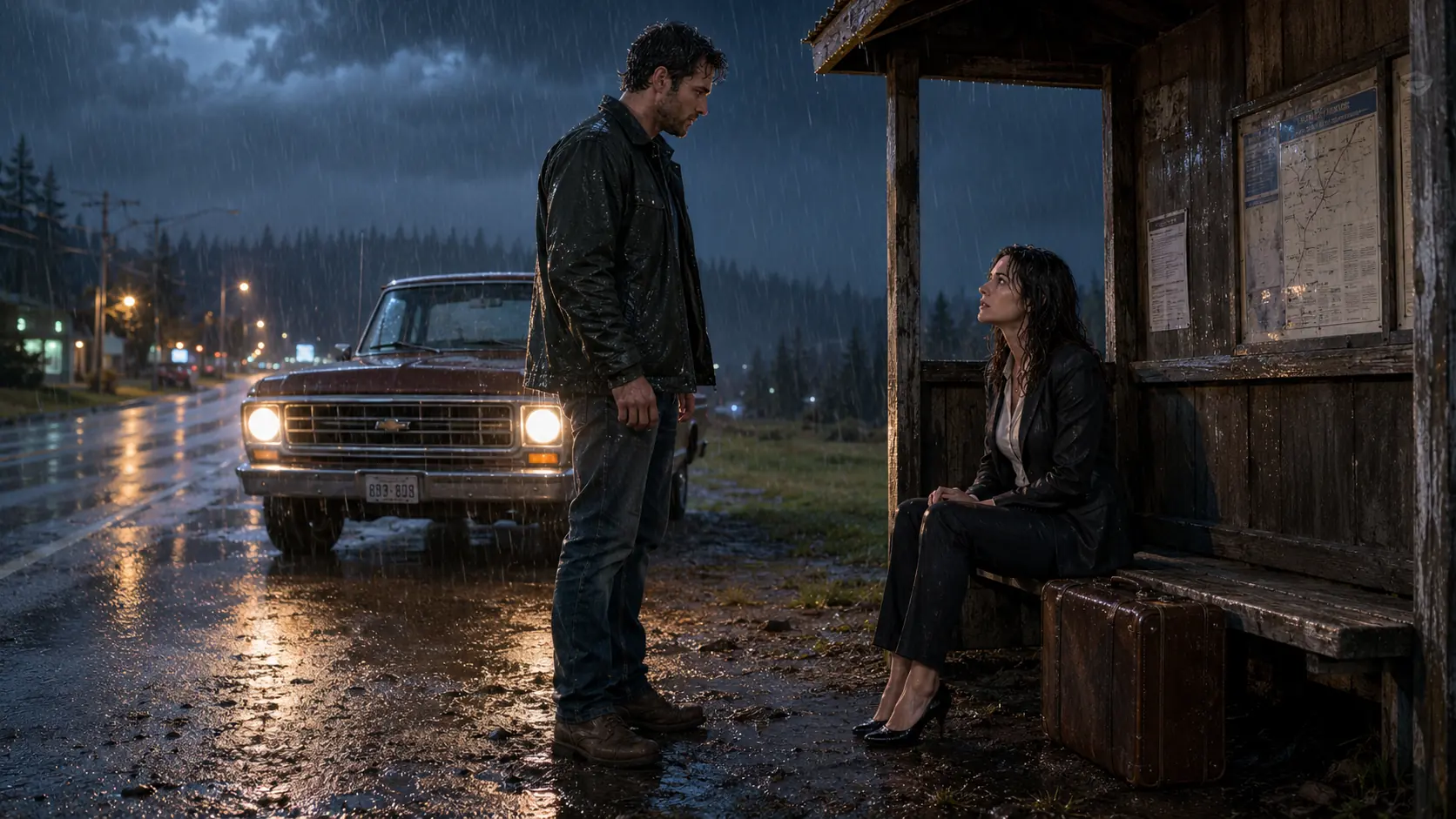
Daniel returned with two mugs.
“Coffee,” he said. “Terrible, but hot.”
She accepted one.
“I might have a chance.”
“Good.”
“You say that like you expected it.”
“I figured a woman who built a company from nothing wasn’t going to get beaten by one bad night.”
Evelyn stared down at the coffee.
“You don’t know me.”
“No,” Daniel said. “But I know what quitting sounds like. You don’t have it.”
The next morning, Evelyn woke on Daniel’s couch to sunlight pressing weakly through gray clouds.
For one disoriented second, she forgot where she was.
Then she heard Noah in the kitchen.
“Dad, do business ladies like pancakes?”
Daniel answered, “Everybody likes pancakes.”
“What if they’re too busy?”
“Then they need pancakes more.”
Evelyn lay still, listening.
She had spent years waking up to alarm tones, calendar reminders, overseas market summaries, investor updates, and urgent emails marked red.
This morning, she woke to a child arguing about pancakes.
It was absurdly peaceful.
Then reality returned.
Her company.
Martin.
Project Harbor.
She sat up too fast and reached for her phone.
There was a message from Claire.
Got the files. You need to see this.
Evelyn’s heart slammed against her ribs.
By 7:30 a.m., she was sitting at Daniel’s kitchen table in borrowed clothes while Noah ate pancakes shaped vaguely like rockets. Daniel had loaned her his old laptop, which took nearly ten minutes to start and sounded like a lawn mower, but it worked.
Claire sent the files through an encrypted transfer.
Evelyn opened them one by one.
The more she read, the colder she became.
Project Harbor was not just an internal coup.
It was a planned destruction of her reputation.
Martin had coordinated with two board members and an outside private equity firm. They intended to remove Evelyn, drive down the company’s valuation through scandal, force a distressed sale, then acquire controlling interest through a shell entity. Afterward, they would sell Hayes Meridian’s government logistics software to a defense contractor for three times its current value.
They were not just stealing her company.
They were selling its bones.
Then Evelyn opened the folder labeled personal leverage.
Inside were photos of her apartment, medical records from her mother’s final illness, old emails to her father, and a memo analyzing Evelyn’s “psychological vulnerabilities.”
Her grief.
Her isolation.
Her work habits.
Her lack of close family support.
Her tendency to avoid asking for help.
They had studied her loneliness like a weakness in a firewall.
Evelyn pushed back from the table so abruptly the chair scraped the floor.
Noah looked up, syrup on his chin.
“Are you mad?”
Daniel looked at her carefully.
Evelyn’s breath came too fast.
“I need air.”
She stepped onto the back porch, barefoot in Daniel’s old socks, and gripped the railing.
The morning air was cold and clean after the storm. Wet grass shimmered in the yard. Somewhere nearby, water dripped steadily from the roof.
For years, Evelyn had believed her loneliness was the price of success.
She had told herself that needing people made her vulnerable, so she needed less. She had trained herself to operate on discipline, strategy, and control. She had missed birthdays, skipped holidays, ignored exhaustion, and called it ambition.
And all the while, the people around her had noticed.
Not because they loved her.
Because they intended to use it.
The back door opened behind her.
Daniel stepped out.
He did not ask if she was fine.
He was learning.
Instead, he stood beside her and leaned on the railing.
After a while, Evelyn said, “They knew.”
“Knew what?”
“That I didn’t have anyone.”
Daniel was quiet.
“They knew there was no husband who would call a lawyer at midnight. No parent who would show up furious. No sibling who would leak the truth. No best friend with a spare room. They knew if they cut off my accounts and locked me out, I would be alone.”
Her voice trembled, and she hated it.
“They were right.”
Daniel turned his head.
“No, they weren’t.”
Evelyn gave a sharp, broken laugh.
“Daniel, you found me at a bus stop.”
“And now you’re on my porch.”
“That doesn’t change what I was.”
“It changes what they counted on.”
She looked at him.
His face was tired, unshaven, and serious.
“They counted on nobody stopping,” he said. “Someone did.”
Evelyn stared at him until her vision blurred.
She turned away quickly.
“I can’t fall apart.”
“You can for five minutes.”
“I don’t have five minutes.”
“Then take two.”
It was such a simple kindness that she had no defense against it.
Evelyn covered her face with both hands and cried.
Not loudly. Not dramatically.
Just enough for the grief, humiliation, fear, and fury to finally move through her instead of staying lodged behind her ribs like broken glass.
Daniel stayed beside her.
He did not touch her without permission.
He simply stood there, steady as the porch beneath her feet.
When she finally lowered her hands, she wiped her cheeks with the sleeve of his sweatshirt and laughed weakly.
“This is extremely bad for my brand.”
Daniel smiled.
“Your brand needed a day off.”
By noon, Evelyn had a plan.
Claire would send copies of the Project Harbor files to three places: Evelyn’s personal attorney, a federal contact from an old government contract audit, and a journalist Evelyn trusted only because the woman had once refused to publish a rumor without documentation.
But there was one problem.
The strongest evidence was still on Evelyn’s company laptop, the one security had taken when they escorted her out.
Unless they could prove the files Claire found were authentic and connect them to the access logs on Evelyn’s device, Martin could claim they were fabricated.
Evelyn needed the laptop.
And Daniel, against every practical instinct, offered to drive her back to Boston.
“You don’t have to do this,” Evelyn said.
“I know.”
“This could get ugly.”
“I figured.”
“You have Noah.”
“He’s staying with my neighbor Mrs. Alvarez until I get back. She already threatened to feed him enough empanadas to make him forget I exist.”
Evelyn blinked.
“You arranged that already?”
“You were pacing the kitchen for twenty minutes muttering about server logs. I made assumptions.”
“You shouldn’t get involved in this.”
Daniel looked at her from across the kitchen.
“Evelyn, a man left you in the rain because your billing account got declined. I’m not going to leave you alone in a corporate war because it’s inconvenient.”
She had no idea what to say to that.
So she said the only thing she could.
“Thank you.”
By 2:00 p.m., they were on the road to Boston.
Evelyn wore her own dry dress pants, Daniel’s sweatshirt, and a borrowed wool coat from Mrs. Alvarez, who had taken one look at her and said, “Mija, rich people can still catch pneumonia,” before pressing a container of food into her hands.
Noah had hugged Evelyn before they left.
“Are you going to fight the bad business people?”
“I’m going to try.”
“Use charts,” he advised seriously. “Teachers get scared when you use charts.”
“I’ll remember that.”
Daniel drove while Evelyn made calls.
Her attorney, Mara Singh, answered on the third attempt and immediately began swearing with impressive creativity after Evelyn sent the first files.
“This is enough for an emergency injunction,” Mara said. “Maybe more. But we need chain of custody. We need original devices, server confirmations, and someone willing to testify.”
“Claire will testify.”
“They’ll destroy her.”
“I won’t let them.”
“Evelyn,” Mara said, voice softening, “you may not be in a position to stop that yet.”
Evelyn looked out the window at the wet highway.
For the first time in twenty-four hours, she did not feel alone enough to believe that.
“I’m getting my laptop,” she said.
Mara went silent.
“Do not break into your own company.”
“I wasn’t planning to.”
“Your tone suggests otherwise.”
“I’m going to ask for it back.”
Daniel glanced at her.
Mara sighed.
“Record everything. Stay in public areas. Do not threaten anyone. And Evelyn?”
“Yes?”
“Whoever helped you last night, keep them close. You’re going to need witnesses who aren’t on your payroll.”
Evelyn looked at Daniel.
He kept his eyes on the road.
“I know,” she said quietly.
They reached Boston just before rush hour.
The Hayes Meridian building rose into the cloudy sky, all steel and glass, coldly reflecting the city below. Evelyn had once loved that view from the street. The building had felt like proof. Proof that she had made it. Proof that no one who doubted her mattered anymore.
Now two security guards stood inside the lobby doors, and her own name had been removed from the digital welcome display.
Seeing that hurt more than she expected.
Daniel parked across the street.
“You sure?”
“No.”
“Good answer.”
Evelyn looked at him.
“I need you to stay here.”
“No.”
“Daniel.”
“If they try to say you came alone and caused a scene, I’m a witness. If they try to intimidate you, I’m standing there. If they call security, I’ll politely suggest they avoid putting hands on the woman whose attorney already has evidence of corporate fraud.”
She stared.
“You’ve thought about this.”
“I work construction contracts for a living. Rich men in clean shirts try to cheat people in muddy boots all the time. Different building, same tricks.”
Evelyn almost smiled.
They crossed the street together.
Inside the lobby, conversations quieted.
People recognized her immediately.
Some looked shocked. Some looked away. Some pulled out phones.
Evelyn straightened her shoulders.
She had no makeup. Her brown hair was tied back with a rubber band Noah had given her because it had “lucky rocket energy.” She wore borrowed clothes and shoes still slightly warped from rain.
But when she walked toward the security desk, her voice was calm.
“I’m here to retrieve personal property taken from me yesterday.”
One guard shifted uncomfortably.
“Ms. Hayes, we were instructed not to—”
“Call upstairs,” Evelyn said. “Tell Martin Vale I’m in the lobby with legal counsel on the phone and a witness present.”
Daniel leaned slightly toward her.
“Am I the witness or legal counsel?”
“Witness.”
“Good. I left my law degree in my other pants.”
Despite everything, she nearly laughed.
The guard made the call.
Five minutes later, Martin Vale appeared from the elevator.
He wore a charcoal suit, a blue tie, and the faint smile of a man who believed the building belonged to him now.
“Evelyn,” he said warmly, as if greeting an unstable relative at a family gathering. “We’ve been worried about you.”
Daniel’s jaw tightened.
Evelyn held up her phone, recording.
“No, you haven’t.”
Martin’s smile flickered.
“I see you’re emotional.”
“Careful,” Evelyn said. “Every word you say now is being preserved.”
Martin glanced at Daniel.
“And who is this?”
“Someone who stopped when everyone else kept driving.”
Martin did not understand the sentence, which made Evelyn glad.
“I’m here for my laptop,” she said.
“That device is company property.”
“It contains personal files and evidence relevant to an emergency legal filing. Refusing to preserve and return it after notice may expose you to sanctions.”
Martin smiled again.
“You always did enjoy sounding like the smartest person in the room.”
“No,” Evelyn said. “I enjoyed being underestimated by men who confused patience with weakness.”
A few employees had gathered near the elevators.
Claire stood among them, pale but determined.
Martin noticed too late.
Evelyn raised her voice just enough to carry.
“For the record, Martin, did you authorize Project Harbor?”
The lobby went very still.
Martin’s expression hardened by one almost invisible degree.
“I don’t know what you’re talking about.”
“Did you authorize the creation of forged financial approvals using my credentials?”
“This is absurd.”
“Did you coordinate with Northbridge Capital to force a distressed sale after removing me as CEO?”
His eyes flashed.
Only for half a second.
But it was enough.
“You need help,” Martin said loudly, turning toward the watching employees. “This is exactly the kind of erratic behavior that concerned the board.”
There it was.
Unstable.
Volatile.
Difficult.
Evelyn felt the old fear rise.
Then Daniel stepped forward.
Not aggressively. Not dramatically.
Just enough to stand beside her.
“She asked for her property,” he said evenly. “You’re the one calling names.”
Martin looked him up and down, taking in the worn boots, work jacket, and rough hands.
“This is a private corporate matter.”
“Funny,” Daniel said. “Looks like a lobby.”
A nervous laugh rippled from somewhere near the elevators.
Martin’s face tightened.
Then Claire stepped forward.
“I copied the archive logs,” she said, voice shaking but clear. “And I sent them to Ms. Hayes’s attorney.”
Martin turned slowly.
“Claire.”
She flinched, but did not step back.
“You told me loyalty mattered,” Claire said. “You were right. I just chose the person who earned it.”
The elevator opened again.
Two more men stepped out, followed by a woman in a navy suit carrying a leather briefcase.
Mara Singh.
Evelyn’s attorney.
She walked across the lobby like a blade.
“Mr. Vale,” Mara said, “my office has filed an emergency petition. You are on formal notice to preserve all records, devices, access logs, board communications, and external communications involving Northbridge Capital. If Ms. Hayes’s laptop is not produced immediately, I will request sanctions before dinner.”
Martin’s mouth went thin.
For the first time, he looked uncertain.
That uncertainty saved Evelyn.
Within twenty minutes, her laptop was returned in a sealed evidence sleeve.
Within two hours, Mara had filed the documents.
Within six hours, the court issued a temporary restraining order freezing the board’s emergency actions and preventing the sale or transfer of Hayes Meridian assets.
By midnight, the journalist published the first story.
By morning, Martin Vale was no longer smiling.
The next week became a storm of a different kind.
News vans camped outside the building. Investors released careful statements pretending they had been concerned all along. Employees leaked internal emails. Northbridge Capital denied wrongdoing in the hollow language of guilty institutions. Federal investigators requested documents.
Evelyn stayed at Daniel’s house for what was supposed to be one night.
Then three.
Then seven.
At first, she told herself it was practical. Her apartment was still tangled in legal complications. Her company was under investigation. Reporters were outside her building. Daniel’s house was quiet, out of the way, and safe.
But practical explanations had limits.
They did not explain why she found herself looking forward to Noah’s stories after school.
They did not explain why she started making breakfast because Daniel always burned toast when distracted.
They did not explain why the small house, with its noisy pipes and crooked shelves, felt more peaceful than any luxury apartment she had ever owned.
They did not explain why, when Daniel came home smelling like sawdust and cold air, something in her chest eased.
Noah adapted fastest.
By the fourth night, he had assigned Evelyn a permanent seat at the kitchen table.
By the sixth, he asked if business people were allowed to help with science projects.
By the eighth, he introduced her to Mrs. Alvarez as “our emergency CEO.”
Mrs. Alvarez nodded solemnly.
“Every house needs one.”
Evelyn discovered that Noah struggled with reading but loved numbers. Daniel discovered that Evelyn could not fold fitted sheets, did not know how to unclog a sink, and approached grocery shopping as if negotiating a merger.
“You made a spreadsheet for cereal,” he said one evening, staring at her laptop.
“Price per ounce matters.”
“Noah chooses cereal based on cartoon animals.”
“That’s why children are vulnerable to market manipulation.”
Daniel looked at her.
“You’re saying that about a box with a smiling tiger on it.”
“The tiger knows what he’s doing.”
Daniel laughed so hard Noah came running from the living room asking what happened.
Slowly, Evelyn’s life widened.
There were still lawyers, court filings, investor calls, and brutal headlines. There were still nights when she woke from dreams of the boardroom, heart racing. There were still moments when she reached for her old armor: coldness, distance, control.
But Daniel never demanded she become softer.
He simply gave her space where softness did not feel punished.
One night, nearly three weeks after the bus stop, Evelyn found him in the garage fixing a broken cabinet door.
Rain tapped against the roof again, gentler this time.
She stood in the doorway wearing jeans, one of his old flannel shirts, and her brown hair loose over her shoulders.
“Do you ever regret stopping?” she asked.
Daniel looked up from the workbench.
“No.”
“You didn’t even know me.”
“I knew enough.”
“You knew I was wet and stranded.”
“That was enough.”
She leaned against the doorway.
“My life is chaos.”
“Most lives are. Yours just has press coverage.”
She smiled faintly.
“I’m serious.”
“So am I.”
Daniel set down the screwdriver.
“Evelyn, after Anna died, people kept saying I was strong. I hated that. They said it because I got up, packed Noah’s lunch, paid bills, went to work. But that wasn’t strength. That was just not having another option.”
Evelyn listened quietly.
“Real strength came later,” he continued. “When I let Mrs. Alvarez watch Noah because I couldn’t do everything. When I told my brother I was drowning. When I admitted I was angry. When I stopped pretending I was fine.”
The word landed between them.
Fine.
Their first lie to each other.
Daniel stepped closer, but not too close.
“You’re strong, Evelyn. Anyone can see that. But you don’t have to be only that.”
Her throat tightened.
“I don’t know how to be anything else.”
“Then start small.”
“How?”
“Stay for dinner even when your lawyer calls. Let Noah teach you his card game even though he cheats. Tell me when you’re scared instead of turning into a boardroom statue.”
“A boardroom statue?”
“Very impressive. Very expensive-looking. Emotionally impossible to move.”
She laughed softly, then wiped at one eye.
“I hate how accurate that is.”
Daniel smiled.
“I’m handy.”
The case against Martin broke open faster than anyone expected.
Claire’s testimony led investigators to hidden communications. The laptop logs proved Evelyn’s credentials had been duplicated while she was physically in investor meetings across town. Northbridge’s shell company documents tied Martin directly to the planned acquisition.
The board reversed its vote.
Martin resigned before he could be removed, then was arrested two days later on charges that made every financial network repeat Evelyn’s name again, this time with different adjectives.
Vindicated.
Resilient.
Wrongfully ousted.
Brilliant.
Evelyn returned to Hayes Meridian as CEO on a cold Monday morning in December.
The lobby was packed.
Employees lined the walls, clapping as she walked in.
Claire cried openly. Mara looked satisfied. Cameras flashed through the glass doors outside. The digital display once again read:
Welcome Back, Evelyn Hayes
Evelyn should have felt triumphant.
Part of her did.
But as she stood in the lobby of the building she had fought to reclaim, she realized something unexpected.
The building no longer felt like proof of her worth.
It was just a building.
Important, yes.
Hard-earned, yes.
But not the whole of her life.
Not anymore.
That evening, after the press conference, Evelyn did not go to her penthouse.
She drove back to Fairhaven.
Daniel was on the porch when she arrived, wearing his faded coat, hands in his pockets. Noah had taped a handmade sign to the front door.
WELCOME BACK CEO EVELYN
Underneath, in smaller letters, he had added:
WE HAVE PANCAKES
Evelyn stood in the driveway for a long moment, smiling through tears.
Then Noah burst out of the house and ran toward her.
“You won!” he shouted.
Evelyn crouched just in time for him to crash into her arms.
“I think we did.”
Daniel walked down the porch steps slowly.
“You okay?”
Evelyn looked up at him.
For once, she did not say fine.
“I’m happy,” she said. “And scared. And tired. And I don’t know what happens next.”
Daniel smiled.
“Sounds honest.”
“It’s new.”
“You wear it well.”
Noah pulled back and looked between them with great seriousness.
“So is Evelyn still our emergency CEO, or is she just regular Evelyn now?”
Daniel coughed.
Evelyn looked at him.
He looked back at her.
There were many things they had not said yet. Things too delicate to rush. Things that had grown quietly in shared kitchens, late-night conversations, courthouse waiting rooms, and rainy drives.
Evelyn brushed Noah’s hair back from his forehead.
“Can I be both?”
Noah considered this.
“Yes,” he said. “But regular Evelyn has to play cards after dinner.”
“She cheats at business,” Daniel said. “She’ll definitely cheat at cards.”
“I do not cheat,” Evelyn said.
“You made a probability chart for Go Fish.”
“That was strategy.”
Noah gasped.
“I knew it!”
Laughter rose between them, bright and easy, filling the cold evening air.
Months passed.
Hayes Meridian changed.
Evelyn changed it.
She removed the executives who had stayed silent. She promoted Claire to chief of staff. She created employee protections that made it harder for power to hide behind polished language. She built an independent ethics board with real authority, not decorative influence.
She also did something that shocked every business magazine that had spent years profiling her as a relentless machine.
She went home at six on Fridays.
At first, the office whispered.
Then they adapted.
So did she.
Some Fridays, she drove to Fairhaven and helped Noah with homework at Daniel’s kitchen table. Some Saturdays, Daniel and Noah came to Boston, where Noah pressed every elevator button in her building and declared the executive lounge “too quiet for humans.”
Evelyn learned to cook three meals that did not involve delivery apps.
Daniel learned that formal charity galas required shoes he hated.
Noah learned that if he asked Evelyn for help with a school presentation, she would produce slides, speaker notes, rehearsal timing, and a closing statement.
His teacher sent a note home saying it was “perhaps slightly advanced for second grade.”
Daniel framed it.
On the anniversary of the storm, Evelyn asked Daniel to drive with her.
They returned to the same roadside bus stop.
It was daylight this time. The sky was clear, washed pale blue after morning rain. Cars moved steadily along the highway. The wooden bench was dry. The shelter looked smaller than Evelyn remembered.
She stood in front of it, her brown hair moving softly in the wind.
Daniel stood beside her.
Noah waited in the truck, drawing rockets in the fog on the window.
“For months,” Evelyn said quietly, “I hated this place.”
Daniel looked at the bench.
“Makes sense.”
“I thought it was where my life fell apart.”
“And now?”
She took a breath.
“Now I think it’s where the wrong life ended.”
Daniel turned toward her.
Evelyn looked at him, the man who had stopped when everyone else kept driving. The man who had offered a coat without asking for her story. The man who had stood beside her in a lobby full of people waiting for her to break.
“I spent years building rooms where nobody could touch me,” she said. “Glass offices. Private elevators. Locked accounts. Perfect schedules. I thought that was safety.”
Daniel listened.
“But when everything collapsed, none of those things protected me. A stranger did. A little boy with a space blanket did. A noisy kitchen did. A house with bad plumbing and canned soup did.”
Daniel smiled faintly.
“The soup has improved.”
“Barely.”
“Harsh but fair.”
Evelyn laughed, then stepped closer.
“I don’t want to be alone like that again.”
Daniel’s expression softened.
“You’re not.”
“I know.”
She looked down, suddenly nervous in a way hostile boardrooms had never made her nervous.
“I love you, Daniel.”
The words came out quietly.
Simple. Terrifying. True.
Daniel’s eyes changed.
For a moment, he looked like a man standing at the edge of something he had never expected to find twice in one lifetime.
Then he reached for her hand.
“I love you too, Evelyn.”
Behind them, the truck window rolled down.
Noah shouted, “Are you guys being romantic? Because I’m hungry!”
Evelyn burst out laughing.
Daniel closed his eyes.
“Perfect timing, buddy.”
“I want pancakes!”
“It’s four in the afternoon!”
“That’s a breakfast stereotype!”
Evelyn leaned into Daniel’s shoulder, laughing harder than she had in years.
The world had not become simple.
Her company still demanded courage. The press still watched. Old enemies still existed in polished rooms. Daniel still worried about bills more than he admitted. Noah still left socks in impossible places.
But Evelyn no longer measured life only by what she could control.
She measured it by the people who stayed.
The businesswoman abandoned at a lonely bus stop had arrived there believing her life was over. She had been stripped of her title, her money, her office, her reputation, and every illusion of safety she had mistaken for love.
But in the middle of a storm, a single father stopped his truck.
He gave her his coat.
His son gave her a space blanket.
And a small, imperfect house became the first place in years where Evelyn Hayes did not have to prove she deserved to exist.
The world is full of invisible storms.
Some happen on highways. Some happen in glass boardrooms. Some happen quietly inside people who look powerful enough to survive anything.
Society often assumes successful people do not need saving. It assumes wealth prevents loneliness, titles prevent fear, and ambition can replace tenderness.
But pain does not care how expensive your clothes are.
Betrayal does not skip the powerful.
And even the strongest woman can reach a night where she is simply cold, tired, and waiting for someone to stop.
True kindness rarely arrives with perfect timing or grand speeches.
Sometimes it looks like an old pickup truck pulling onto the shoulder of an empty highway.
Sometimes it looks like canned soup, borrowed sweatpants, a child’s space blanket, and a man gentle enough not to ask questions before offering warmth.
And sometimes, the life you fought so hard to protect has to fall apart before you finally find the one thing success could never build for you.
A home.