It was a blazing Monday morning in the middle of summer when Daniel Brooks placed his company badge on the HR desk, ending twelve years of loyalty and silence.
No argument.
No negotiation.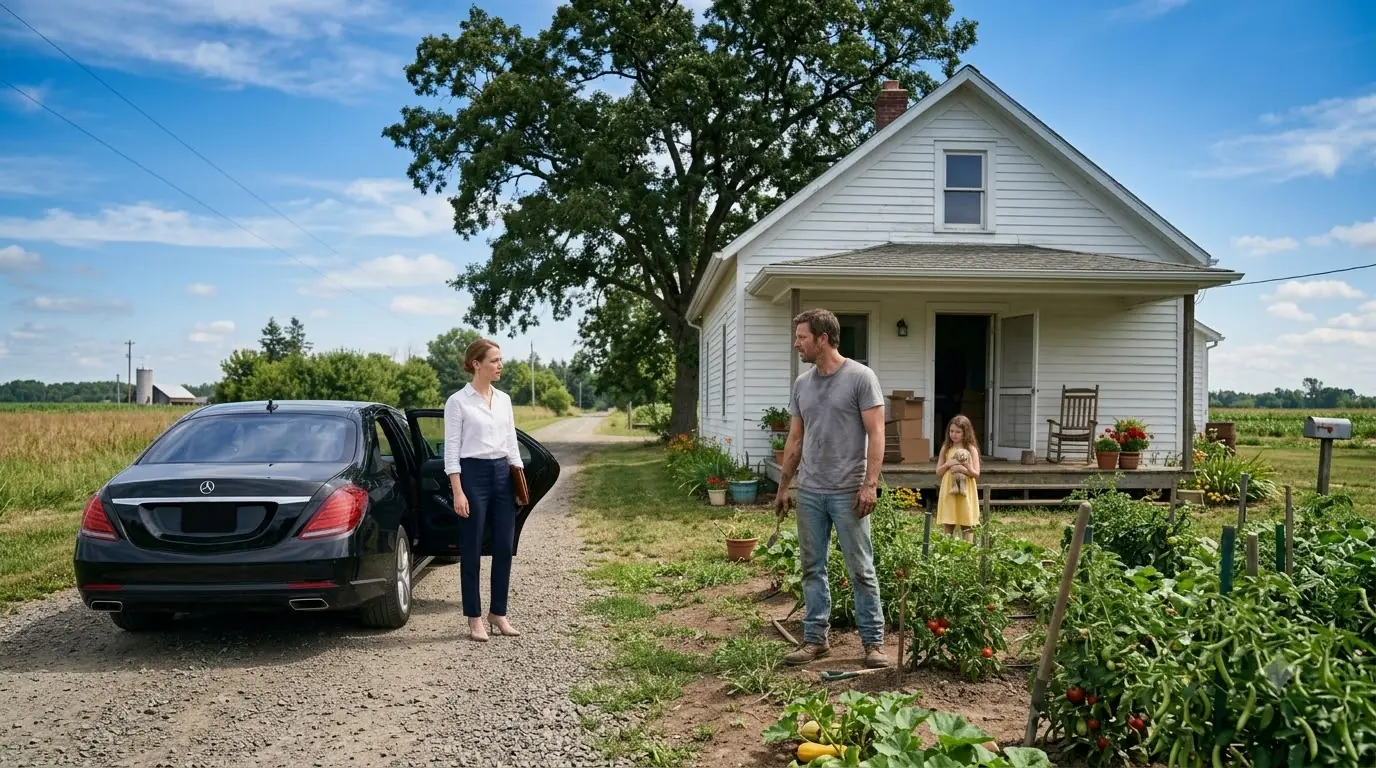
Just one sentence.
“My daughter needs me.”
Margaret Okafor, the HR director at Arcturus Technologies, stared at the badge as if it had landed on her desk from a great height. She had seen resignations before. Angry ones. Tearful ones. Carefully negotiated ones where the employee pretended not to already have another offer signed. But this was different.
Daniel Brooks did not look angry. He did not look relieved either. He looked exhausted in the way only a parent looks exhausted when the decision has already been made in the dark, at a kitchen table, after everyone else has gone to sleep.
“Daniel,” Margaret said carefully, rising from her chair. “Wait. Let me call someone from leadership.”
“There’s no need.”
“There are protocols. A transition plan. You’ve been here twelve years. You can’t just—”
“I can.”
The words were not loud.
That made them harder to argue with.
Margaret studied him. She had known Daniel for nearly a decade. Not closely, but enough. He was the kind of employee every company quietly depended on while publicly celebrating flashier people. He showed up early, stayed late, remembered details, fixed broken processes, and never took credit loudly enough for leadership to feel uncomfortable.
She looked at the envelope he had placed beside the badge.
“Effective immediately?” she asked.
“Yes.”
“You know what that means.”
“I do.”
“No severance discussion first?”
“I’m not leaving because I found something better.”
Margaret’s face softened.
“Is this about Lily?”
Daniel looked down.
That was answer enough.
Margaret’s voice lowered.
“Daniel, let me escalate this. Maybe there’s still a way to make an arrangement.”
“There was a way six weeks ago,” he said. “I asked.”
Margaret knew what he meant.
The remote-work request.
The denied accommodation.
The two-sentence answer from Victor Hale, chief operations officer, written with the cold efficiency of a man who had never had to choose between a paycheck and a child’s breathing, eating, sleeping, healing, or silence.
Remote work is not aligned with the current operational model for this position.
Request declined.
Margaret had read the denial after it was entered into the file. She had almost challenged it. Almost. Then another meeting had started, another issue had come up, another day had swallowed the small moral discomfort whole.
Now Daniel’s badge sat on her desk, and almost was not enough.
“I’m sorry,” she said.
Daniel gave her a tired smile.
“I know.”
Then he turned away.
He walked to his desk on the twelfth floor for the last time. The office looked exactly as it always had. Glass walls. Neutral carpet. Rows of standing desks. The low murmur of engineers, product managers, analysts, and executives pretending their calendar invitations were urgent enough to justify the pace of their lives.
Daniel knew this building the way a person knows a place he never meant to love.
He knew which elevator was fastest after 8:15. He knew the coffee machine on the third floor made better espresso than the one on twelve. He knew which conference rooms had broken thermostats and which ones got harsh afternoon sun. He knew the printer on the east side jammed every Monday for reasons nobody had ever adequately explained.
He knew the names of the night-shift security guards. He knew which maintenance worker kept extra batteries in his supply cart. He knew the quiet stairwell window between the ninth and tenth floors where, for fifteen minutes in the morning, the city looked almost gentle.
He had never told anyone about that window.
It felt like the kind of thing a person only noticed after spending too much of his life inside a building.
His desk took twelve minutes to clear.
A photo of Lily at the beach, age four, squinting into sunlight with one front tooth missing. A ceramic mug she had painted at summer art camp, blue birds circling a yellow moon. A small framed photo of his late wife, Claire, laughing in the kitchen with flour on her cheek. A notebook full of project notes. A grocery list he found under the keyboard.
Eggs.
Yogurt.
Apple juice for Lily, no pulp.
He placed everything into a cardboard box someone had left near the supply closet.
Brendan Walsh appeared at the edge of the cubicle, coffee in hand.
“Hey,” Brendan said. “Is it true?”
Daniel kept packing.
“Yeah.”
“You’re leaving? Like leaving leaving?”
“That’s usually what resignation means.”
Brendan tried to smile, but it failed.
“What happened? Is it money? Because Victor has been freezing raises, but if you push—”
“It’s not money.”
Brendan’s eyes shifted to the photo of Lily.
“Is it your daughter?”
Daniel paused.
For exactly one second, his face changed.
“It’s always been my daughter.”
Brendan had no answer for that.
The elevator ride down felt longer than usual. People stepped in on floors ten, seven, and four. Two employees discussed a client escalation. Someone laughed at a joke on a phone. A woman from finance glanced at Daniel’s box, then looked away quickly, as if resignation might be contagious.
In the lobby, the badge gates blinked green for people going in.
Daniel walked around them.
The revolving doors pushed him out into the summer morning, and the heat hit him hard, full and physical and real. It was nothing like the recycled cold of the office. He stood on the sidewalk, cardboard box under one arm, and looked up at fourteen floors of glass.
Twelve years.
Then he turned and walked toward the parking garage.
The thing about glass buildings is that you can see the sun from inside them.
But after a while, you forget what it feels like on your skin.
Claire Brooks died on a Tuesday in November.
She had gone out to pick Lily up from piano lessons, the same short route she had driven dozens of times before. Past the hardware store. Past the dry cleaner. Past the corner with the broken traffic light the city had been promising to fix for two years.
A delivery truck ran the intersection.
The responding officer told Daniel it had been quick.
He said it like it was mercy.
Lily had been in the back seat.
She survived with a bruised collarbone, a shallow cut above her left ear, and four stitches that looked enormous on her small face. Physically, the pediatric trauma specialist said, Lily was fine. She said physically with careful emphasis, the way medical professionals do when they need parents to hear the invisible word hiding behind it.
Before the accident, Lily had talked constantly.
She had been speaking in full sentences before she was two and a half. By three, she asked questions with the seriousness of a courtroom attorney. Why did clouds not fall? Did birds know they were birds? Why did French fries taste better when ketchup stayed on the side? Did dogs dream about running or about being loved?
She had opinions about everything.
She narrated grocery trips. She corrected Daniel’s pancake shapes. She sang to herself in the bathtub. She invented names for neighborhood cats and assigned them elaborate political histories. Her laugh could fill a room and make Claire stop whatever she was doing just to listen.
Four days after the accident, Lily stopped speaking.
Not gradually.
Not in fragments.
She simply stopped.
The first morning, Daniel thought she was tired. The second, he thought grief had made her quiet. By the fourth, when he asked what she wanted for breakfast and she only looked at him with those enormous brown eyes, still and unreachable, he called the pediatrician.
The months after that became a world of specialists, appointments, forms, waitlists, therapy rooms, and words Daniel had never expected to need.
Trauma response.
Selective mutism.
Nervous system shutdown.
Complicated grief.
Lily’s therapist, Dr. Paula Reeves, had a soft office with warm lamps, a sand tray, and a patience that seemed almost holy. She told Daniel that Lily was not broken. Her silence was not defiance. It was protection. Her body and mind had found a way to survive the unbearable by making the world smaller.
“She needs safety,” Dr. Reeves said. “Not pressure. Not constant questions. Safety, routine, presence, and time.”
Presence.
That word stayed with Daniel.
At first, he thought he could provide it while still working.
He had to.
The mortgage existed. Health insurance existed. Therapy bills existed. Groceries existed. He returned to Arcturus two weeks after Claire’s funeral because the world had the cruelty to keep sending invoices after it had already taken everything.
He hired Barbara, a patient sitter in her sixties who had raised four children and understood that silence from a child was not always something to fill. Barbara brought knitting, soup, and the rare gift of not needing Lily to perform recovery on anyone else’s schedule.
Daniel dropped Lily at school each morning, drove forty-five minutes to the office, sat in meetings where people used words like synergy and bandwidth, then drove home to a daughter who met him at the door with arms around his waist and no words.
Her teacher, Miss Holloway, sent careful weekly emails.
Lily participated in painting today. She chose blue.
Lily sat with the reading group. She tracked the pages.
Lily stood near the window during recess and watched the other children play. She did not seem distressed.
Small dispatches from a country Daniel could not enter.
He told himself it was enough.
He told himself he was providing.
He told himself fathers had to do difficult things.
Then, at two in the morning, he would sit at the kitchen table in the dark, holding tea he never drank, listening to Lily shift silently in the next room, and feel the distance between the father he was managing to be and the father she needed him to be.
It was not a small distance.
The kitchen still carried Claire everywhere.
Her mug in the cabinet, the one with the chipped rim Daniel could not throw away. Her recipe cards in the drawer. Her blue sweater hanging on the back of a chair because Lily had once clutched it during a panic episode, and Daniel had never moved it afterward.
Sometimes, when the house was too quiet, Daniel could almost hear Claire’s voice.
Not as a ghost.
As memory.
Did she eat?
Did you read with her?
Did you sit long enough for her to know you were not leaving?
He tried.
God, he tried.
But trying was becoming math he could not solve.
One evening in June, Daniel came home late from a product escalation meeting that should have been an email. Lily was asleep on the couch, curled beneath Claire’s blue sweater. On the coffee table was a drawing.
A small wooden house.
A yard.
A tree with wide branches.
Two figures standing side by side.
One tall.
One small.
Daniel recognized the house immediately. His parents’ old place on Birch Road in Sunridge, Oregon. He had not been there in three years, but Lily had visited once when she was four. Apparently, she remembered it.
He studied the drawing.
There was space beside the two figures.
Not empty exactly.
More like room waiting to be filled.
The next morning, he submitted the remote-work request.
Six weeks later, Victor Hale denied it in two sentences.
Three days after that, Daniel quit.
Sunridge, Oregon, was not a place that appeared on many travel lists.
Its population was just over three thousand. Main Street had a diner, a hardware store, a used bookshop, a pharmacy that also sold fishing tackle, and a small grocery store where the owner knew who preferred firm peaches and who wanted soft ones for jam. The nearest city was an hour and forty minutes east, which felt, to the people of Sunridge, like exactly the right amount of distance.
Daniel’s parents had bought the house on Birch Road in 1987. His father had taught high school shop. His mother had worked at the county library for thirty years. They had retired to Scottsdale six years earlier because, as his father put it, “My knees have resigned from Oregon winters.”
The house had sat mostly empty since then, kept alive by a neighbor named Walt, who mowed the yard, checked the pipes, and reported any trouble with the gutters.
Daniel called his mother from the parking garage on the day he quit.
“I need the house,” he said.
A pause.
“For how long?”
“I don’t know.”
Another pause, softer this time.
“Then Walt will have the key ready. I’ll call him today. And Daniel?”
“Yeah?”
“Bring extra blankets. The upstairs radiator is stubborn.”
He almost laughed.
Almost.
The drive from Portland to Sunridge took ninety minutes.
Lily sat in the back seat with her stuffed rabbit, Biscuit, strapped beside her with a seat belt she had insisted on fastening herself. She watched the landscape change through the window. City blocks gave way to strip malls, strip malls to highway, highway to county roads, county roads to hills washed gold by summer light.
By the time they reached the valley, Lily had her face pressed to the glass.
Daniel watched her in the rearview mirror and said nothing.
The house looked exactly as he remembered.
White clapboard.
A covered front porch with two rocking chairs.
A backyard sloping toward a narrow creek that ran year-round.
The oak tree in the side yard still stood wide and low, the same tree Daniel had climbed as a boy, the same tree that had made him feel brave before he knew bravery could be something adults ran out of.
He carried their bags inside while Lily stood in the living room and turned slowly.
The house smelled of dust, old wood, and closed windows. Afternoon light fell through the west-facing glass in warm bars. There were shelves of books, a stone fireplace, a braided rug, and the old piano his mother had refused to sell even though nobody had played it properly in years.
Lily walked to the window.
She stood there a long time, looking at the yard, the creek, the oak tree.
Then she touched the glass with one finger.
Daniel unpacked the kitchen first.
He did not cry until she was asleep.
The weeks that followed had a different texture than anything Daniel had lived in since Claire died.
The days were slower, but not easier. Ease was too simple a word. Grief came with them to Sunridge. Trauma did too. Bills followed. Fear followed. Daniel’s savings were not large enough to pretend otherwise.
But the house gave them space.
Lily’s silence seemed less trapped there. In Portland, her quiet had felt like a sealed room. In Sunridge, it seemed to stretch outward into birdsong, creek water, wind through oak leaves, and the soft groan of the porch boards under bare feet.
Daniel found work with Walt’s son, who ran a small landscaping crew. It was not glamorous, and it did not pay what Arcturus had paid, but it let him stay close. Most mornings, Lily came along with her drawing pad and sat in the shade while Daniel hauled mulch, planted borders, trimmed hedges, and turned soil under the summer sun.
She watched everything.
A robin tugging a worm from the grass.