The truck backed up to Patty's fence line just after sunup.
The bed lifted and thousands of pecan shells came crashing down against her gate.
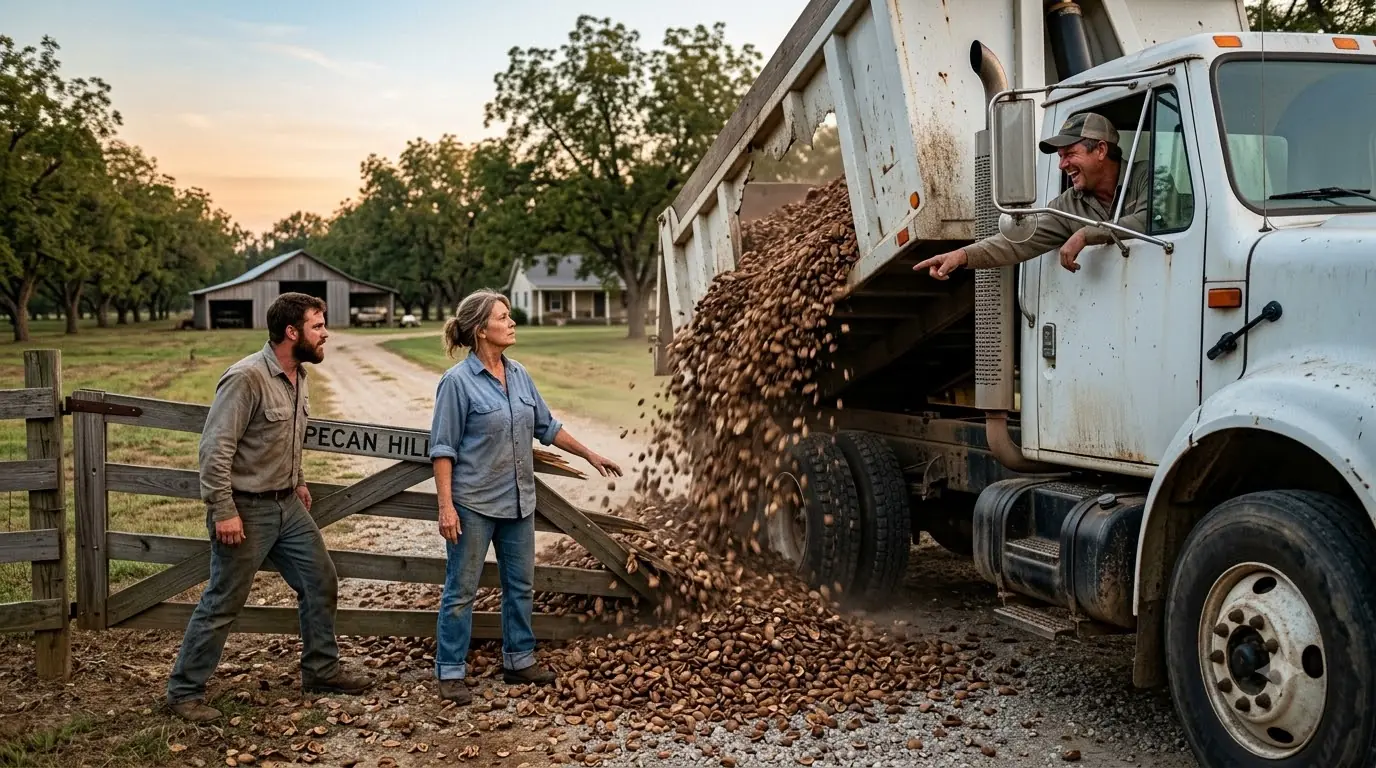
They dumped the load, destroyed the gate, then looked back laughing as the truck pulled away.
Patty's son stared at the damage and shook his head.
But Patty walked past the broken gate. She reached into the pile, lifted a handful of shells, and turned them slowly in her palm. She grabbed another handful, sorting the solid shells from the damp and dusty ones.
Her son studied the damage. Patty studied the opportunity. A week later, another mill truck arrived. Before the driver could unload, Patty waved him down and made him wait.
She wanted the exact weight of the load and the driver's signature beside it. He looked at the pile, then back at her. It was garbage. Why would the weight matter? Patty held out the slip until he signed it. Then she scooped a sample from the fresh load into a glass jar and wrote the date across the lid.
The following week, she did it again. Another load, another signed weight, another dated jar. Inside the barn, the jars began filling an entire shelf. Beside them sat a ledger packed with load weights and short notes in Patty's handwriting.
Near the wall, she kept a separate pile of shells she had chosen by feel. No one at the mill asked why Patty wanted every load weighed and no one noticed she was saving a sample from each one. Most people would have called someone to haul the pile away.
Patty started sorting it by hand. Morning after morning, before the dew burned off, she worked through the shells one scoop at a time. Some went into clean piles, others went into a heap off to the side. She could not fully explain how she told them apart.