One carried a contract. The other stood between her and the flooded field, looking at the broken pumpkin vines with an expression that made her wish he had stayed on the road.
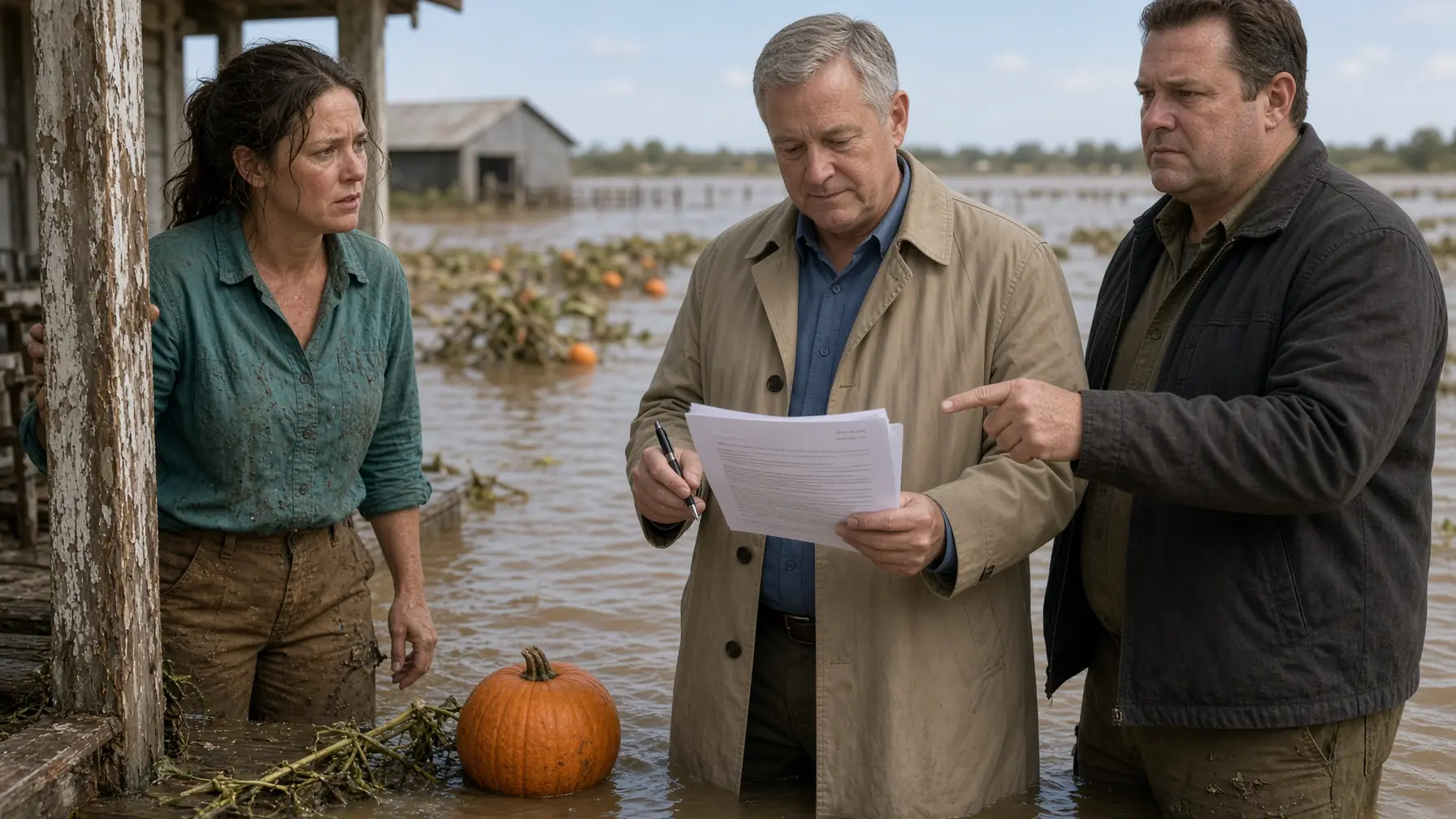
Behind them, muddy water covered the lower porch step.
It had been lower when they arrived.
Mara noticed the difference without yet understanding it. She stood beside the porch post in a faded teal work shirt, brown canvas trousers, and rubber boots coated with mud, her hands hanging at her sides because she had been using them since before midnight.
Grant Danner opened the contract.
A pen rested across the page.
Warren Pike glanced toward the field, then back at her.
They wanted her to look at the paper.
She kept looking at the water.
The storm had begun the previous evening with a sound like gravel thrown against the farmhouse windows. Mara had been at the kitchen table sorting bills when the first hard rain reached the roof.
She looked up.
The forecast had warned of heavy weather, and she had spent the afternoon doing what she could before it arrived. Tools were under cover. Loose equipment had been secured. The goats had shelter, and she had checked the gates before coming inside.
At around forty, she no longer believed preparation meant a storm could do nothing to surprise her.
It meant she might have a better chance when it did.
She stood, went to the window, and looked toward the equipment shed.
Rain blurred the yard.
Beyond it, the pumpkin field lay in darkness.
The crop had occupied her thoughts for months.
Not because pumpkins were romantic.
Because they required work, timing, and enough favorable weather to make the work worthwhile. She had walked those rows in heat, checked leaves after damp mornings, and worried over places where growth lagged behind the rest.
By evening, the field had finally begun to look like something that could carry the season.
The bills on the table were waiting for it.
So was the payment she had postponed while repairing equipment she could not work without.
Mara turned from the window and gathered the papers into a folder.
She did not want them lying where a leak or broken pane might reach them.
The gesture seemed cautious then.
Later, she would wish she could have moved the whole farm into a folder and carried it upstairs.
The rain continued.
At first, the sound was almost comforting.
A hard storm could pass quickly, leaving wet ground and chores in the morning. Mara made tea, charged her phone, and checked the weather again.
Then the wind changed.
It pressed against the side of the house and drove rain beneath places that had held through earlier storms. Water began dripping near the back door.
Mara put down a bucket.
She found towels.
Outside, something struck the wall.
She waited for the next gust to ease before opening the door.
A small piece of material had blown across the yard and caught near the steps. She moved it away, looked toward the shed, and saw water running where she did not want water to run.
That was when the storm stopped being something she could listen to from the kitchen.
She pulled on her boots.
The yard was already slick.
Rain struck her face hard enough to make her lower her head, and the beam of her flashlight turned the falling water into a bright, shifting curtain.
She checked the shed doors first.
They were closed.
Water moved across the ground in thin streams, gathering in low places and hurrying toward the equipment area. Mara followed one with her light.
It was broader than it had been an hour earlier.
She looked upstream.
In darkness and rain, she could see little beyond the nearest shapes.
She did not need to see everything to know the night was becoming worse.
She returned to the house, took a second flashlight, and went toward the goats.
They were unsettled.
The animals shifted close together under shelter, lifting their heads at the light and at the unfamiliar sounds beyond it. Mara checked the ground beneath them.
Wet.
Not yet flooded.
She could have waited.
The upper pasture was farther away, and moving animals during a storm was not a job she wanted to begin without good reason.
But waiting would make the decision harder if water reached them.
She stood for a moment with rain running from her ponytail down the back of her shirt.
Then she opened the route uphill.
The work took longer than it should have.
One goat moved willingly.
Another resisted.
A third tried to turn back toward the shelter it knew.
Mara kept the light low and moved patiently, using the familiar rhythm of her voice rather than raising it over the weather. She was tired before they reached the higher ground.