Walter Briggs slapped the dusty red side panel of the combine with the flat of his hand.
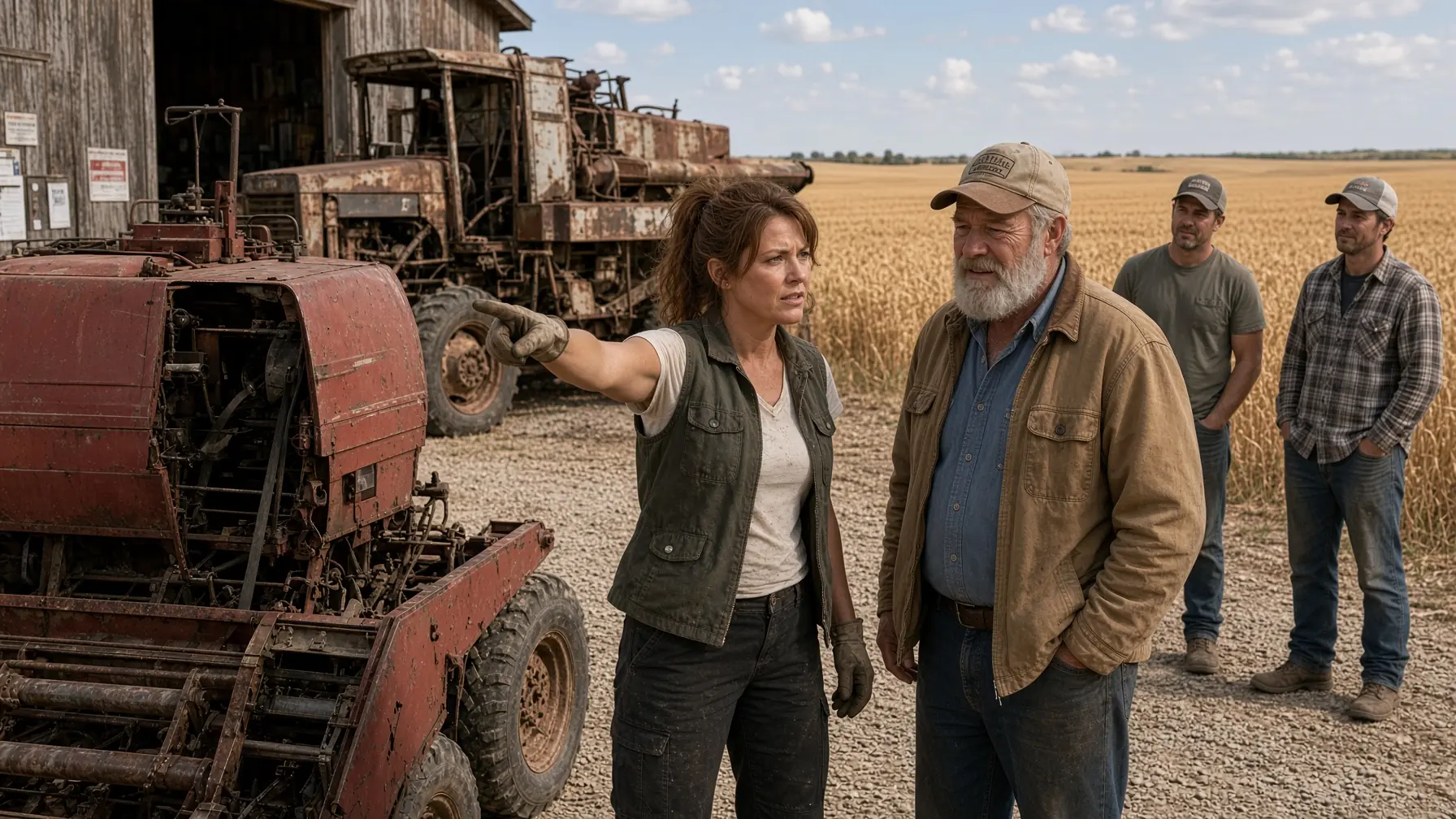
The hollow metallic sound carried across Claire Dawson’s repair yard and out toward the Kansas wheat field beyond it.
“Transmission slips. Feeder won’t engage. Hydraulic pressure’s almost gone.”
Walter shook his head.
“You’d spend more fixing it than buying another one.”
One of the two farmhands standing beside him laughed under his breath.
“Just cut it up for scrap, Claire.”
Claire did not answer.
She stood several feet away with her arms folded loosely across her dark olive work vest.
Thirty-eight years old.
Tall.
Athletic.
Auburn hair pulled into a messy ponytail high behind her head.
Grease already darkened the fingers of her mechanic gloves even though the combine had been in her yard for less than twenty minutes.
Walter looked at her.
“Well?”
Claire walked toward the machine.
“No?”
Walter frowned.
“No what?”
“No scrap.”
The younger farmhand laughed again.
Walter smiled.
“You haven’t even started it.”
“I don’t need to start it to know the frame is good.”
“That isn’t the problem.”
“I heard you.”
Claire crouched beside the open drive assembly.
Walter continued talking behind her.
“Previous owner ran it until the transmission started slipping. Then the feeder drive quit. After that hydraulic pressure dropped.”
Claire pulled one worn belt aside.
“Dealer shop looked at it?”
Walter gave a small laugh.
“My shop looked at it.”
Claire glanced over her shoulder.
Walter Briggs had sold farm equipment in central Kansas for almost thirty years.
He owned Briggs Agricultural Equipment twenty-six miles north of Claire’s workshop.
Three service bays.
Eight technicians.
Diagnostic software for every major brand his dealership represented.
And the confidence of a man used to farmers accepting whatever estimate appeared on the paper.
“How much?”
Claire asked.
“To repair?”
“Yes.”
Walter shrugged.
“If we did everything properly?”
He looked toward the farm workers.
“Twenty-eight. Maybe thirty-two thousand.”
The older worker whistled.
Claire looked back at the combine.
“And what’s the machine worth running?”
“Forty-five on a good day.”
“So you told the owner to replace it.”
“I told him not to throw thirty grand into a twenty-year-old machine.”
Claire reached deeper into the exposed side.
Her fingers found the drive shaft.
She rotated it.
Stopped.
Rotated again.
It moved.
Walter watched her.
“Transmission’s bad.”
Claire turned the shaft backward.
Again.
There was resistance.
But no grinding.
No sudden dead spot.
No obvious internal break.
She shifted position and put both hands on the feeder drive coupling.
It moved too.
Not freely.
But it moved.
Claire’s eyes narrowed.
One farmhand said:
“Machine’s done, Claire.”
She ignored him.
She checked the hydraulic lines.
Dry.
Reservoir low.
Filter old enough that the paint had almost disappeared.
Then she looked over her shoulder.
Behind the workshop sat another red combine.
Or what remained of one.
No header.
No cab glass.
Rear wheels missing.
Engine partially stripped.
It had sat there for almost four years because Claire refused to throw away equipment that still had useful bones.
Walter noticed where she was looking.
His grin returned.
“Oh, no.”
Claire stood.
Walked toward the parts machine.
Walter called after her:
“You seriously thinking about that wreck?”
She stopped beside the old combine and looked at the transmission housing.
Then the hydraulic block.
Then the feeder-drive arrangement.
Same generation.
Same engineering family.
Different model designation.
But Claire had already seen what mattered.
She turned.
“You’re trying to repair this combine like every broken part needs to be replaced.”
Walter spread his hands.
“And you’ve got a better idea?”
“I don’t need new parts.”
Walter followed her eyes.
“That old wreck?”
“Same generation.”
Claire pointed.
“Same hydraulic block.”
Then lower.
“Same feeder drive.”
She looked toward the damaged combine.
“And unless I’m remembering wrong…”
She walked closer to the stripped machine.
Cleaned grime from a metal tag with her thumb.
Read the number.