The first handcuff closed while a hamburger was still cooking on Marcus Reed's grill. Fat struck the heat with a small hiss, ordinary enough that for a moment the sound seemed to belong to a different yard.
Marcus kept his free hand open. Across the brick patio, his friends held their hands where the officers could see them, their afternoon reduced to careful distances and movements nobody had needed to explain a minute earlier.
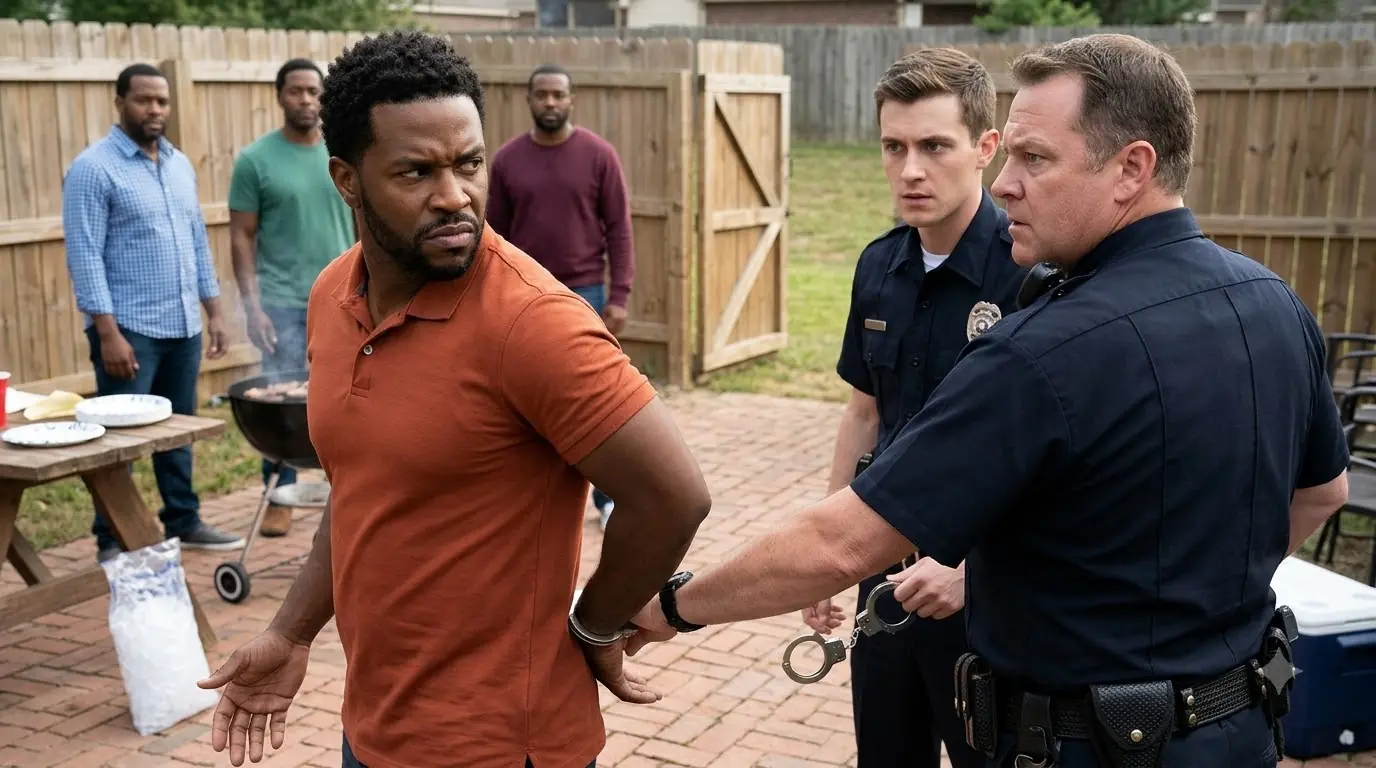
The second cuff remained in Sergeant Wade Mercer's hand. There was still a moment before it closed, still enough time for a question to enter a scene the sergeant appeared to believe he already understood.
Earlier that Saturday, Marcus had worried about chairs. He owned enough for four men if the old folding one could be trusted, and the uncertainty seemed important in a house where inviting people over still made him notice everything that might fail to make them comfortable.
He opened the chair on the patio and sat carefully. The frame held, but one foot rocked against an uneven place between the bricks.
He moved it six inches. The rocking stopped.
He had liked folding chairs as a boy for a reason he would have found embarrassing to confess then. They meant people were staying long enough that standing at the door would not do.
He remembered his father bringing extra ones outside, opening each with a practiced motion and checking the legs before setting it down. The chairs did not match, and nobody considered that a reason to delay the food.
Some guests brought their own. Others arrived carrying something to share, a bag held high while they greeted the people already there.
Marcus watched from a place near enough to hear but far enough that he could pretend he was not listening. Adults told stories differently when nobody asked them to make the story instructive.
He liked the laughter most. Not because every joke was understandable to him, but because the men laughing seemed briefly free of whatever made their faces more serious during the week.
His father looked different among friends. The same man who could become quiet at a counter would lean back in a chair, interrupt an old story to correct a detail, and accept the answering correction without losing his place in the afternoon.
That contrast mattered before Marcus knew how to explain it. He saw that restraint elsewhere was not the man's whole nature.
There was another self available when the people listening did not treat every strong feeling as something to manage. The boy wanted to grow into that ease, not merely into the larger body that would occupy the chair.
Once he tried to carry a chair too large for him. The frame caught against something, and he tugged at it with increasing determination while the adults kept talking.
His father noticed before the metal struck anything important. He came over, held one side, and asked Marcus to show where it was caught.
The help was practical, not a public verdict on the boy's strength. Together they freed the chair, carried it where it belonged, and opened it.
Marcus expected to be sent away afterward. Instead his father gave him another small task and returned to the conversation, leaving the failed attempt no larger than it needed to be.