The first frost had already silvered the grass when Margaret Cole knelt in the dirt and pulled up a root no one wanted.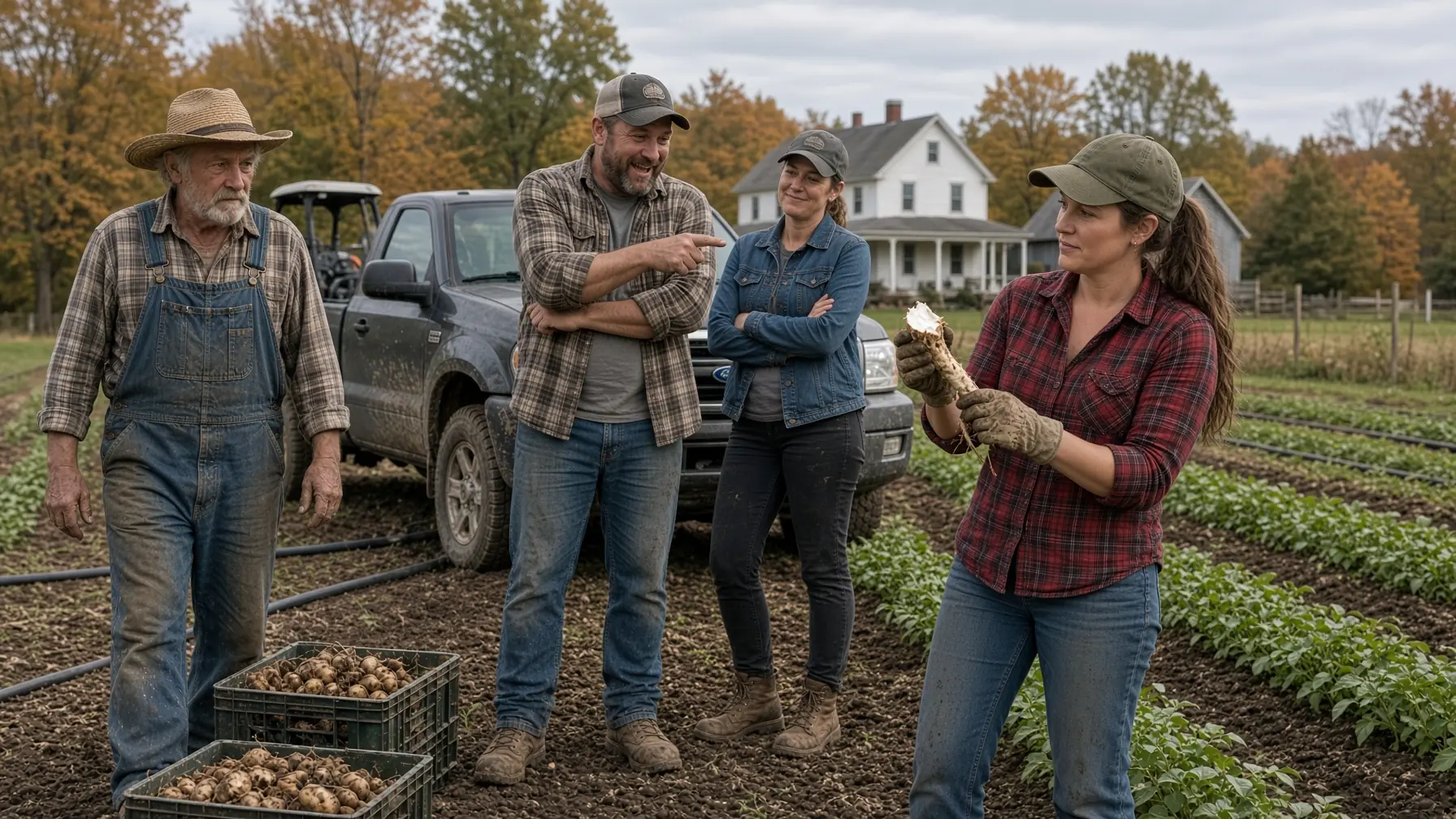
Chester County, Pennsylvania.
Autumn, 1843.
All along the ridge, farmers were digging potatoes.
Heavy baskets rolled toward cellars.
Children brushed soil from thick brown tubers.
Men counted sacks and estimated how many months the harvest might carry a household through winter.
Margaret was digging something else.
She pushed a fork beneath a narrow row at the edge of her garden and lifted carefully.
A cluster of pale roots came loose.
Long.
Forked.
Twisted.
Nothing impressive.
One root was barely larger than a man's finger.
Her seven-year-old son Daniel crouched beside her.
“That’s it?”
Margaret smiled.
“That’s it.”
Her four-year-old daughter Ruth sat a few feet away, sorting stones into two solemn little piles.
Daniel turned the root over.
“It looks ugly.”
“So do potatoes when they come out.”
“Can you eat it?”
Margaret wiped the dirt away against her apron.
Then broke the root in half.
The flesh inside was pale and crisp.
She took a bite.
Daniel watched.
“Well?”
Margaret chewed.
“Sweet.”
“How sweet?”
“Try it.”
He bit the other half.
His eyes changed.
“Apple.”
Margaret nodded.
“And something else.”
“Honey.”
Behind the fence came laughter.
Everett Shaw had been walking back from his potato field.
He stopped.
“You're eating that fool weed again?”
Daniel immediately looked embarrassed.
Margaret did not.
Everett leaned against the fence.
“Margaret.”
He nodded toward her small bed.
“You've got good ground sitting under that stuff.”
She continued loosening soil.
“It’s growing something.”
“Barely.”
He wasn't cruel.
That was what made his opinion harder to dismiss.
Everett had farmed the neighboring property most of his life.
He had buried two brothers.
Survived lean seasons.
Raised children.
He understood what hunger looked like when winter stretched too long.
“Potatoes will feed those children through March.”
He pointed toward the strange roots.
“That won't feed a bird.”
Margaret looked at him.
“Then don't plant it.”
Everett laughed.
“That’s fair.”
He walked on.
Daniel frowned.
“Why does everyone call it fool weed?”
Margaret placed another root into the basket.
“Because people like naming things they don't understand.”
“Is it really foolish?”
“No.”
“How do you know?”
Margaret looked toward the potato field.
“Because my mother grew it.”
That answer was enough for Daniel.
It was not enough for the county.
Margaret Cole was thirty-one years old.
A widow for three winters.
Her husband, Samuel, had died after a fever that began as something ordinary and became something the doctor could not stop.
He left behind:
A small farmhouse.
A leaning porch.
One milk cow.
Several acres of workable soil.
Two children.
Debt small enough not to destroy them immediately, but large enough that Margaret thought about it every month.
Samuel’s coat still hung beside the back door.
Margaret had never moved it.
Sometimes Ruth pressed her face against the sleeve because it still smelled faintly like smoke and wool.
Margaret pretended not to notice.
She worked mostly alone.
Potatoes formed the backbone of the farm.
Same as the neighbors.
They were sensible.
Reliable.
High yielding.
Easy to store.
A field that might produce a disappointing amount of grain could still produce enough potatoes to keep a family alive.
Farmers understood that.
That was why more and more ground had gone into potatoes over the years.
But near the edge of Margaret's yard was one narrow bed that did not match anything around it.
Skirret.
Most people in the county had stopped planting it long before.
Margaret had learned it from her mother in Lancaster County.
Her mother learned it from hers.
An old garden crop.
Patient.
Slow.
Unfashionable.
It did not give the dramatic yield of potatoes.
It did not reward impatience.
Some roots needed a full season.