The first thing Maggie Carter noticed was that the root did not come free.
She had expected the small plant to lift with the kind of stubborn resistance she knew from weeds around the barn and garden beds. Instead, the soil seemed to hold it with a weight that felt older than the thin green stem above ground had any right to possess.
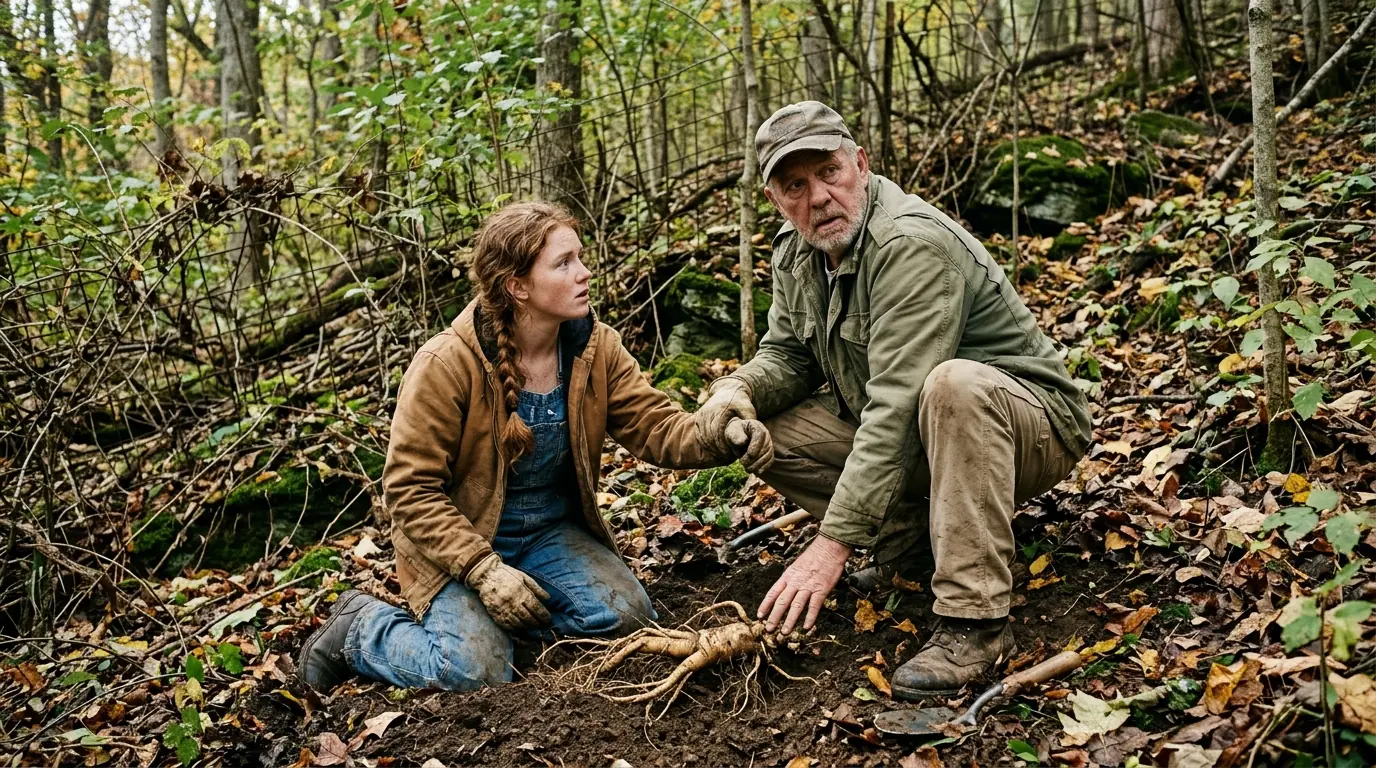
Maggie knelt deeper into the damp hillside, one knee pressing into a layer of brown leaves softened by two days of autumn rain. The air smelled of spicebush, wet bark, and the dark mineral scent that rose whenever a boot broke open Kentucky soil. She eased her gloved fingers beneath the plant and brushed away another ribbon of earth.
A pale-brown shoulder appeared.
Then another.
She stopped.
The shape beneath the soil was not a stone. It was not a buried stick, either. It had a thick body, narrow at the crown and widening below, with fine feeder roots threading out like old veins. Growth scars climbed the top in tight, crowded rings.
Maggie leaned closer.
“Grandpa,” she called.
No answer came from the lower trail.
She raised her voice. “Grandpa, I found a strange root.”
Somewhere behind the spicebush, Earl Carter grunted.
“Let me see it.”
Maggie smiled. At seventy-four, her grandfather could make three words sound like a complaint even when he was interested.
She kept one hand beneath the loosened soil and used the other to clear another inch. The root curved deeper than she expected. When she tried to lift it slightly, the ground held firm.
That was when Earl appeared between two young maples.
He came uphill slowly, one hand on the weathered fence post he had been inspecting, olive field jacket dark at the shoulders from the morning mist. His old cap was pulled low, and his short gray beard moved as he muttered about rotten staples and deer leaning against wire.
He looked at Maggie first.
Then at the root.
The complaint vanished from his face.
He crossed the last few steps much faster than he had climbed the hill.
Maggie barely had time to say, “I think it keeps going—” before Earl crouched beside her and caught her wrist.
“Don’t.”
His grip was firm enough to stop her, not hard enough to hurt.
Maggie stared at him.
Earl was not a man easily surprised. He had watched a tornado remove half a tobacco shed when Maggie was six, then spent the rest of that afternoon salvaging tin before the rain returned. He had found a black bear beside the feed shed one spring and reacted by backing into the house for a rifle-sized flashlight because, as he later explained, “It was too dark to see if that fool animal knew where it was going.”
But now the old man’s eyes were wide.
Not with excitement.
With fear.
He looked uphill.
Then downhill.
Then toward the faint trail that crossed the ridge beyond the abandoned wire fence.
Maggie frowned. “Why are you looking around?”
Earl released her wrist only long enough to pull loose soil back toward the root. He covered the thickest exposed section with both hands, then swept damp leaves across the disturbed patch.
“If it’s what I remember,” he said quietly, “tell no one you found it.”
Maggie looked at the half-hidden crown.