The auctioneer had already decided the wooden box was going into the scrap heap when the little girl raised her hand.
He had one boot on the tailgate of his truck and the other planted in the dust of a Wyoming ranch yard. The July sun had climbed high enough to turn every piece of discarded iron hot to the touch, and the last buyers were drifting toward their pickups. Nothing in the box looked worth another minute. Rusted hand shears lay tangled with chipped machine combs, bent cutters, and broken springs. An oily brown stain had worked through the boards along the bottom. One handle hung loose by a single nail.
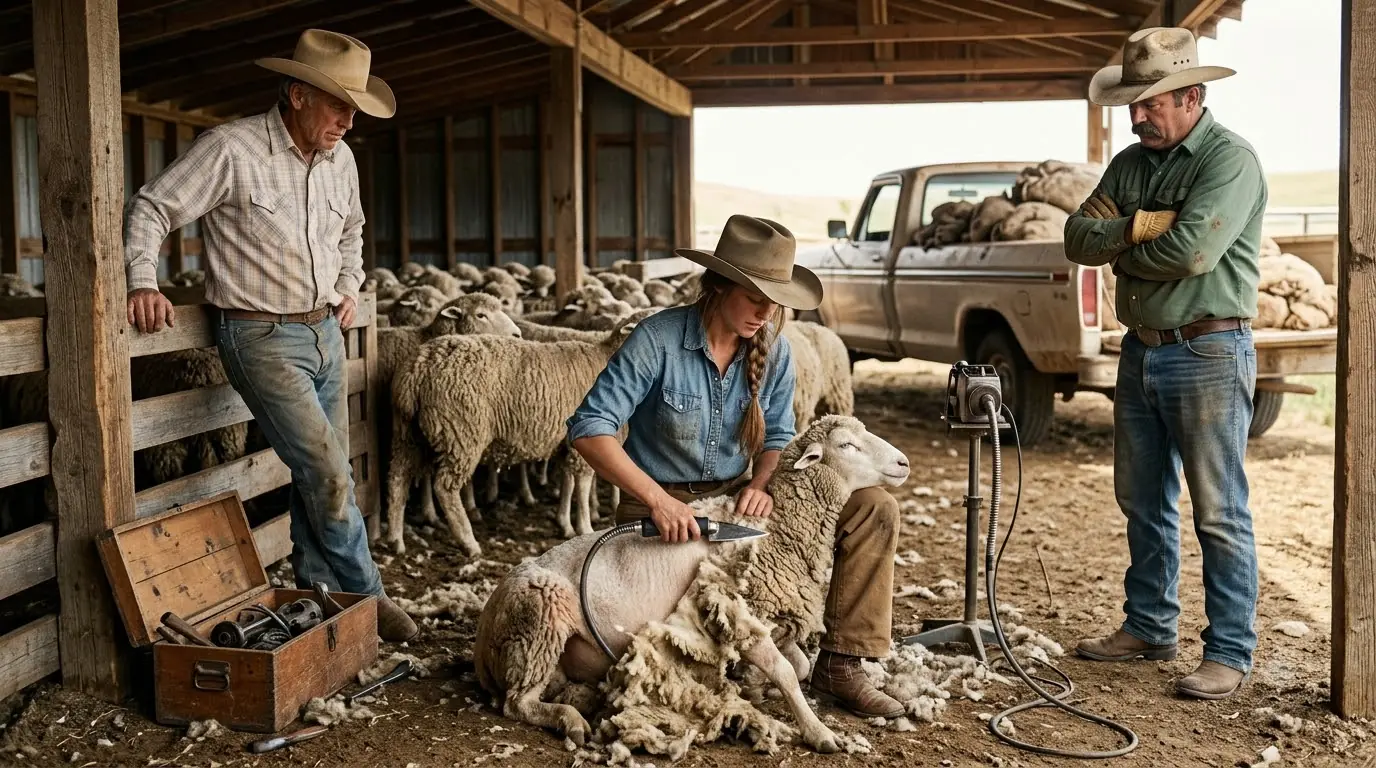
“Anybody have a use for this mess?” he called.
“I do,” Nora Bell said.
The auctioneer lowered his eyes. She stood near the end of the truck with four dimes pressed so tightly in her palm that their ridged edges marked her skin. Ten years old, narrow-shouldered, her hair tucked away from the wind, she was the youngest bidder at the ranch liquidation outside Riverton. An older rancher glanced at the box and chuckled. Another wondered whether she intended to shear fence posts. A third suggested she would have better luck burning the box and leaving the blades where they lay.
“How much money have you got, miss?” the auctioneer asked.
“Forty cents.”
He looked toward her father, Samuel Bell, who stood a few yards back in a weathered hat. Samuel did not nod or shake his head. He watched Nora as he watched a lamb trying to find its feet: closely enough to help if danger came, but without stealing the effort from it. The auctioneer shrugged and held out his palm. Nora placed the four dimes there one by one.
“Sold,” he said, and there was enough laughter to make her ears hot.
The box was heavier than she expected. When she tried to lift it by the remaining handle, the wood creaked and a blunt steel comb slid across the boards. She set it down and dragged it toward the pickup, leaving two uneven marks in the dirt. A man near the horse trailer told Samuel he had better keep an eye on the girl or she would buy the whole junkyard before lunch. Samuel took hold of the opposite corner of the box and helped Nora carry it without looking at the speaker.
Only after they had placed it safely behind the cab did he ask, “What did you buy?”
“Tools.”
“Some of them were tools once.”
“They can be again.”
Samuel looked down at the brown mass of iron, then at his daughter. “Maybe. But you’ve spent every cent you had. That means you get to find out.”
On the way home, Nora watched the box whenever the pickup turned a corner. She had imagined the useful parts hidden among the damaged ones, but she had not imagined the weight of carrying a purchase all the way through to a result. The other buyers could laugh and forget about it. She could not. She had promised herself that there was value in the steel, and now the promise rattled in the truck bed behind her.