“Seventy dollars.”
Raymond Pike stared at the young woman standing in his equipment yard as though she had just asked to buy the smoke coming out of his burn pile.
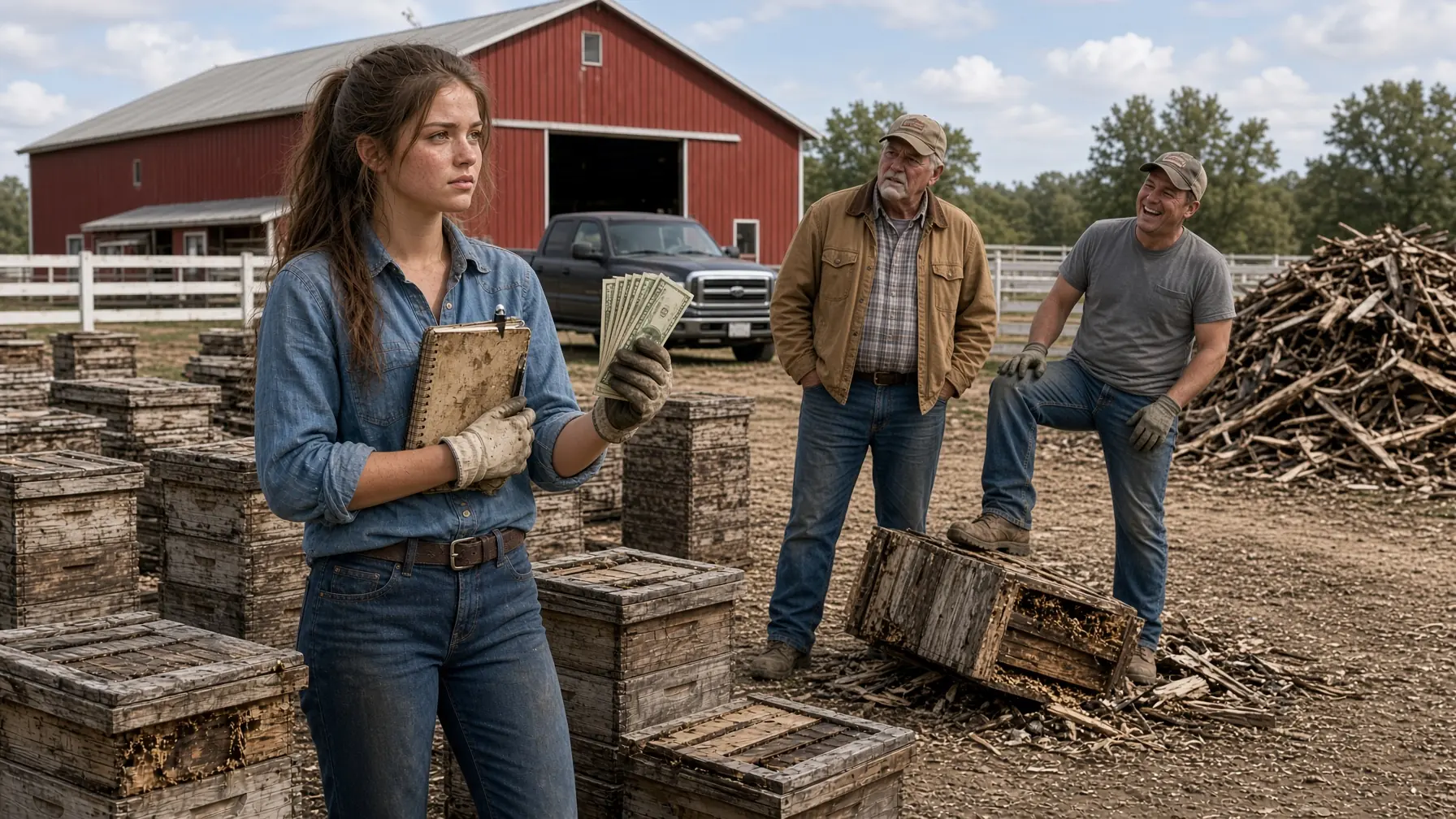
Nia Carter did not blink.
“One dollar each.”
Raymond looked toward the two farmhands stacking the old beehive boxes beside a patch of dead grass.
Then he laughed.
Loudly.
He wanted them to hear.
“Those things?”
He pointed toward the warped wooden boxes.
Most were gray with age.
Some had collapsed corners.
Others were blackened by water stains and packed with old wax, dirt, dead insects, and years of neglect.
“I was about to burn them.”
Nia nodded.
“I know.”
Raymond smiled.
“That’s all they're worth to you?”
“No.”
She looked at the pile.
“That’s what I’m offering.”
The farmhands exchanged glances.
Raymond laughed again.
“You think you’re going into the bee business now?”
Nia said nothing.
He stepped closer.
Raymond owned more than nine hundred acres around Cedar Hollow.
Apples.
Row crops.
Soybeans.
Feed corn.
He had been wealthy long enough to believe age and money were reliable measurements of intelligence.
Nia was nineteen.
Her family owned forty-six acres.
To Raymond, the calculation seemed obvious.
“Seventy bucks.”
He shrugged.
“Take the garbage.”
“Burn it yourself for all I care.”
Nia extended her hand.
“So we have a deal?”
Raymond smirked.
“Sure.”
Then, just loudly enough for the farmhands:
“Maybe your family can burn whatever’s left of their farm when this doesn’t work.”
Nia looked at him.
No anger.
No embarrassment.
She simply nodded.
“I’ll take all seventy.”
Raymond did not bother watching her load them.
To him, the transaction was already beneath mention.
A teenager hauling away rotting wood.
Another Carter desperate idea.
Another thing Cedar Hollow would laugh about for a week and forget.
What Raymond never noticed was the black notebook Nia closed before she climbed into her mother’s pickup.
She did not close it in frustration.
She closed it the way someone closes a map after finally finding the road.
Raymond believed he had sold her seventy problems.
Nia believed she had just bought the first seventy pieces of a company nobody else could see.
The Carter farm had survived two generations.
Forty-six acres did not sound like much next to Raymond’s nine hundred.
But to Nia, every acre carried a memory.
Apple rows planted by her grandfather.
Blueberry bushes her father had expanded before he died.
Squash fields her mother, Angela Carter, still inspected herself at sunrise.
Clover patches.
Vegetable rotations.
A weathered red barn.
Two tractors that required more prayer than maintenance.
From the county road, the farm looked healthy.
Green.
Orderly.
Alive.
But for three years, something had been going wrong.
The trees still bloomed.
The blueberries still flowered.
Squash vines still pushed bright yellow blossoms through the leaves.
And then—
too little fruit followed.
Yield dropped.
Then dropped again.
The soil tests were fine.
Water was adequate.
Fertilizer levels were normal.
Disease pressure was manageable.
The missing piece was smaller than Nia’s thumbnail.
Bees.
Wild pollinator numbers around Cedar Hollow had declined quietly for years.
Nobody noticed at first.
That was how agricultural problems often arrived.
Not as disaster.
As percentage points.
Five percent fewer berries.
Seven percent worse fruit set.
Another section of squash not worth harvesting.
Eventually, farmers around Cedar Hollow depended on commercial beekeepers trucking colonies into the county during bloom season.
And every year those colonies became more expensive.
The previous spring, Angela Carter had written checks totaling nearly $18,000 just for temporary pollination.
Bees arrived.
Stayed a few weeks.
Left.
The Carters paid again the following year.
Nia had watched her mother write those checks since she was seventeen.
One evening, Angela sat at the kitchen table with invoices spread around her.
She pressed both hands against her forehead.
“Eighteen thousand dollars.”
Nia sat across from her.
Angela continued.
“For insects.”
Nia almost smiled.
Angela looked up.
“Don’t.”
“I didn’t say anything.”
“You were about to.”
Nia leaned back.
Angela stared at the invoices.
“When I was your age, bees lived here.”
“They still do.”
“Not enough.”
“No.”