The sawmill paid Nora Bennett two hundred dollars to take its waste.
She asked for another truckload.
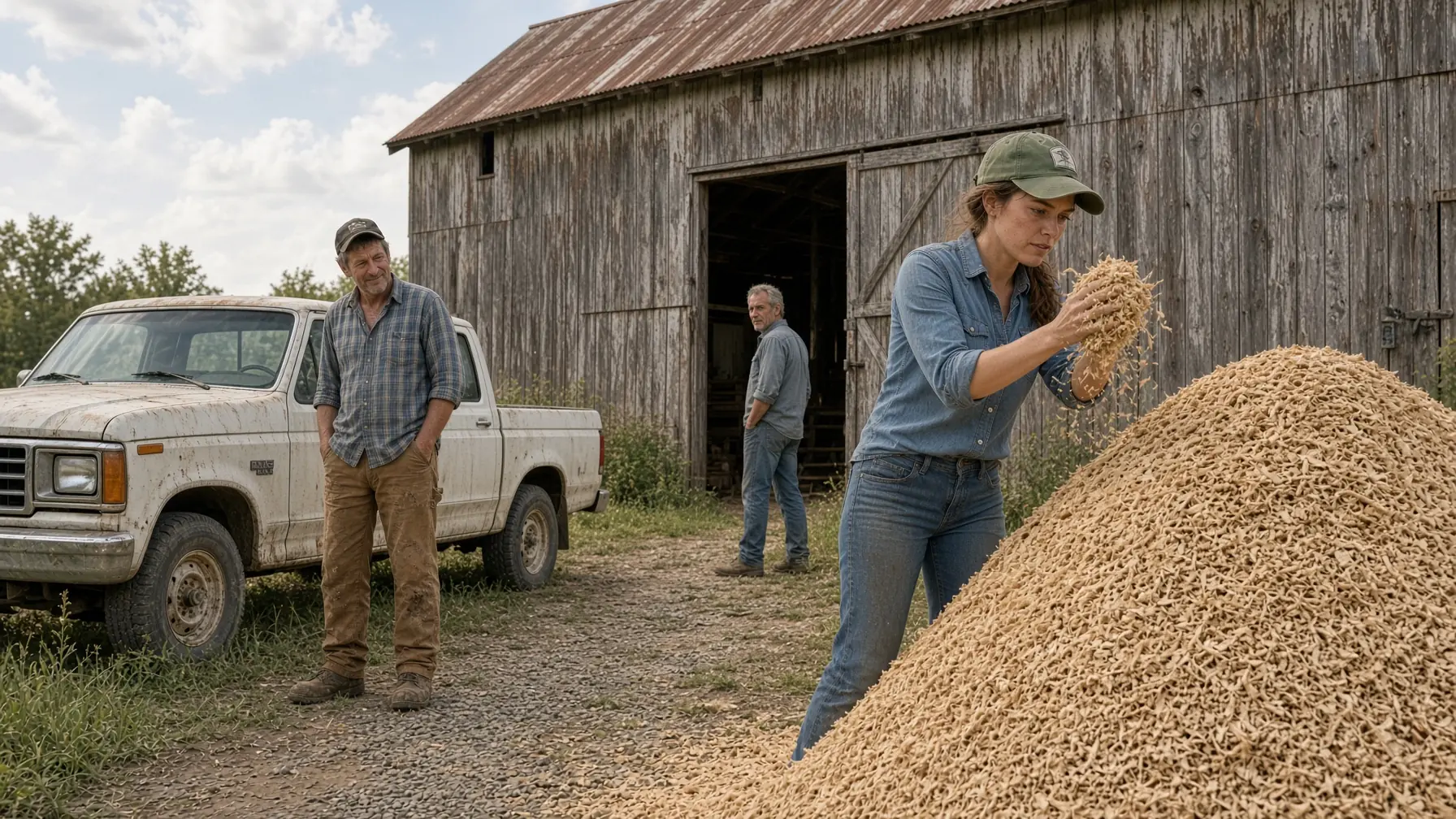
By noon, a pale mountain of fresh sawdust stood beside the empty dairy barn.
The driver climbed down from his cab, handed Nora the delivery slip, then looked around the property.
Twenty-eight acres.
Weeds growing along the old fencing.
An empty barn.
No cows.
No tractors moving.
Nothing about the Bennett farm looked like a place preparing to expand.
The driver glanced at the sawdust.
Then at the twenty-four-year-old woman standing in work boots beside him.
“You don't even have livestock.”
Nora signed the slip.
“No.”
“What are you going to do with all this?”
She pointed toward the abandoned milk room.
“Grow something.”
The driver laughed.
“What?”
Nora smiled.
“Mushrooms.”
Behind her, her father lowered his eyes.
Cal Bennett had spent thirty years trying to grow things on that farm.
Milk production.
Hay.
Pasture.
Enough corn to supplement feed.
He understood work.
He understood weather.
He understood what happened when prices fell while bills stayed exactly the same.
And eight months from now, the bank wanted $6,400.
Money they did not have.
His daughter had just accepted two truckloads of someone else’s waste.
What neither of them knew was that Nora’s first crop would never reach a customer.
It would go directly into the trash.
The Bennett farm sat down a gravel lane in western North Carolina.
The road turned powder-white during dry summer weeks and swallowed boots in winter rain.
Nora knew every curve.
As a child, she had ridden a bicycle between the farmhouse and the dairy barn.
Her height was still marked in pencil beside the kitchen door.
Age eight.
Ten.
Thirteen.
Sixteen.
The farm had once smelled like silage, warm milk, and diesel exhaust.
Now the cows were gone.
The last livestock trailer had backed down the lane two years earlier.
Nora remembered her father standing beside the barn while the final animals disappeared around the trees.
He did not cry.
Cal Bennett was not a man who cried where people could see him.
But he stood there for a long time after the truck was gone.
Without the dairy operation, the farm stopped carrying itself.
Cal found night work driving a delivery truck.
Part of the pasture was leased to a neighbor.
The rent covered some property costs.
Cal’s wages paid for groceries and the house.
The farm loan remained.
Every month.
Every year.
Uninterested in sentiment.
One February evening, Cal came through the kitchen door carrying a painted wooden board.
Nora looked up from her coffee.
Two words were painted across it.
FOR SALE
Cal leaned it behind the door.
Nora stared.
“How long?”
“Until fall.”
He removed his coat.
“If the farm can't start paying for itself by then, we sell while there's still something worth selling.”
Nora looked toward the barn through the dark kitchen window.
The old milk room.
The empty stalls.
The pasture where cows had once stood.
“How much is the next loan payment?”
“You know.”
“I want to hear it.”
Cal sighed.
“Six thousand four hundred.”
“November first?”
“Yes.”
Nora had $4,200 saved.
Warehouse shifts.
Overtime.
Weekend work.
Enough to rent a small place somewhere else.
Enough to leave.
Start again.
Buy furniture slowly.
Find a better job.
Live like most twenty-four-year-olds she knew.
Instead she asked:
“Can I use the old milk room?”
Cal looked at her.
“For what?”
“I have an idea.”
“That sentence has cost farmers a lot of money.”
Nora almost smiled.
“I know.”
Cal sat down.
“Then show me what you plan to spend before you spend it.”
That was as close as he came to saying yes.
The sawmill stood six miles away.
Nora could hear it on some mornings when the wind came from the north.
The mill normally sold sawdust and wood residue for animal bedding and other uses.
That winter, one regular buyer temporarily shut down.
Material began accumulating faster than the mill could move it.
Storage space mattered.
Trucking cost money.
For a short period, the mill manager offered nearby landowners $200 per load if they could accept clean material immediately.
Most people heard:
Free sawdust plus two hundred dollars.
Nora asked different questions.
“What are you cutting?”
Frank, the manager, frowned.
“Oak.”