The wind tore across the frozen highway, howling like a wounded animal, as Emma Rodriguez wiped down the last table at The Frosted Bean, her 23-year-old hands trembling slightly from exhaustion rather than cold.
The old brick building creaked and groaned under the weight of the unprecedented December storm, snow piling against the windows in drifts taller than she’d ever seen. Interstate 87 was a frozen wasteland; abandoned vehicles dotted the landscape like discarded toys.
“Emma, honey, you should head home before this gets worse,” called Murphy, her longtime assistant, from behind the espresso machine, his face etched with concern. At 72, he’d weathered countless upstate New York winters, but nothing quite like this.
“Can’t leave yet, Murphy,” she replied, forcing a tired smile. “The storm’s only going to get worse, and I promised to keep the shop open until everyone gets somewhere safe.” She paused, glancing at the small stack of unpaid invoices.
The café was barely breaking even, and her mother’s medical bills were mounting faster than the snow outside. Running a small coffee shop in a town this size had been her dream—a place for locals to gather, to feel at home—but dreams didn’t pay for heat, electricity, or emergency car repairs.
A gust of wind burst through the door, rattling the bell violently. Snow swirled in on the soles of a dozen polished shoes. Emma looked up to see a man in a $1,000 coat, soaked through, struggling to keep his balance.
Behind him, another figure staggered inside, then another, until fifteen sharply dressed men had crowded the narrow entrance, shaking snow from designer coats and luxury boots.
“Jesus Christ, is this place even open?” the first man shouted, his steel-gray eyes scanning the café with disdain.
Emma’s hands flexed over the counter. “We’re open,” she said evenly. “And given the storm, it’s probably your safest option for the night.”
The men looked around in disbelief: a small café with brick walls, mismatched chairs, and the rich aroma of roasted coffee beans filling the air. Not a single luxury amenity in sight, yet Emma carried herself with quiet authority, projecting calm that seemed to challenge their assumptions.
“I’m Alexander Hayes,” the first man announced. “Hayes International, Manhattan’s largest private equity firm.”
“I’m Emma Rodriguez, owner of The Frosted Bean,” she replied, motioning toward the espresso machine. Her tone was polite but firm. “Welcome. Please take a seat.”
Alexander’s eyes narrowed. He wasn’t used to people ignoring the aura of wealth and influence around him. Emma was different—calm, competent, and unafraid. He felt a flicker of unease, followed quickly by admiration.
Another man, silver-haired and meticulous, stepped forward. “We need accommodations for the night,” he said. “Highway patrol says nothing’s moving until morning.”
Murphy emerged from the kitchen, drying his hands on a towel. “Well, gentlemen, this isn’t a hotel, but you’re welcome to wait here. Emma, maybe pour some coffee, and I’ll see what’s left in the pantry for snacks.”
Emma nodded and moved behind the counter. “Actually,” she said, “you might want to call ahead to the hotels in town—if you can get a signal. This storm’s been building all day.”
“Already tried,” Alexander interrupted, showing his phone with a blank signal. “No luck.”
“The cell tower went down about an hour ago,” Murphy confirmed. “Landlines too. Happens every few years.”
Emma set to work, pouring coffee into mismatched mugs and arranging chairs around the largest tables. She glanced at each of the billionaires: suits finely tailored, expensive shoes coated with snow, expressions a mix of frustration, disbelief, and helplessness. They were used to solving problems with money. Here, money didn’t matter.
“This is absurd,” muttered a man with a British accent, pacing nervously. “We have commitments! Meetings! Investors waiting!”
“Coffee’s fresh,” Emma announced. “We’ve got leftover sandwiches, pastries, and muffins. Not gourmet, but warm and safe. You’ll survive the night.”
“Cost?” Alexander asked, reaching for his wallet.
Emma looked at him, her eyes firm. “For coffee and shelter during a life-threatening blizzard? It’s free. You’re welcome.”
A few men exchanged glances. They were unused to generosity without a transaction attached. Alexander felt a small stab of shame. “That’s very kind,” he said carefully.
Emma smiled faintly and returned to filling cups. “Kindness is its own reward,” she said, her tone neutral, almost daring them to argue.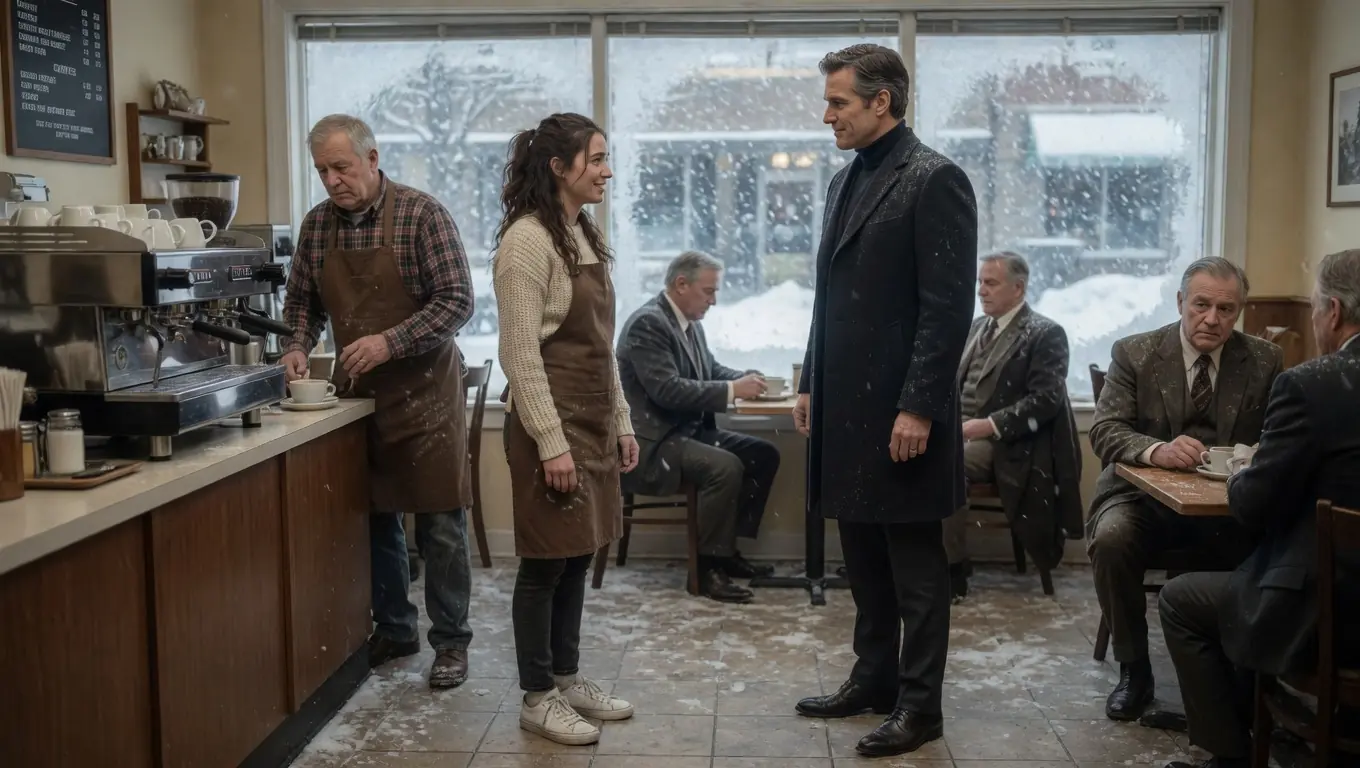
The evening passed slowly. Emma moved between tables, refilling coffee, fetching blankets, and tending to murmurs of discomfort. Murphy managed the small kitchen, turning what remained into makeshift dinners. Slowly, the atmosphere shifted. The billionaires began talking—not about profits or acquisitions—but about the storm, the surrealness of being stuck, and the unexpected relief of warmth, food, and human interaction.
Alexander couldn’t stop glancing at Emma. She was everywhere at once: calm, patient, endlessly accommodating, commanding respect without raising her voice. In all his years, he’d never seen someone so young wield authority purely through competence and compassion.
By midnight, the cots were arranged in the back storage area. Blankets and pillows lined the small floor. Emma sat for a moment, exhausted, sipping lukewarm coffee and listening to the sound of heavy snow outside, punctuated by muffled conversations and quiet laughter from the stranded billionaires. For the first time that evening, she allowed herself to relax.
Somewhere around 2:00 a.m., she caught Alexander glancing at her across the café. There was curiosity, yes, but also something else—an acknowledgment of her presence, of her importance. Not as a waitress, not as a small-town owner, but as a person. That recognition felt strange and almost overwhelming.
The storm raged into the early morning hours, yet Emma persisted. Coffee was refilled, snacks were heated, and she even managed to play a small record on the vintage turntable behind the counter. Country music from the ’90s echoed softly, creating a warm cocoon in the otherwise frigid night.
By dawn, the snow had eased, leaving a sparkling white landscape. Emma stepped outside to check the street. Her heart skipped a beat. Lining the main road leading up to her café were rows upon rows of luxury cars—one hundred and thirty-five in total—stretching farther than she could see.
Every billionaire who had been stranded the night before had returned, not for coffee, not for food, but to honor her and the sanctuary she had provided.
Inside, the café was suddenly filled with reporters and photographers, but Emma remained calm. She had done what was right, and the evidence of that kindness was undeniable. 15 lives had been touched, one café had been transformed into a haven, and the entire town would remember her for years to come.
Alexander approached, carrying a fresh cup of coffee. “You did this,” he said simply. “All of it. Not for recognition, not for money. Just because it was the right thing to do.”
Emma took the cup, her hands still trembling from fatigue. “Sometimes,” she said softly, “that’s all anyone can do. Make the choice to be kind.”
Alexander smiled, a mixture of admiration and something more personal in his gaze. “I think… this is only the beginning.”
And in that moment, Emma realized that her little coffee shop had become so much more than a business. It had become a symbol of compassion, resilience, and the unassuming power of doing the right thing when no one is watching.