The seat moved half an inch, and Daniel Harper stopped pulling.
For the past hour, he had blamed rust. Rust explained the seized bolts, the stubborn frame, and the pain spreading through his shoulder every time he tried to shift the Cadillac’s front bench.
It did not explain the leather beneath it.
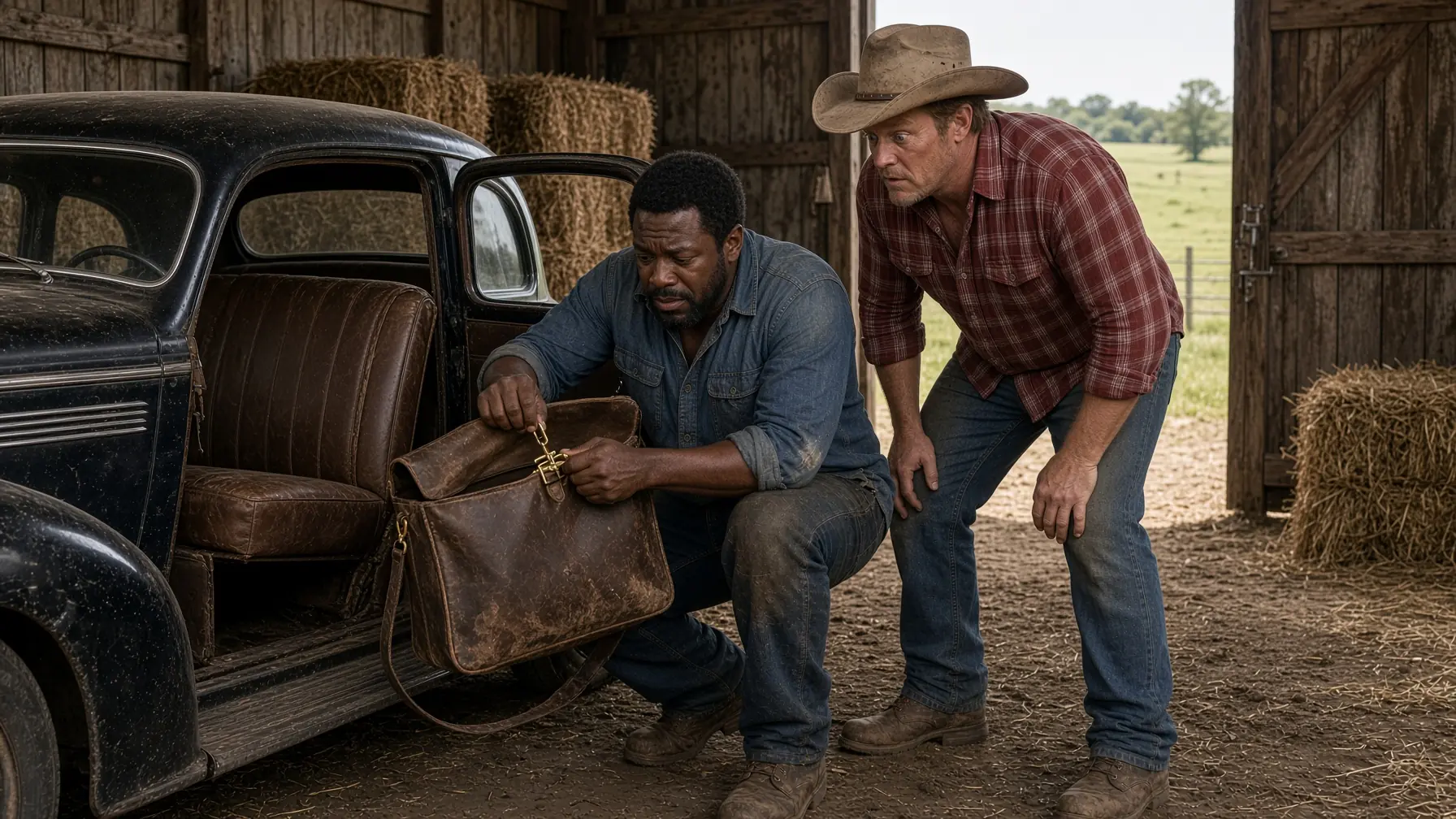
Daniel lowered his wrench and reached for the work light. In the narrow gap behind the seat support, a brown strap lay folded against something that had no reason to be part of a car.
He crouched closer.
The surrounding metal bore signs of work different from the original construction. Somebody had altered the space beneath the seat, then secured everything so firmly that an ordinary upholstery repair might never have exposed it.
Daniel looked toward the closed garage door.
He was alone. Outside, afternoon traffic moved along the Detroit street, and a delivery truck rattled past without slowing.
Inside, he could hear his own breathing.
He had spent nearly all his restoration savings buying this car. Less than a day earlier, he had stood beside it at an estate auction, wondering whether he had finally found the project he had wanted for years or made a mistake expensive enough to threaten his little garage.
Now he slipped his fingers through the gap.
The leather felt dry and stiff. He loosened his grip immediately, afraid of tearing it, and shifted the light so he could see what he was doing.
There was a bag.
And behind it, pressed deeper into the darkness, another.
Daniel sat back on his heels.
His father had once told him that an old car could keep a person’s history long after everyone forgot to ask about it. Daniel had always understood that as something beautiful people said about machines.
He had never expected to find the history still inside.
The previous morning, he had driven to the auction with an envelope of savings tucked into his jacket.
The money had accumulated slowly: a little from each completed job, more from weekend work, and whatever remained when rent, groceries, and equipment expenses had been paid. He had kept it separate from the money needed to run the shop.
Even so, spending it frightened him.
His garage was modest. The tools were good because he maintained them, not because they were new. He knew which drawer needed lifting before it would open and which corner of the floor collected water during a hard rain.
Customers brought him daily drivers, unfinished projects, and cars somebody else had declared too much trouble. He enjoyed the work, but for years he had wanted a restoration that belonged to him from beginning to end.
At the auction, polished cars drew polished shoes.
Collectors moved between the more impressive lots with printed descriptions in their hands. Daniel walked farther down the row, toward vehicles whose windows were cloudy and whose tires had forgotten their shape.
That was where he found the Cadillac.
Its black paint had faded unevenly. The chrome was dull, the front seat torn, and dust lay thick enough on the windshield to obscure the interior.
But the proportions stopped him.
The long hood. The sweep of the fenders. The grille that still held its shape despite years of neglect.
He stood beside it until an auction assistant asked whether he intended to inspect it or simply admire it.
“Both,” Daniel said.
He checked what he could. There would be engine work, bodywork, and an interior that needed more than cleaning. Some parts would be difficult to find.
He made himself look at the problems before looking again at the lines.
When bidding began, he stayed still through the first few offers. Then he raised his hand.
A collector across the small gathering answered.
Daniel raised his hand again.
The numbers approached the limit he had written down before leaving home. He felt the envelope in his pocket, as though touching it might make the amount larger.
The collector hesitated.
The auctioneer called for another bid.
Daniel waited with his mouth dry.
The hammer came down just below his limit.
For a moment, he did not understand that it was over.
Then the assistant turned toward him, and the people around the Cadillac began moving on.
He had won.
He had also committed most of the money that had allowed him to imagine doing this safely.
While completing the paperwork, he looked through the office window toward the car. A man passing it glanced at the collapsed tires, shook his head, and kept walking.
Daniel felt the first sharp doubt.
It remained with him through the transport arrangements and the drive back to his shop. But when the Cadillac was unloaded into the garage, he stood beside it and found himself making plans.
He would work on customers’ cars during the day.
The Cadillac would get evenings.
He would buy parts gradually, repair what could responsibly be repaired, and accept that the restoration might take longer than he wanted.
He did not need to finish quickly.
He needed to finish properly.
The next morning, he began documenting the car before taking it apart.
He photographed the engine compartment, the dashboard, the doors, and every piece of trim he intended to remove. Fasteners went into labeled containers. Parts that looked ruined received a closer inspection before he condemned them.
His father had worked long shifts in an automotive plant and come home with hands that seemed permanently marked by steel and oil. He had taught Daniel to respect the difference between a thing being old and a thing being finished.