At 7:12 on a Tuesday morning, Dana Whitfield left her sister’s brick house in north Columbus carrying nothing more dangerous than a phone, a small crossbody bag, and the irritation of having slept badly.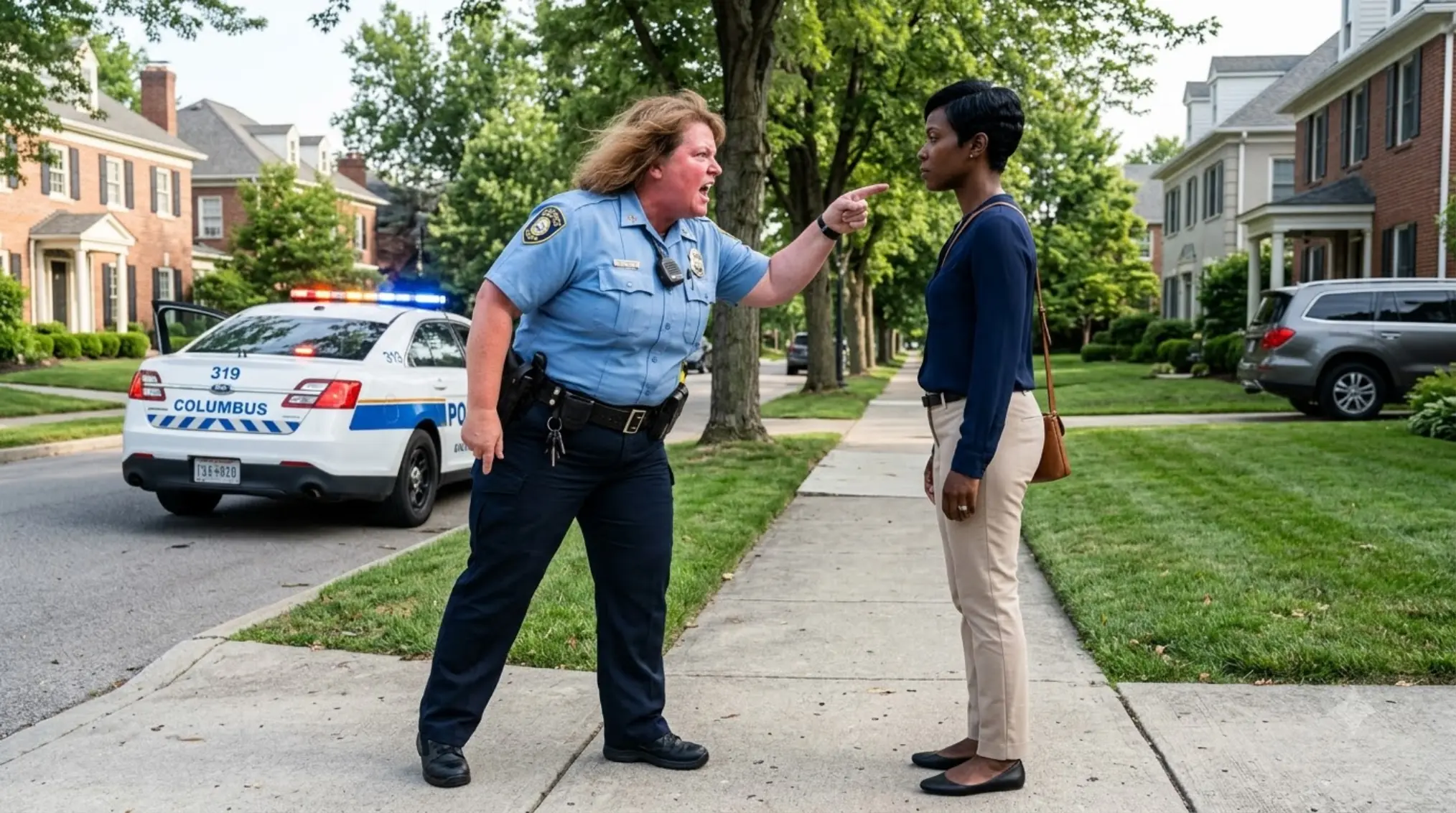
She had been visiting for four days while attending meetings at the Ohio State Civil Rights Division downtown, and the morning walk had become the only quiet part of her schedule.
Dana was forty-one years old, with deep-brown skin, short black hair cut neatly around her ears, and the composed expression of someone whose career required listening to angry people without becoming angry simply because they were.
She wore a navy long-sleeve blouse, beige trousers, low black shoes, and no visible government identification.
That detail would matter later.
At the moment, it should not have mattered at all.
Dana walked west along the sidewalk, passed a row of red-brick houses, turned at a small park, and continued around the next block.
The neighborhood was quiet.
Sprinklers clicked over lawns.
A delivery van idled beside one driveway.
A man in gray shorts stood outside drinking coffee.
Dana noticed him because he watched her pass.
She looked toward him.
He looked away.
Nothing unusual.
Dana continued.
Ten minutes later, she completed the loop and walked past the same house again.
The man was still outside.
This time, he held a phone.
Dana heard no conversation.
She kept walking.
At 7:31, a marked Columbus police cruiser turned onto the street behind her.
Dana heard the engine slow.
She did not turn immediately.
The cruiser passed.
Then stopped twenty yards ahead.
The driver’s door opened.
A very heavyset white female officer stepped out.
She was in her mid-forties, with shoulder-length dirty-blonde hair, flushed cheeks, and a light-blue uniform shirt pulled tightly across her torso beneath a radio microphone and body-camera mount.
The officer closed the door harder than necessary.
“Ma’am.”
Dana stopped.
“Yes?”
“Come here.”
Dana remained where she was.
“Is there a reason?”
The officer frowned.
“I said come here.”
Dana glanced toward the cruiser.
Red and blue lights had begun flashing.
She looked back.
“I can hear you from here.”
The officer approached quickly.
Her name tag read:
THOMPSON
Dana noticed the badge number beneath it.
She did not need to make a visible effort to memorize it.
The number was already familiar.
Officer Melissa Thompson stopped several feet away.
“What are you doing?”
“Walking.”
Thompson’s mouth tightened.
“Where do you live?”
Dana looked toward her.
“Why?”
“We got a complaint.”
“About what?”
“Suspicious activity.”
“What activity?”
Thompson gestured broadly toward the houses.
“Walking around.”
Dana waited.
The answer sounded absurd enough that she wanted to make sure nothing else followed.
Nothing did.
Dana asked, “Is walking around this block illegal?”
Thompson’s face reddened slightly.
“Don’t start.”
“I asked a question.”
“And I’m asking for identification.”
Dana remained still.
“Am I being detained?”
Thompson stared.
Dana watched recognition pass through her expression.
Not recognition of Dana.
Recognition of the language.
People who knew enough to ask whether they were detained often irritated officers who preferred uncomplicated compliance.
Thompson stepped closer.
“We have a caller saying you’ve been circling houses.”
“I’ve been taking a walk.”
“You already said that.”
“And you haven’t told me what crime you suspect.”
Thompson pointed toward Dana’s bag.
“Identification.”
Dana did not move.
“Am I free to leave?”
“No.”
There it was.
Dana glanced at the body camera clipped to Thompson’s chest.
A small indicator light was on.
Good.
“What is the reasonable suspicion supporting the detention?”
Thompson’s expression changed immediately.
“Excuse me?”
“You said I’m not free to leave.”
“I know what I said.”
“So what specific facts suggest I committed, am committing, or am about to commit a crime?”
Thompson took another step forward.
Her finger rose.
“You’ve been circling private homes without ID.”
Dana looked at her.
“I’m not required to carry identification simply because I’m walking.”
Thompson pointed directly toward Dana’s chest.
“You’ve been circling these houses without ID. Keep arguing and I’ll detain your ass right here.”
Dana’s voice became quieter.
“You already said I’m detained.”
For a moment, Thompson seemed thrown off.
Then anger replaced uncertainty.
“You know exactly what I mean.”
“I want the record to know what you mean.”
Thompson stared.
“What record?”
Dana looked directly at the body camera.
“That one.”
Thompson followed her gaze.
Then looked back.
“You trying to threaten me?”
“No.”
Dana’s face remained calm.
“I’m trying to understand the legal basis for what you’re doing.”
Several neighbors had come outside.
The man in gray shorts stood near his driveway.
Another woman had appeared on a porch across the street.
A teenager watched from behind a screen door.
Thompson noticed the audience.
Her posture stiffened.
“Give me your ID.”
Dana said nothing.
Thompson raised her voice.
“Now.”
Dana slowly reached toward her crossbody bag.
Thompson’s hand moved toward her belt.
“Slow.”
Dana stopped.
“You ordered me to get identification.”
“I said slow.”
“I’m moving slowly.”
“Then keep your attitude out of it.”
Dana stared at her.
There was a moment in every questionable encounter when an investigator had to decide whether continuing to challenge an officer in real time would produce useful evidence or merely increase physical risk.
Dana knew the distinction better than most.
She opened the bag.
Inside were a phone, wallet, keys, and a thin state-issued identification holder.
There was also a folded copy of a case-assignment sheet she had reviewed the previous evening.
Officer Thompson’s name appeared on that document.
Dana had not known she would meet the woman personally.
Certainly not like this.
Dana withdrew only her driver’s license.
She held it between two fingers.
Thompson reached.
Dana did not release it immediately.
“Before I hand this over, I want you to state that I am detained.”
Thompson jerked the card from her hand.
“You don’t tell me what to state.”
Dana lowered her hand.
“Understood.”
Thompson walked back toward the cruiser.
Dana remained on the sidewalk.
The neighbor in gray shorts looked toward her.
“You okay?”
Dana answered without looking away from the cruiser.
“I’m fine.”
Thompson turned sharply.
“Sir, go inside.”
The man raised both hands.
“I’m on my property.”
“I said go inside.”
Dana’s eyebrows lifted slightly.
Interesting.
Thompson sat in the cruiser and entered Dana’s information.
Nothing came back.
No warrants.
No criminal record.
Valid license.
Address registered twelve miles away.
Dana watched Thompson’s face through the windshield.
The officer looked toward the computer.
Then toward Dana.
Then back again.
A reasonable stop should have been ending.
It did not.
Thompson exited the cruiser carrying the license.
“What are you doing in this neighborhood?”
“Visiting family.”
“Who?”
Dana looked at her.
“Is that necessary to determine whether I committed a crime?”
Thompson moved closer.
“You don’t live here.”
“No.”
“You’ve walked past the same house twice.”
“Yes.”
“Why?”
“Because walking in a loop tends to do that.”
Someone on a porch laughed.
Thompson looked toward the sound.
Then back at Dana.
“You think this is funny?”
“No.”
“You’ve got a real mouth on you.”
Dana took her license from Thompson.
“Am I free to go?”
Thompson hesitated.
That hesitation would later become important.
Finally she said:
“Stay right there.”
Dana’s face became still.
“Why?”
“I’m checking something.”
“What?”
“The complaint.”
“You already checked my identification.”
“Stay there.”
Thompson turned back toward the cruiser.
Dana looked at her watch.
7:39.
Eight minutes had passed since the stop began.
She pulled out her phone.
Thompson spun around.
“Put that away.”
Dana stopped.
“Why?”
“I told you to stay put.”