Amelia saw the sheriff before Logan did.
Later was not available to him yet. There was only the booth, the light coming through the large front windows, the smell of onions on the grill, and his wife's face changing across the table.
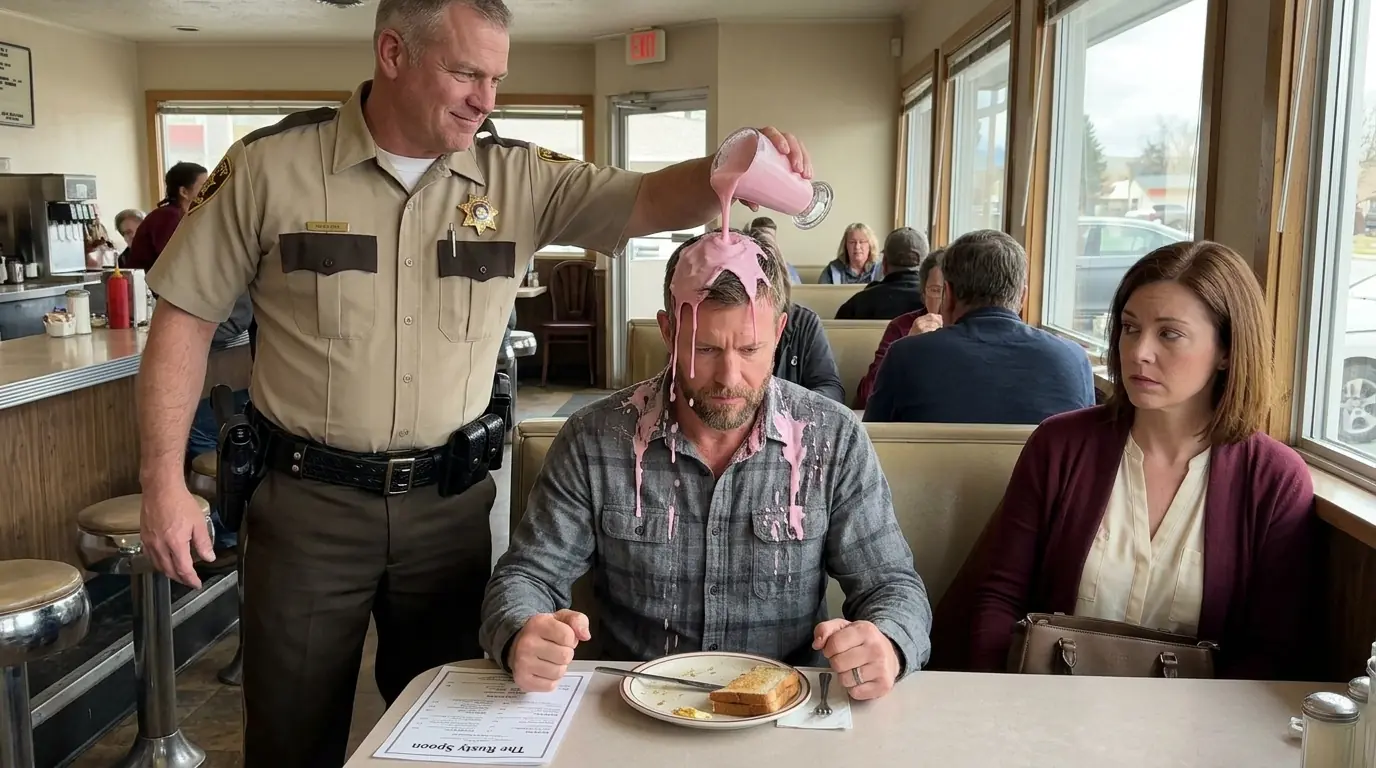
He had been telling her something about the back steps at the house. Nothing important. A board that needed replacing before winter. He had brought a small sample of wood in the truck because he wanted to show her a color at the hardware store after lunch. The piece of wood lay in a paper bag beneath his seat, along with a receipt and a pencil he kept losing.
Amelia's eyes moved over his shoulder.
Her hand stopped beside her water glass.
Logan noticed the movement without understanding it. He smiled at her, expecting her attention to return.
It didn't.
Behind him, a chair leg scraped against black and white tile.
There were sounds a person remembered because they belonged to a happy day. There were sounds that became important only when something followed them. For Logan, the brief scrape of that chair would never be an ordinary diner sound again.
But the afternoon had begun well enough.
The truck started on the first turn of the key. The sky over the Montana hills was clear. Amelia came down the front steps wearing the burgundy cardigan he liked, her chestnut hair loose around her shoulders. She had changed her handbag twice before leaving and finally chosen the small brown one he bought her three years earlier.
He noticed.
He did not say so because he had learned that noticing could sound like keeping score when the distance between two people had already become a subject neither wanted to discuss.
Instead he opened the truck door.
"You don't have to do that," she said.
"I know."
She hesitated, then climbed in.
It was the first time in weeks they had planned a whole afternoon together.
They would eat at the Rusty Spoon. They would buy paint for the small room at the back of the house. They might drive out toward the lake if the weather held, which it plainly would. Logan had cleared his work schedule. Amelia said she had no appointments until evening.
He wanted it to be an ordinary day badly enough that he could feel himself trying not to want it too much.
At forty-three, he had become suspicious of plans announced as fresh starts. A marriage did not restart because somebody ordered pie. It changed through the accumulation of smaller acts, most of them invisible to anyone outside it. Answering a question without looking at a phone. Leaving room in the conversation. Believing that the person beside you was still worth curiosity.
He had been trying.
He could not tell whether trying had become part of the problem.