The porch light flickered as David Matthews wiped down the kitchen counter for the third time that evening.
Through the window, he could see the “Room for Rent” sign he had posted that morning, already dampened by the autumn drizzle.
His son Tommy sat at the table, carefully arranging his toy cars in a perfect line, the way he did every night before bed.
David was forty-two, with dark hair that had started showing gray at the temples, a reminder of the past three years since his wife, Sarah, had passed.
He worked two jobs now. Mornings at the hardware store, evenings doing bookkeeping for small businesses. The extra room upstairs, Sarah’s old craft room, had sat empty long enough.
The mortgage did not care about sentiment.
“Dad, is someone going to live with us?” Tommy asked, looking up with those wide brown eyes that were so much like his mother’s.
“Maybe, buddy. We’ll see.”
That was when he heard it, a soft sound, almost lost in the rain.
Crying.
David moved to the front door and opened it.
There, hunched on his porch steps, was a young woman. She could not have been more than twenty-five, her long brown hair plastered to her face, her white lace dress soaked through and clinging to her slight frame.
She held a small backpack against her chest like a shield.
“Miss, are you all right?”
She looked up, startled.
Her eyes were red and puffy, mascara tracks running down her cheeks. She started to stand, stumbling slightly.
“I’m sorry. I just… I saw your sign. The room. I didn’t mean to. I’ll go.”
“Wait.” David held up a hand. “You’re soaking wet. Come inside. We can talk about the room, but first, let’s get you dry.”
She hesitated, her whole body trembling from cold or fear. David could not tell.
“I don’t have much money right now. I can pay you. I promise. I just need a few days.”
“Come inside,” David repeated, gentler this time. “It’s okay.”
Tommy had appeared at his father’s elbow, peering around with curiosity.
“She’s really wet, Dad.”
“I know, son. Why don’t you go get one of those big towels from the bathroom?”
The girl stepped inside slowly, water dripping onto the hardwood floor Sarah had loved so much. She looked around the modest home with something like wonder, at the worn but comfortable furniture, the photos on the walls, the toy cars scattered near the couch.
“I’m David,” he said. “This is my son, Tommy. He’s seven.”
“I’m Emily,” she said softly, accepting the towel Tommy brought with a whispered thank you.
As the kettle heated, he studied her from the kitchen. Something about her did not add up.
The dress, even soaked and wrinkled, looked expensive. Her hands were soft, uncalloused. She wore no jewelry, but there was a pale band on her ring finger where something had been recently.
When he returned with the tea, she wrapped her hands around the mug gratefully.
“The room is upstairs,” David began. “It’s small, but it has a bed, a desk, and a closet. Bathroom’s shared. I’m asking four hundred a month, utilities included.”
He paused.
“You said you needed a few days.”
Emily nodded, staring into her tea.
“I left home. I had to. My father… he… we had a disagreement. About my life. About who I should be.”
Her voice cracked.
“I just started walking. I didn’t plan anything. I just knew I couldn’t go back there.”
David recognized that look.
He had seen it in the mirror three years ago, when the hospital bills had piled up and the life insurance had not been enough.
The look of someone whose world had shifted beneath their feet.
“Tell you what,” he said. “You can stay tonight, no charge. Get warm. Get some rest. Tomorrow, we’ll figure out the details.”
Tears spilled down her cheeks again.
“Why are you being so nice to me? You don’t know me.”
“No,” David agreed. “But I know what it’s like to need help. And I know what it’s like to receive it from strangers who didn’t have to care, but did anyway.”
That night, David gave Emily a pair of sweatpants and an old T-shirt to sleep in.
He showed her to the small room upstairs with its slanted ceiling and single window that looked out over the quiet street. She stood in the doorway for a long moment, running her hand along the doorframe.
“This was my wife’s space,” David said quietly. “She did quilting, needlework, made beautiful things. She’d be glad someone’s using it again.”
Emily turned to him.
“Was it cancer?”
“Three years ago last month.”
“I’m sorry.”
“Me, too.”
David smiled, though it did not quite reach his eyes.
“But Tommy and I are doing okay. One day at a time, right?”
Emily nodded.
“One day at a time.”
The next morning, David woke to find Emily already awake, sitting at the kitchen table with Tommy.
She had borrowed one of Sarah’s old sweaters. David had told her to help herself to anything in the closet. Her hair was pulled back in a simple ponytail.
She looked younger in the morning light and very tired.
“I was telling Emily about my cars,” Tommy announced. “She likes the red one best, like me.”
“Is that so?”
David started the coffee maker.
“Well, Emily, I’ve got to head to work soon. Tommy has school. You’re welcome to stay. Rest up. We can talk more this evening.”
“Actually,” Emily said, standing quickly, “I’d like to help. Is there anything I can do? Clean, maybe organize? I’m good at that. I want to earn my keep.”
David considered.
The house was clean enough. But Sarah’s craft supplies were still boxed up in the garage, something he had been putting off dealing with for three years.
“There are some boxes in the garage,” he said slowly. “If you wanted to sort through them, figure out what’s worth keeping or donating, that would be helpful. But only if you’re up for it. No pressure.”
“I’d like that,” Emily said. “Really.”
Over the next few days, a quiet rhythm developed.
David worked his jobs. Tommy went to school. And Emily transformed the house bit by bit.
She sorted the craft supplies, organized the kitchen cabinets, even planted some flowers in the front beds that had gone wild with weeds.
In the evenings, she would have dinner ready. Simple meals, but made with care.
“You don’t have to do all this,” David told her one evening as they cleaned up after spaghetti and meatballs.
“I want to,” Emily insisted. “You gave me a safe place to land. This is the least I can do.”
“Your father,” David ventured carefully. “Have you thought about calling him?”
Emily’s hand stilled in the soapy water.
“He wanted me to marry someone I didn’t love. Someone he chose. A business arrangement, he called it. When I said no, when I said I wanted to make my own choices about my life…”
She shook her head.
“He told me if I walked out that door, I was no longer his daughter.”
“I’m sure he didn’t mean—”
“You don’t know my father.”
Her voice was firm.
“He’s not like you, David. He doesn’t understand kindness. Everything with him is about control, about winning. I spent my whole life trying to be what he wanted. I can’t do it anymore.”
David dried a plate slowly.
“What do you want? If you could do anything.”
Emily smiled, but it was sad.
“I don’t know. Isn’t that terrible? I’m twenty-six years old, and I have no idea who I am or what I want. I’ve been so busy being Richard Thornton’s daughter, being the perfect heiress, that I never stopped to ask myself what Emily wanted.”
David’s hand paused.
“Richard Thornton? As in Thornton Industries?”
Emily turned to look at him, fear flickering across her face.
“You’ve heard of him?”
“He’s one of the richest men in the state.”
David set down the dish towel.
“Emily, are you telling me…”
“Does it matter?” she asked quietly. “I’m not that person anymore. I don’t want to be.”
David studied her for a long moment.
“No,” he said finally. “I suppose it doesn’t. You’re Emily, the woman who makes my son laugh at breakfast and who planted flowers in my wife’s garden. That’s who matters.”
Relief washed over her face.
“Thank you.”
But things began to change.
Tommy came home from school troubled one day, a week after Emily had arrived.
“Dad, some men were asking about Emily at school. They talked to Mrs. Peterson.”
David felt his stomach drop.
“What kind of men?”
“They had suits. Like the serious kind.”
Tommy looked worried.
“Are they going to take Emily away?”
That evening, after Tommy was in bed, David found Emily on the porch, wrapped in a blanket, staring at the stars.
“There were people asking about you,” he said, sitting beside her. “At Tommy’s school.”
Emily closed her eyes.
“My father. He’s looking for me.”
“Emily, you’re twenty-six. You’re an adult. He can’t force you to go back.”
“You don’t understand.”
Her voice was strained.
“My father isn’t just rich, David. He’s powerful. He has connections, influence. If he wants to find me, he will. And when he does…”
She stood abruptly.
“I should go. I’ve put you and Tommy in enough danger already.”
“Danger?”
David stood, too.
“What are you talking about?”
“My father, he… he doesn’t lose, David. Ever. If he thinks you’re helping me defy him, he could make things very difficult for you. Your jobs, this house, even Tommy’s school. I can’t let that happen.”
David felt a surge of anger, not at Emily, but at a man he had never met. A man who would terrorize his own daughter and threaten strangers for the crime of showing her kindness.
“Now you listen to me,” he said firmly. “I lost my wife to something I couldn’t fight, couldn’t change, couldn’t fix. Cancer doesn’t care how hard you work or how much you love someone. But this? A bully with money? That I can handle.”
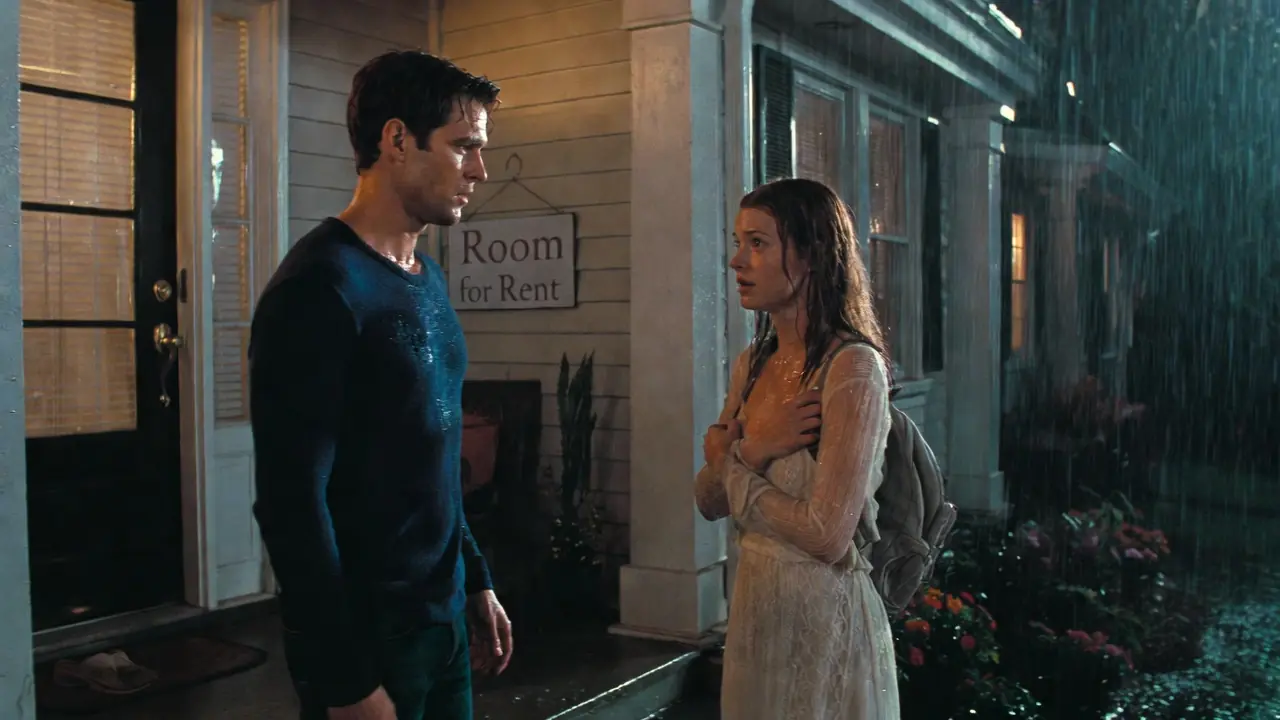
He put his hands on her shoulders.
“You’re not going anywhere unless you want to. And if your father has a problem with that, he can come talk to me himself.”
Emily’s eyes filled with tears.
“Why? Why would you risk everything for someone you barely know?”
“Because Sarah would have done the same thing,” David said simply. “Because it’s the right thing to do. And because sometimes, Emily, people need to know they matter. Not for what they have or who their father is, but just because they’re human and they deserve kindness.”
Two days later, Richard Thornton arrived.
David had just gotten home from the hardware store when a sleek black car pulled up in front of the house.
The man who stepped out was tall and imposing, with silver hair and a presence that seemed to demand attention. He wore a suit that probably cost more than David’s monthly mortgage payment.
David stepped onto the porch, crossing his arms.
Tommy was at a friend’s house, which was probably for the best.
“Mr. Matthews, I presume?” Richard Thornton’s voice was smooth, controlled. “I believe you have something that belongs to me.”
“If you’re talking about Emily, she’s not a thing, and she doesn’t belong to anyone.”
Thornton’s expression hardened.
“You don’t know what you’re dealing with. My daughter is troubled. She’s not thinking clearly. She needs to come home.”
“She’s an adult. She can make her own choices.”
“Can she?”
Thornton took a step closer.
“Do you have any idea what you’ve gotten yourself into? I could ruin you, Mr. Matthews. Your job at the hardware store. I know the owner. Your bookkeeping clients. I could make sure they all go elsewhere. This house, this life you’ve built, I could take it all away.”
David felt his heart pounding, but he stood his ground.
“Maybe you could. But you know what? I’ve already lost the most important thing in my life. My wife died in my arms three years ago. So your threats about money and jobs? They don’t scare me the way you think they should.”
Something flickered across Thornton’s face.
“You’re a fool.”
“Maybe. But I’m a fool who can look his son in the eye and know I did the right thing.”
The door opened behind David, and Emily stepped out.
She looked terrified but determined.
“Father.”
“Emily, get in the car.”
Thornton’s voice was cold, commanding.
“No.”
For a moment, Thornton looked genuinely shocked.
“What did you say?”
“I said no.”
Emily moved to stand beside David.
“I’m not coming back. I’m not marrying Marcus. I’m not being CEO of a company I don’t care about. I’m done living your life.”
“You’re throwing away everything I built for you. Your inheritance, your position, your future.”
“My future?”
Emily laughed, but there was no humor in it.
“What future, Father? The one where I’m miserable in a loveless marriage? Where I spend every day making decisions I don’t believe in for a company I never wanted to run? That’s not a future. That’s a prison.”
“You’re being dramatic.”
“I’m being honest.”
Emily’s voice rose.
“For the first time in my life, I’m being honest. I don’t want your money. I don’t want your company. I just want to be me. Why can’t you understand that?”
Thornton looked at his daughter for a long moment.
Something in his face shifted, not quite softening, but cracking.
“You really mean it?”
“I do.”
He turned to David.
“And you? You’re not after her money?”
“I didn’t even know who she was until a week ago,” David said. “And honestly, it doesn’t matter. She’s a kind person who needed help. That’s all that mattered.”
Thornton was quiet for a long time.
When he finally spoke, his voice was different, older, more tired.
“Her mother used to say I cared more about winning than about being happy. I told her she was wrong.”
He looked at Emily.
“I spent twenty years proving her right, didn’t I?”
Emily’s eyes widened.
“Father…”
“I wanted to give you everything,” Thornton continued. “Security, power, success. I thought if I built a big enough empire, you’d be protected from everything that could hurt you. But I’m the one who hurt you most, aren’t I?”
A tear rolled down Emily’s cheek.
“I just wanted you to see me. Not as your heir or your employee. Just as your daughter.”
Richard Thornton stood there on David Matthews’s modest porch, this titan of industry, and for the first time in perhaps decades, he looked uncertain.
“I don’t know if I know how to do that.”
“Then learn,” Emily said softly. “It’s not too late.”
David watched this unfold, staying quiet.
This was not his moment, though it was happening on his porch in front of his home. Sometimes, the greatest kindness was simply bearing witness, being present without interfering.
“If I leave you here,” Thornton said slowly, “will you at least call me? Let me know you’re safe?”
Emily nodded.
“I will. And this marriage to Marcus is not happening. I’m sorry, Father, but it never was.”
Thornton sighed deeply.
“He was a business associate’s son. It seemed logical. But your mother would have had my head for even suggesting it.”
He looked at David.
“You’ll look after her?”
“As long as she wants to stay,” David said.
Thornton reached into his jacket and pulled out a card.
“If you need anything. Either of you.”
He handed it to Emily, then turned back to his car.
Before getting in, he paused.
“Emily, your mother would be proud of you for standing up for yourself. I should have said that more when she was alive. I should say it more now.”
Then he was gone, the black car disappearing down the quiet street.
Emily collapsed onto the porch steps, and David sat beside her.
Neither spoke for a while.
“I thought that would go differently,” Emily finally said.
“How so?”
“I don’t know. More yelling. More threats. He’s never backed down before.”
“Maybe he’s tired of fighting,” David suggested. “Or maybe seeing you stand up to him made him realize something. Parents are people, too, Emily. We make mistakes. Sometimes big ones. But most of us, we’re trying our best, even when our best isn’t very good.”
Emily leaned her head on his shoulder.
“Thank you for everything.”
“You don’t have to thank me.”
“Yes, I do. You gave me more than a room, David. You gave me space to figure out who I am. You didn’t ask for anything in return. You didn’t try to fix me or change me. You just let me be.”
They sat together as the evening settled around them, two people who had found unexpected solace in each other’s company.
Over the following weeks, Emily started rebuilding her life.
She got a job at a local bookstore, something simple that made her smile. She started taking art classes at the community college. She called her father once a week. Awkward conversations at first, but slowly becoming easier.
And she stayed in the small room upstairs, though David told her repeatedly that she could afford better now that she was working.
“I like it here,” she would say. “It feels like home.”
One evening, about two months after she had first arrived on his porch, David found Emily in the kitchen helping Tommy with his homework.
“If you have twelve apples and give away five,” Emily was saying, “how many do you have left?”
“Seven,” Tommy announced proudly.
“That’s right. You’re getting so good at this.”
David smiled, watching them.
Sarah would have liked Emily, he thought. She would have appreciated her kindness with Tommy, her gentle presence in their home.
“Hey, Emily,” Tommy said suddenly. “Are you going to stay forever?”
Emily glanced at David, uncertain.
“I don’t know, buddy. Would you want me to?”
“Yeah,” Tommy said enthusiastically. “You make good pancakes, and you’re nice. And Dad smiles more now.”
Later, after Tommy was in bed, Emily and David sat on the porch swing Sarah had loved.
“He’s right, you know,” Emily said. “You do smile more.”
“So do you.”
“I feel more like myself than I ever have.”
“It’s strange. I had everything before. Money, status, security. But I was miserable. Now I have a minimum-wage job and a rented room, and I’m happier than I’ve ever been.”
“That’s not strange,” David said. “That’s called living your own life on your own terms.”
Emily looked at him thoughtfully.
“What about you, David? When do you start living your life again? Not just for Tommy, but for you.”
It was a question he had avoided thinking about for three years.
“I don’t know. Sarah and I, we had plans. Travel, hobbies we’d take up when Tommy was older. All that died with her.”
“But you didn’t die,” Emily said gently. “You’re still here. And I think Sarah would want you to be happy. Not just surviving, but actually living.”
David felt the familiar tightness in his chest, the grief that never quite went away.
But there was something else, too.
Something he had not felt in a long time.
Hope.
“Maybe you’re right,” he said quietly.
Six months after Emily had shown up on his porch, David came home to find a surprise.
Emily and Tommy had decorated the kitchen with streamers and balloons. A cake sat on the table with “Happy 3 Years” written across it in frosting.
“Three years?” David asked, confused.
“Since Sarah passed,” Emily said softly. “Tommy told me you never celebrated her life, only mourned her death. We thought maybe it was time to remember the happy parts.”
David felt tears prick his eyes.
On the wall, Emily had hung photos of Sarah, smiling, laughing, alive. In the center was one of their wedding day, young and hopeful.
“We made her favorite cake,” Tommy said. “Emily helped me find the recipe.”
They sat together, the three of them, and shared stories about Sarah.
Tommy talked about how she used to sing silly songs. David remembered their first date, how nervous he had been. Emily listened, honoring a woman she had never met.
“She sounds wonderful,” Emily said.
“She was,” David agreed. “She’d be glad you’re here, Emily. She always said our home should be a place of healing.”
“It has been,” Emily said. “For all of us, I think.”
Time continued its gentle march forward.
Emily took more classes, eventually enrolling full-time at the university to study social work. She wanted to help people who were lost, the way David had helped her.
Her relationship with her father slowly improved. Richard Thornton started calling more, asking about her classes, her life. He even came to dinner once, sitting awkwardly at David’s modest table, trying to understand this life his daughter had chosen.
“You’ve done well by her,” Thornton told David.