For three years, nobody entered Alessandro Duca’s office.
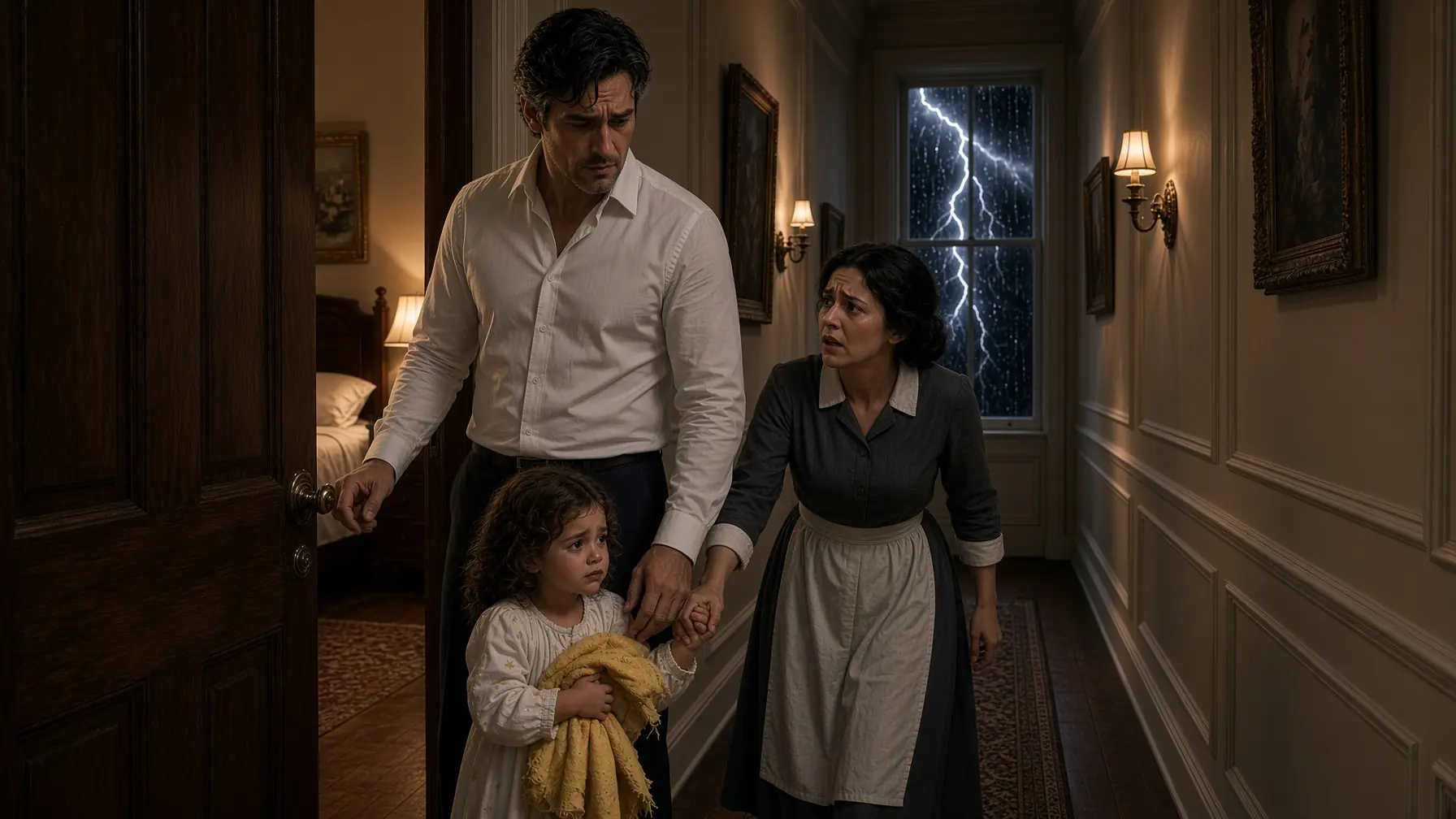
Not the cleaning staff.
Not his security chief.
Not even his seventy-two-year-old mother, who lived in the east wing and had spent most of those three years pretending she did not hear her son pacing alone after midnight.
The room remained exactly as it had been on the day Alessandro received the phone call that changed him.
His younger sister Maria was dead.
Eight months pregnant.
A highway accident on the way to a hospital appointment.
Doctors had tried to save both her and the baby.
They saved neither.
There was still a coffee cup on the shelf Maria had used the last time she visited.
A pale-blue scarf remained folded over the back of a chair.
Three years of dust had gathered on books Alessandro once read while she sat on the sofa and complained that he worked too much.
After the funeral, Alessandro locked the door.
Then he became colder.
People in Chicago already feared him.
After Maria died, they learned to fear him quietly.
At forty-two, Alessandro Duca controlled a network of legitimate logistics companies, construction interests, nightclubs, private lending businesses, and older criminal relationships inherited from men who had raised him to believe power was the only reliable form of safety.
He was not loud.
That was what made him frightening.
He rarely threatened anyone twice.
He never shouted in meetings.
And when somebody brought him bad news, the most dangerous response was usually silence.
The Duca estate reflected him perfectly.
Stone walls.
Iron gates.
Armed security.
Long hallways.
Expensive rooms nobody used.
A fortress disguised as a home.
Then a three-year-old followed a white cat through the wrong door.
And Alessandro’s entire carefully controlled life began coming apart.
Sophia Moretti had worked at the Duca estate for almost two years.
She was twenty-eight.
Widowed.
Practical.
The kind of woman who had learned that grief did not disappear merely because bills still arrived on time.
Her husband, Daniel, had died in a construction accident when their daughter Emma was six months old.
There had been no inheritance.
No insurance miracle.
No wealthy relative stepping in.
Only a funeral.
A child.
Rent.
And the sudden necessity of becoming the only adult in a family that had been designed for two.
Sophia became good at surviving.
She woke early.
Worked hard.
Spent carefully.
Cried privately.
And refused to let Emma grow up believing sadness was the same thing as hopelessness.
The position at the Duca estate paid better than the hotel job Sophia had before.
She was trusted.
Quiet.
Efficient.
Never entered rooms she had not been assigned.
Never listened when men in expensive coats spoke too softly in hallways.
Never asked why certain guests arrived through the rear entrance.
The rules kept her employed.
They also kept her safe.
One rule mattered more than all the others.
Nobody entered Alessandro Duca’s second-floor office.
Mrs. Rosa Caruso, the estate’s longtime housekeeper, had explained that during Sophia’s first week.
“You don't clean it.”
“You don't knock.”
“You don't mention it.”
Sophia had nodded.
That was enough.
She never asked why.
Then, one Tuesday in October, Emma’s preschool called at seven in the morning.
A pipe had burst overnight.
Three classrooms flooded.
School closed until repairs were complete.
Sophia sat at her tiny kitchen table holding the phone while panic spread slowly through her chest.
Her mother lived four hours away.
The neighbor who sometimes helped was attending a funeral in Wisconsin.
A babysitter on no notice would cost almost half Sophia’s daily pay.
And missing work was not an option.
Not with rent due Friday.
So she did something she hated.
She took Emma with her.
Before leaving, Sophia knelt in front of her daughter.
Emma was three years and eight months old.
Small.
Brown curls.
Hazel eyes.
Yellow sweater.
Gray leggings.
A tiny backpack filled with books, crackers, crayons, and one stuffed rabbit named Max.
“You stay downstairs.”
Emma nodded.
“You stay in the staff room.”
Another nod.
“You do not wander.”
“I won't.”
“You do not go upstairs.”
“Okay.”
Sophia took both her hands.
“And if you see the big oak door at the end of the second-floor hall…”
Emma’s eyes widened because children become interested in anything described as forbidden.
“You do not go near it.”
“Why?”
“Because it belongs to Mr. Duca.”
“Is he mean?”
Sophia hesitated.
“No.”
That was not exactly true.
But it was better than frightening her.
“He likes privacy.”
Emma considered this.
“Like bathroom privacy?”
Sophia almost laughed.
“Yes.”
“Exactly like that.”
Emma looked serious.
“I don't go into bathrooms when people are in there.”
“Good.”
“Same rule.”
Satisfied, Emma climbed into the car.