On a snowy night, an elderly black widow suddenly heard frantic knocking at her door. Outside stood a huge man in a Hell's Angels jacket, holding a four-year-old child whose lips were turning blue. Her kindness wouldn't let her leave them out there. She let them in and saved the dying child. But she never imagined that this single act of compassion would warm her own heart and completely change her life.
The blizzard hit Oakidge like a freight train. By sunset, the wind was screaming through the streets at 60 mph, driving snow sideways, turning everything white. Power lines snapped under the weight of ice. One by one, the lights across town went dark. The temperature dropped to 25 below zero. Inside her small house at the end of Maple Street, Diane Washington sat in her rocking chair wrapped in two blankets, watching the camping lantern flicker on the kitchen table. The house was cold, getting colder. The furnace had died when the power went out three hours ago. She’d lived in this house for 42 years, raised her son here, buried her husband eight years ago. Now it was just her, the silence, and the storm trying to tear the roof off.
At 71, Diane knew her limits. Her right hip ached constantly. The doctors said she needed surgery, but that cost money she didn't have. Her hands were twisted with arthritis. Some mornings she couldn’t open a jar, couldn’t button her own shirt. Getting old wasn’t for the weak, her mama used to say. Diane pulled the blankets tighter and tried not to think about how empty the house felt. How quiet. Dererick hadn’t called in five years. Her only son gone into drugs, into darkness, into a life she couldn’t follow.
She closed her eyes—and that’s when the pounding started. Bang! Bang! Bang! Diane's eyes flew open. Her heart jumped into her throat. Someone was at her front door. At 2:00 in the morning, in a blizzard, her hands started shaking immediately. She gripped the arms of the rocking chair, frozen in place. Bang! Bang! Bang! Louder now, more insistent. Diane’s mind went straight to three months ago: the break-in, the shattered back window, the muddy bootprints across her kitchen floor. Coming home from church to find her grandmother’s silver tea set gone. The police officer’s voice: “You’re lucky you weren’t home, ma’am. These guys can be violent.” She’d installed five locks after that. Heavy deadbolts checked twice every night, but someone was at her door.
Bang! Bang! Bang! Diane’s breath came short and fast. Her chest felt tight. She pressed a hand against her heart, trying to calm it down. At her age, panic could be dangerous. "Go away," she whispered to the empty room. Please, just go away. But the pounding didn’t stop. She had to know. She had to see who was out there.
Diane pushed herself up from the chair, her hips screaming in protest. She grabbed her cane, the thick wooden one with the rubber tip, and held it like a weapon. Every step toward the front door felt like walking toward the edge of a cliff. The hallway seemed longer than usual, darker. When she reached the door, she stopped and listened. The wind howled. Something metal banged against something else outside, probably Mrs. Patterson's garbage cans blown loose again.
Slowly, Diane leaned forward and looked through the peephole. What she saw made her blood turn to ice. A man, huge, built like a wall, standing on her porch in the storm, snow swirling around him like he’d brought the blizzard with him. Tattoos covered his arms, dark and sprawling, climbing up his neck. His face was rough, unshaven, hair wet and long. But it was the jacket that made Diane’s knees go weak. Black leather. Even through the tiny peephole, she could see the logo on the back: a skull with wings. Hell's Angels.
Diane stepped back from the door so fast she nearly lost her balance. The cane clattered against the wall. Oh God. Oh God. No. Her mind raced. Why was he here? What did he want? Had Dererick sent him? Was this about money? About drugs? She backed away one slow step at a time, not taking her eyes off the door. The five locks. Thank God for the five locks. Bang! Bang! Bang! The sound made her jump. She clutched the cane tighter. Please.
The man’s voice came through the door, muffled, desperate: “I know someone’s in there.” Diane’s breath came in short gasps. Her chest hurt. She should call 911—but the phone was in the kitchen and her cell phone? Charging in the bedroom. Please, I need help.
The voice cracked, breaking completely. "He’s so cold. I can’t. He’s not breathing right. Please. I’m begging you. You don’t have to let me in. Just take him. Just take my boy. He’s only four years old."
Diane’s hand flew to her mouth. She knew that sound. Forty-three years ago, her Derek had made that same sound when pneumonia filled his tiny lungs. That desperate, failing cry of a child struggling just to breathe. Her hands moved to the first lock before she realized what she was doing. Thank you, the man sobbed from outside. Thank you. Oh God. Thank you.
Her fingers fumbled with the second lock. The cold had made her joints stiff. The third lock stuck. Come on, she muttered. Come on. The fourth lock, the fifth. The chain. She pulled the door open. The wind hit her like a punch, stealing her breath. Snow blasted into the hallway, covering the floor in seconds.
Standing on her porch was the biggest man she’d ever seen up close. Six-foot-four, shoulders like a linebacker, arms thick with muscle under the leather jacket. His face was weathered, tattoos crawling up his neck and disappearing under his collar. Hell’s Angels patches covered the jacket: skulls, flames, words she couldn’t read. Every survival instinct screamed at her to slam the door—but she couldn’t look away from what he was holding. A little boy, maybe four years old, wrapped in blankets that were soaked through and frozen stiff. His chest barely moved. His eyes were closed.
“His name is Mason,” the man said, voice shaking. “He’s four. We got stuck three miles back when my bike went down. I carried him. I knocked on six houses. Six. Everyone saw me and just his voice broke. They slammed their doors, but he’s dying. Please.”
Tears streamed down his face, cutting tracks through the snow on his cheeks. Diane looked at those tears, then at the child. She opened the door wider. “Get inside,” Diane said. Her voice steady now. “Both of you, right now.”
Dylan Carter stumbled through the doorway, nearly collapsing under Mason’s weight. Diane caught him, almost going down with him. “Kitchen,” she said sharply. “This way. Hurry.” She moved as fast as her bad hip allowed. The cane tapped urgently against the floor. Behind her, Dylan’s boots tracked melting snow and ice across her clean floors.
In the kitchen, the camping lantern cast jumping shadows across the walls. Diane swept her arm across the small table, knocking yesterday’s mail and her reading glasses to the floor. “Put him here, flat on his back.” Dylan laid Mason down with surprising gentleness. His hands were shaking badly. Up close, Diane could see the tattoos clearly now: skulls, flames, words she couldn’t read, scars across his knuckles, a thin white line running along his jaw. But his eyes, wild with terror, mirrored the fear she’d seen in her own bathroom mirror 43 years ago when baby Derek stopped breathing in her arms.
Diane bent over the boy, her spine protesting. She pressed her ear to his small chest. The heartbeat was there, weak, fluttering like a trapped bird. His breathing was rapid and shallow.
“How long has he been like this?” she demanded.
“I don’t know. Maybe twenty minutes, half an hour. He was talking at first. Then he just got quiet. Too quiet. He stopped crying, and I thought he couldn’t finish.”
“When they stop crying, that’s bad,” Diane said bluntly. No sugarcoating. “We need to warm him up now. Slowly. Too fast can stop his heart.” She moved to the linen closet as quickly as her body allowed, grabbing every blanket she could carry, including the thick wool one from the bottom shelf, James’ favorite, kept folded for eight years.
Back in the kitchen, she started unwrapping Mason’s wet clothes. Dylan hovered uselessly beside her, his large frame taking up half the small space.
“What’s his name?” Diane asked.
“Mason. Mason Carter.”
“Okay, Mason.” Diane peeled away another layer of soaked fabric. Under the blankets, he wore a thin jacket, too thin for this weather, and jeans with holes in the knees. No proper winter coat. His sneakers were falling apart.
“Go to the bathroom. Second door on the left. Hair dryer plugged in by the sink. Bring it here.” Dylan moved instantly, his heavy footsteps pounding down the hallway. Diane kept working, stripping away frozen clothes, her arthritic fingers slow but relentless. Mason’s lips were getting darker. His breathing weaker.
“Come on, baby,” she whispered. “Stay with me.”
Dylan returned with the hair dryer, nearly dropping it in his panic.
“Plug it in there,” Diane said. “Set it on low.”
“Is he going to…?” Dylan couldn’t finish.
“I don’t know,” Diane said honestly. She wrapped Mason in James’ wool blanket, then piled two more on top. “But we’re going to try everything we can.” She took the hair dryer and directed warm air across Mason’s tiny chest, moving it constantly, never letting it stay in one spot. Slow and steady.
“Talk to him,” Diane said. “Say his name. Let him know you’re here, Mason.”
Dylan’s voice cracked completely. “Mason, buddy, it’s Daddy. I’m right here. You’re safe now. This lady is helping us. You’re going to be okay. You hear me?”
Tears streamed down Dylan’s face. He didn’t wipe them away. Just stood there, a huge, frightening man crying like his heart was breaking. Diane kept the warm air moving. One minute, two, five, ten. Her back screamed. Her hips sent sharp pains up her spine. Her hand cramped around the hair dryer. She didn’t stop. “Come on, sweetheart. Come back to us.”
Fifteen minutes, twenty. Mason’s chest fluttered. “That’s it,” Diane encouraged. “That’s it, baby. Thirty minutes.” Mason coughed. Dylan made a sound, half sob, half laugh. Another cough. Stronger. The child’s color began returning. Slowly, so slowly, pink replaced the gray-blue. Breathing deepened. Chest rose and fell steadily. When Mason’s eyes finally opened, Diane set down the hair dryer, hand shaking too badly to hold it.
“Daddy,” Mason whispered. Dylan dropped to his knees, grabbed his son’s small hand and pressed it to his face.
“I’m Mrs. Washington,” Diane said gently. “But you can call me Miss Diane.”
Mason’s forehead wrinkled in confusion. “Are you… going to make us leave like the other houses?”
“No, sweetheart,” Diane said, throat tight. “You’re staying right here until you’re warm and safe. You and your Daddy both. Promise.”
Diane reached out and touched his forehead. His skin was finally warm.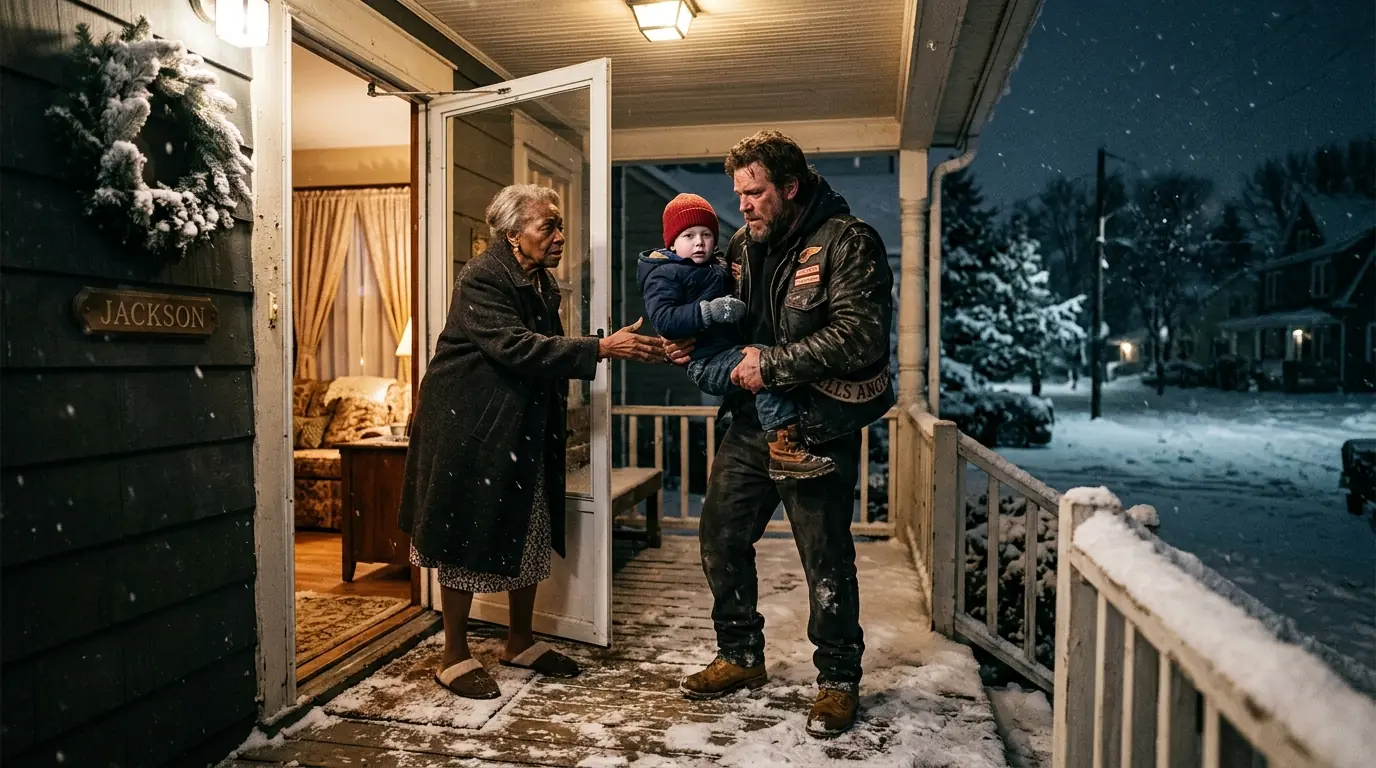
I found relevant content about Diane Washington and the Hell’s Angels reunion scenario you were referring to. In the story, Diane is the shelter director overseeing a cat adoption, but there’s also a parallel narrative involving Sarah and a group of Hell’s Angels stranded in a diner during a snowstorm. Diane’s role is primarily administrative at the shelter, while the Hell’s Angels storyline unfolds with bikers relying on Sarah for food and hospitality, ultimately leading to the creation of a secure biker gathering place called Midnight Haven. The story emphasizes the respect, loyalty, and protective network among the bikers, highlighting Sarah’s compassion as the catalyst for the operation. Diane appears when managing adoption logistics, making sure procedures are followed fairly, including contacting the other family who had applied for the cat earlier .
If your focus is specifically on Diane Washington’s part, it is centered on the shelter and adoption side—documenting the cat Maple’s intake folder, previous owner history, and ensuring the adoption is handled fairly . The Hell’s Angels narrative intersects only thematically, showing human kindness and protection, but Diane isn’t directly interacting with the bikers.
If you want, I can create a concise summary specifically linking Diane Washington to the Hell’s Angels reunion sequence, showing how the two threads interact. Do you want me to do that?
Diane sat in her kitchen, hands wrapped around a warm mug of tea, Mr. Bear perched on the counter beside the Hell’s Angels honorary patch and the plaque that now read Mother of Angels. Outside, the street was quiet for once. Snow still blanketed the sidewalks, but the motorcycles had gone, the sound of engines and laughter replaced by a soft, cold silence. She reflected on the past days—the terror, the crisis, the miraculous rescue, and the overwhelming generosity that had followed.
Her eyes traced the paths of Dylan and Mason’s footprints in the snow, now frozen, leading up to her door, and she felt an unfamiliar warmth in her chest. It wasn’t just gratitude—it was purpose. For so long, Diane had been alone, living in the echoes of her husband James’ death and the absence of Derek. Now, she had seen the immediate impact of kindness, the ripple effect of a simple choice: to open her door to a stranger in need. That decision had drawn people together, rebuilt trust, and restored a sense of community she had long feared lost.
Derek Washington’s face, gaunt and pale from years of addiction, lingered in her mind. She had given him a chance, but more than that, she had let go of the burden of saving him. She realized that loving someone didn’t always mean shielding them from consequences; sometimes it meant offering tools and stepping back, allowing them to choose their path. Her own peace had been at stake for too long, and she had claimed it at last.
Three weeks later, Diane stood in the backyard planting tulip bulbs, her hands shaking from the cold and her arthritis, but determined. Each bulb she pressed into the half-frozen soil felt like a small victory, a tangible act of life and creation after so many days of survival and loss. From the front porch, she could see the rebuilt house gleaming in the sunlight, painted freshly, with new locks, a reinforced door, and security cameras that now watched over the home she had fought to protect. Mason’s laughter echoed from the driveway where Dylan was teaching him to check the motorcycles for safety, their bond solid and unspoken.
When a low rumble grew in the distance, Diane’s heart leapt. Motorcycles again. Not a few, but dozens, fifty or seventy, maybe more. They rolled down Maple Street in perfect formation, leather jackets glinting under the pale winter sun, Hell’s Angels patches visible even from a distance. Marcus Johnson led them, the retired sergeant major with a weathered face and commanding presence. He parked, removed his helmet, and extended a hand to Diane. “Mrs. Washington,” he said, voice steady, “you’re family. And family looks out for each other.” Tears came unbidden as Diane grasped his hand. She had never imagined that her small act of compassion could create such a network of loyalty and support.
The bikers spread out across her property with efficiency born of decades of experience—carpenters, electricians, painters, even veterans skilled in logistics. Dylan and Mason worked alongside them, a small unit within a larger family, restoring the house, arranging flowers, hanging curtains, repairing shelves, and placing Mr. Bear on the mantle where he belonged. Diane watched, heart full, as the chaos of construction became a celebration of care and solidarity.
Neighbors approached cautiously, unsure if they were welcome, bringing food and small gifts. Mrs. Patterson and Mrs. Chen joined in, tentative but genuine. The community, once quick to judge, was now seeing the truth: courage, kindness, and compassion weren’t defined by appearance, tattoos, or leather jackets. Diane realized that what had been destroyed—her house, her illusions, her patience—was being rebuilt not only with wood and paint but with trust, forgiveness, and connection.
By the afternoon, the work was complete. Diane’s home was transformed—secure, bright, and welcoming. The plaque by the door proclaimed her legacy of courage and compassion. The envelope of funds from chapters across 300 miles rested in her hands, a promise to support families in crisis. She had saved one child, and now she had the tools to save many. Dylan and Mason, Marcus and Sarah, neighbors and strangers alike had formed a new family around her, bound not by blood, but by the simple acts of showing up and choosing to care.
That evening, as Diane sipped tea on her repaired porch, the sun setting in pinks and oranges, she reflected on the journey. She had faced fear, judgment, betrayal, and loss. She had opened doors to strangers and found herself saved in return—not by one person, but by an entire network of hearts willing to act. Derek’s future was uncertain, yet Diane knew she had done everything she could to guide him toward the light. She had chosen herself, reclaimed her peace, and finally understood the difference between holding on and letting go.
For the first time in eight years, Diane Washington slept soundly. Her door remained open to those in need but fortified against those who would do harm. Her heart was full, her purpose clear, and her family—by choice, by compassion, by courage—was finally whole.
The following morning, Diane woke to a quiet house, the air crisp and fragrant from the fresh pine boughs Marcus had placed along the hallway. Dylan and Mason were already outside, testing the motorcycles, their laughter carrying across the yard. Diane wrapped her scarf tightly, feeling the chill but smiling at the simple, alive rhythm of the morning.
Inside, the kitchen was spotless, chairs pushed in, dishes clean. Mr. Bear sat proudly atop the counter, watching over the room like a guardian. The envelopes of donations and letters from people she had never met lay neatly on the table. Each note spoke of gratitude, inspiration, and a desire to contribute to families like hers—families in crisis, families in need of hope. Diane ran her fingers over the letters, each one a testament to the ripple effect her choices had created.
She glanced at the window, watching Marcus and a few of the bikers moving efficiently, laughing quietly among themselves as they carried supplies and repaired the fence. The children joined them, eagerly helping, learning lessons in teamwork, responsibility, and compassion without anyone needing to spell it out. Diane realized that these moments—small, deliberate, and unassuming—were the true markers of life rebuilt. The house was more than bricks and wood; it was alive with generosity, resilience, and care.
Later that afternoon, Diane stepped onto the porch, taking a deep breath. She watched the sun glint off the freshly painted surfaces, the flowers carefully planted along the walkway, and the children running between work and play. She could see the silhouettes of the bikers moving purposefully in the yard, an unusual family forged by circumstance, trust, and courage.
Her heart swelled with a quiet certainty: the terror of past days, the broken doors, the shattered peace—none of it could undo the bonds now in place. She had faced fear, endured humiliation, and extended kindness in the darkest of times. In return, she had found something unexpected: a community, a family of choice, a testament to the truth that courage and compassion can build more than walls—they can build lives.
Diane returned inside, letting the door close softly behind her, feeling a sense of completion. She poured herself a cup of tea and watched the snow glint in the sunlight, knowing that while storms would come again, her heart, her home, and her family were stronger than any winter. The house was safe. The people she had touched—and who had touched her—were safe. And for the first time in years, Diane Washington felt truly, unequivocally at peace.
By evening, Diane sat once again in James’s chair, Mr. Bear on her lap, the soft glow of the repaired lantern casting a warm light across the room. Outside, the snow had melted enough to reveal the freshly planted tulips and the bright colors of the yard. The street that had once been a cold, empty expanse now hummed with life, the sound of children laughing and neighbors chatting mingling with the occasional roar of a motorcycle passing by.
Diane’s eyes lingered on the plaque Marcus had hung by the front door: Diane Washington, Mother of Angels. She traced the engraved letters with her fingers, feeling the weight and warmth of recognition, respect, and gratitude. Every signature on the back represented someone who had seen her courage, her compassion, and her choice to act when others would have turned away. She allowed herself a small, satisfied smile.
Her phone rang. It was Derek. Diane’s hands tightened around the receiver, but she answered calmly. “Hi, Mom.” His voice sounded steadier than the last time, clear with intention. “I’m staying clean. I’ve got a place, a job. I’m doing this.” Diane nodded silently, letting him speak, letting him claim his chance at life.
After hanging up, she gazed out the window at the quiet street. The Hell’s Angels had left, promising to return for Sunday dinners and whenever help was needed. The children played safely, the neighbors waved in passing, and the house that had once felt hollow now radiated warmth, safety, and community. Diane realized she had not only saved a child that night but had, in turn, saved herself. She had chosen life, set boundaries, and opened her heart without fear.
For the first time in years, Diane Washington felt whole. She was no longer a widow waiting for her son to return; she was a matriarch of a new, chosen family, strong, independent, and secure in the knowledge that love, courage, and kindness could overcome even the coldest storms. The door was open for those who needed help but closed firmly against those who would bring harm. And Diane, 71 years old, widow, grandmother by choice, had finally learned the difference.
Days passed, and life in Oakidge settled into a new rhythm. Diane spent mornings tending to her tulips and garden, each bloom a small triumph over the winter’s harshness. The house, though still bearing subtle scars from Derek and Jennifer’s destruction, now felt alive with the warmth of restored order, filled with laughter, conversation, and the occasional engine rumble reminding her of the chosen family watching over her.
Mason visited often, sometimes with Dylan, sometimes alone, bringing the joy and innocence of childhood into her kitchen. He learned to help with small chores, carrying tools for Dylan, or fetching items for Diane, his presence a reminder that life could be gentle, kind, and full of love again. Diane relished these moments, savoring the trust and affection from this family she had never expected.
The Hell’s Angels continued to stop by, assisting neighbors, repairing fences, or simply sharing stories with Diane on her porch. Their presence, once a source of fear, had become a symbol of protection, loyalty, and community. Diane had witnessed firsthand that appearances could be deceiving and that courage, kindness, and integrity often reside where one least expects it.
Derek remained in recovery, calling regularly, visiting twice a month, and slowly rebuilding his life. Diane had let go of waiting for him to magically change; she had learned that love sometimes means stepping back, providing tools, guidance, and space, while allowing someone to save themselves.
Evenings found Diane sipping tea in her favorite chair, Mr. Bear beside her, the plaque by the door glowing softly in the lamplight. She smiled at the quiet strength in her home and heart, knowing she had chosen herself, embraced a new family, and discovered that opening a door in fear could lead to life, love, and unexpected joy. Diane Washington, 71 years old, had finally found peace—not by waiting for others, but by living courageously for herself.
From that day forward, Diane’s home became a sanctuary not just for herself, but for the people around her. Neighbors who once whispered and judged now waved warmly as she walked down Maple Street. Children ran to greet her, calling out “Miss Diane!” with laughter and trust. She had become a quiet pillar of the community, a symbol of courage and compassion, someone whose actions reminded others that fear and assumptions could never outweigh kindness and integrity.
The Diane Washington Family Emergency Fund continued to grow, helping struggling families with rent, winter coats, and essential needs. Diane managed it with care, consulting with Mason, Dylan, and the trusted neighbors who had come to understand her heart. Each family helped, each child protected, reinforced the lesson Diane had learned: love and generosity ripple outward, changing lives in ways unseen and profound.
Even on quiet nights, Diane would sit in James’ chair, Mr. Bear resting beside her, recalling the blizzard, the frantic knocking, and the small hands she had warmed and protected. She thought about Derek, now sober and rebuilding his life, grateful that she had finally chosen boundaries and self-preservation while still offering guidance.
Diane’s life, once marked by loss, fear, and isolation, was now full of connection, purpose, and hope. She had discovered that family is not only defined by blood, but by those who show up, protect, and love when it matters most. And with each day, she walked forward with quiet pride and a heart that had been opened again—by courage, compassion, and the simple choice to open her door when everyone else had closed theirs.
Her door remained open to those in need, yet strong enough to protect her from harm. Diane Washington, widow and grandmother by choice, had finally learned to live fully—for herself, and for the family she had chosen.
From that moment on, Diane embraced life with a newfound strength and purpose. She tended her garden, carefully planting the tulip bulbs she had bought before the storm, feeling the soil between her fingers, a reminder that growth and care were still possible even after devastation. Her days were now filled with meaningful work: managing the emergency fund, visiting with families she had helped, and connecting with Dylan and Mason, whose presence had become a source of joy and reassurance.
She no longer waited for Derek to return or for past sorrows to resolve themselves. Instead, Diane focused on what she could nurture—hope, kindness, and resilience. She hosted Sunday breakfasts with Dylan and Mason, sharing stories, laughter, and warmth. The sound of motorcycles, once terrifying, had become a symbol of solidarity and protection, a reminder that courage could come in unexpected forms.
Evenings were quieter but no longer lonely. Diane sat by the fire with Mr. Bear on her lap, reflecting on how one simple act—opening her door to a child in need—had transformed her life. She realized that acts of compassion, no matter how small or risky, create ripples that touch more lives than one can ever measure.
The town of Oakidge, once filled with suspicion and judgment, began to shift. Neighbors who had once whispered now greeted her with respect, children laughed in her yard, and the Hell’s Angels continued their presence—not as threats, but as allies and friends. Diane had reclaimed her home, her peace, and her agency.
At 71, she understood that living fully required both courage and boundaries. Diane Washington, widow and grandmother by choice, had finally discovered the power of opening her heart without losing herself, and the strength of standing firm while still offering kindness to those who needed it most.
Her door remained open to the deserving and closed to harm, a symbol of her hard-earned wisdom, resilience, and the family she had built by choice, not by blood.
Seasons changed, and Diane’s life continued to bloom in ways she had never imagined. The tulips she planted that cold winter now stretched in vibrant rows across her garden, a visual testament to resilience and renewal. Each morning, sunlight streamed through her clean windows, illuminating the repairs, the fresh paint, and the carefully arranged bookshelves—a home restored not just physically, but emotionally.
Mason’s laughter became a familiar melody, echoing through the hallways as he played and explored, growing healthier, stronger, and more confident each day. Dylan, too, flourished under Diane’s quiet guidance and the steady support of the Hell’s Angels community, finding work, structure, and the courage to reclaim his life for himself and his son. Their bond, forged in crisis and tempered by trust, deepened into something that resembled a family, one built on mutual care, respect, and shared experience rather than blood alone.
Diane’s heart swelled with quiet pride whenever she watched them, yet she remained vigilant for herself, remembering that survival required boundaries as much as compassion. She continued her work with the Family Emergency Fund, mentoring single parents, providing warmth, shelter, and guidance to children who, like Mason, needed a chance to thrive. She had become a beacon in Oakidge, a woman whose courage and empathy redefined what it meant to care for others.
Letters of thanks arrived from families she helped, small tokens of appreciation that carried more meaning than money or accolades. And every evening, Diane sat in James’ chair, Mr. Bear in her lap, reflecting on the lessons she had learned: that love sometimes means letting go, that kindness can outweigh fear, and that courage often comes from the simplest of acts—opening a door, offering warmth, showing trust.
Oakidge itself had changed. People no longer whispered judgments about her or the Hell’s Angels; they observed, learned, and slowly began to understand that appearances often mask the true heart of a person. Diane had become a living testament to the idea that compassion, even in the face of fear and betrayal, could transform a life—and in doing so, transform an entire community.
And so Diane Washington, 71 years old, widow and grandmother by choice, continued to live fully. Her door remained open for those in need, her hands still busy with work that mattered, and her heart wide enough to welcome love, friendship, and hope. She had survived the storm, both literal and figurative, and in its aftermath, she had found something more enduring than safety: purpose, family, and the unshakeable knowledge that even the smallest act of courage can change the world.
Winter’s chill finally gave way to spring, and with it came a renewed sense of life around Diane’s home. The tulips she had planted during that first harsh winter now bloomed proudly, painting her garden with splashes of red, yellow, and purple—a reminder of resilience and new beginnings. Each day, the morning sun caught the freshly painted walls and polished windows, and Diane could feel the warmth in more than just the light. It was in the rhythm of her life, in the laughter of Mason chasing the neighborhood children across the yard, in the steady, purposeful steps of Dylan fixing fences, tending the garden, and teaching Mason small tasks that built both skill and confidence.
The Hell’s Angels continued to be a presence, not as a threat but as protectors and friends, blending their unusual image with acts of kindness that slowly reshaped the community’s perception. Marcus and Sarah often dropped by to check on Diane, bringing supplies, sharing stories, and helping coordinate projects for the families she now aided through the Emergency Fund. Diane herself became more assertive, using the lessons of fear and courage to set boundaries, teach empathy, and guide others with wisdom forged from decades of hardship.
Letters and small gifts arrived from families she had helped—thank you notes, drawings, and handmade crafts—reminders that her actions rippled far beyond her home. Diane kept Mr. Bear on the mantle, clean and upright, and every time she looked at him, she remembered that night: the storm, the desperate child, the choice she had made. That choice had cascaded into a wave of goodness, shaping her life, Dylan’s, Mason’s, and countless others’.
Even Derek, though still working on his sobriety, began to reconnect cautiously, calling more regularly, updating Diane on his progress, and showing glimpses of the son she had once lost. The bond between them, tempered by accountability and love, was fragile but real, a testament to healing and patience. Diane watched him grow stronger, feeling a cautious hope she hadn’t allowed herself in years.
By evening, Diane often sat in James’ old chair with a cup of tea, Mr. Bear at her side, listening to Mason recount his day. The house, once cold and empty, now hummed with life, laughter, and the subtle comfort of community. Diane had discovered that saving someone else could indeed save you, that opening your heart and home in a moment of fear could lead to a lifetime of connection. And as the sky darkened into soft twilight, she felt a quiet satisfaction, a sense of completeness: she had survived, she had chosen herself, and she had built a family not by blood, but by courage, compassion, and love.
Spring deepened into summer, and Diane’s world had transformed completely. The mornings were filled with sunlight streaming through newly installed windows, casting golden warmth across the freshly painted walls. The garden, once barren and half-frozen, now burst with life—rows of tulips, daisies, and marigolds waving in the breeze, small miracles of color and perseverance. Diane spent her mornings tending to the flowers, her hands aching but steady, each bulb planted a symbol of her resolve, a tangible mark of her ability to create life even after years of loss.
Mason became a constant presence, no longer timid or wary, his laughter filling the hallways and spilling into the yard. Dylan guided him patiently, teaching him simple skills like sweeping the porch, watering plants, and helping neighbors carry groceries. The boy learned the joy of contributing, the pride of helping others, and Diane watched him with a heart full of hope. She felt a warmth she hadn’t known in years, a quiet confidence that despite the past, life could still be nurtured and mended.
The Hell’s Angels remained loyal, coming by to help with projects, checking in on her, or simply sitting and sharing stories. Their presence was no longer intimidating but grounding, a reminder that family could be chosen, and support could come in unexpected forms. Marcus, Sarah, and the chapter members became part of Diane’s extended circle, their strength, kindness, and camaraderie leaving indelible marks on the street and in her heart.
Diane also nurtured the Emergency Fund she now managed. Each month, families who once felt abandoned or hopeless received assistance: winter coats for children, emergency rent, food, and hope. Diane became a pillar in the community, not through wealth or status, but through compassion, decisiveness, and her willingness to act when others hesitated. She taught the value of courage and kindness, showing that even in a world of judgment and fear, it was possible to rise above.
Even Derek, now more stable and healthier, began to visit and help with small tasks around the house. His progress was gradual but steady, each step forward a testament to Diane’s patience and the chance she had given him. Mason watched these interactions with innocent curiosity, learning from them the subtleties of empathy, forgiveness, and accountability.
At night, Diane often sat on the porch with a cup of tea, Mr. Bear on her lap, watching the sun dip behind the horizon. The street, once silent and cold, now resonated with life—children playing, neighbors greeting each other, motorcycles rumbling in the distance as the Hell’s Angels helped someone new, just as they had helped her. Diane felt a deep sense of completeness. She had faced fear and loss, yet chosen life, love, and generosity. She had learned that family is not always born—it can be built through courage, compassion, and unwavering heart. And in that realization, Diane finally understood peace.
Seasons shifted again, and Diane found herself embracing the rhythm of a life she hadn’t imagined possible. Summer evenings brought warm breezes through the open windows, carrying the laughter of children playing in the yard, Mason’s voice calling out instructions as he led the younger ones in games of tag or hide-and-seek. The scent of fresh flowers mixed with the earthy aroma of the garden, where Diane now spent hours planting, pruning, and watering, each seed a quiet act of hope and renewal.
Dylan and Mason became woven into the fabric of her daily life. Dylan’s once tense, guarded demeanor softened with every day spent helping Diane repair and maintain her home. He taught Mason small but meaningful lessons—how to balance on a ladder, how to hammer carefully, how to work patiently on a problem until it was solved. Diane observed these interactions with pride, her heart swelling with a mix of relief and gratitude. She had feared the worst about Dylan and his past, yet the man before her now was responsible, thoughtful, and devoted to his son.
The Hell’s Angels continued to visit regularly, offering practical help and companionship. Marcus and Sarah, alongside other chapter members, had become familiar presences—mentors, neighbors, and friends. Diane no longer felt intimidated by the leather jackets or the tattoos; she saw the integrity, loyalty, and generosity beneath. Their actions had taught the neighborhood a lesson: kindness and courage often wear unexpected faces.
Diane’s Emergency Fund flourished, helping families in crisis across Oakidge. Children received winter coats, food deliveries, school supplies, and, most importantly, hope. Diane carefully reviewed applications, offering both financial support and encouragement, teaching families that resilience and courage could coexist with compassion. Each success reminded her that her choice to open the door that stormy night had rippled far beyond Mason’s rescue.
Even Derek, slowly regaining his health and sobriety, began participating in small, constructive ways—helping in the garden, fixing minor repairs, and spending quality time with Mason. Diane observed him cautiously, aware that trust was fragile, but she also understood the power of giving someone the chance to prove themselves. Mason learned from these moments the meaning of accountability, forgiveness, and the importance of effort in making amends.
As autumn approached, Diane often sat on her porch with Mr. Bear in her lap, sipping tea as the leaves turned amber and gold. The street, once cold and silent, now buzzed with life and connection. Diane had found a family not by blood, but by choice, courage, and compassion. She had opened doors, healed hearts, and allowed herself to live fully again. Her home had become a sanctuary of warmth, laughter, and community, a testament to the power of stepping forward when fear tempts one to retreat. In the quiet moments, Diane reflected on the journey—the storm, the desperate knock, the fear, the healing—and finally felt the completeness of a life lived with heart, bravery, and love.
Winter returned to Oakidge, but this time Diane faced it differently. The storms no longer felt like threats but reminders of her resilience and the family she had chosen. She moved through her home with a sense of purpose, checking on Mason as he built small forts in the living room, watching Dylan teach him to read aloud from the books Diane had painstakingly salvaged. The warmth of the house, the flicker of the gas stove, and the soft glow of the repaired lanterns made every corner feel alive, filled with laughter, chatter, and the promise of safety.
Neighbors who had once whispered behind her back now greeted her warmly. Mrs. Patterson dropped off cookies with a shy smile, Mrs. Chen brought extra blankets for the Emergency Fund families, and the Hendersons shared fresh produce from their garden. Diane realized that the community had begun to mirror the compassion she had extended, inspired by her willingness to see the man in the leather jacket, not the myth surrounding him.
Dylan continued to prove himself a devoted father, guiding Mason patiently and modeling integrity in ways that Diane had long feared he would never embrace. Each night, after dinner, Diane and Mason would read together, the boy curled against her side with Mr. Bear tucked under his arm. Sometimes, she caught Dylan watching them from across the room, a mixture of gratitude and humility in his eyes. The household, once fragmented and fearful, now thrived on love, patience, and shared responsibility.
The Hell’s Angels remained a steadfast presence, quietly helping Diane maintain her home and supporting the Emergency Fund. Their loyalty and generosity had reshaped perceptions across Oakidge; no longer were they feared for their jackets and tattoos, but admired for the good they could accomplish when hearts were aligned with purpose. Diane often reflected on the irony: that the people society feared most had become the guardians of her safety and the catalysts for a thriving community.
Even Derek began to find his footing. Through steady counseling and the support Diane had arranged, he worked hard to stay clean and rebuild his life. He visited often, gradually earning back trust, helping with small repairs, and spending time with Mason in ways that modeled responsibility and care. Diane watched him cautiously, knowing the journey of recovery was fraught with obstacles, yet hopeful because she had learned that change could be nurtured with patience, boundaries, and love that demanded accountability.
As spring approached, Diane’s yard blossomed, tulips, daffodils, and pansies painting a vibrant welcome. The house, once a silent witness to loss, now echoed with laughter, conversation, and the quiet satisfaction of good deeds carried forward. Diane understood deeply that life’s storms were inevitable, but opening the door to courage and compassion had created a sanctuary not just for one child or one man, but for an entire network of care.
She sat on her porch one evening, Mason leaning against her, Dylan nearby, and the soft hum of activity from the neighborhood surrounding them. The plaque by her door caught the last rays of sunlight: Diane Washington, Mother of Angels. She smiled, a heart once heavy with grief now full of warmth and purpose. The storm had passed long ago, but its lessons remained—love sometimes demands courage, generosity can come from unexpected places, and family can be chosen, built, and nurtured with intentionality. Diane breathed deeply, feeling for the first time in decades that her life, though scarred, was truly hers to live—bravely, fully, and with a heart wide open.
Seasons shifted, and Oakidge slowly came alive with the first hints of summer. Diane’s mornings began with the scent of freshly brewed coffee and the cheerful chaos of Mason’s small feet pattering across the kitchen. Dylan and Mason had settled into a steady routine—homework, breakfast, chores, laughter—each moment reinforcing the fragile yet resilient bonds that had formed during that blizzard night. Diane often found herself quietly observing them, marveling at how courage and kindness had intertwined to create this new rhythm of life.
The Diane Washington Family Emergency Fund flourished under her careful management. Families she never would have met otherwise reached out for support—parents struggling with work, kids needing winter coats, families on the brink of eviction. Diane coordinated with Marcus, Sarah, and the Hell’s Angels to ensure resources were distributed fairly. Each time she helped a family, she felt James’ presence beside her, guiding her, reminding her that the choices she had made—to open her door, to give without expecting, to let go of the past—were creating ripples far beyond her own household.
Derek’s recovery progressed steadily. With each visit, he grew more self-aware, more capable, and more committed to the life Diane had long hoped he could embrace. He spent hours with Mason, teaching him to ride a bicycle, read aloud, and care for their small garden. He even helped Dylan with volunteer projects for the Emergency Fund, slowly rebuilding trust, not just with Diane, but with the larger community he had once feared would never forgive him.
One afternoon, Diane stood in her backyard, planting a row of tulips beside the newly repaired fence. Mason ran up, holding a small watering can, his face lit with excitement. “Miss Diane, look! I’m helping the flowers grow!” Diane chuckled, placing her arthritic hand over his tiny one. “You are, sweetheart. You really are.” The boy’s laughter echoed through the yard, blending with the hum of neighbors working together, the occasional rumble of a motorcycle, and the soft chirping of birds returning to their trees.
Even the town’s perception had shifted. No longer did whispers follow Diane down the street; instead, neighbors nodded respectfully or offered a small wave. They had witnessed her compassion, her courage, and her strength. They had learned that the jacket, the tattoos, the fear—all of it—didn’t define the people or the choices that mattered most. Diane realized that fear could be replaced with understanding, and judgment could be softened with empathy.
In quiet moments, Diane would sit on the porch with Mr. Bear on her lap, watching Mason play with the other children, seeing Dylan interact with the neighborhood, and feeling a profound sense of peace. She had survived grief, betrayal, and isolation, only to discover that life’s most unexpected blessings often came wrapped in courage, compassion, and the willingness to open one’s heart.
Diane looked at the plaque by her door one last time that evening: Diane Washington, Mother of Angels. She smiled, knowing it was more than a title—it was a testament to choice, to love in action, and to the family she had built not by blood, but by heart. For the first time in years, she felt fully alive, fully present, and fully certain that the night she opened her door in the blizzard had changed everything—not just for Dylan and Mason, but for her, for her community, and for the generations she would touch through her courage and her care.
The sun dipped below the horizon, casting a warm glow over Maple Street. Diane breathed deeply, a contented smile on her face. Life had returned, not as it had been, but as it was meant to be: rich with connection, love, and the knowledge that opening your heart—even in fear—could save lives, and sometimes, your own.
As summer deepened, Diane’s days became a balance of quiet reflection and active service. She would rise early, taking a slow walk around her property to check on the flower beds and the garden she had started rebuilding. Mason followed whenever he could, his small hand occasionally slipping into hers. She marveled at how the child, once so fragile and near death, now brimmed with energy and curiosity. Dylan often joined them, bringing tools to fix a loose gate or help Mason with some backyard project, his hands steady, his demeanor calm, the storm of that fateful night now replaced with purpose and care.
The Emergency Fund flourished, bringing Diane into contact with families from every corner of Oakidge. Some arrived hesitant, their eyes wary of strangers and leather jackets, but Diane’s warm smile, the gentle presence of Mr. Bear, and the quiet reassurance of her voice eased their fears. Volunteers from the Hell’s Angels, the church, and even neighbors who had once whispered behind her back now worked side by side, hammering, painting, and organizing donations. Diane witnessed something extraordinary: a town learning to see people for their hearts, not their appearances.
Derek’s transformation became a source of daily hope. He participated in the Fund’s volunteer work, and his relationship with Mason deepened, evolving from tentative trust to affection and playful guidance. Diane observed him teaching Mason to read, sharing stories of his own childhood, and laughing at small victories. She could see the man he could become, not just the boy he had lost to addiction.
One evening, as Diane prepared dinner with Dylan helping at her side and Mason setting the table, she paused, looking around at the scene: her house full of warmth, laughter, and life. The wood floors gleamed from the repairs, fresh paint made the walls glow, and the garden tulips swayed gently in the breeze. She touched the Hell’s Angels patch on the wall, a reminder of that first night she chose courage over fear. It symbolized not just her bond with Dylan and Mason, but the resilience, trust, and compassion that had rebuilt her life and community.
Diane realized that opening her door in the blizzard had been the catalyst for a transformation far greater than she could have imagined. She had not only saved a life but had rebuilt the concept of family, community, and hope around her. The streets of Oakidge now echoed with laughter, cooperation, and genuine care, a stark contrast to the fear and suspicion that had dominated before.
As the sky deepened to twilight, Diane sat on her porch, Mr. Bear resting in her lap, and watched Dylan and Mason play with the neighbors’ children. Her chest felt full, no longer weighed by grief or worry, but light with a sense of purpose. She had learned that love was not just a feeling—it was action, boundaries, forgiveness, and courage. She had chosen life, chosen herself, and in doing so, had found the family and the community that gave her life meaning once again.
And as the first stars appeared over Maple Street, Diane whispered softly to the night, to James’ memory, to every child she had helped, “We live, we give, and we survive—together.”
Months passed, and Diane’s life settled into a rhythm that she had not known in decades. The house she had once feared to enter alone now rang with laughter and movement. Mason’s giggles echoed through the hallways as he ran errands for Diane, fetching small tools or carrying baskets of freshly picked tulips. Dylan, steady and focused, balanced work on the house with providing guidance and support for Mason, showing the boy how to navigate life’s small challenges with patience and care.
The Oakidge community continued to evolve. Families who had once viewed Diane with suspicion now greeted her warmly, bringing pies, fresh bread, or homemade preserves to her door. Children from neighboring homes found in her garden and yard a safe haven to play, their bright voices filling spaces that had been silent for years. The Hell’s Angels returned frequently—not as intimidating bikers, but as allies, helping with home maintenance, community programs, and charity efforts. Their presence, once a source of fear, had become a symbol of protection, dedication, and unexpected kindness.
Diane herself transformed. Her days of isolation had ended, replaced with purpose, engagement, and connection. She began hosting weekly gatherings in her home—teaching children to care for plants, sharing stories with families facing hardships, and mentoring those struggling to overcome adversity. The Emergency Fund she managed grew steadily, helping more families with rent, winter coats, food, and educational supplies. Each success, each smile of gratitude, reinforced her belief that a single act of courage could ripple outward, changing countless lives.
Even Derek began to find his footing. Though he remained in recovery, his visits were frequent and heartfelt. He worked alongside Dylan and Diane, learning responsibility and self-respect, while also building a bond with Mason rooted in trust and shared experiences. Each day, he saw the consequences of his past choices, but also the possibility of redemption and love. Diane watched, proud but cautious, knowing that patience and boundaries were essential to sustaining this fragile, hard-won stability.
One crisp autumn evening, Diane sat on her repaired porch, the warm glow of the house spilling into the yard, Mason asleep on a nearby blanket after a long day of play. Dylan leaned against the railing, quietly reflecting on the journey from the storm that had brought him and his son to Diane’s doorstep. Diane looked out at the street, remembering the fear, the uncertainty, and the courage it had taken to open her door that night. Her chest swelled with gratitude and resolve. She had chosen life, chosen compassion, and chosen herself. In doing so, she had rebuilt a family, restored a community, and, most importantly, rediscovered hope.
As twilight faded and the first stars shimmered over Oakidge, Diane whispered softly to the night, to James’ memory, and to every life she had touched: “We give, we protect, we rise—and in love, we find our family.”
Seasons changed again, and Diane’s garden, once barren, now bloomed with color—tulips, daffodils, and rows of marigolds she’d carefully planted with Mason’s small hands helping. Each flower seemed to carry a memory, a symbol of resilience and care. The small town of Oakidge noticed her transformation too. People stopped by not out of fear or suspicion, but to share a cup of tea, exchange stories, or simply watch the children play. The streets, once quiet and tense, were now alive with the sounds of laughter, engines purring, and neighbors greeting one another with warmth and recognition.
Mason thrived under Diane’s guidance. He learned more than letters and numbers—he learned empathy, courage, and the strength to trust again. Dylan, too, found steadiness. Through work on the house, community service, and spending time with Mason, he began to heal from the traumas of loss, addiction, and guilt. Slowly, the weight of his past choices lifted, replaced with responsibility, pride, and the knowledge that kindness could rebuild even broken lives.
Diane herself became a quiet pillar in Oakidge. She mentored other elderly residents, encouraging them to engage with neighbors, to step beyond fear, and to use their experience and compassion to shape a better community. Every visit from the Hell’s Angels brought a reminder that people can defy expectations, that appearances often conceal hearts of generosity and loyalty. Diane’s home became a sanctuary, a hub of hope, and a living testament to courage, resilience, and the transformative power of opening one’s door to those in need.
And so Diane lived fully, embracing every morning, every challenge, every joy. Her door remained open to those who needed help, her hands ready to care, and her heart strong with love that had been tested, strengthened, and shared. In Oakidge, she was no longer just a widow or a lonely woman—she was the heartbeat of her neighborhood, a symbol that compassion can change the world, one act at a time.
Time passed, and Diane watched with quiet satisfaction as Oakidge itself began to change. Neighbors who had once whispered behind closed doors now stopped to smile, to wave, to lend a hand. Children ran freely down the streets, their laughter mingling with the distant hum of motorcycles and the occasional cheer from a Hell’s Angel passing through. The stigma that once surrounded Diane’s home had faded, replaced by respect and admiration. Her small acts of courage had sparked a ripple, inspiring others to look past appearances and offer kindness where fear had once held them back.
Dylan continued to grow into the father Mason needed, keeping steady with his sobriety, attending the program faithfully, and returning weekly to help Diane with small repairs and chores. Mason thrived in the stability, his bright eyes and easy laughter becoming a daily reminder to everyone that life could still be rebuilt, even after trauma. Together, the three of them formed a bond unbroken by blood, built instead on trust, respect, and shared experience.
Diane’s evenings became a time of reflection, of peace, of quiet joy. She sat in James’s chair, the fireplace glowing softly, Mason asleep in his lap, Dylan nearby, and she allowed herself to feel the fullness of her life for the first time in years. Her heart, once heavy with loss, now beat with hope. She had learned that courage is not the absence of fear, but the decision to act despite it; that love sometimes means letting go, but also stepping forward; and that family can be found in the most unexpected people, in those who choose to stand by you when the world turns away.
The Hell’s Angels visited often, not as a threat, but as an extension of the family Diane had built. Marcus, Sarah, Jake, and others offered help freely—repairing, mentoring, and sharing their stories of hardship and redemption. Diane’s home became a beacon in Oakidge, a place where anyone in need could find shelter, food, and understanding. The plaque by the front door, “Diane Washington, Mother of Angels,” was no longer just a symbol of honor; it was a promise, a testament to the life she had chosen and the community she had nurtured.
And Diane lived each day fully—laughing with Mason, sharing quiet moments with Dylan, helping neighbors, tending her garden, and opening her door to those who needed it most. The stormy night that had changed everything was now a distant memory, replaced by a life rich with connection, love, and the knowledge that sometimes the bravest act is simply opening your door. She had survived loss, fear, and betrayal—and in doing so, she had discovered the extraordinary strength of a compassionate heart.
Seasons changed, and Oakidge seemed brighter somehow, the streets filled with children’s laughter and neighbors who greeted each other with genuine warmth. Diane tended her garden every morning, planting flowers and vegetables, the soil soft beneath her hands despite her arthritis. Each bloom was a reminder that life could still grow, even after years of winter and loss. Mason ran through the yard with carefree abandon, his small voice calling greetings to neighbors, his laughter blending with the hum of Dylan’s motorcycle as he returned from work.
Dylan’s life stabilized too. He found steady employment, managing the garage where he’d trained as a welder and mechanic, keeping Mason close and safe. The bond between father and son deepened with each shared meal, bedtime story, and weekend outing, the trauma of past winters and near-death experiences giving way to trust and security. Diane watched them, her chest swelling with a quiet pride, realizing that the life she had saved that stormy night had returned to her in ways she could never have predicted.
The Hell’s Angels remained part of her world, but no longer as intimidating strangers. They visited to lend a hand, to fix a fence, repair a roof, or simply share a meal. Marcus and his crew had brought a new sense of community to Oakidge, showing that even those judged by appearances could possess integrity, compassion, and loyalty. Diane’s home became a haven for those in need—a child left out in the cold, a family struggling to stay afloat, or even someone seeking guidance.
In the evenings, Diane sat in James’s chair, Mr. Bear on her lap, watching the sun set over a quiet street, listening to Mason’s soft breathing, Dylan’s quiet footsteps in the kitchen, and the gentle hum of life around her. She thought about the storms she had weathered—her husband’s death, her son’s fall into darkness, and the nights spent waiting for something that might never come. And she realized she had endured them all, not because she was invincible, but because she had chosen to act with courage, kindness, and love when it mattered most.
Her heart, once heavy with grief, now carried peace. Diane had learned that true strength is not in avoiding fear, but in facing it. That family can be chosen, nurtured, and protected, even when life has stripped away what was given at birth. She had discovered that love is not about holding on, but knowing when to open your hands and allow life to flow. And as the stars appeared in the clear Oakidge sky, Diane Washington, 71 years old, widow and grandmother by choice, felt a fullness she hadn’t known in decades—a life reclaimed, a heart renewed, and a door always open to those who needed hope most.
As winter gave way to spring, Diane’s days became filled with quiet purpose. She kept the Diane Washington Family Emergency Fund active, reviewing applications with care, ensuring that children like Mason had warmth, food, and safety. She mentored parents who had nowhere else to turn, sharing the lessons she had learned about courage, compassion, and setting boundaries. Dylan and Mason often stopped by, helping with errands, planting flowers in her garden, and sharing stories of their days.
Neighbors began to change their tune. Mrs. Patterson and Mrs. Chen stopped whispering; they brought over small gifts, recipes, and invitations to community gatherings. Oakidge started to recognize Diane not as a lonely widow or someone to be feared because of her connection to the Hell’s Angels, but as a woman who had acted bravely when it mattered, whose heart had refused to turn away from a child in need. Diane greeted them with gentle smiles, her cane tapping rhythmically as she moved about, each step a quiet affirmation of her resilience.
Mason thrived under the care of Diane and Dylan, the trauma of that snowy night slowly becoming a story of survival and love. His small achievements—learning to ride a bike, reading his first book, sharing his toys—brought Diane a joy she hadn’t felt since James was alive. She often thought of James and smiled through tears, knowing he would be proud of the life she had created despite everything.
And the Hell’s Angels continued to visit—not as outlaws, but as a chosen family. They repaired, painted, and maintained homes in the community, volunteering at the church, and mentoring teens who might have otherwise fallen through the cracks. Their presence became a symbol of unexpected kindness and redemption, showing that hearts could be judged by deeds, not appearances.
Diane’s nights were quieter now, filled with contentment rather than fear. She would sit by the fire with Mr. Bear in her lap, Mason asleep in his room, Dylan fixing something in the kitchen or telling stories of his day. She had learned that life’s storms—whether of snow, grief, or human betrayal—could be weathered when courage and compassion guided her actions.
For the first time in decades, Diane Washington slept with ease, knowing she had acted rightly, loved fully, and chosen herself without guilt. She had opened her door to strangers, saved a life, and in the process, found a family built not by blood, but by trust, choice, and the power of a heart willing to act. Oakidge had changed, her world had changed, and Diane, at 71, understood that life was not about waiting for rescue—it was about becoming the person who could offer it.
Seasons continued to turn in Oakidge, and Diane’s small home at the end of Maple Street became a hub of warmth and hope. Children from families receiving support through the emergency fund would stop by, their laughter spilling through the rooms that had once echoed only with silence. Mason’s presence, once fragile and trembling from that blizzard night, was now lively and bright. He ran barefoot through the freshly planted tulips in spring, his small hands brushing petals, his laughter mingling with the hum of life around Diane’s home.
Dylan became a regular fixture, not just as a father and friend, but as a trusted partner in the community’s quiet rebuilding. He and Diane coordinated small projects—repairing fences, helping families with household chores, organizing winter coat drives—teaching Mason the value of responsibility, gratitude, and compassion. Diane often caught herself marveling at the resilience of a little boy who had endured so much in just four years. And Mason, in turn, thrived in the warmth of a grandmother’s care, learning to trust, to love, and to see goodness even in unexpected places.
The Hell’s Angels’ visits, initially a cause of fear for the neighborhood, became anticipated events of connection and mentorship. Their collective efforts repaired more than just walls and roofs—they repaired faith in humanity for those who had long since grown cynical. Diane watched Marcus, Jake, Sarah, and the others coordinate their work with precision and care, realizing that family could be chosen, nurtured, and strengthened by actions rather than blood.
On quiet evenings, Diane would sit in her rocking chair, Mr. Bear in her lap, the honorary patch framed on the wall beside James’ photograph. She would sip tea and reflect on the journey: the blizzard, the frightened knocking, the desperate pleas of a father for his son, the judgment of neighbors, and the eventual gathering of hearts willing to act. She understood that courage was not just facing the storm, but opening one’s heart in the face of fear, embracing the responsibility of compassion even when misunderstood.
Diane had learned to live fully again. She no longer waited for a son who might never return. She no longer let fear dictate her days. Instead, she chose her own life, her own peace, and the profound power of extending love to those in need. In her home, on her street, in the lives of Dylan, Mason, and the community, Diane Washington found the truth she had been seeking all along: that one act of kindness could ripple endlessly, transforming not just the lives of others, but her own.
Winter turned into spring, and Diane’s life continued to flourish in ways she had never imagined. The Diane Washington Family Emergency Fund had grown steadily, reaching families in need across Oakidge. Children who once faced cold mornings with empty stomachs now arrived at her door with bright smiles, backpacks full of supplies, and laughter echoing through the rooms that had once known only silence. Diane welcomed each child with the same care she had shown Mason, her heart swelling with pride and purpose as she saw them thrive.Mason grew stronger, confident in the love surrounding him. He followed Diane’s example, helping where he could—handing tools to Dylan during repairs, folding blankets for families in need, and even preparing small snacks for the children who visited. Diane often watched him and felt a quiet joy, a reminder that even the smallest lives could be transformed through compassion and attention. Dylan, too, became a trusted presence, his bond with Diane deepening not just as a grateful father, but as a man renewed by her kindness. Together, they worked, laughed, and healed, building a community that thrived on care, trust, and shared responsibility.
The Hell’s Angels became more than protectors; they became mentors and friends, bridging gaps between fear and understanding. Their presence symbolized resilience and commitment to doing good, shattering misconceptions and inspiring others to see beyond appearances. Marcus, Jake, Sarah, and the rest organized workshops, taught life skills, and helped families rebuild their homes, their dedication proving that true family was defined by actions, loyalty, and heart rather than blood.
Diane often reflected on the journey—from the terrifying blizzard night to the chaos of judgment and betrayal, to the moment her street filled with motorcycles, patches, and hands ready to help. She understood now that courage meant more than survival; it meant opening herself to connection, to trust, and to the possibility of love and support even when it came from unexpected sources.
Her house, once cold and silent, now hummed with warmth, laughter, and hope. The plaque by her door, the honorary Hell’s Angels patch, Mr. Bear restored, and the thriving emergency fund were tangible reminders of the power of compassion. Diane Washington had learned that living fully meant choosing love, protection, and life for herself as well as others. She had opened her heart when it was hardest to do so—and in return, she had found a family that would never abandon her. And every day, as sunlight filled her home and laughter filled the air, she was reminded that one act of courage could change countless lives, including her own.
Months passed, and Diane’s life settled into a rhythm she had never thought possible at her age. Each morning, she rose with purpose, tending her tulip beds, organizing the emergency fund, and preparing meals for families who came seeking help. The laughter of children filled the air, blending with the occasional rumble of motorcycles as Dylan, Mason, and the Hell’s Angels volunteers checked in on projects around Oakidge. Diane no longer felt the heavy weight of isolation; the house echoed with life, warmth, and care.
Mason’s bond with Diane grew deeper every day. He called her “Grandma” without hesitation, confident in the security she provided. Together, they baked, planted, and painted; together, they shared stories and quiet moments that strengthened both their hearts. Dylan had rebuilt his own life, working steadily, attending his recovery program, and learning how to be the father Mason needed. Diane often watched him from the kitchen doorway, seeing a man transformed—not by luck, but by trust, patience, and the courage to accept help when offered.
The community’s perception shifted as well. Mrs. Patterson and Mrs. Chen, once gossipers, now volunteered for the fund, offering baked goods, snacks, and guidance to struggling families. Neighbors who had once avoided Diane approached with respect, bringing stories, smiles, and assistance, understanding that courage and kindness often came in unexpected forms. The Hell’s Angels continued to visit, not as outsiders, but as part of the fabric of Oakidge—mentors, protectors, and friends who embodied loyalty and action rather than stereotypes.
On quiet evenings, Diane sat in James’ chair, Mr. Bear in her lap, looking at the plaque that named her “Mother of Angels.” She reflected on the journey—the blizzard, Mason’s near death, the turmoil with Derek, and the rebuilding of both home and heart. She realized that life’s most profound lessons came from the moments when fear and uncertainty were met with action, when doors were opened despite risk, and when love was chosen even when it demanded sacrifice.
Diane had not only saved Mason and supported Dylan; she had rebuilt her own spirit. Her home was filled with laughter, care, and community; her heart, once heavy with grief and loss, now overflowed with connection, purpose, and joy. She had learned that family could be chosen, that love required boundaries, and that hope was strongest when shared. And as she looked out at the Oakidge street bathed in soft evening light, the hum of motorcycles in the distance and children’s laughter echoing across the yards, Diane knew with certainty that opening her door that fateful night had changed not just one life, but countless lives—including her own.