“Turn around. Hands on the car.”
Lena Brooks looked at the officer, then at the small crack in her rear light. Ten minutes earlier, he had told her that was the reason for the stop.
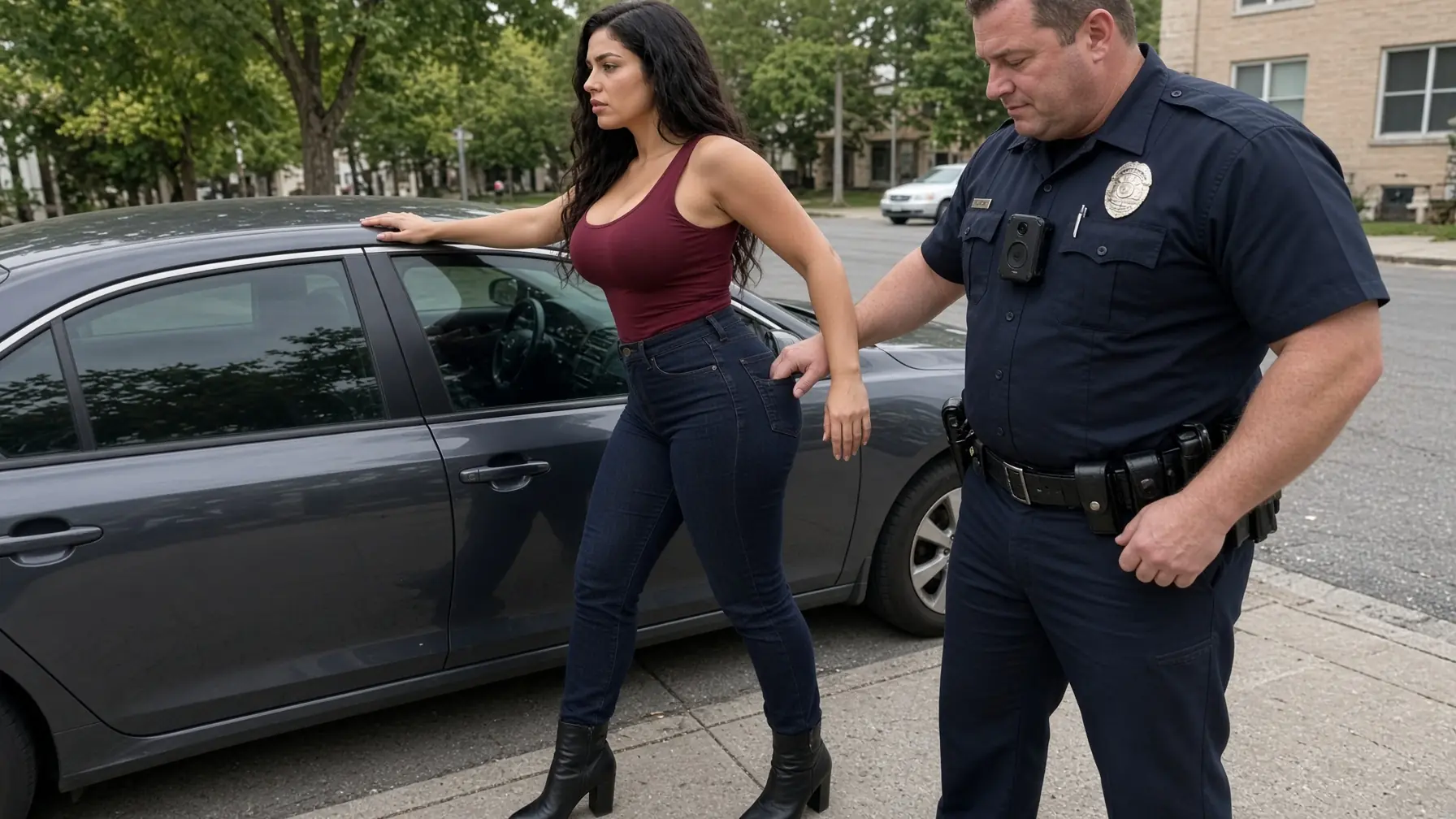
Now her license lay on the roof of his patrol car, her keys were in his pocket, and he was telling her to spread her feet.
“For a broken light?”
Officer Price stepped closer. He was broad through the shoulders, with a clean uniform and the bored expression of someone who expected every conversation to end his way.
“For my safety.”
Lena set her bag on the trunk and turned.
The metal was still warm from the afternoon sun. She placed her palms against it, trying to keep the movement ordinary, trying not to let him see how quickly her pulse had changed.
“Farther apart.”
She moved her feet.
Behind her, traffic continued along the commercial street. A bus pulled away from a stop, a delivery driver crossed toward a storefront, and someone came out of the pharmacy carrying a white paper bag.
People looked.
Then most of them kept walking.
Lena was twenty-four. She had never been arrested, had never stood with her hands against a car while a stranger searched her, and had never understood how exposed a person could feel without moving an inch.
The officer checked her pockets.
She told him what was inside before he reached each one: a receipt, her phone, a folded tissue, nothing sharp, nothing dangerous.
He found exactly those things.
Then he began again.
She turned her head.
“You already checked that.”
“Face forward.”
Lena faced the rear window.
Her own reflection looked pale and distorted in the glass.
She waited for him to finish. When he did not step away, she understood that the first search had been about what he might find.
The second was about what he could make her endure.
Earlier that day, her biggest worry had been arriving late to a job interview.
She worked at a small service company, answering calls, coordinating appointments, and dealing with people who believed their emergency should rearrange everyone else’s schedule. The new position would offer steadier hours and enough additional pay to make the end of each month less precarious.
She had taken her lunch break early, changed in the office restroom, and brushed her hair twice because she could not decide whether it looked professional or merely nervous.
Her younger sister had sent a message.
Don’t apologize for knowing how to do the job.
Lena had smiled at that.
She was good at apologizing.
For putting someone on hold. For explaining a delay she had not caused. For asking a coworker to return a borrowed charger. For saying no in a way that made it sound like she had failed to be helpful.
Her sister claimed Lena could turn even a firm decision into a request for permission.
That afternoon, she intended to do better.
She had a folder containing her résumé on the passenger seat. A bottle of water rested in the cup holder, and she had checked the route before leaving.
The rear light was already on her list of things to fix.
A small collision in a parking lot had cracked the plastic housing. She had ordered a replacement, but it had not arrived.
When the patrol lights appeared behind her, she sighed.
Bad timing.
That was all she thought at first.
She pulled over beside a row of businesses, lowered the window, and reached for her documents after explaining where they were.
Officer Price took them.
“Know why I stopped you?”
“The light?”
He looked toward the back of the car.
“You’ve been driving around like that?”
“The replacement’s on its way.”
“You have proof?”
“I can show you the order on my phone.”
He watched her for a moment, then told her to wait.
Lena checked the dashboard clock.
There was still time.
She sent a short message to the office where she was interviewing, explaining that a traffic stop might delay her arrival.
The reply was polite.
Thank you for letting us know.
She put the phone down.
Price returned after several minutes.
“Where are you headed?”
She told him.
“What’s in the folder?”
“My résumé.”
He leaned slightly toward the passenger window.
“What do you do?”
Lena answered.
“Anything in the car I should know about?”
“No.”
“Weapons?”
“No.”
“Drugs?”
“No.”
His eyes moved over the interior.
Lena waited.
The questions were irritating, but she had dealt with irritating questions before. She assumed this was simply a conversation she needed to finish patiently.
Then Price asked whether he could look inside the car.
She glanced at the clock again.
“Is that necessary for the light?”
His expression changed.
It was small enough that someone watching from across the street might have missed it.
Lena did not.
“I’m asking you a question.”