The tractor stopped hard enough to throw Ruth Havorson against the steering wheel.
For one sharp second, the engine fought whatever had caught beneath the soil. The hood trembled, the tires strained, and the sound rose into a harsh, ugly note that cut through the October wind.
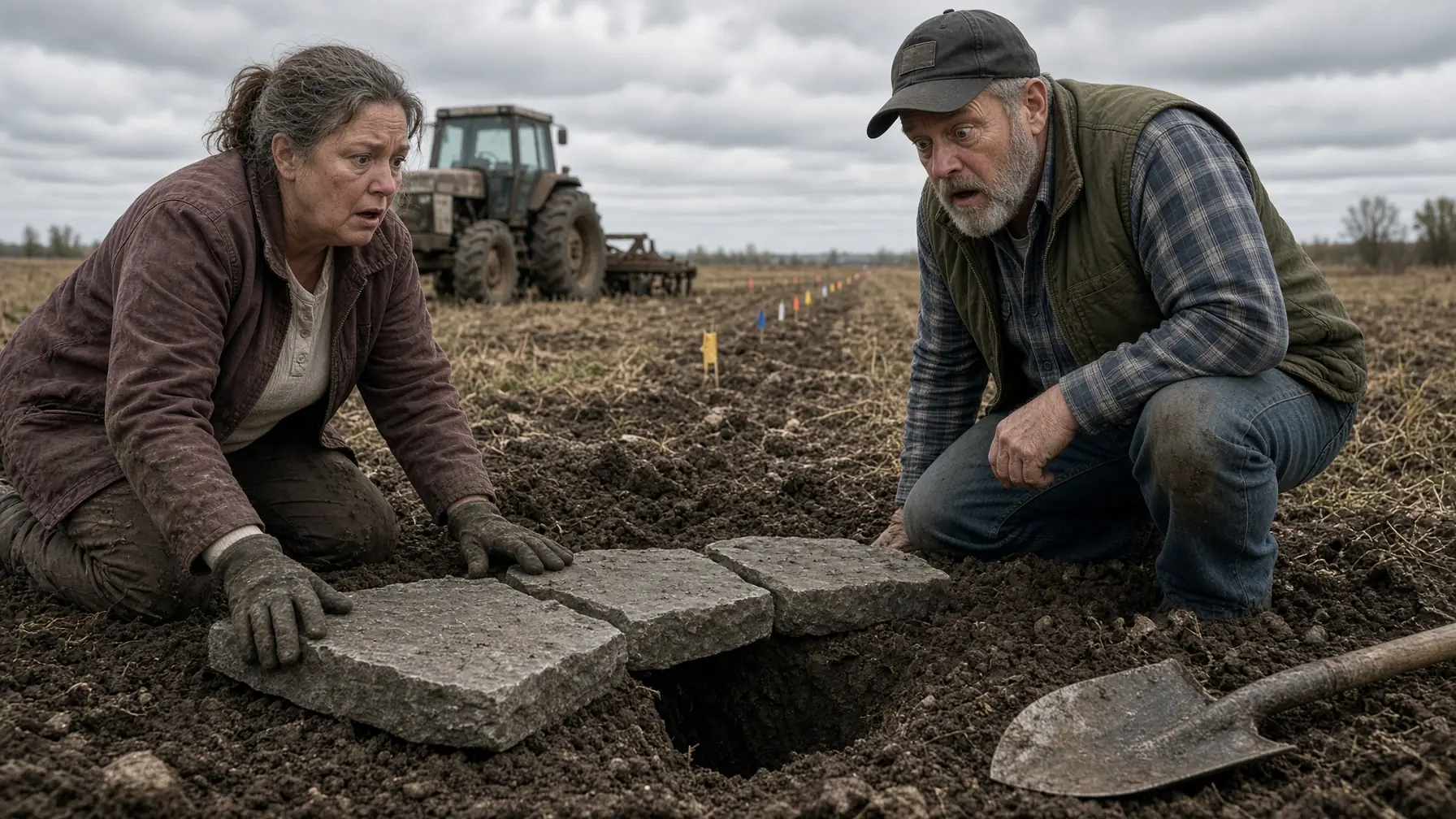
Ruth disengaged the drive.
Then she shut everything down.
Silence settled over the nineteen-acre field.
Her hands remained on the controls. She could feel her heartbeat in the heel of her right palm, where it pressed against the lever, and a dull ache beginning beneath her ribs where the steering wheel had caught her.
Behind her, the subsoiler stood motionless in the dark earth.
She did not turn immediately.
From the gate came the squeak of a loose hinge.
Wade had seen it.
Of course he had.
Ruth closed her eyes for a moment, then took the key out and put it in her jacket pocket. When she opened them again, the small survey flags ahead of the tractor were fluttering in a line across the gentle rise.
She had spent three afternoons placing them.
From the seat, they looked almost absurdly straight.
At the gate, her neighbor started walking toward her.
Ruth knew what he would say before he reached the tractor.
She was wrong about the words.
He would find worse ones.
A month earlier, she had stood beside that same gate with a folded sale notice in her hand and listened to two men discuss the field as though it had already defeated everyone who might ever own it.
“Pretty from the road,” one had said.
“Most trouble is.”
They had not noticed her standing a few feet away.
Thin yellow grass bordered the property. Beyond it, the ground rose gently before flattening toward the back. There was no dramatic slope, no obvious scar, nothing that explained why nineteen acres in farming country had attracted so little interest.
Ruth had walked it twice before the sale.
The first time, she went in old sneakers and came back with wet socks.
The second time, she wore boots.
She did not mistake that for solving the problem.
She simply wanted to know whether the trouble was the same everywhere.
It wasn’t.
There were places where the soil held together in heavy, stubborn clumps. Places where grass grew thin and pale. Places where her boot sank a little farther than she expected, followed by stretches that felt firm enough to make her question what she had noticed.
She wrote it down.
For years, she had helped Tom keep track of seed orders, repairs, fuel deliveries, and the small debts that became large ones if a person stopped paying attention. Her handwriting filled the margins of old calendars.
After he died, people began explaining things to her that she had once explained to them.
Not everyone.
Enough that she noticed.
A man who had borrowed their trailer twice told her she probably did not understand equipment costs.
A woman at the store asked whether someone was helping her with the bills.
Then a distant relative suggested that selling everything might make grieving easier.
Ruth had thanked them more often than she wanted to remember.
The field was not something she bought in a burst of defiance.
That was what people assumed afterward.
They saw a widow of forty-eight, tired around the eyes, with a loose ponytail and a husband’s name still attached to half the conversations in her life. They imagined grief had made her reckless.
The truth was less dramatic.
She had spent weeks doing arithmetic.