The combine stopped again with nearly eighty acres of corn still standing and rain less than three hours away.
Walter Hayes watched from the edge of the field as the great red machine settled into silence. A moment earlier, its header had been taking corn. Then the warning sounded, the rotor slowed, and another short strip of progress ended exactly like the previous one.
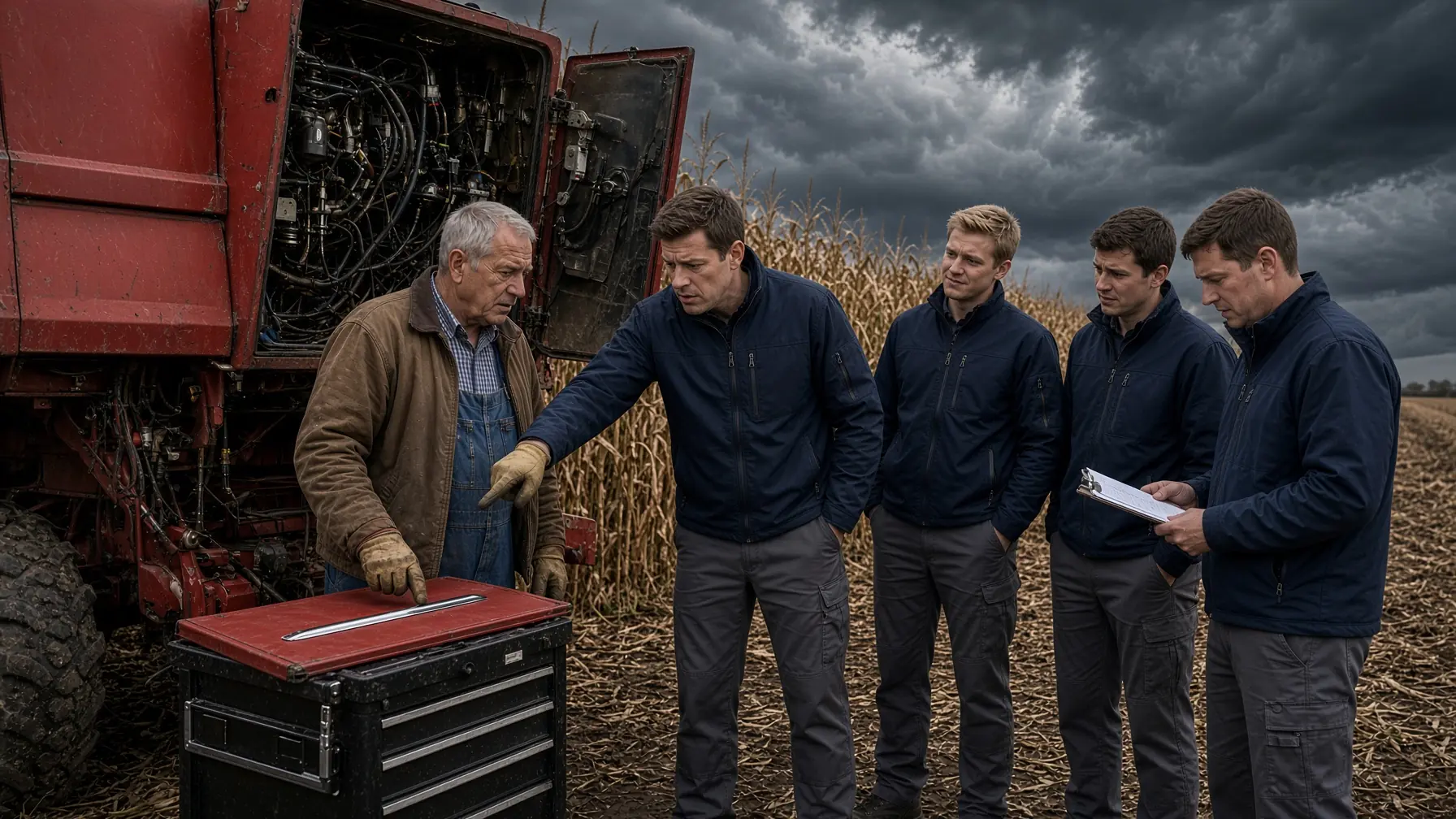
To the west, the sky had turned the color of dirty steel.
Walter looked at it, then at the men gathering beside the combine.
Five engineers.
A diagnostic tablet, a laptop, pressure-testing equipment, and a service truck full of tools.
They had been working on the problem for nearly two hours.
The combine would start. The rotor would turn. With nothing passing through it, the machine sounded ready to work.
Then it entered the corn.
Thirty feet. Sometimes forty.
The drive overloaded, the alarm sounded, and everything stopped.
Lucas Bennett climbed down from the cab with the tablet in his hand.
“Rotor overload again.”
One of the younger men shook his head.
“Pressure’s still within range.”
“Bearing temperatures?”
“Normal.”
“Drive motor?”
“Same.”
Walter said nothing.
He had been farming long enough to understand that an expensive failure did not always look dramatic. Sometimes it looked like five competent men getting the same reassuring answers while a storm crossed the county.
He turned toward the standing corn.
The crop did not care what the readings said.
It needed to come out.
Lucas studied the tablet again, dragging a finger across the screen. At thirty-six, he was tall and clean-shaven, with the deliberate manner of a man accustomed to explaining difficult equipment to people who wanted simpler answers than the machinery could provide.
Walter understood that kind of pressure.
He also understood the temptation to keep asking a familiar question because the equipment made it easy to ask.
He started toward the machine.
One engineer had the side drive panel open. Another stood beside him, looking at an assembly they had already inspected. The youngest glanced up as Walter approached, then returned his attention to the screen beside the service cart.
Lucas noticed him last.
“You need something, Walter?”
Walter looked through the opening.
“No.”
Lucas waited for him to leave.
Walter stayed.
“We’re working on it.”
“I can see that.”
“We’ve checked the drive system.”
Walter nodded.
“Looks like it.”
The youngest engineer smiled at another member of the team.
Walter saw it.
At sixty-eight, he had encountered that expression often enough to recognize it without needing an introduction. Sometimes it came from a man with a degree. Sometimes from a man with money. Sometimes from someone who had simply arrived in cleaner boots.
It meant Walter’s presence had already been classified as an interruption.
Lucas held the tablet against his chest.
“The computer’s showing an intermittent load condition. We’re looking at sensor feedback or control software.”
“Maybe,” Walter said.
Lucas gave him a thin smile.
“You have another theory?”
Walter looked toward the exposed drive.
“I’d like a look.”
One of the younger engineers laughed quietly.